Support

India

About the Country

India is a land of incredible contrasts and a kaleidoscope of experiences, located in South Asia and ranking as the seventh-largest country in the world by area. It is a place where ancient traditions blend harmoniously with modernity, offering travellers a unique experience. From the snow-capped peaks of the Himalayas in the north to the tropical beaches in the south, India's geographical diversity and scale are astonishing.

At the heart of India's rich history and culture is its capital, Delhi, a city where every stone tells a story of centuries past. India is the cradle of ancient civilisations and the birthplace of Hinduism, Buddhism, Jainism, and Sikhism. This rich spiritual tapestry also includes a significant Islamic heritage, with numerous mosques found throughout the country and halal food widely available, particularly in major cities. A journey through India is an immersion into a world of vibrant colours, spicy aromas, majestic temples like the famous Hanuman Garhi, and bustling bazaars. When visiting religious sites, travellers are advised to dress modestly, covering shoulders and legs, as a sign of respect.
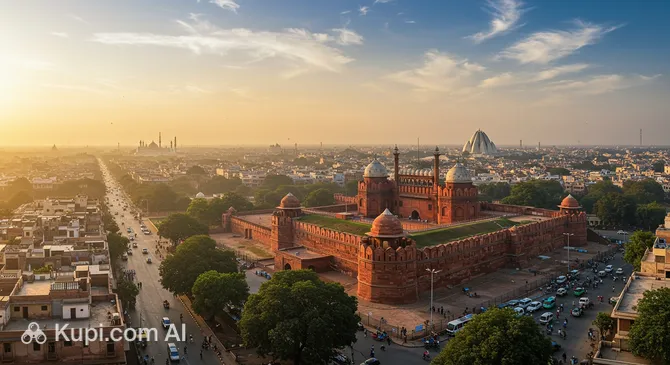
Delhi. Source: Kupi.com Binoculars

India's natural beauty is as diverse as its culture. Here, one can explore national parks with abundant wildlife, relax on picturesque coastlines, or embark on trekking adventures along mountain trails. The climate ranges from alpine to tropical monsoon, offering opportunities for travel all year round. The overall impression of India is a kaleidoscope of sounds, smells, and emotions; a country that surprises, inspires, and remains in the heart forever, whether you are exploring the technology hub of Bengaluru or meditating in a secluded ashram.

Currency

India's national currency is the Indian Rupee (international code: INR). All modern Indian banknotes feature an image of Mahatma Gandhi. The banknotes are issued in various denominations and colours, which helps to distinguish between them. Coins are also in circulation and are used for smaller transactions.

When travelling from the UAE, you can exchange your Dirhams (AED) for Rupees (INR) upon arrival in India. It is highly recommended to use official banks or licensed exchange bureaus, which can be found at airports and in major cities. Avoid exchanging money with street vendors, as this can be risky. For convenience, you can also use online platforms to pre-book your currency exchange.

In large cities and tourist centres, credit and debit cards (especially Visa and Mastercard) issued by UAE banks are widely accepted in many hotels, restaurants, and large shops. However, it is advisable to always select to pay in the local currency (INR) to avoid extra charges and unfavourable exchange rates. For smaller towns, markets, and local shops, cash is preferred, so it is always useful to carry a sufficient amount of Rupees for daily expenses.

Visa Requirements

To enter India, both UAE citizens and residents typically require a visa. However, the application process is streamlined for those based in the UAE. The most convenient method for many travellers is the electronic visa (e-Visa), which can be applied for online in advance of your trip. Alternatively, visas can be obtained by applying through authorised visa service centres in the UAE.

For UAE passport holders who have previously held an Indian e-Visa or a regular paper visa, a visa-on-arrival facility is available at six major international airports: Bangalore, Chennai, Delhi, Hyderabad, Kolkata, and Mumbai. First-time travellers to India from the UAE are advised to obtain an e-Visa before their journey. For expatriate residents in the UAE, the rules depend on their nationality, but most will need to secure an e-Visa or a standard visa prior to travel.

In addition to a visa, you will need a passport with at least six months of validity from your date of arrival in India and a minimum of two blank pages. It is also recommended to carry your return flight tickets, proof of accommodation, and a medical insurance policy. As visa regulations can change, it is strongly recommended to verify the latest information on the official websites of the Indian Embassy or authorised visa centres before planning your travel.

We'll tell you if you need a visa

Specify where you are going, or
Your citizenship
Destination

Time Zones

Across its entire territory, India operates on a single time zone known as Indian Standard Time (IST). This corresponds to UTC+5:30, which is 1 hour and 30 minutes ahead of the UAE's Gulf Standard Time (GST). This means you will not have to adjust your watch when travelling between different cities and states within the country, whether you are journeying from Delhi in the north to Kerala in the south, or from Mumbai in the west to Kolkata in the east.

The unified time zone makes planning domestic travel and activities much simpler. Tourists do not need to worry about time differences when booking tickets for trains, buses or internal flights, or when organising excursions in different regions of India.

How to Get There

The primary and most convenient way to reach India is by air. The country is exceptionally well-connected to the UAE, with numerous direct flights operated by major carriers such as Emirates, Etihad Airways, Air Arabia, and flydubai. India has many international airports, the main gateways being Indira Gandhi International Airport in the capital, Delhi, and Chhatrapati Shivaji Maharaj International Airport in Mumbai. These hubs, along with airports in other major cities like Bengaluru and Chennai, receive flights from across the globe, including Europe, North America, South East Asia, and Australia.

For travellers from neighbouring countries, it is possible to enter India by land. The country shares land borders with Pakistan, Nepal, Bhutan, Bangladesh, and Myanmar. Some border crossings are open to tourists and offer bus or train services; however, this method is less common for long-distance international journeys compared to air travel. Sea travel to India mainly consists of cruise liners docking at major ports like Mumbai or Cochin, but regular ferry services for direct entry from most parts of the world are limited.

When planning your trip to India, it is advisable to book flights and accommodation well in advance, especially if your travel falls during the peak tourist season (typically October to March) or major national festivals. Also, remember to check the latest visa requirements. UAE citizens can easily apply for an e-Visa online, which is available for tourism, business, and medical purposes. For first-time visitors from the UAE, an e-Visa is recommended, while those who have previously held an Indian visa may be eligible for visa-on-arrival at select airports.

For your reference, here is a summary of the main international airports in India:

Airport Name City Passenger Traffic
Indira Gandhi International AirportDelhiLargest
Chhatrapati Shivaji Maharaj International AirportMumbaiVery Large
Kempegowda International AirportBengaluruVery Large
Chennai International AirportChennaiLarge
Netaji Subhas Chandra Bose International AirportKolkataLarge

India is a country of incredible diversity, and its cities and resorts reflect this to the fullest. From ancient metropolises that hold the secrets of centuries to modern business hubs and serene spiritual sanctuaries, every traveller will find something to suit them here. Whether you are planning to delve into history, discover a unique culture, or simply relax in nature, India's popular destinations are ready to offer unforgettable experiences.

Delhi. Source: Kupi.com Binoculars

The heart of the country is undoubtedly its capital, Delhi. This city is an amazing blend of old and new: from majestic Mughal-era forts and mosques to modern skyscrapers and bustling markets. Fans of high-tech and innovation should turn their attention to Bengaluru, known as the 'Silicon Valley of India', which is also famous for its parks and palaces. For those seeking spiritual enlightenment and a connection to ancient traditions, a must-visit is Haridwar, one of the seven sacred cities of Hinduism, located on the banks of the Ganges.

If you are drawn to coastal landscapes, then Visakhapatnam, a port city on the Bay of Bengal, offers beautiful beaches and picturesque hills. Meanwhile, the ancient city of Ujjain, another sacred centre, attracts pilgrims and history enthusiasts with its temples and festivals. Each of these places is unique and ready to give you vivid memories of your journey through India. When visiting religious sites, a modest dress code is recommended, and travellers will be pleased to find a wide availability of halal food options in major cities.

Top Attractions

India is a country with an incredible kaleidoscope of cultures, traditions and, of course, attractions capable of capturing any traveller's imagination. From ancient temples to picturesque natural spots, there is something for everyone here. Let's explore some of the iconic places worth adding to your itinerary.

One of the most revered places is the Shri Mahakaleshwar Jyotirlinga Temple. It is one of the twelve Jyotirlingas, sacred abodes of the god Shiva, attracting pilgrims from all over the country. The temple is known for its ancient architecture, a special spiritual atmosphere, and unique rituals, such as the Bhasma Aarti. To maintain the sanctity of the temple, especially for entering the inner sanctum (Garbhagriha), a strict dress code is enforced: men are required to wear a traditional dhoti and women must wear a saree. For general darshan (viewing), modest attire is sufficient.

Shri Mahakaleshwar Jyotirlinga Temple. Source: Kupi.com Binoculars

For those seeking tranquillity and natural beauty, Raja's Garden is an excellent choice. This picturesque garden invites visitors to enjoy the harmony of floral arrangements, manicured lawns, and the gentle sound of fountains. It is an ideal place for leisurely strolls and a break from the hustle and bustle of the city.

Raja's Seat Garden. Source: Kupi.com Binoculars

You can immerse yourself in the spiritual life of India by visiting Naya Ghat. These are sacred steps leading down to the Sarayu River, where daily ritual baths and colourful ceremonies take place. Witnessing these ancient traditions offers an unforgettable experience and a deeper understanding of the country's culture. Visitors are advised to dress modestly out of respect for the religious customs.

Naya Ghat. Source: Kupi.com Binoculars

Another iconic site is Hanuman Garhi. This important 10th-century temple, dedicated to the god Hanuman, is situated on a hill offering breathtaking panoramic views. It is believed that a visit to this temple grants blessings of good health and prosperity. To reach the shrine, one must climb 76 steps, which is considered part of the pilgrimage itself. Visitors should wear modest attire; shorts, mini-skirts, and sleeveless tops are not permitted.

Hanuman Garhi Temple. Source: Kupi.com Binoculars

Best Time to Visit

When planning a trip to India from the UAE, it's essential to consider its diverse climate and seasons, especially given it's just a short flight away. Numerous direct flights from carriers like Emirates, Etihad, flydubai, and Air India connect major UAE cities with India, making it an accessible destination for a planned holiday or a spontaneous getaway.

The high season generally runs from October to March, offering the most pleasant weather across the majority of the country. During this time, you can expect warm, sunny days and cool nights, particularly in the north. This makes it the perfect period for sightseeing, visiting landmarks, enjoying safaris in national parks, and relaxing on the beaches of Goa and Kerala. However, be prepared for a significant number of tourists and, consequently, higher prices for accommodation and services.

The low season, or off-season, falls between April and September. April and May are the hottest months, with temperatures soaring in the central and northern plains, a heat that residents of the UAE will find familiar. From June to September, the monsoon brings heavy rainfall and high humidity to most of the country. The advantages of travelling during this period include far fewer tourists and lower prices. The landscape is transformed by the rains into a lush, vibrant green, which is especially picturesque. However, the monsoon can cause flooding and travel disruptions, and some attractions, particularly in mountainous regions, may be temporarily closed. It is important to note that India's climate varies greatly by region: while the plains experience intense heat or monsoon rains, the Himalayas may offer a pleasant coolness ideal for trekking (though not during the peak monsoon).

When choosing your travel time, consider India's many festivals, which are an integral part of its culture. Major celebrations like Diwali (the festival of lights, usually in October/November) or Holi (the festival of colours, typically in March) can be an unforgettable experience but will also affect crowds and prices. For Muslim travellers, finding halal food is generally straightforward in most parts of India, especially in cities with significant Muslim populations like Delhi, Mumbai, and in southern states like Kerala. It is always recommended to check the specific weather conditions for the region you plan to visit. For instance, some parts of Tamil Nadu experience their main rainy season from October to December, while the rest of the country enjoys dry weather.

Traditions

The culture of India is incredibly rich and diverse, and familiarising yourself with its main traditions will make your journey more meaningful and enjoyable. The classic Indian greeting is ‘Namaste’, which is accompanied by placing the palms together at chest level and giving a slight bow. It is a universal gesture of respect. Hospitality is a cornerstone of Indian culture; if you are invited into someone's home, it is a sign of special regard. It is customary to bring a small gift for the hosts, such as sweets or fruit (avoid alcohol unless you are certain of your hosts' preferences). Refusing offered refreshments is considered impolite. In India, it is important to be mindful of your clothing: when visiting temples, mosques, and other religious objects, you must cover your shoulders and knees, and women may also need to cover their heads. Shoes are always removed before entering holy places and often before entering a home.

There are also specific customs at the dining table. Traditionally, food is eaten with the right hand, as the left hand is considered 'unclean' and is used for personal hygiene. Of course, travellers will be offered cutlery, but knowing this rule will help you avoid any awkwardness. For Muslim travellers, finding halal food is relatively easy in most major cities, as India has one of the world's largest Muslim populations and many restaurants offer certified halal meals or are Muslim-owned. Among the many vibrant festivals, the most notable are Diwali, the festival of lights, which symbolises the victory of good over evil and light over darkness, and Holi, the spring festival of colours, where people joyfully throw coloured powders and splash each other with tinted water. To show respect for local residents, avoid public displays of affection, do not point at people or sacred objects with your finger (it is better to use an open palm or a nod of the head), and always treat elders with reverence. Showing interest in and respect for local customs will open the hearts of the Indian people to you.

Entertainment

India is a country where every traveller will find entertainment to their liking, thanks to an incredible kaleidoscope of cultures, traditions, and landscapes. From spiritual practices to adrenaline-pumping adventures, and from delving into ancient history to discovering contemporary art, the opportunities for leisure here are truly limitless.

For those who enjoy active pursuits, options include trekking in the majestic Himalayas, rafting on powerful rivers, exploring the colourful underwater world along the coasts, or trying your hand at surfing. For connoisseurs of cultural entertainment, India offers visits to numerous ancient temples and majestic forts. When visiting religious sites, it is important to dress modestly, covering shoulders and knees, and to remove your footwear before entering. You can also immerse yourself in the world of classical Indian music and dance at concerts and festivals, and explore the rich collections of museums and art galleries, especially in major centres like Delhi.

As evening falls, the nightlife comes alive in metropolises such as Bengaluru or Mumbai, where you can find many atmospheric lounges and restaurants with diverse cuisine, including a wide array of halal options, alongside vibrant entertainment venues. Shopping in India is a fascinating adventure in itself: from vibrant saris and silk fabrics to exquisite jewellery, aromatic spices, authentic Indian tea, and unique handmade items that make for wonderful souvenirs. For a family holiday, there are also many interesting options – from visiting national parks and reserves with their rich wildlife to modern theme parks and water parks in major cities, offering entertainment for all ages.

Currency rates

Planning a trip? That's wonderful! To avoid any financial surprises on your journey, it's important to remember that currency exchange rates are constantly changing. Therefore, we strongly advise you to monitor the latest rates, both before you fly and throughout your stay. You can use the data provided below for this purpose — we monitor currency exchange rates 24/7 and strive to offer the most current information.

INR currency exchange rate as of 02.01.2026

1 AED
~ 24.38 INR
4.26 AMD
~ 1 INR
1 AUD
~ 59.76 INR
1 AZN
~ 52.67 INR
1 BYN
~ 30.46 INR
1 CAD
~ 65.24 INR
1 EUR
~ 105.18 INR
1 GBP
~ 120.65 INR
3.65 HUF
~ 1 INR
1 KGS
~ 1.02 INR
16.13 KRW
~ 1 INR
5.67 KZT
~ 1 INR
1 PLN
~ 24.94 INR
1 RUB
~ 1.14 INR
1 SAR
~ 23.88 INR
1 SGD
~ 69.65 INR
1 TRY
~ 2.09 INR
1 UAH
~ 2.12 INR
1 USD
~ 89.55 INR
134.16 UZS
~ 1 INR

Reached the end of the page?

That means the route is fully explored