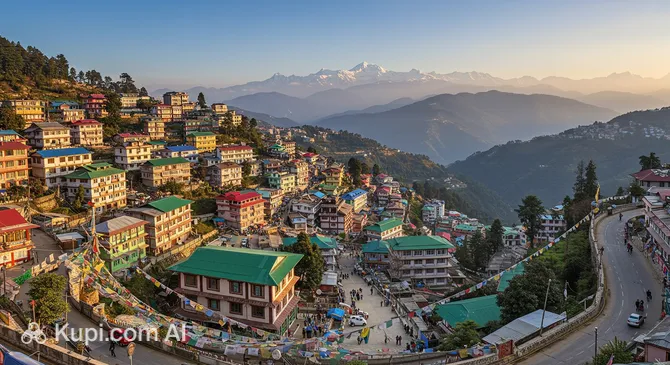
Navigating Gangtok requires a shift in perspective compared to typical flat-terrain cities. Due to its steep, mountainous geography and narrow winding roads, there is no metro system, tram network, or city-wide bus service in the conventional sense. Instead, the public transport system relies almost entirely on a well-organized network of taxis and jeeps that serve as the lifeline for locals and tourists alike.
The backbone of local transit is the shared taxi system. These vehicles, often small hatchbacks or vans, operate like mini-buses on fixed routes connecting major neighborhoods such as Deorali, Tadong, and Burtuk with the city center. They are easily identifiable by their specific color codes and route numbers displayed on the windshield. These taxis do not adhere to a strict time schedule; instead, they depart from designated stands once they are full. This system is efficient, frequent, and incredibly cost-effective, making it the preferred mode of travel for short distances.
For payment, cash is the absolute standard. There are no travel cards, digital tap-in systems, or mobile ticketing apps for local transport. Fares for shared taxis are fixed by the government based on the distance and are generally very affordable. You simply pay the driver directly upon reaching your destination or before the journey begins at a stand. It is highly advisable to carry small denominations of the local currency, as drivers may not always have change for large bills.
If you prefer a more private and comfortable journey, private taxis are readily available at all major taxi stands and transport hubs. Unlike shared vehicles, these can be hired for exclusive use to take you to specific sightseeing points or for a full day of touring. While rates are standard for popular tourist circuits, it is wise to confirm the price from the official rate charts available at taxi stands or negotiate clearly before starting your trip. Note that ride-hailing apps like Uber or Ola generally do not operate in this region, so you will need to rely on physical taxi stands or hotel arrangements.
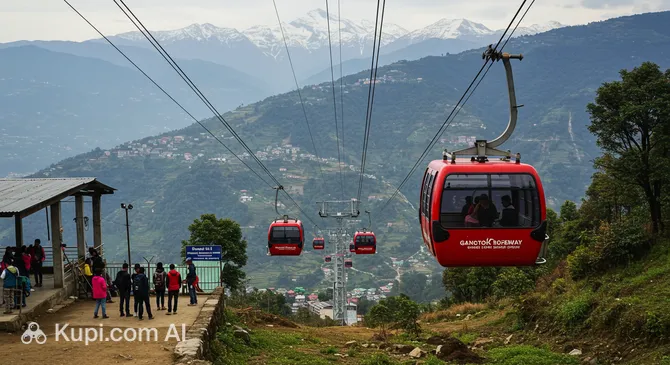
A unique feature of the city's transport landscape is the Gangtok Ropeway. While primarily a tourist attraction, this cable car system also functions as a practical transport link, connecting the lower terminal at Deorali to the upper terminal at Tashiling, near the Secretariat. Spanning about one kilometer, it offers a quick and scenic way to bypass the winding roads and traffic below, providing passengers with breathtaking aerial views of the city and the surrounding mountains.
Walking is also a significant part of getting around, particularly in the heart of the city. The famous MG Marg is a pedestrian-only zone where no vehicles are allowed. This promenade is the social and commercial hub of the city, and exploring it on foot is the best way to soak in the atmosphere. However, be prepared for steep inclines and staircases when venturing off the main promenade to other parts of the town.
Tourists should be aware of the operating hours for transport. Shared taxis are abundant during the day but become scarce after 8:00 PM or 9:00 PM. If you plan to dine out late or stay at a hotel far from the center, it is crucial to arrange a private taxi in advance for your return. Additionally, traffic discipline is strictly enforced here; drivers will not stop in no-parking zones to pick up or drop off passengers, so always head to a designated stand or a safe layby.