Support

Jakar

About

Welcome to Jakar, the bustling administrative center of the Bumthang District and a place often affectionately compared to Switzerland due to its stunning alpine scenery. Nestled in the spacious Choekhor Valley, this charming town serves as the spiritual heart of Bhutan, offering visitors a serene atmosphere that perfectly blends ancient tradition with breathtaking natural beauty.
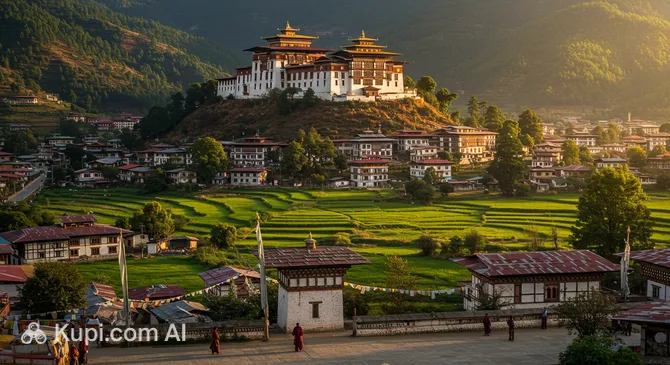
Jakar. Source: Kupi.Binoculars

Geographically, Jakar sits at an elevation of approximately 2,580 meters, providing crisp mountain air and panoramic views of the surrounding ridges. With a modest population of around 6,000 residents, the town maintains a cozy, village-like feel while still offering essential amenities for travelers. The climate is generally temperate, though winters can be quite cold, turning the landscape into a picturesque winter wonderland.

The town is dominated by the majestic Jakar Dzong, known as the "Castle of the White Bird," which stands on a ridge overlooking the valley. This fortress is a focal point for local governance and religion. Those interested in the region's past can explore the fascinating history of Jakar, which is deeply intertwined with the spread of Buddhism in the Himalayas. Other must-visit sites include the sacred Jambay Lhakhang, one of the oldest temples in the kingdom, and the Kurjey Lhakhang complex, a site of great spiritual significance.

Jakar is an ideal base for trekking, attending vibrant local festivals, or simply soaking in the peaceful ambiance of the Himalayas. Whether you are a culture enthusiast or a nature lover, a visit to this captivating town promises a memorable journey into the soul of the country.

Weather Overview

Jakar experiences a high-altitude climate that keeps conditions cool to cold throughout the year, necessitating warm clothing regardless of when you visit. The weather is generally characterized by biting winters and mild, frequently damp summers. To help you pack appropriate gear for your trip, it is helpful to review the specific trends for the weather in Jakar before you travel.

During the winter months of December through February, the cold is quite pronounced, with January seeing average temperatures around -4.6°C and nightly lows plunging to -10.7°C. In contrast, the summer season from June to August offers milder conditions, with average temperatures hovering near 11.7°C and daily highs rarely exceeding 15°C. Expect cool summers with frequent wet days, particularly from May through September, and cold winters with temperatures often dropping well below freezing.

Interesting Facts

Beyond its scenic valleys and historic fortresses, Jakar holds a collection of fascinating stories and unique cultural quirks that often surprise visitors. Here are a few intriguing details about this Himalayan town that reveal its distinct character.

  • While the region is often compared to the Swiss Alps for its landscapes, the connection is surprisingly literal. Jakar is home to a Swiss Farm established by a Swiss national in the 1960s, which introduced professional cheese-making to the area and produces the celebrated Red Panda Weissbier, a local unfiltered beer brewed right in the valley.

  • The town's name, which translates to "White Bird," is derived from a 16th-century legend regarding the founding of its main fortress. According to local lore, a white bird was seen roosting on a ridge, which the lamas interpreted as a divine omen pointing to the perfect strategic location for building the Jakar Dzong.

  • One of the town's most sacred sites, Jambay Lhakhang, is believed to be part of a massive geomantic architectural feat. Legend says it is one of 108 temples built in a single day by a Tibetan king to pin down a giant demoness specifically on her left knee, thereby subduing evil spirits across the Himalayas.

  • Due to the high altitude, the traditional staple crop here is buckwheat rather than rice. This agricultural reality has shaped a unique local cuisine, featuring distinct dishes like puta (buckwheat noodles) and pancakes that you might not find in other parts of Bhutan.

How to Get There

Reaching this Himalayan destination is an adventure in itself, often involving a combination of scenic flights and mountain drives. For a comprehensive guide on all available transport options and routes, you can read more about how to get to Jakar.

The most direct way to arrive is by flying into the local Jakar (Bathpalathang) (IATA: BUT). This domestic airport is conveniently located just 0.8 km from the town center, making the transfer to your accommodation incredibly quick and easy. It serves as a vital link for travelers wishing to bypass the long overland journey from western Bhutan.

Most international visitors, however, will first land at Paro Airport (IATA: PBH) in the city of Paro, which is the country's primary international gateway. Paro is situated approximately 131 km from Jakar in a straight line. However, do not be deceived by the distance; the mountainous terrain means the road journey is much longer and winding. A trip by taxi or bus from Paro generally takes around 8 to 10 hours, offering breathtaking views of the valleys and passes along the way.

For clarity, here is a summary of the main airports in the region:

Airport Name City Passenger Traffic Km from City
Lhasa Gonggar Airport Lhasa Large 192.3
Paro Airport Paro Medium 131.1
Jakar (Bathpalathang) Jakar Small 0.8
Gelephu Gelephu Small 80.1
Trashigang (Yonphula) Trashigang Small 84.0

The city of Jakar does not have a railway station, as the mountainous landscape of Bhutan is not served by a train network. Visitors typically rely on domestic flights or road transport, such as hired vehicles and buses, to navigate between districts. The winding roads, while requiring patience, provide some of the most spectacular travel experiences in the Himalayas.

Main Attractions

Jakar is often considered the cultural and spiritual hub of the region, offering a wealth of historic sites that are deeply woven into the myths and legends of the Himalayas. The valley is dotted with some of the kingdom's oldest and most venerated temples, making it a paradise for history buffs and spiritual seekers alike. Here are the key attractions that define the character of this charming town.

Jakar Dzong is impossible to miss, perched high on a ridge overlooking the town. Known as the "Castle of the White Bird," it is one of the largest and most impressive fortresses in the country. What makes it unique for tourists is its distinctive architecture; unlike most other dzongs, its central tower (utse) is situated on the outer wall rather than in the center of the courtyard. Visitors can explore the administrative and monastic sections, enjoying commanding views of the Chokhor Valley below, which provides a perfect photo opportunity.

A short distance north of the town lies Kurjey Lhakhang, one of the holiest sites in the entire kingdom. The complex consists of three temples, the oldest of which is built around a cave where Guru Rinpoche is said to have meditated and left an imprint of his body in the rock. Travelers are drawn here by the profound sense of peace and the large cypress tree standing behind the temple, believed to have sprouted from the Guru's walking stick. It is a powerful place to witness local devotion in its purest form.

Located across the river is Tamshing Lhakhang, a temple founded in 1501 by the great treasure revealer Pema Lingpa. This site is particularly interesting for art lovers, as it houses remarkable ancient religious paintings that are among the oldest in the region. A highlight for many visitors is the heavy iron chain coat attributed to Pema Lingpa; it is said that carrying this chain around the inner sanctum three times washes away sins, a ritual that many tourists attempt for good luck.

Although technically a short drive from the main town, Mebar Tsho (The Burning Lake) is an essential stop for anyone visiting Jakar. According to legend, Pema Lingpa jumped into this river gorge with a burning butter lamp and emerged with the lamp still lit, along with a chest of treasures. Today, the site is a serene spot where prayer flags flutter over the rushing river, offering a mystical atmosphere that perfectly encapsulates the magic of the Bumthang district.

Local Cuisine

The culinary landscape of Jakar is quite distinct from the rest of the country, largely shaped by the high altitude of the Bumthang District. While rice is the staple in western regions, this valley is the heartland of buckwheat, which defines the local diet. Visitors here have the unique opportunity to taste rustic, traditional dishes that offer a nutty, earthy flavor profile found nowhere else in the kingdom.

You simply cannot leave without trying Puta, a signature local dish consisting of noodles made from buckwheat flour. These are typically hand-extruded and stir-fried in mustard oil with scallions, peppercorns, and a dash of chili, resembling a heartier version of Japanese soba. Another breakfast favorite is Khule, spongy buckwheat pancakes that are best enjoyed when dipped in the ubiquitous ema datshi (chilies and cheese) or paired with shakam, a type of dried beef jerky that is popular in the mountains.

A surprising highlight of the food scene here is the production of European-style dairy products. Thanks to a Swiss development project established decades ago, the area produces excellent Gouda and Emmental cheese. These local cheeses are often served in guesthouses or sold in small shops, sometimes accompanied by pure Bumthang honey, which is renowned for its rich, floral sweetness and organic quality.

When it comes to beverages, Jakar is famous as the home of Red Panda Weissbier. This unfiltered wheat beer is brewed locally at the Swiss Brewery overlooking the town and is widely regarded as the finest craft beer in the country. For a more traditional experience, adventurous travelers can try Ara, a potent local spirit distilled from fermented grain. In this region, it is sometimes served warm with a poached egg floating in it, a customary gesture of hospitality known as ara kay.

Dining in Jakar is generally a cozy and intimate affair. Most tourists eat their main meals at their hotels or guesthouses, where kitchens prepare buffet-style spreads featuring a mix of Bhutanese, Indian, and Continental dishes to suit all palates. However, a walk through the main town of Chamkhar reveals small, family-run eateries serving steaming baskets of momos (dumplings) and hot noodle soups, offering a warm refuge from the cool mountain air and a chance to dine alongside locals.

Travel Tips

Visiting Jakar, the spiritual heartland of the Bumthang District, offers a serene escape into the Himalayas, but its remote location and high altitude require a bit of preparation. To help you navigate the "Switzerland of Bhutan" with ease and respect for local customs, here are some essential practical tips for your journey.

  1. Clothing and Gear: Since Jakar sits at an elevation of over 2,500 meters, the weather can be unpredictable. Layering is key; bring warm fleece jackets and thermal wear even in summer, as nights are consistently cool. Sturdy, broken-in walking shoes are essential for exploring the valley's unpaved paths. When visiting sacred sites like Jakar Dzong or Jambay Lhakhang, you must dress modestly: shoulders and knees should be covered, and you will need to remove your shoes and hat before entering inner sanctums.

  2. Transportation: There is no public transit system like metros or trams in this mountain town. The town center, Chamkhar, is compact and best explored on foot. For visiting attractions scattered across the valley, taxis are available at the main taxi stand in town. However, most international tourists will rely on the vehicle and driver provided by their tour operator, which is the most convenient way to navigate the winding mountain roads.

  3. Finances: The local currency is the Ngultrum (BTN), which is pegged 1:1 with the Indian Rupee. While larger hotels may accept cards, cash is king in Jakar's small shops and cafes. There are a few ATMs in the town center, but they can be unreliable or run out of cash, so it is wise to withdraw sufficient funds in Thimphu or Paro before traveling east. Tipping your guide and driver at the end of the trip is customary.

  4. Health and Safety: Jakar is generally very safe, but the altitude can affect some travelers; drink plenty of water to stay hydrated. There is a district hospital and small pharmacies in the town center, but they are not open 24/7, so bring a personal supply of essential medications. Be cautious of stray dogs, especially at night when they form packs and can be aggressive or noisy; carrying earplugs is highly recommended for a good night's sleep.

  5. Communication: English is the medium of instruction in schools and is widely spoken by locals involved in tourism. The local dialect is Bumthangkha, but standard Dzongkha is also understood. You can purchase a local SIM card (B-Mobile or TashiCell) in town for data connectivity, as hotel Wi-Fi can sometimes be slow or intermittent in this remote region.

  6. Local Etiquette: The standard greeting is "Kuzuzangpo la." When visiting temples or passing chortens (stupas) and prayer wheels, always walk in a clockwise direction. It is polite to receive and give objects using your right hand or both hands. If you are offered food or tea, it is traditional to decline politely once ("meshu meshu") before accepting.

  7. What to Avoid: Strict tobacco laws exist throughout the country; smoking in public places is prohibited and can incur fines. Also, never take photographs inside the prayer halls of temples and monasteries. If you are unsure, ask your guide, as this is considered a serious breach of sanctity.

  8. Local Insight: Do not miss the chance to visit the small shops in Chamkhar town to buy locally produced Swiss cheese and clover honey. These items are unique to the Bumthang region and make for excellent, consumable souvenirs that support the local agricultural community.

By keeping these practicalities in mind, you can focus on absorbing the mystical atmosphere and stunning landscapes of this unique Himalayan valley. Enjoy your time in Jakar, where every turn in the road reveals a piece of history and a warm smile from the locals.

Entertainment & Nightlife

Entertainment and nightlife in Jakar are defined by the town's serene, rural character rather than a bustling party scene. Visitors expecting thumping bass and neon-lit clubs will find a different kind of magic here: quiet evenings spent around a wood stove, starlit skies, and intimate gatherings. The nightlife is low-key and revolves largely around the hotels and a few local spots in the main town area, offering a cozy end to a day of trekking or sightseeing.

The primary hub for any evening activity outside of the resorts is Chamkhar Town. This single-street commercial center quiets down significantly after sunset, but it is where you will find a handful of local bars and snooker parlors. These venues are simple and rustic, often filled with locals enjoying a game of pool or a drink after work. The atmosphere is casual and friendly, though language can sometimes be a barrier in the smaller, strictly local establishments. Most places close quite early, typically by 9:00 PM or 10:00 PM.

For a more tourist-friendly experience, the best "nightlife" is often found within the guesthouses and resorts themselves. A standout venue is the bar at the Swiss Guest House. Famous for its attached brewery, this is the perfect place to enjoy a fresh pint of Red Panda Weissbier on tap. The setting is warm and alpine, making it a favorite spot for travelers to swap stories. Another reliable option is the bar at Yu-Ghar Resort, which offers a comfortable lounge setting and a selection of international spirits and local wines.

If you are looking for a taste of local culture, you might encounter a Drayang. These are traditional entertainment venues found in Bhutanese towns where women perform dances and sing requests for patrons. While more prevalent in larger cities like Thimphu, a smaller version may operate in the vicinity of Chamkhar. It is a unique cultural experience, though the lighting is often dim and the vibe is distinctively local.

Practical advice for a night out in Jakar centers on logistics and warmth. The temperatures drop sharply at night, so dress in heavy layers even if you are just going for a short walk. Taxis are not readily available late at night; if you plan to dine or drink away from your hotel, it is essential to arrange a ride back with your driver or the venue in advance. Prices are generally affordable, with local beers and spirits costing significantly less than imported brands.

Safety is high in terms of crime, but the physical environment requires caution. The streets are poorly lit, and sidewalks can be uneven. The biggest concern for night walkers is the population of stray dogs, which become territorial and aggressive after dark. It is highly advisable to avoid walking alone at night; stick to vehicles or carry a walking stick and a flashlight if you must be on foot.

During the daylight hours, entertainment takes a more active form. Weekends often feature archery matches at the local range in Chamkhar. Archery is the national sport, and watching the teams compete with their compound bows, complete with singing and dancing when a target is hit, is a thrilling cultural spectacle. For a quieter afternoon, visitors can explore the Swiss Farm area to see local cheese production or visit the small shops in town selling traditional textiles and handicrafts.

Parks & Museums

Jakar is a destination where the distinction between nature and culture blurs; the entire valley feels like a living museum set within a vast natural park. Instead of manicured city gardens or modern exhibition halls, visitors will find ancient forests, sacred gorges, and historic palaces that have stood the test of time, offering a profound connection to the region's heritage and landscape.

While not a park in the traditional urban sense, Mebar Tsho (The Burning Lake) is the area's most significant natural and spiritual landmark. Located just a short drive from the town, this is not a still lake but a turbulent gorge where the river rushes over smooth rocks. Surrounded by prayer flags fluttering in the breeze and pristine forest, it offers a serene environment for contemplation. It is a place where nature's power meets deep religious mythology, making it a must-visit for those seeking both scenic beauty and spiritual insight.

For a more pastoral experience, the grounds around the Swiss Farm provide a delightful escape that resembles a European countryside estate. The area is dotted with apple orchards, pine forests, and grazing cattle, offering a peaceful setting for leisurely walks. The air here is fresh and scented with pine, and the well-maintained trails allow visitors to enjoy the lush greenery of the valley floor while observing the unique blend of Bhutanese agriculture and Swiss farming techniques.

In terms of museums, the Ogyen Choling Palace Museum is the premier cultural institution in the wider Bumthang district. Although located in the nearby Tang Valley, it is an essential excursion for anyone staying in Jakar. Housed in a beautifully preserved ancestral manor, the museum offers an unparalleled look into the lifestyle of Bhutanese nobility over the last century. Exhibits include traditional textiles, ancient weaponry, and household artifacts, all displayed in their original setting, providing a tangible link to the feudal past.

Closer to town, the Wangdichholing Palace stands as a silent witness to the origins of the modern Bhutanese monarchy. Built in 1857, it was the first palace in the kingdom that was not designed as a fortress (dzong), marking a period of peace and stability. While it has been undergoing extensive restoration to convert it into a museum, the structure itself is a masterpiece of timber architecture and painting. Viewing its grand exterior and the surrounding grounds gives visitors a sense of the grandeur that once hosted the country's first kings.

For an authentic insider experience, take the walking path that connects Kurjey Lhakhang to Tamshing Lhakhang. This trail crosses a suspension bridge over the Chamkhar River and winds through farm fields and small villages. It is a "living museum" walk where you can observe daily rural life, from farmers tending to buckwheat fields to monks chanting in the temples, offering a glimpse into the heart of the valley that no guidebook can fully capture.

Getting Around

Navigating Jakar is a refreshingly simple experience compared to the complex transit webs of major global cities. Due to its small size and mountainous setting, the town does not possess a mass public transport system such as a metro, tram network, or municipal bus fleet. Instead, the local transportation infrastructure is informal and relies primarily on road vehicles, making it easy to understand but requiring a bit of local know-how to use effectively.

The most common form of public transport for getting around the valley is the taxi. These are typically standard sedans or small hatchbacks, easily identifiable by their yellow roof signs or license plates. Taxis can be found waiting at designated stands in the main Chamkhar town area or can be flagged down along the main road. They serve as the de facto shuttle service for locals and visitors alike, offering rides to nearby attractions, monasteries, and resorts that are too far to reach comfortably on foot.

When it comes to payment, cash is the absolute rule for all local transport. There are no digital travel cards, tap-to-pay systems, or transport apps like Uber or Lyft available here. You will need to pay the driver directly in the local currency, the Ngultrum (BTN), or Indian Rupees, which are widely accepted. Small denominations are recommended, as drivers may not always have change for large bills. Fares are generally reasonable, but they are not always metered; for trips outside the immediate town center, it is standard practice to negotiate and agree on a fixed price before getting into the vehicle.

For those planning to use taxis, practical advice includes asking your hotel reception for the approximate "going rate" to your destination so you have a baseline for negotiation. Taxis generally operate from early morning until shortly after sunset. Finding a ride late at night can be difficult, so if you plan to dine out, it is wise to arrange a pickup time with a driver beforehand or ask the restaurant to call one for you.

Walking is a highly viable and pleasant alternative for exploring the town center itself. The main commercial area of Chamkhar is compact and flat, allowing you to visit shops, cafes, and the local market on foot without any need for a vehicle. For the more adventurous, renting a mountain bike is an increasingly popular way to see the valley. Several hotels and local tour operators offer bike rentals, allowing you to navigate the farm roads and trails at your own pace while enjoying the fresh mountain air.

It is important to note that most international tourists visiting the region will likely have a private vehicle and driver assigned to them as part of their visa and tour package. This remains the most convenient and stress-free way to navigate the broader district. However, utilizing a local taxi or walking for short trips offers a more immersive glimpse into the daily life of this serene Himalayan community.

Accommodation

Accommodation in Jakar is characterized by its warm, rustic hospitality rather than impersonal luxury. Reflecting the traditional architecture of the Bumthang District, most lodging options are charming, family-run guesthouses and mid-range resorts built with local stone and pine. Given the cool climate, a defining feature of many rooms here is the presence of a bukhari (wood-burning stove), which adds a cozy, alpine atmosphere to your stay. While you will not find high-rise international hotel chains, the standard of comfort is generally high, with properties focusing on cleanliness, cultural immersion, and scenic views.

When choosing where to stay, travelers generally have two main options regarding location. The most convenient area is in and around Chamkhar Town. Staying here puts you within walking distance of local shops, small cafes, and the main market, making it easy to explore the town on foot. Alternatively, many visitors prefer the resorts scattered along the slopes of the Choekhor Valley. These properties are slightly removed from the town center but offer tranquility and sweeping panoramic views of the Dzong and the surrounding mountains.

Among the well-known establishments, the Swiss Guest House is a historic favorite. As the oldest guesthouse in the district, it offers a unique blend of Bhutanese tradition and Swiss influence, famous for its attached brewery and cheese production. Another popular choice is the Yu-Ghar Resort, known for its comfortable amenities and location near the river, providing a peaceful retreat with easy access to the town's attractions.

Booking Tip: Accommodation in Jakar can fill up incredibly fast during the peak trekking seasons (spring and autumn) and especially during the annual Jakar Tshechu (festival). It is highly recommended to confirm your booking several months in advance if your travel dates coincide with these popular events.

In terms of pricing and booking methods, most hotels in Jakar fall into the budget to mid-range category by international standards, though a few luxury boutique lodges are emerging. For the majority of international tourists, accommodation is arranged and booked directly by their authorized Bhutanese tour operator as part of the mandatory travel package. However, if you are a regional tourist or have specific preferences, it is possible to request specific hotels through your agent or book directly online for certain properties.

Nearby Cities

For those looking to explore the surroundings, Jakar serves as an excellent base for day trips to several interesting nearby locations. While the mountainous terrain of Bhutan means travel times can be longer than the distances suggest, there are culturally rich destinations within reach that offer a deeper insight into the kingdom's heritage.

Trongsa is one of the most significant towns located just a few hours' drive west of Jakar. It is historically famous as the ancestral home of the Royal Family, and the first two kings ruled from here. The town is dominated by the majestic Trongsa Dzong, a fortress that commands the landscape from a sheer ridge and is a masterpiece of Bhutanese architecture. Visitors can also explore the Watchtower Museum (Ta Dzong), which houses a collection of royal memorabilia and Buddhist art.

To the southeast lies the picturesque Ura Valley, home to the clustered village of Ura. Unlike the scattered settlements typical of the region, Ura features closely packed houses with cobblestone alleys, reminiscent of a medieval hamlet. At an altitude of 3,100 meters, it is the highest of the four Bumthang valleys and offers a glimpse into a traditional way of life that has remained largely unchanged, especially during the vibrant Ura Yakchoe festival.

City Population Distance (km)
Thimphu 104000 109
Phuentsholing 27658 154
Tsirang 25000 80
Paro 15000 132
Gelephu 9858 81

These nearby destinations offer a glimpse into the diverse culture and landscapes of the region, making them well worth the journey for travelers eager to see more of the Himalayas.

Shopping & Souvenirs

Shopping in Jakar offers a delightful immersion into the local culture of the Bumthang District. Unlike the commercial hubs of larger cities, the retail experience here is intimate, traditional, and centered around locally produced goods. Visitors will not find sprawling shopping complexes or international fashion chains; instead, the town offers a selection of small, family-owned general stores and handicraft shops that showcase the region's unique artistic and agricultural heritage.

The heart of all commercial activity is Chamkhar Town. This compact area consists primarily of a distinctive main street lined with traditional Bhutanese-style buildings housing various shops. A stroll down this thoroughfare allows you to browse everything from daily necessities to exquisite local crafts. It is a pedestrian-friendly zone where you can easily visit multiple stores within a short time, often meeting the shop owners who are happy to share the stories behind their products.

Travelers should be aware that there are no shopping malls or department stores in Jakar. The town retains a village atmosphere, and the concept of a modern mall does not fit the local lifestyle. The charm lies in the small-scale, personalized service found in the standalone shops, where the pace is slow and the interactions are genuine.

While there isn't a massive permanent bazaar, the local market area in Chamkhar is a vibrant spot to visit, especially on weekends. Here, farmers from the surrounding valleys gather to sell fresh organic produce, including wild mushrooms, ferns, and the region's famous buckwheat flour. It is an excellent place to observe daily life, interact with locals, and perhaps pick up some traditional incense or dried fruits.

The most iconic item to buy in Jakar is Yathra, a thick, hand-woven woolen textile with intricate geometric patterns that is unique to the Bumthang region. You can find it fashioned into warm jackets, bags, rugs, and cushion covers, making for a practical and beautiful memento. Additionally, the district is known as the culinary heart of the country, making edible souvenirs very popular. Be sure to look for Bumthang honey, which is renowned for its floral purity, and locally produced Swiss-style cheese (Gouda and Emmental). Bottles of the local craft beer or jars of chili pickle are also excellent choices to bring back home.

Shops generally open around 9:00 AM and close by 7:00 PM or 8:00 PM. It is important to note that Tuesday is often observed as the weekly holiday ("dry day") for shopkeepers in many Bhutanese towns, so you may find some businesses closed on this day. regarding payment, cash is the primary mode of transaction. While a few larger handicraft stores might accept credit cards, it is rare. ATMs are available in the town center, but it is highly recommended to carry sufficient cash (Ngultrum or Indian Rupees) for your shopping needs.

There is no tax-free shopping or VAT refund scheme available for tourists in Jakar. Prices are generally fixed in established shops, though polite bargaining may be acceptable in the market area or when purchasing multiple handicraft items directly from artisans.

Reached the end of the page?

That means the route is fully explored