Support

Sri Lanka

About the Country

Sri Lanka, an enchanting island in the Indian Ocean often called the "Pearl of the East," attracts travellers with its amazing blend of ancient culture, lush tropical nature, and welcoming atmosphere. This compact island offers an incredible variety of experiences, from serene beaches to misty mountains, and from ancient ruins to bustling cities.

Sri Lanka's cultural heritage spans over two and a half millennia, leaving behind majestic temple complexes and ancient cities. A prime example is Sigiriya, an impressive 5th-century rock fortress with ancient frescoes, and the sacred city of Kandy, home to one of the most important Buddhist relics – the Temple of the Sacred Tooth Relic. Visitors to religious sites are expected to dress modestly, covering shoulders and legs as a sign of respect. The nation's capital, Colombo, is a dynamic metropolis where colonial architecture stands alongside modern skyscrapers, offering tourists both historical sights and opportunities for shopping and entertainment.
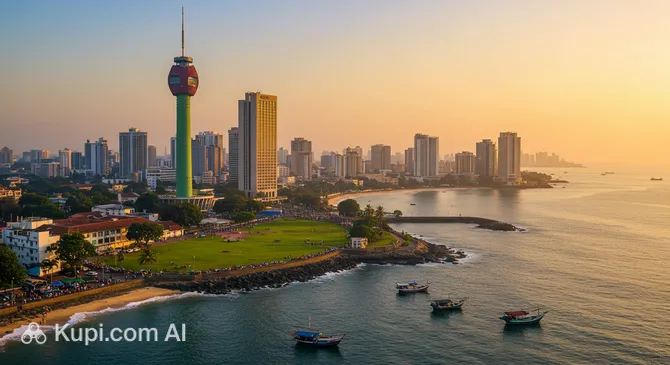
Colombo. Source: Kupi.com Binoculars

Sri Lanka's nature is no less impressive, featuring vast tea plantations, national parks where you can spot elephants and leopards, and a picturesque coastline with golden beaches ideal for surfing and diving. The warm tropical climate makes the island an attractive destination to visit all year round. Sri Lanka is a place where everyone can find something to enjoy, whether it's an immersion in history, connecting with nature, or simply a relaxing holiday by the ocean.
Currency

The national currency of Sri Lanka is the Sri Lankan Rupee (LKR). Local banknotes are colourfully designed, often depicting the island's rich fauna, flora, and cultural landmarks, making them a small work of art in their own right. For exchanging major currencies like the UAE Dirham or US Dollar, it is best to use official banks or licensed exchange points. These can be found at the airport upon arrival, and also in most cities and tourist centres. It is recommended to avoid street money changers due to the risk of receiving an unfavourable rate or encountering fraud. Be sure to keep your exchange receipts, as they may be required for converting any remaining rupees back when you depart from the country.

Credit cards, mainly Visa and Mastercard, are widely accepted in hotels, large restaurants, and shops, particularly in popular tourist areas of Sri Lanka. However, for purchases at local markets, paying for tuk-tuks, or visiting smaller establishments away from the main tourist routes, it is always useful to have a certain amount of cash on you. ATMs are also available in cities and tourist centres, but it is wise to check with your bank in the UAE beforehand about the conditions for withdrawing cash abroad and any potential fees.

Visa Requirements

For travellers from the UAE planning a visit to Sri Lanka, the entry requirements have been simplified. As of July 2025, Sri Lanka offers visa-free access to citizens of 40 countries, including the United Arab Emirates. This policy allows for a tourist stay of up to 30 days.

While a visa is not required for UAE citizens, all visitors must obtain an Electronic Travel Authorisation (ETA) before their departure. The application for an ETA is a straightforward online process that can be completed through the official Sri Lanka ETA website. To enter the country, your passport must be valid for at least six months from your date of arrival. It is also advisable to have proof of a return or onward ticket and sufficient funds for your stay.

For non-UAE citizens residing in the UAE, visa requirements may vary based on their nationality. It is strongly recommended that all travellers check the latest information on the official website of the Sri Lankan Department of Immigration and Emigration or with the Sri Lankan embassy before planning their trip, as visa regulations can change.

We'll tell you if you need a visa

Specify where you are going, or
Your citizenship
Destination

Time Zones

When planning a trip to Sri Lanka, you will not have to worry about changing timezones within the country. The whole of Sri Lanka operates on a single timezone – SLST (Sri Lanka Standard Time), which is UTC+5:30. For travellers from the UAE, this means Sri Lanka is 1 hour and 30 minutes ahead of local time. This means the time is the same in all cities and regions, including the capital Colombo and popular resort areas.

This uniformity makes it much easier to plan journeys and excursions around the island, as you will not need to adjust your watch or account for time differences between various points on your itinerary.

How to Get There

The most convenient way to reach Sri Lanka, a picturesque island nation in the Indian Ocean, is by air. The country's main international transport hub is Bandaranaike International Airport (CMB), located near the capital, Colombo. This is where the majority of flights from around the world arrive. Direct flights connect Sri Lanka with many countries in Asia and the Middle East, as well as some European cities. For travellers from the UAE, direct flights are readily available from Dubai, Sharjah, and Abu Dhabi with carriers including Emirates, flydubai, Air Arabia, and Etihad Airways. For those travelling from other regions, convenient connecting flights are usually available via major aviation hubs.

As Sri Lanka is an island, it has no land borders, and arriving by land from other countries is impossible. In theory, it is possible to arrive by sea, for example, as part of some cruise itineraries that call at the island's ports; however, this is not a common method of arrival for most tourists. To ensure your trip is smooth and cost-effective, it is advisable to book your airline tickets well in advance, especially if you plan to travel during the peak tourist season, which typically runs from December to April.

For clarity, here is a summary of the main airports:

Airport Name City Passenger Traffic
Bandaranaike International AirportColomboMajor
China Bay AirportTrincomaleeSmall
Batticaloa AirportBatticaloaSmall
Koggala AirportKoggalaSmall
Kankesanturai AirportJaffnaSmall

Sri Lanka, the "pearl of the Indian Ocean," offers travellers an amazing variety of places for relaxation and exploration. From bustling metropolises and ancient capitals holding the secrets of centuries, to serene mountain resorts nestled amidst lush green tea plantations and golden beaches washed by warm waves, there is a perfect spot for every taste.

Begin your journey in the country's commercial capital, Colombo. This dynamic city is a blend of modern skyscrapers, colonial architecture, and lively markets, offering a unique glimpse into contemporary Sri Lanka.

Colombo. Source: Kupi.com Binoculars

Equally captivating is the cultural capital of Kandy, home to the sacred Temple of the Tooth Relic, which enchants visitors with its spiritual atmosphere and picturesque lake. History enthusiasts and admirers of colonial charm should not miss a visit to Galle, with its famous Dutch Fort, a designated UNESCO World Heritage Site. For those seeking a cooler climate and serenity amidst emerald tea plantations, the ideal choice is Nuwara Eliya, famously known as "Little England". These cities are just a glimpse of what the island has to offer, inviting you to explore its other incredible corners, from ancient ruins to cosy beach resorts.

Top Attractions

Sri Lanka is an island that captures the imagination with its ancient cities, majestic temples, and incredible nature. From adventure seekers to history and culture connoisseurs, there is something here for everyone. Let's explore some of the most iconic attractions in this amazing country.

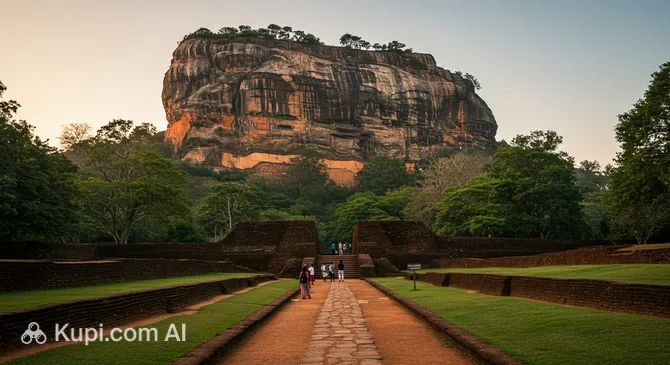
One of Sri Lanka's most recognisable symbols is Sigiriya, or 'Lion Rock'. This ancient 5th-century rock fortress, rising 200 metres above the surrounding plain, holds the ruins of a royal palace, unique frescoes, and gigantic lion's paws carved at the entrance. The climb to the top is a true adventure, rewarded with breathtaking panoramic views.

Sigiriya. Source: Kupi.com Binoculars

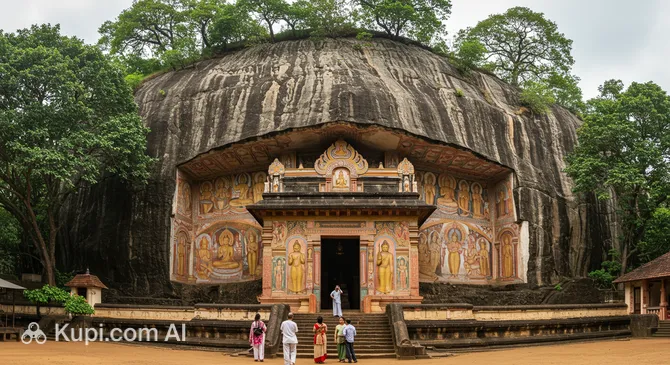
No less impressive is the Dambulla Cave Temple, also known as the Golden Temple of Dambulla. It is the largest and best-preserved cave temple complex in Sri Lanka, consisting of five main caves. Inside, you will discover over 150 Buddha statues and colourful murals depicting his life and teachings. This site is a UNESCO World Heritage Site and an important pilgrimage centre. As this is a sacred site, visitors are required to dress modestly, ensuring shoulders and knees are covered for both men and women. You will also need to remove your shoes and any headwear before entering the temple.

Dambulla Cave Temple. Source: Kupi.com Binoculars

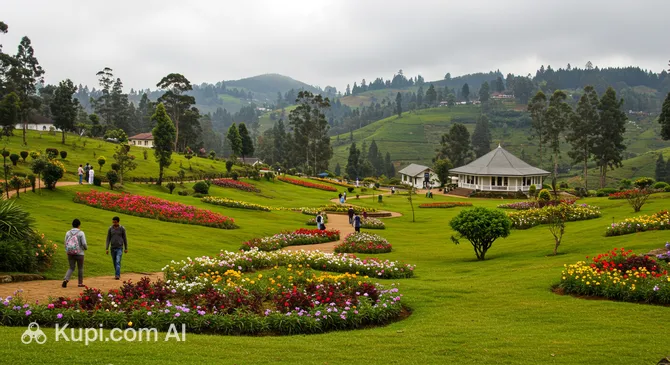
For those seeking tranquillity and natural beauty, Gregory Park in the mountain resort town of Nuwara Eliya is an excellent choice. This picturesque park, set around Lake Gregory, was created during the British colonial era and still retains its colonial atmosphere. Here, you can enjoy leisurely strolls, go for a boat ride, or simply relax on the shore, admiring the surrounding landscapes of tea plantations and mountains.

Gregory Park. Source: Kupi.com Binoculars

Best Time to Visit

Sri Lanka is an island that can be visited all year round, thanks to two different monsoon seasons affecting its coasts at different times. The high season for the south-west and south coasts (home to popular resorts like Galle and Negombo, as well as the capital, Colombo) runs from December to March. During this period, the weather is sunny, dry, and warm – ideal conditions for beach holidays and excursions to cultural landmarks such as Kandy or Sigiriya. For the east coast, the best time to visit is from April/May to September. The advantages of the high season are clear: perfect weather. The disadvantages are more tourists and, consequently, higher prices for accommodation and services.

The low season, or inter-monsoon period, coincides with the monsoon seasons. The south-west monsoon ("Yala") brings rain to the west and south coasts from May to August, while the north-east monsoon ("Maha") affects the east and north coasts from October to January. During these times, the weather can be unstable, with short but sometimes heavy showers and increased humidity. However, there are distinct advantages: there are significantly fewer tourists, prices for hotels and flights can be much lower, and the island's natural landscape becomes exceptionally lush and green – a beautiful contrast to the UAE's desert environment. It is important to remember that while one part of the island is experiencing rain, the other is usually sunny, so you can always find a region with good weather.

When planning your trip, it is also worth considering cultural events. One of the most spectacular is the Esala Perahera festival in Kandy, which usually takes place in July or August. It is a grand procession with elephants, dancers, and musicians, honouring the sacred Tooth Relic of the Buddha. In May, the entire island celebrates Vesak Poya, which commemorates the birth, enlightenment, and passing of the Buddha, and is marked by colourful illuminations and charitable acts. When visiting religious sites like the temples in Anuradhapura or Kandy, it is important to dress modestly by covering your shoulders and knees as a sign of respect. As Sri Lanka's climate varies significantly by region, it is always advisable to check the weather forecast for the specific places you plan to visit, whether it is the mountainous Nuwara Eliya or the ancient city of Anuradhapura.

Traditions

The culture of Sri Lanka is rich with ancient traditions, and showing respect for local customs will make your journey more pleasant. When greeting locals, you can use the traditional 'Ayubowan' (meaning 'may you have a long life'), placing your palms together at chest level and giving a slight nod. While a handshake is also common, especially in business settings, 'Ayubowan' will always be appreciated. Sri Lankans are famous for their hospitality; if you are invited into a home, a small souvenir or some sweets would be a nice gesture, although it is not strictly required. Pay special attention to your clothing when visiting religious sites: shoulders and knees must be covered for both men and women. It is customary to remove shoes and headwear before entering a temple or a home.

At the dining table, especially when eating traditional dishes with your hands, use your right hand, as the left is considered unclean. This is a custom that will be familiar to visitors from the UAE. However, cutlery is always available in tourist areas. For Muslim travellers, halal food is widely accessible in major cities like Colombo, Kandy, and Galle, with many restaurants being halal-certified or Muslim-owned. Key religious festivals include Vesak Poya (usually in May), which celebrates the birth, enlightenment, and passing of the Buddha, when the entire country is decorated with lanterns, and the Sinhala and Tamil New Year (Avurudu, in April), a time for family celebrations and traditional games. Mosques are also found across the country, with notable ones in Colombo, Kandy, and Galle, ensuring prayer facilities are available.

To avoid awkward situations, remember not to point your feet at people or sacred images, and do not touch a monk's head. It is best to ask for permission before photographing people, especially monks, and never turn your back to a statue of Buddha for a photo. By showing tact and respect for local traditions, you will discover the true warmth and friendliness of the people of Sri Lanka. Try not to express anger or impatience in public, as this is considered poor form. Similarly, avoid overly public displays of affection, which are frowned upon. Small gestures of consideration and a sincere interest in the culture will always be met with warmth, helping you connect with the local people and making your trip truly unforgettable.

Entertainment

Sri Lanka offers travellers a remarkable variety of entertainment to suit every taste. Fans of active holidays will find a wealth of opportunities here: from thrilling surfing on famous beaches and diving among coral reefs to fascinating hiking along scenic trails in the island's central highlands and whale watching. The cultural programme is no less rich: you can explore ancient cities, such as the impressive Sigiriya, and visit numerous Buddhist temples. When visiting these sacred sites, it is important to dress modestly, ensuring shoulders and knees are covered. For example, you can explore the Dambulla Cave Temple and discover the country's rich heritage in museums and galleries, especially in the capital, Colombo.

Evening life in Sri Lanka is mainly concentrated in the major cities and popular tourist resorts on the coast. Here you can find welcoming restaurants offering local and international cuisine, with many providing certified halal options. There are also stylish lounges with live music and a relaxing atmosphere, as well as some nightclubs for those seeking more lively entertainment. Shopping on the island is a pleasure in itself. Tourists eagerly bring home famous Ceylon tea, aromatic spices, precious stones, wooden crafts, batik, and traditional masks. In addition to colourful local markets, cities like Colombo have modern shopping centres, such as the One Galle Face Mall, which also offers prayer facilities for visitors.

Sri Lanka also has much to offer for a family holiday. Besides the beautiful beaches, which are perfect for playing and swimming, you can visit one of the many national parks to see wild animals, including elephants and leopards, in their natural habitat. Many hotels offer kids' clubs and entertainment programmes. Turtle conservation farms are also popular, where you can learn about protecting these amazing creatures, as are scenic botanical gardens that offer pleasant walks for the whole family.

Currency rates

Planning a trip? That's wonderful! To ensure the financial side of your journey doesn't come as a surprise, it is important to remember that currency exchange rates are constantly changing. Therefore, we strongly advise you to monitor the latest rates both before your departure and throughout your trip. You can use the data provided below for this purpose — we monitor exchange rates 24/7 and strive to provide the most up-to-date information.

LKR currency exchange rate as of 02.01.2026

1 AED
~ 83.89 LKR
1.24 AMD
~ 1 LKR
1 AUD
~ 205.63 LKR
1 AZN
~ 181.24 LKR
1 BYN
~ 104.81 LKR
1 CAD
~ 224.46 LKR
1 EUR
~ 361.83 LKR
1 GBP
~ 415.11 LKR
1.06 HUF
~ 1 LKR
1 INR
~ 3.42 LKR
1 KGS
~ 3.52 LKR
4.69 KRW
~ 1 LKR
1.65 KZT
~ 1 LKR
1 PLN
~ 85.82 LKR
1 RUB
~ 3.91 LKR
1 SAR
~ 82.15 LKR
1 SGD
~ 239.65 LKR
1 TRY
~ 7.17 LKR
1 UAH
~ 7.28 LKR
1 USD
~ 308.06 LKR
38.99 UZS
~ 1 LKR

Reached the end of the page?

That means the route is fully explored