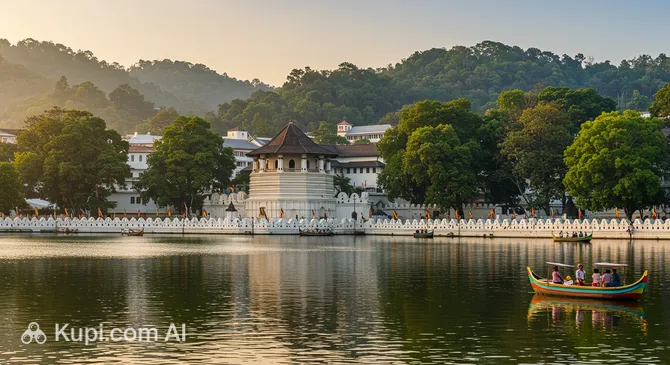
Kandy is a city that perfectly blends history, culture, and nature, serving as the cultural capital of the island. As the second-largest city in Sri Lanka, it holds a special place in the hearts of locals and travelers alike, offering a serene yet vibrant atmosphere that distinguishes it from the coastal regions.
Nestled in the **Central Province** amidst mist-covered mountains, Kandy offers a refreshing escape with a climate that is generally cooler and more comfortable than the tropical lowlands. The city is home to approximately **161,000 residents** and acts as a bustling gateway to the hill country, surrounded by lush tea plantations and biodiverse rainforests.
Kandy. Illustration.
Source: Kupi.com AI
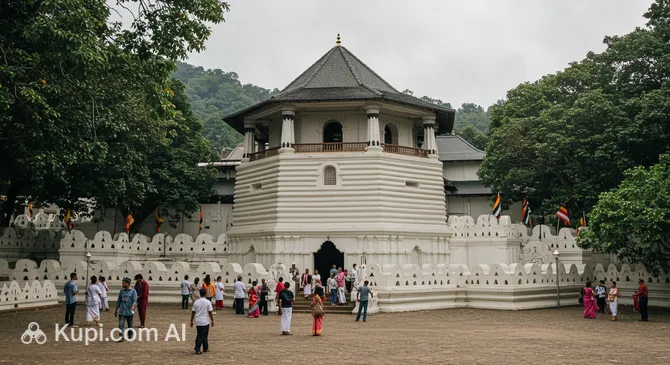
The history of Kandy is deeply intertwined with the island's royal past, as it served as the last capital of the ancient kings. Today, it is a UNESCO World Heritage site, most famous for the sacred **Temple of the Tooth Relic** (Sri Dalada Maligawa), which houses a revered tooth of the Buddha. Visitors can also enjoy a peaceful stroll around the scenic **Kandy Lake** or explore the exotic flora at the nearby Royal Botanical Gardens in Peradeniya.
Whether you are seeking spiritual enlightenment, interested in colonial architecture, or simply wish to immerse yourself in the vibrant local culture, Kandy promises an unforgettable experience. It is a destination that truly captures the soul of the island and invites you to explore its many wonders.
Weather Overview
Kandy enjoys a pleasant tropical climate that is generally milder than the coastal lowlands due to its elevation. The weather in Kandy remains fairly consistent throughout the year, with average temperatures hovering between **23.4°C** and **26.0°C**. The warmest period usually occurs around April, where daytime highs can reach **30.4°C**, while the coolest nights are often found in January, with temperatures dipping to approximately **19.6°C**.
Rainfall is a significant part of the local climate, contributing to the lush greenery of the region. Visitors should expect frequent showers, particularly towards the end of the year; October is typically the wettest month with rain recorded on **28 days**. In contrast, the beginning of the year offers slightly drier conditions, with February seeing the fewest wet days, making it a popular time for exploring the city.
Average monthly temperature
Average monthly precipitation
Interesting Facts
Beyond the main attractions, Kandy holds many fascinating secrets that reveal the depth of its royal heritage and colonial past. This historic city is layered with legends and surprising connections to global history that often escape the casual observer.
While the world knows the city as Kandy, this name is actually an anglicized version of the Sinhala phrase "Kanda Uda Rata," which translates to the "Land on the Mountain." Historically, the locals referred to their capital as Senkadagala or Mahanuwara, meaning "The Great City," a title that reflects its status as the last bastion of the Sri Lankan kings.
The iconic lake that defines the city's landscape is not a natural formation but an artificial reservoir created in 1807 by the last king, Sri Wickrama Rajasinghe. Legend whispers that the small island in the center, known as Diyathilaka Mandapaya, was once connected to the palace by a secret underwater tunnel and was used by the king's harem for bathing.
The sacred relic housed in the Temple of the Sacred Tooth Relic has an adventurous backstory worthy of a movie. It is believed to have been smuggled into Sri Lanka from India in the 4th century AD by Princess Hemamali, who hid the holy object in her hair ornament to protect it during the perilous journey.
During World War II, the Royal Botanic Gardens, Peradeniya played a pivotal but little-known military role. The lush grounds served as the headquarters for the South East Asia Command under Lord Louis Mountbatten, meaning that major strategies affecting the entire Asian theater were devised amidst the exotic orchids and palm avenues.
Temple of the Sacred Tooth Relic. Illustration.
Source: Kupi.com AI
Traveler photos:
How to Get There
Reaching the hill capital is a journey through scenic landscapes, often serving as a beautiful introduction to the central highlands. For those planning their trip, you can find all ways to reach the city detailed in our comprehensive guide.
The city of Kandy does not have its own international airport, but it is well-connected to the country's main gateway. Most international travelers fly into Bandaranaike International Airport (CMB) in the city of Colombo, which is about 84 km from Kandy. The transfer from the airport to the city center typically takes around 2.5 hours by taxi or private car, depending on traffic conditions. This airport handles a large volume of passengers and serves as the primary entry point for visitors exploring the island.
For faster domestic connections or a more scenic approach, there are smaller regional options available. The Castlereigh Reservoir Waterdrome (NUF) in Hatton is the closest facility, located approximately 49 km away, often serving seaplanes. Additionally, the Sigiriya Slaf Base (GIU) in Sigiriya is situated about 74 km from Kandy. These smaller hubs offer a unique alternative to road travel, though they handle significantly less traffic than the main airport in Colombo.
For clarity, here is a summary of the main airports:
Kandy is a treasure trove of cultural, historical, and natural wonders, serving as the spiritual heart of the island. The city's attractions range from sacred Buddhist sites to sprawling botanical gardens, offering visitors a diverse itinerary that captures the essence of the hill country.
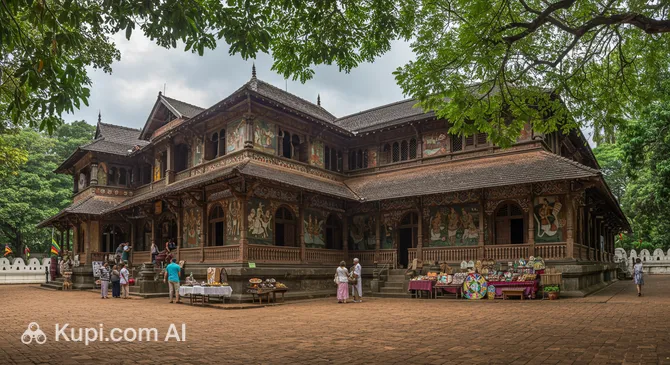
The most iconic landmark is undoubtedly the Temple of the Sacred Tooth Relic, known locally as Sri Dalada Maligawa. Located within the royal palace complex, this temple houses the sacred tooth relic of the Buddha, making it one of the most venerated places of worship in the Buddhist world. Tourists are drawn here not only for its spiritual significance but also to witness the captivating pooja rituals, admire the golden-roofed architecture, and explore the rich history preserved within its walls.
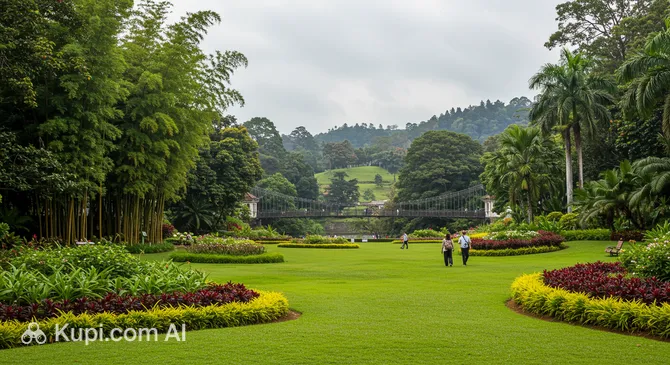
Just a short drive from the city center lies the magnificent Royal Botanic Gardens, Peradeniya. Spanning over 60 hectares and bordered by the Mahaweli River, these gardens are renowned for their staggering collection of over 4,000 plant species. Visitors can walk down the famous Avenue of Royal Palms, marvel at the giant Javan fig tree, and explore the vibrant Orchid House. It is a perfect spot for a leisurely afternoon surrounded by exotic flora.
Royal Botanic Gardens, Peradeniya. Illustration.
Source: Kupi.com AI
Traveler photos:
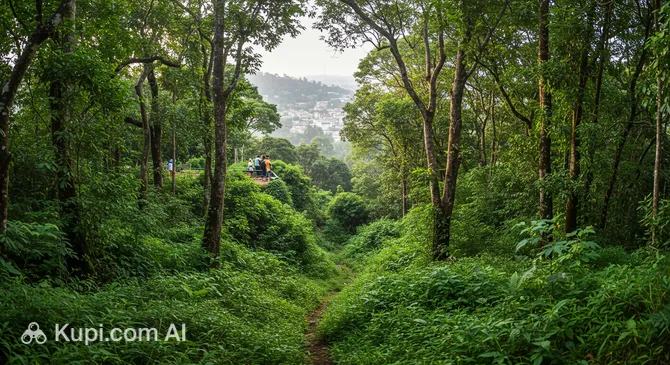
For those interested in nature and history, the Udawatta Kele Sanctuary offers a peaceful retreat. Historically known as the "Forbidden Forest of the Kings," this reserve sits on a hill ridge behind the Temple of the Tooth. It is a haven for birdwatchers and nature enthusiasts, featuring dense canopy trails, giant lianas, and a variety of wildlife, including playful monkeys and endemic bird species.
Udawatta Kele Sanctuary. Illustration.
Source: Kupi.com AI
Traveler photos:
To delve into the region's most famous export, a visit to the Ceylon Tea Museum in Hantana is essential. Housed in the restored 1925 Hantana Tea Factory, the museum provides a fascinating insight into the history of the tea industry. Exhibits include vintage tea-processing machinery and memorabilia from the pioneers of the trade. The top floor features a tea cafe where visitors can taste majestic local blends while enjoying panoramic views of the surrounding hills.
Ceylon Tea Museum. Illustration.
Source: Kupi.com AI
Traveler photos:
Finally, for the best photo opportunity in the city, travelers should head to the Kandy Viewpoint located at Rajapihilla Mawatha. From this elevated platform, you can enjoy a breathtaking panoramic view of Kandy Lake, the golden roof of the temple, and the city nestled within the valley. It is particularly magical during sunset when the city lights begin to twinkle against the darkening mountains.
Local Cuisine
The culinary landscape of Kandy is a vibrant reflection of its cultural heritage, offering a delightful mix of traditional Sri Lankan spices and unique hill country flavors. The local cuisine is heavily influenced by the abundance of fresh produce grown in the surrounding fertile valleys. A quintessential meal here is the authentic Rice and Curry, which is often served with a variety of side dishes. Visitors should definitely try the polos (young jackfruit curry), a regional specialty cooked slowly in coconut milk and spices until it reaches a meat-like tenderness.
For a more rhythmic dining experience, look for the sound of metal blades clashing against a hot griddle, signaling the preparation of Kottu Roti. This popular street food consists of chopped flatbread stir-fried with vegetables, eggs, and your choice of meat, creating a spicy and satisfying comfort dish. Another favorite for breakfast or dinner is Hoppers (Appa), bowl-shaped pancakes with crispy edges and soft centers, best enjoyed with a dollop of spicy lunumiris (onion and chili paste).
Given the city's location amidst the tea plantations, beverage culture is an integral part of the gastronomic experience. A warm cup of premium Ceylon Tea is the perfect companion to the cool Kandy climate. For those seeking an alcoholic beverage, Arrack—a local spirit distilled from the sap of coconut flowers—is a must-try, typically mixed with ginger beer for a refreshing cocktail.
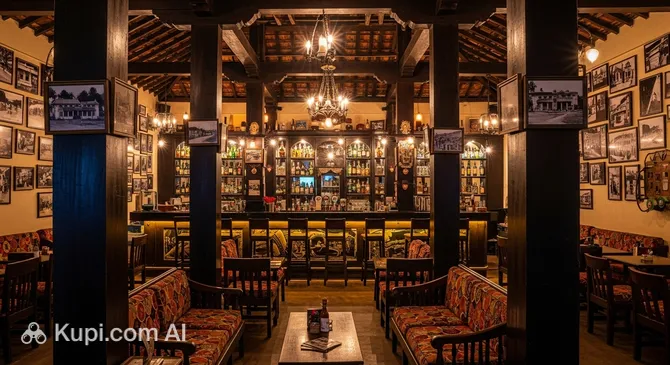
Royal Bar & Hotel. Illustration.
Source: Kupi.com AI
Traveler photos:
The dining scene in Kandy ranges from humble street stalls to elegant colonial-era establishments. Travelers looking for a meal steeped in history can visit the Royal Bar & Hotel, which offers a nostalgic atmosphere and a menu that blends local and Western tastes. For a dining experience that combines excellent food with scenic surroundings, Fox Kandy provides a fantastic setting to savor the rich flavors of the region.
Travel Tips
Preparing for your trip to Kandy requires a little local know-how to navigate the hill country's unique rhythm. These practical insights will help you transition from a visitor to a savvy traveler in the heart of Sri Lanka.
Clothing and Gear: Given the cooler and often wetter climate of the hills, pack breathable layers and a light jacket for the evenings. An umbrella or raincoat is essential as showers can occur unexpectedly. For visiting religious sites like the Temple of the Tooth, strict modesty is enforced; you must wear clothes that cover your shoulders and knees, and wearing white is traditionally preferred to show respect.
Transportation: The city center is relatively compact and walkable, but for longer distances, three-wheelers (tuk-tuks) are the most convenient option. Ride-hailing apps like PickMe or Uber operate here and offer fixed prices, which saves you from the need to negotiate fares. Public buses are extremely cheap but can be crowded and drive quite fast.
Finances: The local currency is the Sri Lankan Rupee (LKR). While hotels, supermarkets, and upscale restaurants accept credit cards, cash is absolute king for street food, local markets, and tuk-tuks. ATMs are widely available throughout the city. Tipping is customary; leaving a 10% tip or rounding up the bill for good service is appreciated.
Health and Safety: Kandy is generally safe for tourists, but it is important to stay hydrated and protect yourself from the sun. Stick to bottled water and avoid drinking from the tap. Pharmacies are common in the city center and are usually marked with a green cross. Be cautious when crossing roads, as traffic can be unpredictable.
Communication: Sinhala is the primary language, but English is widely spoken and understood, especially in the tourism sector. You can easily purchase a local SIM card (Dialog or Mobitel) in town for reliable data coverage. A warm "Ayubowan" (May you have a long life) is the traditional greeting and is always received with a smile.
Local Etiquette: Respect for Buddhist traditions is paramount. Always remove your shoes and headgear before entering temple grounds. When inside, never turn your back to a Buddha statue to take a selfie or photo; instead, stand to the side and face the statue respectfully.
What to Avoid: Be very cautious around the monkeys often found near the lake and temple areas. Do not feed them or carry food openly, as they can be aggressive and may try to snatch items from your hands or bags.
Local Insight: If you are looking to buy spices or tea, head to the Kandy Central Market or a dedicated tea center. Engaging with vendors there often leads to better prices and a more authentic experience than buying from roadside tourist shops.
Armed with these tips, you are ready to embrace the charm and misty allure of Kandy with confidence. Enjoy every moment of your journey through this historic and spiritual sanctuary!
Entertainment & Nightlife
Unlike the bustling coastal towns or the energetic capital of Colombo, Kandy offers a more subdued and sophisticated nightlife scene. The city does not stay awake until dawn; instead, it specializes in relaxed evenings where the focus is on good conversation, live music, and enjoying the cool hill country breeze. The entertainment here is less about thumping nightclubs and more about atmospheric lounge bars and cultural experiences.
The evening often begins with a touch of tradition. Before heading out for dinner or drinks, many visitors make their way to the Kandyan Cultural Centre near the lake. This is the premier venue to witness the famous Kandyan dance performance, a vibrant spectacle of drumming, acrobatic movements, and fire walking that usually starts around 5:30 PM. It provides a perfect cultural introduction to the night.
Kandyan Cultural Centre. Illustration.
Source: Kupi.com AI
Traveler photos:
For those seeking a place to unwind with a drink, the city center and the area surrounding Dalada Veediya are the main hubs. A standout venue for a fun evening is The Last Drop Restaurant, known for its lively ambiance and frequent live music events. It attracts a mix of locals and tourists looking to socialize in a modern setting. The dress code in Kandy is generally casual, but "smart casual" is appreciated in hotel bars and upscale lounges.
The Last Drop Restaurant. Illustration.
Source: Kupi.com AI
Traveler photos:
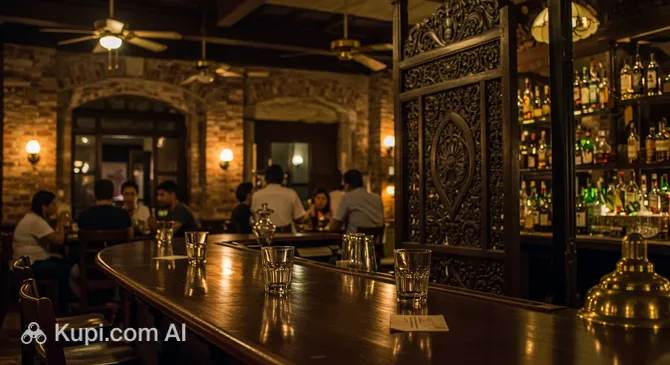
If you prefer a setting steeped in history, the Royal Bar & Hotel is an absolute classic. With its colonial-era architecture, wooden interiors, and gallery-style courtyard, it offers a nostalgic atmosphere to enjoy a cocktail or a cold beer. Another popular spot for a chilled vibe and hearty meals is Soul Food, which is great for travelers wanting to relax after a day of sightseeing.
Practical Advice for Night Owls:
Timing: Kandy sleeps early. Most bars and restaurants close by 10:00 PM or 11:00 PM, though a few hotel bars may stay open until midnight. Plan to start your evening early to make the most of it.
Transport: Walking around the lake is pleasant in the early evening, but as the streets get quieter and darker, it is safer to take a tuk-tuk. They are readily available, but always agree on the fare before hopping in or use a ride-hailing app.
Prices: Alcohol prices are reasonable compared to Western standards but higher than on the coast. A local beer typically costs around 600-900 LKR, while cocktails range from 1,500 LKR upwards.
While the nightlife is the main evening draw, daytime entertainment in Kandy also offers variety. Apart from the historical sites, you can visit the Kandy City Centre, a modern shopping complex that provides a cool escape from the midday sun, or explore the various smaller museums scattered around the city.
Parks & Museums
Beyond its spiritual aura and bustling streets, Kandy is a city deeply connected to nature and history. While the massive Royal Botanic Gardens often steal the spotlight, the region offers a variety of other green spaces and museums that provide a quieter, more reflective understanding of the hill capital's rich heritage.
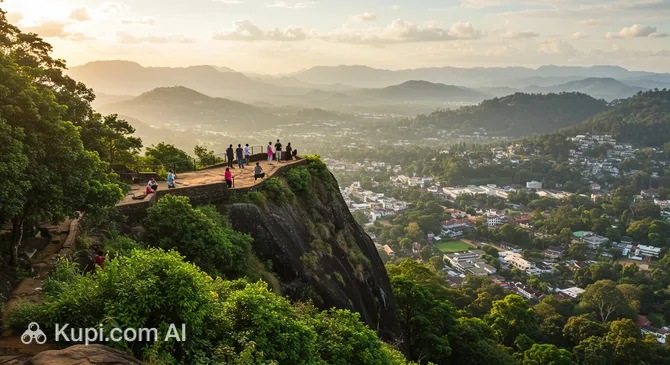
For those who prefer panoramic views over manicured lawns, Arthur's Seat Viewpoint is a must-visit location. Situated on a hill overlooking Kandy Lake, this spot offers a stunning vantage point to see the city layout and the Temple of the Tooth from above. It is less crowded than other viewpoints, making it an ideal spot for photographers looking to capture the city nestled within the misty mountains.
Arthur's Seat Viewpoint. Illustration.
Source: Kupi.com AI
Traveler photos:
Another lovely green escape is Wales Park, also known as the Royal Palace Park. Located on a small hill overlooking the lake, it is a favorite among locals for a quiet evening stroll. The park features shaded paths and a Japanese field gun captured during World War II, blending a bit of history with its serene atmosphere.
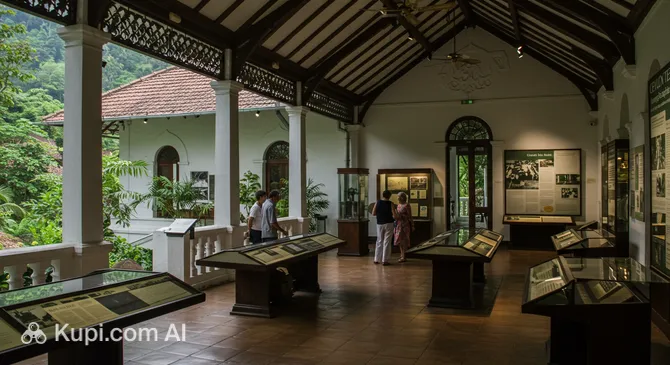
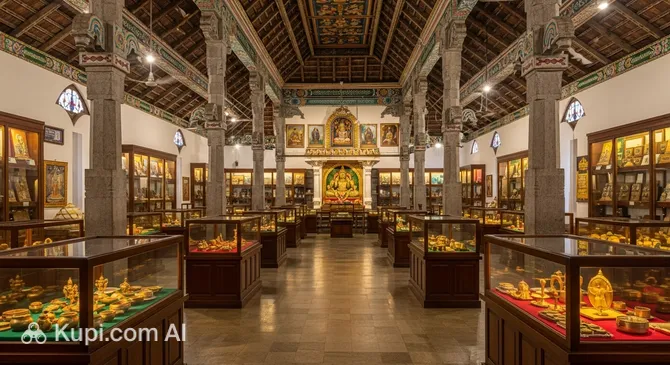
Delving into the city's cultural depth, the Sri Dalada Museum offers a unique insight into the reverence surrounding the sacred tooth relic. Located on the floor above the Alut Maligawa within the temple complex, this museum displays a dazzling collection of gifts offered to the relic over centuries, including ancient jewelry, royal decrees, and artifacts that narrate the spread of Buddhism across Asia.
Sri Dalada Museum. Illustration.
Source: Kupi.com AI
Traveler photos:
Adjacent to the temple lies the National Museum of Kandy, housed in the Palle Vahala, which was historically the quarters of the King's harem. This museum is a treasure trove of Kandyan era artifacts, featuring traditional weapons, jewelry, and tools that depict the lifestyle of the pre-colonial era. It provides a fascinating context to the architecture and traditions you see around the city.
For a truly authentic experience, take a walk around the World Buddhist Museum, located just behind the Temple of the Tooth. It is the only museum of its kind, showcasing the spread and evolution of Buddhism in different countries. An insider tip for nature lovers: visit the gardens in the early morning to avoid the school groups and heat, and you might spot endemic birds foraging in the quiet corners.
Getting Around
Public Transport:
Navigating Kandy is an adventure in itself, with a public transport system that is heavily reliant on the road network. The city does not have a metro or tram system; instead, it depends on an extensive network of buses that connect the city center to the surrounding suburbs and hill towns. These buses are colorful, frequent, and incredibly affordable. They are divided into two main categories: the government-run CTB buses (usually red) and private buses (often decorated with lights and loud music). The central hub for all bus travel is the Goods Shed Bus Stand, located conveniently near the railway station.
For shorter distances and greater flexibility, three-wheelers, locally known as "tuk-tuks," are the most popular mode of transport. They can zip through the city's notorious traffic and navigate the steep, narrow roads leading to hotels in the hills. While they are a fun way to travel, it is essential to choose a tuk-tuk with a "Taxi Meter" sign. If the vehicle is unmetered, you must negotiate and agree on the fare before getting in to avoid being overcharged.
The Kandy Railway Station serves as a historic and scenic transport hub. While primarily used for intercity travel to the tea country or the capital, it can also be used for short intra-city hops. A popular quick trip for tourists is taking the train from Kandy to the Peradeniya Junction, which is a scenic and traffic-free way to reach the Royal Botanic Gardens. The station itself retains a colonial charm, making the wait for a train a pleasant experience.
When it comes to payment, cash is king in Kandy. There are no travel cards or digital passes for public buses or trains. You simply hop on the bus, take a seat (or stand), and wait for the conductor to come to you. You pay them directly in cash, so carrying small denominations of the local currency is highly recommended, as conductors often struggle to change large notes. Tickets are issued as small paper receipts which you should keep until you disembark.
For a more modern and hassle-free experience, ride-hailing apps are widely available and highly recommended for tourists. Apps like PickMe and Uber operate efficiently in the city, allowing you to book tuk-tuks, cars, or vans at fixed rates. This eliminates the language barrier and the need for bargaining. These apps also allow for card payments, providing a convenient alternative to carrying cash.
A few practical tips will help you travel smoothly: Kandy experiences heavy traffic congestion during school rush hours (around 7:00 AM and 1:30 PM) and in the late afternoon. If possible, plan your travel to avoid these times. Public buses generally operate from early morning until around 9:00 PM, but frequency drops significantly after sunset. For late-night travel, booking a taxi or tuk-tuk via an app is the safest and most reliable option.
For those interested in alternatives, the city center around the lake and the Temple of the Tooth is best explored on foot. The area is relatively flat and full of sights that are easily missed from a vehicle. While bike rentals are available, they are less common due to the hilly terrain and dense traffic, so walking or using a combination of tuk-tuks and walking is usually the best strategy for sightseeing.
Accommodation
Where to Stay:
Accommodation in Kandy caters to a wide spectrum of travelers, blending the city's colonial heritage with modern hospitality. The options range from budget-friendly backpacker hostels and family-run guesthouses to high-end boutique villas and luxury resorts. Whether you are looking for a simple room near the transit hubs or a lavish suite with mountain views, the city has something to offer every budget.
For those who prioritize convenience, staying near the City Center or around Kandy Lake is ideal. This location places you within walking distance of the Temple of the Tooth, the cultural center, and the main shopping districts. However, many travelers prefer the tranquility of the surrounding hills. Areas like Anniewatte and Hantana are popular for their cooler breeze and stunning panoramic views, offering a peaceful retreat just a short tuk-tuk ride away from the bustling town.
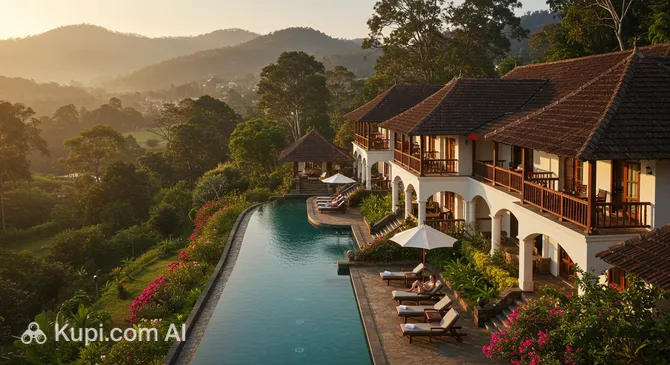
If you are looking for a stay that captures the essence of the hill capital's grandeur, Amaya Hills is a well-known choice. Perched high in the mountains, it is designed to reflect traditional Kandyan palace architecture and offers guests breathtaking vistas of the valley below. Alternatively, for a more intimate and serene experience, Rivora Residence provides a comfortable haven with personalized service, making it a great base for exploring the region.
Amaya Hills. Illustration.
Source: Kupi.com AI
Traveler photos:
Booking and Prices: The cost of accommodation is generally reasonable. Budget rooms can be found for very affordable rates, while mid-range hotels offer excellent amenities without breaking the bank. Luxury resorts are priced higher but often deliver exceptional value compared to international standards. Most properties are listed on major online booking platforms, making it easy to secure your spot.
Travel Tip: Kandy becomes incredibly busy during the annual Esala Perahera festival, which typically takes place in July or August. During this period, room rates can triple, and hotels sell out weeks in advance. If you plan to visit during the festival, it is highly recommended to book your accommodation several months ahead of time.
Nearby Cities
For those looking to explore the surroundings, Kandy serves as an excellent base for day trips to several interesting nearby locations.
Travelers can easily visit Mawanella, located just a short drive to the west. This area is famous for Uthuwankanda, a rock fortress often associated with the Sri Lankan legend of Saradiel, and is also home to traditional spice gardens. A bit further into the scenic hills lies Kotmale, known for its massive dam and the Mahaweli Maha Seya stupa, offering breathtaking views of the lush valley. For a longer excursion, Ratnapura awaits to the south; known as the "City of Gems," it provides a fascinating insight into the island's renowned gem mining industry and rich history.
City
Population
Distance
Abasingammedda
11 000
6 km
Akurana
63 397
9 km
Gampola
37 871
16 km
Galhinna
18 507
16 km
Matale
36 451
20 km
These nearby destinations offer a glimpse into the diverse culture and landscapes of the region.
Shopping & Souvenirs
Shopping in Kandy is a delightful experience that allows visitors to take a piece of Sri Lanka's hill country heritage home with them. While it may not be a global fashion capital, the city is renowned for its authentic handicrafts, precious gemstones, and world-class tea. The shopping scene here is a mix of bustling traditional bazaars and modern complexes, offering everything from intricately carved wooden souvenirs to high-quality textiles.
The main commercial activity is concentrated in the grid of streets surrounding the central clock tower and the lake. Dalada Veediya and Colombo Street are particularly vibrant, lined with shops selling jewelry, fabrics, and local crafts. For those interested in local fashion and textiles, Sriyani Dress Point is a popular destination where you can find a vast array of sarees and traditional attire, providing a colorful glimpse into local clothing culture.
For a more contemporary shopping experience, the Kandy City Centre (KCC) is the premier destination. Conveniently located near the Temple of the Tooth, this modern mall serves as a one-stop complex for international brands, electronics, and souvenirs. It provides a comfortable, air-conditioned environment to browse through upscale stores or enjoy a meal at the food court with a view of the city.
Kandy City Centre. Illustration.
Source: Kupi.com AI
Traveler photos:
No shopping trip to Kandy is complete without visiting the Kandy Municipal Central Market. This sprawling market is a sensory adventure, packed with stalls selling fresh fruits, aromatic spices, and dried fish. It is the best place to buy authentic Sri Lankan spices like cinnamon, cardamom, and cloves directly from the source. The vendors are friendly, and the vibrant atmosphere offers a true taste of local life.
When it comes to souvenirs, Kandy is famous for its "Royal" arts and crafts. Look for traditional dumbara mats, lacquerware, and intricate wood carvings, which are specialties of the region. As the heart of the tea country, purchasing premium Ceylon Tea is a must; you can find specialized tea shops or visit the gift shop at the Ceylon Tea Museum. Additionally, the city is a hub for the gem trade, particularly for blue sapphires, but ensure you buy from a government-certified jeweler to guarantee authenticity.
Most shops in Kandy open around 9:00 AM or 10:00 AM and close by 7:00 PM or 8:00 PM. The Kandy City Centre generally stays open a bit later, until around 9:00 PM. While credit cards are widely accepted in malls, hotels, and larger gem shops, cash is essential for transactions in the Central Market and smaller street stalls. Bargaining is expected in the markets and small souvenir shops, so do not hesitate to negotiate for a better price.
Regarding tax-free shopping, Sri Lanka operates a Tourist VAT Refund Scheme. Tourists may be eligible for a refund on Value Added Tax for goods purchased at authorized retailers, provided the total purchase exceeds a certain amount. To claim this, look for shops displaying the "Tax-Free" sign and ask for a VAT refund invoice, which can then be processed at the customs counter at the international airport upon departure.