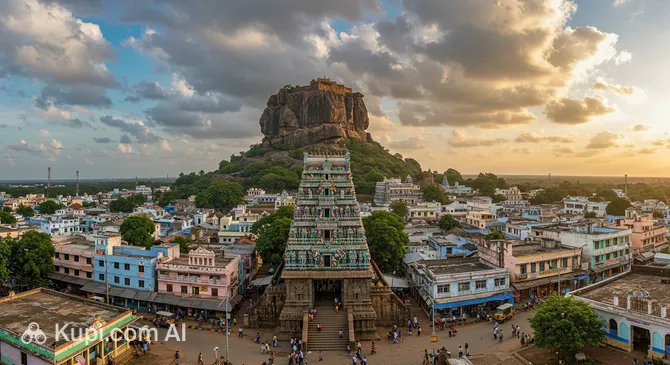
Dindigul is a charming historical city located in the southern part of India, in the state of Tamil Nadu. Nestled in the picturesque foothills of the Palani and Sirumalai Hills, it welcomes travelers with a peaceful provincial atmosphere and a rich heritage rooted in deep antiquity. The city occupies a strategic position, having long remained an important hub at the crossroads of the ancient Pandya, Chera, and Chola kingdoms.
With a population of about 207,327 people, Dindigul harmoniously combines its status as an industrial center with the spirit of old India. Dindigul. Illustration.
Source: Kupi.com AI
One of the main features of this place is its unique architecture centered around a massive rock in the middle of the city, as well as its fame as the "City of Locks" and the gastronomic capital of the region. Immersing yourself in the city's history will allow you to better understand how the successive Nayak dynasties and the rulers of Mysore shaped the face of this land.
Today, tourists come here to see the majestic fort towering over the city quarters and to taste the country-famous spicy biryani. Dindigul is ideal for those seeking an authentic experience away from crowded metropolises, wishing to touch the real hardworking and cultural rhythm of Tamil Nadu.
Weather Overview
Dindigul is characterized by a typical South Indian tropical climate, which is noticeably influenced by the neighboring mountain ranges. Hot weather prevails here with a clear division into seasons. The hottest period occurs from March to June, when air temperatures can reach 38-40°C. At this time, it can be quite dusty in the city, so travelers are recommended to plan sightseeing for the early morning hours.
Expect a warm summer with occasional rains and moderately cool winters, when the thermometer fluctuates within a comfortable range of 20-30°C. Most precipitation falls during the monsoon period, the peak of which occurs in October and November—in November, the rainfall level can reach 249 mm. To better prepare for your trip and learn the current city's climate, it's worth checking the weather forecast in advance.
Due to the proximity of the Palani and Sirumalai Hills, natural ventilation is created in Dindigul, which slightly softens the extreme heat compared to coastal areas. However, humidity remains high throughout most of the year. The optimal time for visiting the city is considered to be the period from December to February, when the weather is at its driest and most pleasant for long walks and climbing to the fort on the rock.
Average monthly temperature
Average monthly precipitation
Interesting Facts
Dindigul is a city with a fascinating character and many hidden stories. Here are some curious facts to help you get to know it better:
"Pillow on the Rock": The city's name comes from the Tamil words "dind" (pillow) and "kal" (rock). It describes the huge granite rock in the center of the city, the shape of which reminded locals of a pillow.
India's Lock Capital: Dindigul is famous throughout India for producing reliable mechanical locks. This craft has been a key industry here for many decades, and the products of local masters are considered the standard of strength.
Border of Three Empires: In antiquity, the city was at the junction of three great South Indian kingdoms—the Pandya, Chera, and Chola—making it an important strategic and cultural foothold.
Forest Reserve within City Limits: Right next to the urban area, between the Palani and Sirumalai Hills, lies a protected forest area of about 85 hectares, serving as the "lungs" of the region.
Home of a Special Biryani: The local biryani recipe is considered so unique that it has become a brand. It is prepared using a special variety of rice called "Seeraga Samba," which makes the dish particularly aromatic.
How to Get There
Dindigul is an important transport hub in the state of Tamil Nadu, providing convenient connections to the largest cities in South India. The city is well-integrated into the road and rail network, making it accessible for travelers planning a route through the region. To plan your logistics in advance, you can study the detailed methods for getting to Dindigul from various points in the country.
The nearest aviation hub is the airport in the city of Madurai (IXM), located approximately 66 kilometers away. A trip from the airport to the center of Dindigul by taxi or bus will take about an hour and a half if there are no major traffic jams. You can also use the airports in Tiruchirappalli (about 100 km) or Coimbatore (162 km), from where regular flights are operated from Delhi and Chennai.
Railway communication in Dindigul is excellently developed. Major trains connecting South India with Chennai (travel time about 7-8 hours) and other significant centers pass through the local station. To move around the city and its surroundings, tourists often choose auto-rickshaws or use online taxi aggregators such as Uber or Ola, which helps avoid complications with local rates.
Station
Passenger traffic
Distance
Madurai Junction railway station
9
51 km
Tiruchirappalli Junction railway station
8
92 km
Coimbatore Junction
8
130 km
Salem Junction
7
146 km
Thoothukudi railway station
3
173 km
Main Attractions
The main symbol and landmark of the city is rightfully considered the Dindigul Rock Fort. This majestic fort was built in the 17th century by the Madurai Nayak dynasty and later significantly reinforced by the British. Located atop a massive rock, the fortress offers not only breathtaking panoramic views of the surrounding hills but also the opportunity to touch ancient cannons and visit old temples preserved within its powerful walls.
For those planning their travels across Tamil Nadu, an important site is the Dindigul Railway Station. It is not just a transport hub but a bustling place reflecting the city's daily rhythm. From here, it is convenient to depart for pilgrimage shrines or mountain regions, and the station building itself is an important part of the urban infrastructure.
If you want to organize a full exploration of the region, it is worth paying attention to the services of A B Tours & Travels. Local experts will help create routes to nearby nature reserves and temple complexes, such as the famous temple in Palani, located a few dozen kilometers from the city. This is a great way to see corners of the Sirumalai foothills hidden from the eyes of mass tourists.
Local Cuisine
A gastronomic journey to Dindigul is primarily an introduction to the famous Dindigul Biryani. This city is considered one of the culinary capitals of Tamil Nadu precisely because of its unique way of preparing rice with meat. Unlike other regions, it uses a small, aromatic rice variety called "Seeraga Samba," which absorbs the juices of mutton or chicken and a rich set of spices. To appreciate the standard taste of this dish, it is worth visiting the legendary Thalappakatti Restaurant, whose history began right here more than half a century ago.
In addition to recognized chains, the city has many cozy establishments where they cook no less authentically. Gold Star Biryani is another popular spot where you can try the signature dish accompanied by cool raita and spicy sauce. The food culture in the city is democratic: locals equally value both respectable restaurants and small street stalls where freshly prepared food is always served. The main emphasis here is on rich flavors, the use of fresh spices, and traditional Tamil recipes.
Don't forget to try other classic South Indian dishes: crispy dosas, fluffy idlis, and aromatic filter coffee, which is served here with a special foam. Street food in the fort area offers a great opportunity to grab a snack on the go while trying local delicacies. However, tourists are advised to choose proven places with a high flow of visitors and prefer bottled water to ensure that gastronomic discoveries bring only pleasure.
Travel Tips
Planning a trip to Dindigul will become easier and more pleasant if you use tips from experienced travelers. This city lives at its own pace, and knowing local features will help you feel confident and comfortable here.
Clothing and Dress Code: Choose light cotton clothing, as the climate here is tropical and quite humid. When visiting temples or the fort, be sure to cover your shoulders and knees—this is a sign of respect for local traditions. Don't forget comfortable shoes for climbing the rock.
Intra-city Transport: For getting around, it's best to use the Uber or Ola apps. This will save you from having to bargain with auto-rickshaw drivers and will ensure a fixed price.
Finances: There are many ATMs in the city, but small shops and markets only accept cash Rupees. Always have small bills with you for fares and tipping in restaurants (usually about 5-10% of the bill).
Health: Drink only bottled water and avoid ice in drinks at street cafes. Use mosquito repellents in the evening to protect yourself.
Communication: The main language is Tamil. English is understood by hotel staff and young people, but learning a few phrases like "Vannakkam" (hello) will be very helpful for communicating with locals.
Local Etiquette: It is customary to remove your shoes when entering a home or temple. It's better to greet people with the traditional "Namaste" gesture, placing your palms together at your chest.
What to Avoid: You should not walk alone in the industrial outskirts of the city after dark. Also, try not to photograph people without their explicit consent.
Time to Visit: Try to visit the Dindigul Rock Fort early in the morning to avoid the scorching sun and crowds of tourists.
May your journey to this "City of Locks" be filled with bright discoveries and only positive emotions!
Entertainment & Nightlife
Nightlife in Dindigul is of a quiet and restrained nature, typical of provincial Indian cities. There are no noisy nightclubs or large-scale concert venues here, and after 10:00 PM, the city sinks into silence. The main center of evening leisure is family restaurants and cozy cafes, where locals gather for leisurely conversations accompanied by traditional cuisine.
For those looking for a more sophisticated setting, venues at large hotels are a suitable option. For example, the Swing Bar offers a comfortable atmosphere where you can relax at the end of a busy day. Also popular is the Vivera Grande Bar, where the service is focused on a higher level, and the environment is conducive to quiet relaxation.
Daytime entertainment in the city is centered around visiting markets, walking in the fort area, and going to cinemas, which are an important part of local culture. On weekends, families can often be found having picnics in the central squares and at the foot of the hills. If you are looking for vibrant parties, it is better to plan a trip to neighboring Madurai, while Dindigul will leave warm memories of soulful evening walks and the aroma of spicy tea on the streets.
Parks & Museums
Despite the fact that Dindigul is an industrial and administrative center, history and nature lovers will find interesting locations for walks here. The main "open-air museum" is the Dindigul Rock Fort. Although there are no classic museum halls with display cases, the fort walls themselves, the ancient cannons, and the preserved architectural elements of the temples at the top of the rock tell the region's history better than any guidebook. This site is maintained by the Archaeological Survey of India and is the main cultural heritage object in the district.
Park infrastructure in the city itself is modestly developed, which is typical for many Indian provincial centers. The main green areas are small gardens at the foot of the fort and squares in the central part of the city. However, a real treasure for nature lovers is the 85-hectare forest reserve located in the foothills of the Sirumalai and Palani Hills. Residents and visitors often head to these foothills for hiking and outdoor relaxation, away from the city dust and bustle.
For a deeper immersion into the culture and art of the region, tourists often visit the marketplaces and workshops producing the famous Dindigul locks, which are themselves living exhibits of local craft. If you are looking for classic art galleries or large-scale botanical gardens, you should plan a trip to neighboring Madurai, while Dindigul will offer you the sincere atmosphere of living history and the natural beauty of the surrounding hills.
Getting Around
The public transport system in Dindigul is represented by an extensive network of buses, the railway, and popular auto-rickshaws. City buses are the most affordable way to get around, connecting the center with the outskirts and nearby villages. However, tourists should take into account that during peak hours (7 to 10 AM and 5 to 8 PM), transport can be very crowded, and navigation in the Tamil language may require help from locals.
For more comfortable and faster trips around the city, auto-rickshaws are best. They are maneuverable and allow you to easily reach the narrow streets at the foot of the fort or the market. The price of the trip should be agreed upon in advance or you should ask to turn on the meter, although the latter option is rare in the provinces. Recently, Uber and Ola services have become available in Dindigul, which significantly simplifies calling a car and makes the cost of the trip transparent.
Pedestrian infrastructure in Dindigul is poorly developed: sidewalks are often absent or occupied by market stalls, and traffic can seem chaotic. Traffic jams around the central markets and the fort are common, so you should allow at least 30 minutes for a trip of 5-7 kilometers. Bicycles are rarely rented here due to heavy traffic, but for short distances in quiet residential areas, it remains a possible alternative.
Accommodation
For travelers planning a stay in Dindigul, the city offers a decent choice of accommodation options, primarily oriented toward the mid-range and budget price segments. Since the city often serves as a transit point for pilgrims and business people, most hotels are concentrated near the railway station and central shopping districts. Here you can find everything from simple guesthouses to modern 2-3 star hotels offering the necessary set of amenities for a comfortable stay.
If you prefer higher-quality service, you should pay attention to places like the hotel where the Vivera Grande Bar is located. Such establishments offer comfortable air-conditioned rooms, restaurants with local and international cuisine, and additional services for tourists. The cost of living ranges from 1,500 to 4,000 Indian Rupees per night, making the city accessible to travelers with different budgets.
During peak tourist seasons or large religious festivals in neighboring Palani, it is recommended to book accommodation in advance through popular services such as Booking or local Indian platforms. For those planning to stay in the region longer, apartment rental options are available in residential neighborhoods, allowing for a deeper immersion into the local lifestyle and savings on accommodation.
Nearby Cities
Dindigul serves as an excellent starting point for exploring the cultural and natural riches of Tamil Nadu. Thanks to its convenient transport location, you can easily make interesting day trips to neighboring cities and pilgrimage centers, each possessing its own unique character.
Just a few kilometers from the center are settlements such as Chettinaickanpatti and Silappadi, which allow you to see the traditional way of life in the suburbs. For those interested in spiritual heritage, a mandatory point will be a trip to Palani (about 60 km), where one of India's richest and most revered temples, the Murugan Temple, is located atop a hill, reachable by hundreds of steps or a modern cable car.
City
Population
Distance
Chettinayakkanpatti
16 354
4 km
Silappadi
23 678
5 km
Vellodu
13 832
6 km
Kuttathupatti
10 748
8 km
Chettiyapatti
8 622
8 km
Slightly further away are significant centers such as Vellodu and Kuttathupatti, as well as the dynamic Madurai, which takes about an hour and a half to reach. The surroundings of Dindigul are rich in agricultural land and picturesque views of the Sirumalai Hills, making any trip outside the city a small adventure.
Shopping & Souvenirs
Shopping in Dindigul is primarily an introduction to unique local goods that cannot be found in such variety anywhere else. The city is famous throughout the country for its lock production. Local shops located in the central quarters and at the foot of the Dindigul Rock Fort offer a huge selection of mechanical products—from tiny souvenir locks to massive handmade bolts. Bringing such a lock as a souvenir means taking home a piece of the city's authentic industrial heritage.
Main shopping activities are concentrated in the central bazaars and open-air markets. Life here is in full swing from early morning: stalls are bursting with spices, fresh vegetables, and high-quality Tamil textiles. Markets near the railway station and central bus station are the best places to buy aromatic cardamom, turmeric, or the famous biryani spices that will help recreate the taste of local dishes at home.
There are practically no large modern shopping centers in Dindigul, which only adds color to the shopping experience. Shops usually operate from 10:00 AM to 9:00 PM, although small stalls may close for a lunch break. Payment in most outlets is made in cash (Indian Rupees), although larger stores and hotels are beginning to accept cards. Don't forget to bargain at the markets—it's not only a way to save money but also a part of the local communication culture.