Support

Gangasagar

About

Gangasagar is a stunning corner of India, located on Sagar Island in the Ganges Delta, where the great river meets the waters of the Bay of Bengal. Steeped in spirituality and surrounded by natural beauty, this town offers a unique immersion into an atmosphere of ancient traditions and tranquility.
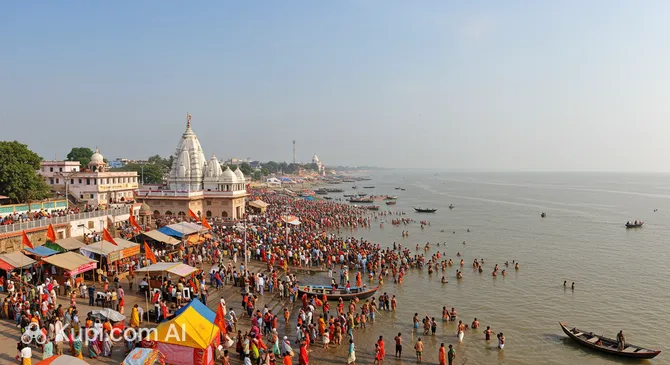
Gangasagar. Illustration.
Source: Kupi.com AI

The town is situated in the far south of West Bengal, surrounded by picturesque beaches, mangroves, and the endless expanse of the ocean. With a population of just over 10,000, Gangasagar maintains a cozy and leisurely atmosphere, far from the hustle and bustle of major metropolises. Despite its modest size, the town plays a significant role in the country's cultural and religious life, welcoming thousands of pilgrims and tourists every year.

The main feature of Gangasagar is its deep spiritual energy. Here, you can witness the sunrise on an almost deserted beach, observe ritual ablutions in the sacred waters, and visit ancient temples, among which the Kapil Muni Temple is especially revered as the center of pilgrimage during the Makar Sankranti festival. Nature lovers will appreciate the serenity of the local landscapes and the chance to see the unique ecosystem of the mangrove forests, while culture enthusiasts will enjoy the rich heritage and hospitality of the locals.

Visiting Gangasagar is an opportunity to touch the "real" India: sincere, colorful, and mystical. It is a place where time seems to slow down, and the surrounding nature and centuries-old traditions fill the soul with harmony and inspiration. If you are looking for a unique experience and spiritual enrichment, Gangasagar will undoubtedly leave a deep mark on your heart.

You can find more interesting facts on the history of Gangasagar page.
Weather Overview

The weather in Gangasagar is characterized by a warm and humid climate. The average annual temperature ranges from 20.2°C in January to 29.7°C in June. Expect hot summers with heavy rainfall, especially from June to September, when the number of rainy days reaches its peak and the temperature stays around 28-30°C. Winters, from December to February, are mild and relatively dry, with an average temperature of about 20-23°C and minimal precipitation.

The highest rainfall occurs in August (averaging 15 mm), while July is the rainiest month with 30 days of precipitation. The driest months are January and February, with almost no rainfall. For more detailed information, you can check the full forecast: Gangasagar Climate.

Average monthly temperature

Average monthly precipitation

Interesting Facts

Beyond its spiritual fame, Gangasagar hides several surprising details and stories that not every traveler knows. These little-known facts add even more charm and depth to this sacred place.

Gangasagar Beach. Illustration.
Source: Kupi.com AI

Traveler photos:

  • The annual Gangasagar Mela fair, held in January, is not just a major event but the second-largest gathering of pilgrims in all of India, surpassed only by the famous Kumbh Mela. Imagine hundreds of thousands of people simultaneously performing ritual ablutions at the confluence of the Ganges and the Bay of Bengal!

  • The center of spiritual life in Gangasagar is the Kapil Muni Temple, dedicated to the ancient sage Kapila. According to local beliefs, his prolonged meditation in this spot endowed the island with a special protective power that shields it from disasters and hardships to this day.

  • For many centuries, Gangasagar served as a secluded retreat for numerous holy ascetics and sages. They chose this remote location for deep spiritual practices, and the special atmosphere of peace, conducive to reflection and the search for inner harmony, is still felt here today.

  • The famous Gangasagar Beach attracts visitors not only with its picturesque silver sand and clear waters but is also considered one of the most beautiful and well-maintained on India's entire east coast. It is a favorite spot for watching the sunrise for both pilgrims and tourists.

How to Get There

When planning a trip to this sacred town, it is important to keep in mind that it is located on an island, and the journey here usually involves several stages. You can find all the ways to get to the town in more detail on our dedicated page, but below we will cover the main transport hubs used by most travelers.

There is no airport in Gangasagar itself, so most tourists arrive via major air hubs in neighboring cities. The most convenient option is Netaji Subhash Chandra Bose International Airport (CCU), located in Kolkata. This is a major international airport approximately 118 km from Gangasagar. The journey from here by taxi or bus to the ferry crossing takes about 3 hours and 20 minutes. Another option is Biju Patnaik International Airport (BBI) in Bhubaneswar. It is significantly further away, about 282 km, and the car journey takes around 7 hours and 30 minutes. This option is suitable if you are planning a more extensive trip through the region.

For convenience, here is a summary of the main airports:

AirportPassenger trafficDistance
Netaji Subhas Chandra Bose Airport21.2 mln118 km
Jessore Airport175 596203 km
Kazi Nazrul Islam513 488235 km
Barisal Airport46 767263 km
Biju Patnaik International Airport4.8 mln282 km

Regarding rail connections, there is no station in Gangasagar itself. Tourists usually take a train to Kolkata (Howrah or Sealdah stations) and then transfer to suburban trains going to Kakdwip or Namkhana stations. Kakdwip station is closest to the ferry crossing (Lot No. 8), from where boats depart for Sagar Island. The train ride from Kolkata to Kakdwip takes about 2–3 hours, followed by a short rickshaw ride to the pier.

It is important to remember that the final part of the journey to Gangasagar always includes a water crossing. After arriving in Kakdwip (by train or bus from Kolkata), you must take a ferry to cross the strait to Sagar Island. Once on the island, you can reach the town and temple complex by local buses or private taxis. Keep the ferry schedule in mind, as it depends on the tides.

Main Attractions

Gangasagar, known as an important pilgrimage site, attracts visitors with its spiritual atmosphere and unique location. While the primary goal for many visitors is religious rites, there are several notable places in and around the town that deserve tourist attention.

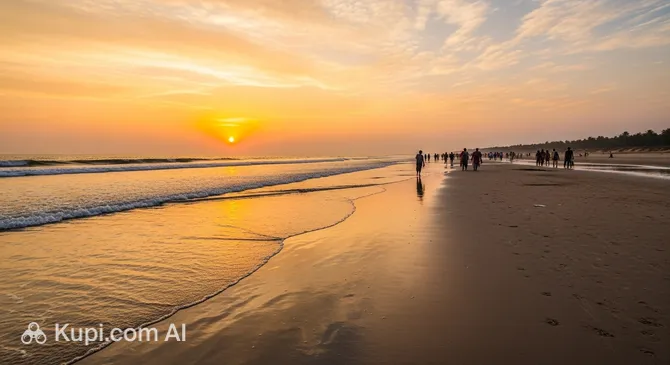
The main natural attraction and the heart of the pilgrimage is Gangasagar Beach. This spot, where the sacred Ganges River meets the Bay of Bengal, holds a special allure. Tourists and pilgrims come here to perform holy ablutions, especially during the annual Makar Sankranti festival. The beach also offers peaceful views of the endless sea, the chance to enjoy sunrises and sunsets, and a place to simply relax on the sandy shore, soaking up the tranquility of the location.

Gangasagar Beach. Illustration.
Source: Kupi.com AI

Traveler photos:

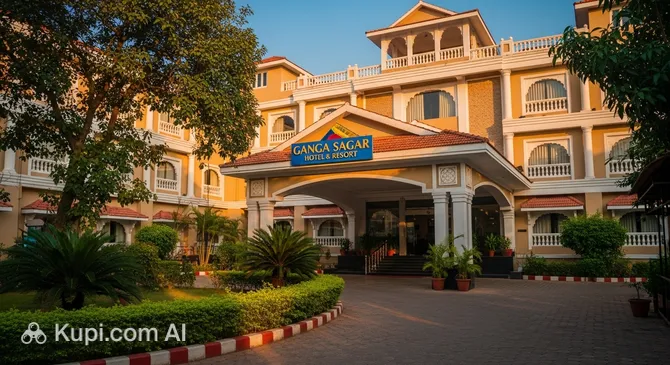
For those seeking comfortable accommodation during their visit, the Ganga Sagar Hotel and Resort offers modern amenities and quality service. Staying here allows for a good rest after a busy day of exploring shrines or walking along the coast. Its convenient location is an added plus for travelers.

Ganga Sagar Hotel & Resort. Illustration.
Source: Kupi.com AI

Traveler photos:

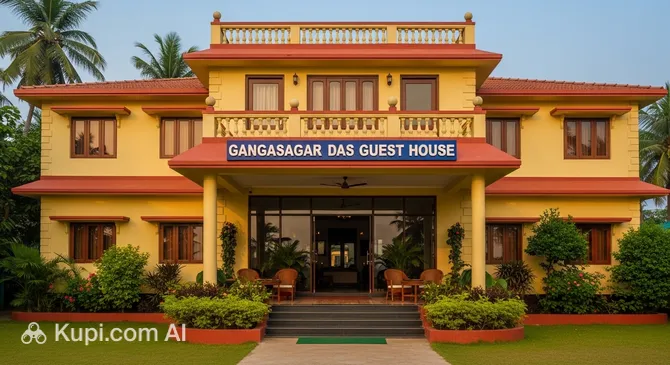
Another option for staying in Gangasagar is the Gangasagar Das Guest House. It provides simpler but cozy conditions, suitable for pilgrims and tourists who value authenticity and the opportunity to be closer to local life. This place allows you to experience the hospitality and the special atmosphere of this sacred corner of India.

Gangasagar Das Guest House. Illustration.
Source: Kupi.com AI

Traveler photos:

Local Cuisine

The gastronomy of Gangasagar is a true immersion into the flavors of Bengal, where the freshest gifts of the ocean take center stage. Fishermen bring in their catch daily, so local cuisine is built around fish and seafood dishes. Travelers should definitely try the traditional Bengali fish curry or fried carp seasoned with aromatic spices.

Among the culinary delights, "Machher Jhol" stands out—a rich and spicy fish soup with vegetables, usually served with rice. Various shrimp and crab snacks are also popular. An essential part of the meal is aromatic rice, often cooked with coconut milk, and various vegetable dishes generously seasoned with local spices. These dishes reflect the region's rich culinary traditions.

For dessert, be sure to try the famous "Rosogolla"—delicate cottage cheese balls in syrup, for which all of Bengal is famous. Local markets also offer an abundance of fresh fruit and sweets made from condensed milk and coconut. Among drinks, the refreshing sugarcane juice, often sold by street vendors, is particularly popular. Overall, the emphasis is on natural and refreshing non-alcoholic beverages.

The food culture in Gangasagar is largely centered around street food and home traditions. Markets are always bustling, offering fresh produce and local delicacies. During the Gangasagar Mela, the town's streets transform into a true open-air gastronomic festival where you can taste hot flatbreads, spicy snacks, and various sweets. While there are public dining establishments, the real value lies in the chance to try dishes prepared according to old family recipes, allowing for a deeper acquaintance with authentic Bengali cuisine.

Travel Tips

Planning a trip to Gangasagar, a place of deep spiritual significance? To ensure your journey goes smoothly and leaves only positive impressions, we have prepared some practical tips.

  1. Clothing and Essentials:

    Gangasagar has a tropical climate, so choose light, breathable clothing made from natural fabrics like cotton or linen. Given that this is an important pilgrimage site, opt for modest clothing that covers the shoulders and knees, especially when visiting temples and holy sites. Don't forget comfortable walking shoes, a hat for sun protection, sunscreen, and mosquito repellent. A universal power adapter for electronics might also be useful.

  2. Transport:

    You can reach Gangasagar (Sagar Island) by ferry from Kakdwip (Lot No. 8 pier), which can be reached by bus or taxi from Kolkata. On the island, the main transport modes are cycle-rickshaws, auto-rickshaws, and private taxis for longer distances. Conventional public transport is limited. Renting a car for self-driving is not recommended due to the nature of the roads and logistics.

  3. Finances:

    The official currency is the Indian Rupee (INR). It is recommended to carry sufficient cash, as options for cashless payments and the number of ATMs in Gangasagar are limited, especially for international cards. It is better to exchange currency in advance in major cities. Small tips are appreciated for good service in establishments and for porters.

  4. Health and Safety:

    Bring a first-aid kit with basic medications. There are pharmacies in Gangasagar, but the selection may be limited. For serious medical assistance, you may need to visit facilities in larger cities. Drink only bottled water. Generally, Gangasagar is a safe place, but always take basic precautions: keep an eye on your belongings, especially in crowded areas (e.g., during the Makar Sankranti festival).

  5. Communication:

    The main language is Bengali, with Hindi also widely spoken. English may be understood in hotels and tourist spots, but overall proficiency among the local population is low. It is helpful to learn a few phrases in the local language, such as "nomaskar" (hello) and "dhonnobad" (thank you). Mobile service and internet can be unstable. Wi-Fi is available in some hotels, but don't rely on it heavily.

  6. Local Etiquette:

    Show respect for local traditions and religious feelings. You must remove your shoes before entering temples and holy sites. Only photograph people, especially during religious rites, with their permission. Modesty in dress and behavior is valued. Be polite and smile when communicating with locals.

  7. What to Avoid:

    Do not point at people or sacred objects with your index finger—it is better to use an open palm gesture. Avoid public displays of strong emotion or affection, as this may be perceived inappropriately. Also, try not to use your left hand to pass items or food, as it is traditionally considered "unclean."

  8. Gangasagar Special Feature – Makar Sankranti:

    If your trip coincides with the Makar Sankranti festival (usually in mid-January), be prepared for massive crowds of pilgrims. During this time, Gangasagar is transformed, offering a unique spiritual experience, but it also requires advance planning for accommodation and transport, as well as increased vigilance.

We hope these tips help you better prepare for your trip and enjoy every moment of your stay in the amazing Gangasagar, one of the significant spiritual centers of India!

Entertainment & Nightlife

Gangasagar, known as a major pilgrimage site in India, offers its guests a very special kind of relaxation, far removed from the noisy bustle of the city. If you are looking for lively nightclubs, bars with loud music, and districts where the fun doesn't stop until morning, Gangasagar offers a different experience instead. The nightlife here has its own peaceful character, centered on spirituality and calm.

Instead of neon club signs, evenings in Gangasagar are lit by the soft light of the stars and occasional street lamps. There are no specialized nightlife districts here. The atmosphere invites quiet walks, contemplation, or participation in evening religious rituals if they are being held. The main "entertainment" after sunset is the opportunity to enjoy the silence, have dinner in a quiet setting, or chat with other pilgrims and travelers.

You likely won't find specific nightclubs or bars in the traditional sense in Gangasagar. Evening leisure usually comes down to dinner at hotel restaurants or small local eateries offering traditional cuisine. Some hotels, such as the Ganga Sagar Hotel and Resort or the Gangasagar Das Guest House, may offer dinner for their guests. Operating hours for these places are usually limited, and they close quite early. There is generally no dress code, but modest clothing is encouraged given the cultural context.

Ganga Sagar Hotel & Resort. Illustration.
Source: Kupi.com AI

Traveler photos:

Daytime entertainment in Gangasagar is also closely linked to its spiritual significance and nature. The main attraction is the confluence of the Ganges and the Bay of Bengal. Visitors can spend time at Gangasagar Beach, watching sunrises and sunsets, or visit local temples and ashrams. There are no museums, theaters, or large amusement parks here, as the focus is on pilgrimage and natural beauty.

Gangasagar Beach. Illustration.
Source: Kupi.com AI

Traveler photos:

Regarding practical tips and safety, evenings in Gangasagar are generally peaceful. However, as it is a small settlement, lighting on some streets may be insufficient. It is recommended to carry a flashlight if you plan to move around on foot after dark. Public transport is rare or non-existent at night, so it is better to arrange a taxi or other transport in advance through your hotel. In terms of safety, stick to lit routes and be vigilant, as you would in any new place.

In conclusion, Gangasagar is not the place for those seeking a wild nightlife. It is a destination for those looking for spiritual enrichment, peace, and union with nature. Evening hours here are best dedicated to reflection, quiet rest, and preparing for a new day filled with the unique impressions of this holy place.

Parks & Museums

Gangasagar, primarily known as a sacred pilgrimage site, offers its guests a unique blend of natural beauty and deep cultural heritage. While it may lack traditional urban parks or extensive museum complexes in the conventional sense, its charm lies in its spiritual atmosphere and picturesque coastal landscapes, which are major attractions in their own right.

The main natural gem is undoubtedly Gangasagar Beach. It is not just a stretch of coastline but a sacred site where the holy Ganges River flows into the Bay of Bengal. The beach attracts thousands of pilgrims, especially during the annual Makar Sankranti festival, but even at ordinary times, it impresses with its expanse, peaceful atmosphere, and the opportunity to watch magnificent sunrises and sunsets. For tourists, it is a chance to touch ancient traditions and enjoy the refreshing sea breeze.

Gangasagar Beach. Illustration.
Source: Kupi.com AI

Traveler photos:

Sagar Island itself, where Gangasagar is located, is a vast green zone with landscapes characteristic of a river delta. Its quiet corners and coastal areas are ideal for solitary walks and observing the local flora and fauna, allowing visitors to escape the bustle and immerse themselves in nature.

In place of traditional museums, the guardian of Gangasagar's history and culture is the famous Kapil Muni Temple. According to ancient legends, it was here that the great sage Kapil Muni devoted himself to meditation. The current temple, though rebuilt several times due to natural elements, is the heart of the island's spiritual life. Visiting the temple is an opportunity to dive into the rich mythology and religious practices that have shaped this place over centuries. It is of particular interest to pilgrims and anyone fascinated by Indian culture and spirituality.

The annual Ganga Sagar Mela fair, held in January, also turns the location into a kind of living open-air museum. It showcases an incredible variety of Indian traditions, rituals, and folk art, attracting sadhus, pilgrims, and curious travelers from across the country and the world.

For a more authentic experience, consider hiring a local boat for a short trip to the symbolic confluence of the Ganges and the sea—this allows you to see the coast from a unique perspective and feel the majesty of nature. Another unforgettable experience is observing the rituals and prayers performed by pilgrims on the beach at dawn—a sight full of deep meaning and spiritual energy.

Getting Around

Public transport in Gangasagar is geared towards serving pilgrims and local residents, offering several ways to move around this holy site and its surroundings. Given that Gangasagar (Sagar Island) is an island, ferries and boats play a key role in the transport system, connecting it to the mainland, specifically points like Kachuberia or Lot No. 8 (Harwood Point) from Kakdwip.

On the island itself, the main modes of transport are local buses that run along the main roads, connecting the piers with the Kapil Muni Temple and other important points. Auto-rickshaws (tuk-tuks) and cycle-rickshaws are also widespread and are excellent for short trips, allowing you to reach places buses cannot. Standard minibuses may be absent; their role is partially filled by shared jeeps or larger auto-rickshaws.

The fare system in Gangasagar is quite simple. On buses, tickets are usually purchased from the conductor during the journey, and payment is made in cash. Fares for auto-rickshaws and cycle-rickshaws are typically negotiable, so it is recommended to agree on a price before starting the trip. There are likely no specialized transit cards or mobile apps for payment here. Always carry small bills for convenience. Ferry tickets are bought at the ticket counters at the piers.

Tourists should keep in mind that public transport can be overcrowded, especially during major religious festivals like Makar Sankranti. During these periods, the number of vehicles increases, but so does the demand. Buses and ferries run on a schedule that may change depending on the season and weather conditions, especially for water transport. Rickshaws are available throughout the day. Plan your movements in advance, especially if you need to catch a ferry.

As an alternative to public transport, you can consider hiring a private car or taxi, especially if you are traveling in a group or with a lot of luggage from nearby major cities like Kolkata to the pier. However, on the island itself for short distances, rickshaws remain the most convenient option. Bike rentals or car-sharing are not common in Gangasagar. The ferry ride itself to the island is an inherent and colorful part of the journey to Gangasagar, offering picturesque views.

Accommodation

In Gangasagar, a range of accommodation options is available to tourists, catering to both pilgrims and travelers seeking a peaceful getaway. Choices vary from budget guest houses to more comfortable hotels and small resort complexes. While luxury five-star hotels may be scarce here, the primary focus is on providing convenient and affordable stays.

The most sought-after areas for staying are those located in the immediate vicinity of the Kapil Muni Temple and the confluence of the Ganges and the Bay of Bengal. Accommodations near Gangasagar Beach are also popular, offering picturesque views and easy access to the main shrines.

Among the more comfortable options for a stay are the Ganga Sagar Hotel and Resort and the Gangasagar Das Guest House. These establishments offer improved conditions and services for visitors seeking a higher level of comfort during their stay.

Ganga Sagar Hotel & Resort. Illustration.
Source: Kupi.com AI

Traveler photos:

When planning a trip to Gangasagar, especially during major festivals like Makar Sankranti, it is strongly recommended to book accommodation well in advance. Prices can range from very budget-friendly to moderate, depending on the level of comfort. You can book your stay through popular online platforms or directly by contacting the hotels or guest houses.

Nearby Cities

For those looking to explore the surrounding areas, Gangasagar serves as an excellent starting point for day trips to several interesting nearby locations:

Among them, Contai is worth noting—the nearest town, which attracts visitors with its coastal atmosphere and the chance to witness the daily life of local communities. Nearby is Haldia, a major river port where you can see impressive port facilities and observe the busy life of cargo ships. Meanwhile, Diamond Harbour, with its historical significance and picturesque views of the Hooghly River merging with the Bay of Bengal, offers a more relaxed getaway and beautiful scenery.

CityPopulationDistance
Rudra Nagar10 75611 km
Kakdwip19 36828 km
Contai92 22636 km
Contai27 54944 km
Haldia200 82746 km

These nearby destinations provide insight into the region's diverse culture and landscapes. Each trip promises new impressions and an introduction to the local flavor of India.

Shopping & Souvenirs

Shopping in Gangasagar has a very distinct character, shaped by its status as an important pilgrimage center. You won't find large shopping malls or boutiques of famous brands here. Instead, trade is focused on items related to religious rituals, local handicrafts, and essential items for pilgrims and tourists. The town is famous for small shops offering unique items that reflect the spirit of this holy place.

There are no clearly defined shopping streets or districts in Gangasagar as such. Most commercial activity is concentrated around the temple complexes, especially near the Kapil Muni Ashram, and along the paths leading to the confluence of the Ganges and the Bay of Bengal (Sagar). This is where numerous small shops and temporary stalls offering a variety of goods are located.

Large modern shopping centers are absent in Gangasagar. Shopping here is more traditional and local, oriented towards the needs of pilgrims and the sale of souvenir products.

While there are no large organized markets in the usual sense, you can always find many small vendors and spontaneous markets, especially during major festivals like the Gangasagar Mela. These markets sell fresh flowers for offerings, religious paraphernalia, simple clothing, local sweets, and fruits. It's a great place to feel the local flavor and buy something as a keepsake.

From Gangasagar, people usually bring back items related to its religious significance. Small figurines of deities, images of saints, rudrakshas (sacred seeds), copper vessels for holy water, incense, and oils are popular. You can also find shell crafts, simple handmade jewelry, and small textile items with local motifs. Such souvenirs will not only remind you of your trip but will also carry a piece of the special atmosphere of this place.

Most shops and stalls in Gangasagar operate from early morning until late evening, especially during peak pilgrim periods. However, there may not be a strict schedule as many are family-run businesses. The primary method of payment is cash (Indian Rupees). Credit card acceptance is extremely rare, so tourists are advised to carry a sufficient amount of cash.

A Tax-Free system for tourists is generally not applicable in Gangasagar shops, given the nature of the goods sold and the style of trade in this pilgrimage center.

Reached the end of the page?

That means the route is fully explored