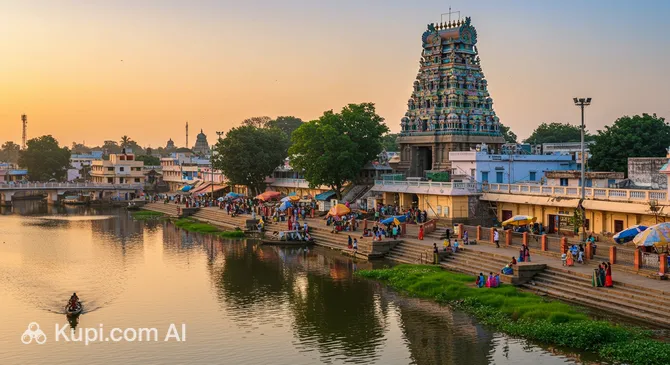
Karur is a fascinating blend of ancient history and a powerful industrial pulse in the heart of Tamil Nadu. Nestled on the banks of the Amaravathi, Kaveri, and Noyyal rivers, the city serves as a major administrative center and an economic engine for India. There is no big-city pretension here; instead, you’ll find the authentic atmosphere of a South Indian working city where daily life revolves around textile looms and bustling markets.
The city's central location in the state has made it a vital transportation hub. With a population of approximately 358,000, Karur is a self-sufficient hub where high literacy rates meet a deep respect for labor. Karur. Illustration.
Source: Kupi.com AI
The region's rich heritage dates back to antiquity, as it once served as the capital for the early kings of the Chera dynasty. The modern history of the city is inextricably linked to the textile industry: local handloom fabrics are exported worldwide, generating hundreds of millions of dollars in revenue annually. Travelers are drawn here not by tourist polish, but by the chance to see the real India—with its majestic temples, the aroma of spices, and the sincere hospitality of the locals.
A visit to Karur is an excellent addition to a Tamil Nadu itinerary for those seeking authenticity and wanting to see how ancient traditions intertwine with modern manufacturing.
Weather Overview
Karur is dominated by a tropical climate typical of the inland regions of South India. It is almost always warm or hot here, and the distinct change of seasons is primarily determined by rainfall. When planning your trip, it is important to know that the climate of the city is characterized by high humidity, especially near the three rivers that flow here.
The hottest time occurs in April and May, when daytime temperatures can reach extremes of +38°C... +40°C. Expect scorching heat that only slightly mellows during the evening hours. The winter months (December and January) are the most comfortable for visiting: during this period, the average temperature is around +26°C, and the nights bring a pleasant coolness (around +21°C).
The rainy season in Karur occurs twice but is most intense in October and November under the influence of the Northeast Monsoon. At this time, the city receives its maximum rainfall (up to 175 mm per month), which can lead to temporary road difficulties. The rest of the year, the climate remains predominantly dry and sunny.
Average monthly temperature
Average monthly precipitation
Interesting Facts
One of Tamil Nadu's Oldest Cities: Karur's history spans over 2,000 years; during the Sangam era, it served as the capital for the powerful rulers of the early Chera dynasty.
Global Textile Hub: The city exports over $300 million worth of handloom textile products annually, supplying fabrics to many international brands.
Bus Body Building Center: Karur is a key hub for bus body manufacturing in South India, serving transport companies across the entire country.
Eco-Friendly Innovations: It is home to a major paper production facility that uses bagasse (sugar cane residue), making the local industry unique.
City of Gemstones: The area around Karur has long been a source of semi-precious stones like amethysts and beryls, a fact recorded in ancient Roman trade chronicles.
How to Get There
The transport accessibility of Karur is due to its strategic position in the center of Tamil Nadu. While the city does not have its own airport, it is perfectly integrated into the regional road and rail network. To plan your route most effectively, it is recommended to research in advance how logistics are organized and how to get to the city from major hubs.
The nearest international airports are located in neighboring cities: Tiruchirappalli International Airport (TRZ) is about 75–80 km away, and Coimbatore International Airport (CJB) is about 90 km away. Both airports handle domestic and international flights, and from there, you can reach Karur by taxi or intercity bus in 1.5–2.5 hours depending on traffic.
Karur Junction railway station is an important transport node connecting the city with Chennai, Bangalore, and other metropolises. Trains are the most convenient and budget-friendly way to travel long distances. The central bus station also hosts numerous routes, including express buses from Chennai, with the journey taking about 6–8 hours.
Main Attractions
While Karur is primarily known as an industrial center, it is home to several impressive religious sites that reflect the spiritual depth of Tamil Nadu. One of the most revered places is the Mariamman Temple. This vibrant architectural landmark is dedicated to the goddess of fertility and rain, and a visit here allows tourists to immerse themselves in the atmosphere of traditional South Indian rituals.
Another gem of the city is the Arulmigu Kalyana Venkataramanaswamy Temple. The temple attracts pilgrims and architecture enthusiasts with its peaceful atmosphere and intricate craftsmanship typical of the Dravidian style. These sacred spaces serve as centers of community life, especially during major Hindu festivals.
Additionally, visitors should take note of the ancient Pasupatheeswarar Temple, dedicated to Lord Shiva. It is considered one of the seven sacred sites in the region and is famous for its majestic gopuram towers. For those interested in historical landmarks, the memorial in Rayanur is a notable site connected to the events of the Anglo-Mysore Wars.
Local Cuisine
The gastronomic landscape of Karur is the quintessence of South Indian flavors. The local diet is based on vegetarian dishes featuring rice and legumes. You must try the traditional thali, often served here on a banana leaf: a set of rice, several types of curry, sambar, rasam, and crispy papadums.
For meat lovers, specialized establishments like the Hotel Velapar Karur Restaurant are known for their fragrant biryani and spicy appetizers. Another popular spot among locals and visitors is the Arafa Chicken Park Restaurant, which offers a variety of South Indian-style poultry dishes.
The street food culture in Karur is thriving: you can find freshly prepared idlis, crispy dosas, and hot samosas on every corner. Favorite drinks remain the famous South Indian filter coffee and masala tea. On hot days, freshly squeezed mango juices or a cooling lassi are lifesavers. As the city is predominantly Hindu, alcohol consumption in public places is restricted, and it is served only in specialized bars within major hotels.
Travel Tips
A trip to Karur will be comfortable and safe if you prepare for the nuances of South Indian life in advance. Here are some practical tips to help you better navigate this industrial center.
Clothing and Dress Code: Choose lightweight clothing made of natural fabrics (cotton, linen), as it is almost always hot in the city. When visiting temples like Mariamman, be sure to cover your shoulders and knees; it is customary to remove your shoes before entering.
Local Transport: Auto-rickshaws are best for short trips, but always haggle before getting in. Use trains or express buses for comfortable travel between cities.
Finance and Cards: The official currency is the Indian Rupee (INR). Major hotels accept cards, but always keep small denominations of cash for markets and rickshaws. ATMs are available in the center, but international cards do not always work.
Health: Drink only commercially produced bottled water. Use sunscreen and wear a hat to avoid heatstroke.
Language and Communication: The main language is Tamil. Hotel staff and young people understand English, but learning a few phrases like "Vanakkam" (hello) will easily win over the locals.
Local Etiquette: In India, it is not customary to use the left hand for passing money or food. The greeting with palms joined (Namaste) is the most universal and respectful gesture.
What to Avoid: Do not drink beverages with ice from street stalls and avoid walking in industrial outskirts after dark due to poor lighting and heavy truck traffic.
SIM Cards: It is best to buy a local SIM card at official operator stores (Airtel, Jio) in the city center; a passport and photo are required for registration.
Following these simple rules will help you focus on exploring the culture and traditions of this ancient textile region, leaving you with only positive impressions.
Entertainment & Nightlife
Nightlife in Karur is virtually non-existent in the sense that residents of major metropolises might expect. It is a conservative industrial city where the rhythm of life is dictated by factory shifts. After sunset, main activities shift to family restaurants and temples, where evening poojas and local religious festivities are frequently held. In the evenings, locals prefer strolling along the riverbanks or gathering at the central markets.
For those looking for a more familiar form of relaxation, it is worth visiting the Bar at Hotel Hemala or the Bar at The Residency Karur. These are among the few places in the city where you can spend an evening in a quiet setting with drinks. Otherwise, for high-energy entertainment, major cinemas, and shopping malls, locals usually head to neighboring Coimbatore or Tiruchirappalli.
Daytime entertainment in the city centers around festivals. If your trip coincides with the Pongal festival, you can witness colorful processions and folk celebrations. Visiting the local textile markets is also a popular pastime and a vibrant spectacle in itself.
Parks & Museums
Due to its industrial character, Karur does not boast an abundance of vast green spaces or major world-class museums. The city is densely built up, and primary open spaces are concentrated along the banks of the Kaveri and Amaravathi rivers. These riverside areas often serve as spots for leisurely strolls by locals, especially during the pre-dawn or sunset hours when the heat subsides.
Architectural elements of the road infrastructure often serve as cultural and visual landmarks in the city. For example, the Karur Roundana (roundabout) is not just a transport hub but also a recognizable symbol of the city center, around which daily life buzzes. Small, well-kept gardens can be found within large temple complexes—these are the places to find shade and peace in the middle of a busy day.
As for museum exhibits, their absence is compensated for by the living history on the streets. Archaeological finds confirming the antiquity of Karur are often transferred to major museums in Chennai or Trichy; however, the walls of the local temples and old quarters themselves are the best witnesses to the region's two-thousand-year heritage. The ecological situation in the city center requires attention, so for outdoor relaxation, it is better to choose peripheral areas closer to the water.
Getting Around
The public transport system in Karur is primarily represented by buses and rickshaws. The city bus network connects the center with the outskirts and industrial zones, but buses are often overcrowded, especially during peak hours. For a tourist, this mode of travel can be a real adventure, requiring a basic understanding of routes in Tamil.
The most popular and convenient way to get around the city is by auto-rickshaws. They are maneuverable and allow you to reach any point quickly, but you should always negotiate the price in advance, as meters are rarely used. Taxi-hailing services via apps (such as Uber or Ola) are also available in the city, providing more transparent pricing.
Walking through the center of Karur can be difficult due to chaotic traffic, dust, and the lack of sidewalks in some areas. The railway station is located in the heart of the city, making the train an ideal option for arrival and departure. Renting a bicycle or a car without a driver is quite difficult and not recommended due to the specifics of local traffic; it is better to hire a car with a local driver for trips around the surrounding area.
Accommodation
Accommodation options in Karur are primarily geared toward business travelers and transit tourists. You won't find luxury five-star resorts here, but the city offers a decent selection of mid-range hotels and budget lodges. Most hotels are concentrated in the central district, near the railway station and main shopping streets, which is convenient for logistics.
For comfortable stays, consider establishments such as The Residency or Hotel Hemala, which house popular local bars and restaurants. These hotels offer a standard range of services, including Wi-Fi and air conditioning, which is critical in the local tropical climate.
Budget travelers have access to numerous guest houses, though it’s worth noting that service in these may be minimalistic. It is recommended to book accommodation in advance, especially during major textile exhibitions or national holidays when the influx of business visitors to the city increases significantly. For those planning a long-term stay, apartments in residential areas are also available for rent.
Nearby Cities
Karur occupies a convenient location that allows travelers to use it as a base for exploring central Tamil Nadu. Within a couple of hours' drive, there are cities with unique cultural and historical significance, making them ideal targets for day trips.
Just a few kilometers away is the suburb of Senappiratti, which practically merges with the main urban area. For larger-scale excursions, Tiruchirappalli (Trichy) is an excellent choice, famous for its majestic Sri Ranganathaswamy Temple complex and its rock fort. Coimbatore, a major metropolis with developed infrastructure and shopping centers, is also an hour's drive away.
For those who appreciate quiet and an authentic rural atmosphere, small settlements like Karattuppalayam or Uppidamangalam offer a glimpse into the traditional lifestyle of the Tamil heartland.
City
Population
Distance
Senappiratti
19 909
4 km
Karattuppalaiyam
9 719
4 km
Uppidamangalam
13 399
11 km
Mohanur
16 457
13 km
Kattupputtur
14 675
16 km
Exploring the surroundings of Karur will give you a complete picture of the diversity of South India: from industrial giants to sacred temple cities and cozy villages.
Shopping & Souvenirs
Shopping in Karur is primarily a hunt for high-quality textiles. The city is considered the home textile capital of South India, so it’s worth bringing back bed linen, curtains, tablecloths, and, of course, handloom fabrics. Local sarees are famous for their durability and bright colors typical of Tamil culture.
Major shopping activities are concentrated in the city's central markets. You won't find glamorous shopping malls with international brands here, but there are endless rows of specialized shops and wholesale warehouses. Walking around iconic spots like the Karur Roundana, you will find many stalls with clothing and household items.
In addition to fabrics, the region is known for products made of granite and semi-precious stones. Markets near the riverbanks offer interesting handmade souvenirs. Shops usually operate from 10:00 to 20:00 or 21:00, and payment is most often made in cash (rupees), although larger retail outlets do accept bank cards. Tax-free systems are virtually non-existent in small local shops, as most trade is oriented toward the domestic market or large-scale wholesale.