Support

Malda

About

Malda is an amazing city where ancient traditions and the dynamic rhythm of modern life harmoniously intertwine. Located in the state of West Bengal in eastern India, it stretches across the picturesque banks of the Mahananda River. Due to its proximity to the confluence with the legendary Ganges, the city's surroundings are famous for their incredible fertility and are lush with fruit orchards, especially its renowned mango groves.
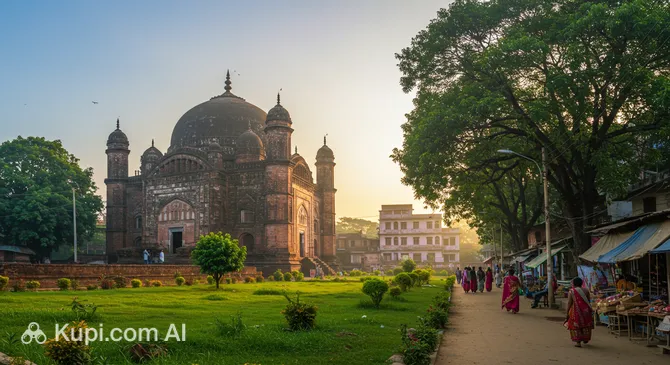
Malda. Illustration.
Source: Kupi.com AI

Today, it is an important administrative and economic center with a population of about 300,000 people. Despite active development, the city retains its unique character. Its streets are filled with the aroma of spices, and bustling markets attract both locals and visitors to the region who wish to experience the atmosphere of the leisurely East.

The main attraction for tourists is the city's rich historical heritage. The ruins of the ancient settlements of Gaur and Pandua, which once served as capitals for the Bengal Sultans, have been preserved in the surrounding areas. Travelers are impressed by the architectural diversity: from majestic mosques and ancient temples to elegant mausoleums hidden in the shade of parks.

A trip to Malda is a chance to touch authentic culture and feel the true rhythm of Bengal. The friendliness of the locals and the unique atmosphere make this city a wonderful place for those seeking new experiences and wanting to see the non-touristy, real Asia.

Weather Overview

The climate in this region can be described as tropical, with clearly defined seasons. To choose the perfect time for your trip and prepare for nature's whims, we recommend checking the detailed weather in Malda before you depart.

Winter here is mild and comfortable, making it an excellent time for sightseeing. The coolest month is January, with an average temperature of about 17.2°C, while at night the air can cool down to 11.8°C. This period is characterized by dryness: in November, December, and January, precipitation is extremely rare, and the number of rainy days is close to zero.

Warming begins in March, and by April, daytime highs reach 34.2°C. From June to September, the monsoon season hits the city: this is the wettest time of year. In July and August, the number of rainy days can reach 27–28 per month, while the temperature stays around 29–30°C. Expect a hot summer with frequent heavy downpours and a dry, pleasant winter.

Average monthly temperature

Average monthly precipitation

Interesting Facts

Beyond its main attractions, Malda holds many fascinating secrets that make a trip here truly memorable. Here are a few facts to help you see the city in a new light:
  • "Mango Capital" of the region. Malda holds the unofficial but proud title of the main mango supplier in Bengal. This is the birthplace of famous varieties that are exported across the country. During the harvest season, the city markets turn into one big festival filled with the sweet aroma of thousands of fruits.

  • Traces of lost capitals. In the immediate vicinity of the city lie the ruins of Gaur and Pandua—ancient settlements that served as the capitals of Bengal in the Middle Ages. Here you can see unique examples of Islamic architecture: mosques, minarets, and gates with intricate carvings. There is a local legend that treasures of ancient sultans are still hidden within the labyrinths of these ruins.

  • Center for traditional crafts. Ancient handicraft techniques still flourish in Malda. Local artisans create famous Bengali fabrics and jewelry featuring unique embroidery. Travelers can not only buy these items but also attend workshops to learn the secrets of craftsmen passed down through generations.

  • Cradle of talent. The city is known as the birthplace of many outstanding individuals who have brought fame to the country's culture. Famous poets, artists, and folk storytellers were born here, preserving and passing on the ancient legends and traditions of this land for centuries.

How to Get There

When planning a trip to this colorful corner of West Bengal, it's worth thinking about the logistics in advance, as there are no direct flights to the city itself. You can find out more about how to get to Malda by exploring all available routes and choosing the most convenient option for yourself.

There is no airport in Malda itself, so travelers usually use air hubs in neighboring cities. One of the most convenient options for tourists traveling through India is Kazi Nazrul Islam Airport (RDP) in Durgapur. It is located about 179 km from Malda. The journey by taxi or bus will take about 5 hours. This is a modern regional airport that accepts flights from the country's major cities.

Another available option is Deoghar Airport (DGH), located in the city of Deoghar. The distance to the center of Malda is about 158 km. The journey by car from here will take approximately 4 hours and 20 minutes. Although the airport is relatively small, it provides an important transport link in the region.

For clarity, here is summary information on the main airports located within a 200 km radius of the city (note that some of the nearest airports are located in neighboring countries—Bangladesh and Nepal):

AirportPassenger trafficDistance
Rajshahi Airport350 00080 km
Saidpur Airport750 000113 km
Deoghar Airport281 442158 km
Bhadrapur Airport281 000173 km
Kazi Nazrul Islam513 488179 km

In addition to air travel, the railway plays a crucial role. Malda is a major railway hub in Eastern India. Malda Town station receives many trains from Kolkata, Delhi, Guwahati, and other metropolises. Traveling by train often proves to be the most budget-friendly and atmospheric way to reach the city, allowing you to enjoy the Bengali landscapes along the way.

Main Attractions

Malda and its surroundings are a true open-air museum where every stone breathes history. The main reason to visit this region is the ruins of the ancient cities of Gaur and Pandua, which were centers of power and culture in Bengal during the Middle Ages. Here, travelers can see unique architectural monuments that harmoniously blend local and Islamic traditions.

One of the most impressive attractions is the Adina Mosque, located in the ancient city of Pandua. Built in the 14th century, it was once considered the largest mosque on the Indian subcontinent. Tourists are drawn here by the incredible scale of the structure and the surviving elements of exquisite stone carving. A walk among its majestic arches and numerous columns allows one to fully experience the grandeur of a bygone era.

Equally interesting is Dakhil Darwaza, a monumental gate that served as the main entrance to the Gaur fort. This massive structure, built of red brick and decorated with terracotta ornaments, is striking in its size, with a facade length of over 22 meters. The gate is a magnificent example of Indo-Islamic architecture and serves as an excellent backdrop for atmospheric photos.

In Gaur, it is also worth seeing Firoz Minar, a high tower that resembles the famous Qutub Minar in Delhi. This five-story structure, about 26 meters high, was once used as a minaret and a symbol of victory. Its characteristic silhouette rising above the greenery and the remains of blue glazed tiles make the tower one of the most recognizable symbols of the region's historical heritage.

Architecture lovers should definitely visit the Eklakhi Mausoleum. It is one of the earliest surviving brick structures in Bengal. The building is interesting for its simple but elegant domed construction and massive walls nearly 4 meters thick. It is believed that the style of this mausoleum inspired architects to create the unique Bengali terracotta temples in subsequent centuries.

Local Cuisine

A gastronomic journey to Malda is impossible to imagine without experiencing the region's main culinary treasure—the mango. This city is rightfully proud of its fruit plantations, and the local cuisine vividly reflects this. During the harvest season, there is a true abundance: travelers are offered not only the freshest juices and desserts but also unique specialties such as the famous mango chutney, piquant sauces, and various sweets based on the "king of fruits," the taste of which is impossible to forget.

A traditional lunch in Malda is a harmonious blend of Bengali culinary traditions and northern influences. The diet is based on rice with spices and delicate flatbreads served with hearty main dishes. Gourmets should definitely try fish in mustard sauce—a classic of Bengali cuisine, distinguished by its bright and rich flavor. Vegetarians will enjoy the spicy vegetable curries, generously seasoned with local spices.

Sweets hold a special place in the heart of every local resident. The region is famous for its desserts, and here you can enjoy authentic rasgulla—cottage cheese balls in syrup, and the famous mishti doi—a thick sweet yogurt often served in clay pots. These treats are the perfect conclusion to any meal.

Street food is a separate, vibrant chapter in the life of the city. Walking through the busy streets and markets, it's impossible to pass by the stalls where crispy samosas and pakoras are fried right before your eyes. Kathi rolls—hearty flatbreads with fillings that are convenient to eat on the go—are particularly popular. Local markets are the best places to immerse yourself in the authentic atmosphere and try dishes "piping hot."

As for drinks, fresh fruit juices remain the absolute leader, especially mango juices during the ripening season. They are perfectly refreshing on a hot day. The tea culture common to all of India is also widespread. Alcohol is less popular in everyday street culture and is usually available in specialized stores or hotel restaurants, so tourists more often prefer the wide selection of non-alcoholic refreshing drinks.

Travel Tips

Welcome to Malda! To ensure your journey through this historical corner of West Bengal is as comfortable and hassle-free as possible, we have prepared a list of important recommendations. This city has its own unique characteristics, and knowing them will help you avoid awkward situations and focus on your experiences.

  1. Clothing and Essentials. Given the tropical climate, opt for light, breathable clothing made of natural cotton or linen. Since Malda is a city with conservative values and many religious monuments, dress modestly: shoulders and knees should be covered for both men and women. Be sure to bring comfortable, closed-toe flat shoes, as exploring the ruins of Gaur and Pandua involves long walks over uneven terrain.
  2. Transport. There is no metro or developed tourist bus system within the city. The most popular and affordable way to get around is by "toto" (electric rickshaws) and auto-rickshaws. Always agree on the fare in advance, before boarding. To visit distant historical sites (Gaur is 12 km from the center), it is most sensible to rent a car with a driver for the day through your hotel or a local agency.
  3. Finance. The official currency is the Indian Rupee. Cards are not accepted everywhere in Malda: they might work in large hotels, but at markets, small shops, and for transport, you will need cash. There are ATMs in the city center, but there may be few of them, and they don't always accept foreign cards, so it's better to withdraw or exchange money in advance at a major airport or your city of arrival.
  4. Health and Safety. Drink only bottled water and check that the seal is intact when purchasing. Avoid ice in drinks at street cafes. The region has a lot of greenery and water bodies, so be sure to use repellents, especially in the evening, to protect yourself from mosquitoes. Pharmacies are available in the city, but the range of products may differ from what you're used to, so pack a basic first-aid kit.
  5. Communication. The primary language is Bengali. Hindi is also widely spoken. English is understood by staff in hotels and some restaurants, but rickshaw drivers and market vendors may not speak it. We recommend downloading an offline translator and carrying your hotel's business card in the local language to show to drivers if necessary.
  6. Local Etiquette. It's best to greet locals with the traditional "Namaste" gesture (palms pressed together) or a slight bow. Remember that the left hand is considered "unclean": pass money, accept items, and eat only with your right hand. When entering any active temples and mosques, as well as private homes, always remove your shoes.
  7. What to Avoid. Refrain from public displays of affection (kissing and hugging)—in provincial India, this is considered inappropriate and may cause disapproval. Also, do not photograph locals, especially women, without their prior permission.
  8. Seasonal Tip. If your trip falls during the summer months (May–July), you will find yourself in the middle of "mango madness." Don't miss the chance to try different varieties of this fruit at local bazaars—they are considered some of the best in India. For a delicious and practical souvenir, buy aamsotto (traditional sun-dried mango pulp), which has a long shelf life and travels well.

Following these simple rules will make your stay in Malda safe and pleasant. Be open to new experiences, show respect for the local culture, and this city will reveal all its historical treasures and hospitality to you!

Entertainment & Nightlife

Nightlife in Malda differs significantly from that of bustling metropolises. In this authentic city in India, you won't find massive nightclubs with laser shows and world-class DJs. Evenings here pass at a calmer, more measured pace, conducive to soulful conversations, delicious food, and cultural relaxation. Most activity winds down by 10:00 PM–11:00 PM, so it's best to plan entertainment for the early evening.

The center of evening attraction is the Rathbari More area (Rathbari intersection) and the central streets of English Bazar. This is where most life after sunset is concentrated: restaurant signs light up, street snack stalls come alive, and locals head out for family walks. The atmosphere here is friendly and safe but quite conservative, so the dress code in establishments is usually casual but modest.

Those who enjoy spending the evening over dinner or a drink should look for "restro-bars"—the most popular type of establishment in the city, combining a restaurant and a bar. Often these places are located within major hotels. For example, the bar at Hotel Indraprastha is popular, where you can relax in an air-conditioned room and try both local and European dishes. Tourists also frequently choose Hotel Kalinga in the Rathbari area, known for its cuisine and comfortable dining environment.

For movie fans, modern cinemas operate in Malda. One of the most famous is Rupkatha Cinema Hall. This is a historic site for the city that has been modernized and now offers screenings of the latest Bollywood and regional films in high quality (Dolby Digital). If you are looking for a more modern entertainment format, head to the PRM Centre Point shopping mall. Here you will find the SVF Cinemas multiplex, as well as a food court and shops where you can enjoy your time before the show.

A few practical tips for evening walks:

  • Transport: The main way to get around is by "toto" electric rickshaws. There are fewer of them at night, so it's better to arrange your return to the hotel in advance or ask a driver to wait for you.
  • Safety: Central streets are lit and safe, but avoid unlit alleys and outskirts late at night. Malda is a city with traditional values, so rowdy behavior on the street is not welcomed.
  • Prices: The cost of dinner and entertainment here is significantly lower than in the country's major tourist centers. The average bill in a good restaurant will be a pleasant surprise for your travel budget.

Regarding daytime entertainment, it is more educational in nature. Nearby, you can visit Adina Deer Park, a pleasant place to escape the city bustle and observe spotted deer and birds in their natural habitat. This is an excellent addition to your program, creating a balance between nature and urban comfort.

Parks & Museums

While Malda is primarily known for its architectural monuments and fruit plantations, it also offers picturesque green spaces where you can escape the hustle and bustle, as well as cultural institutions housing artifacts of the region's rich history. The city offers a harmonious combination of nature walks and immersion into the past.

Parks and Natural Areas

One of the most popular places for ecological tourism in the area is the Adina Deer Park. Located about 20 kilometers from the city, near the famous Adina Mosque, this sanctuary is home to many spotted deer (chital) and nilgai antelopes. The park is a dense forest area where animals roam freely in their natural environment. It is an ideal spot for a family picnic and bird watching, especially in the morning hours when the forest is filled with their songs.

Another significant natural attraction is Sagar Dighi. This is a huge man-made lake dug in the 12th century by the kings of the Sena dynasty. Today, the shores of this historic lake have been turned into a pleasant walking area. In winter, thousands of migratory birds fly here, making the reservoir a true paradise for amateur ornithologists. Locals love to come here in the evening to enjoy the cool breeze and the picturesque sunsets reflected in the calm waters.

Museums and Cultural Heritage

The primary keeper of the region's history is the Malda Museum, managed by the West Bengal Archaeological Directorate. It houses a unique collection of artifacts found during excavations of the ancient capitals Gaur and Pandua. In the museum's halls, you can see stone sculptures of Hindu deities, ancient coins, terracotta items, and slabs with exquisite calligraphy. Visiting this museum is the best way to systematize your knowledge of Bengal's history and see household items used by sultans and commoners many centuries ago.

In fact, the entire area of the ancient city of Gaur can be called a grand open-air museum. While it is not a museum in the classical sense with walls and display cases, the concentration of historical objects here is so high that a walk through the territory replaces a visit to any gallery. Every wall, every mosaic fragment on the Dakhil Darwaza gate or the mosque walls tells the story of the rise and fall of empires better than any textbook.

Insider Tip: If you find yourself at Sagar Dighi, pay attention to the small structures nearby—you can often see local fishermen using traditional gear there. And after visiting the Malda Museum, take a stroll through the neighboring streets: artisans creating silk products often work there, as Malda is also an important center for sericulture in the region.

Getting Around

Malda's transport system differs significantly from that of large metropolises: you won't find a metro or high-speed trams here. Urban logistics rely on road transport and maneuverable means of movement, perfectly adapted to the narrow and busy streets. For a tourist, this means immersion into true local flavor, where a trip from point A to point B becomes a small adventure.

The most popular and ubiquitous form of transport is the "toto"—electric three-wheeled rickshaws. They are eco-friendly, quiet, and ply literally every alleyway. There are two formats for a trip: "shared," where you pay a small amount for a seat and travel with fellow passengers along a fixed route, and "reserve," where you hire the driver personally for yourself. This is the most convenient way to get from your hotel to the market or the railway station.

For trips over longer distances or to the suburbs, classic fuel-powered auto-rickshaws are used. They are noisier and faster than totos and most often operate as shared taxis connecting the city center with outlying areas. State and private buses (NBSTC and other operators) also run through the city, but they are often overcrowded and lack clear schedules in English. Buses are best used for budget trips to the historical ruins of Gaur or Pandua, whose terminal stops are known to all locals.

The payment system in Malda's public transport is extremely simple and traditional: cash reigns supreme here. There are no transport cards, magnetic stripe tickets, or validators in rickshaws and city buses. Payment is handed directly to the driver or conductor at the end of the trip (or at the beginning if it is a bus). It is crucial to have small bills and coins with you, as the driver may not have change for large banknotes.

Ride-hailing apps (like Uber or Ola) familiar in large capitals operate inconsistently or are absent altogether in Malda. There are few cars, and wait times can be long. If you need the comfort of a car, the best alternative is renting a car with a driver for the entire day. This can be arranged at your hotel reception or through a local travel agency. This is the safest and most relaxed option for seeing the sights scattered around the outskirts.

An important tip for tourists: always agree on the price before boarding a toto or rickshaw if you are taking the transport individually. Although local drivers are generally honest, a prior agreement will save you from misunderstandings at the end of the journey. In "shared" mode, prices are fixed and very affordable; it's enough to see how much the locals are paying or politely confirm the cost with fellow passengers.

Accommodation

Where to stay:

The hotel sector in Malda is geared more toward functionality and practicality than luxury. Since the city is not a mass international resort, you won't find five-star global chains or massive "all-inclusive" resort complexes here. The accommodation stock consists mainly of mid-range hotels, budget guest houses (often called "Lodges"), and government tourist bungalows. Nevertheless, travelers can expect clean rooms with air conditioning, Wi-Fi, and the necessary amenities for a comfortable stay after a busy day.

When choosing a place to stay, location is the key factor. The most convenient area for tourists is considered to be English Bazar—the administrative heart of the city. Hotels here are within walking distance of markets, restaurants, and major transport hubs. Another popular option is the area around the Malda Town railway station. This is a strategically advantageous choice for those planning day trips to the ruins of Gaur and Pandua or an early train departure.

Among specific accommodation options, hotels located near the Rathbari More intersection are popular. This is a lively part of the city with good infrastructure. Here you can find modern hotels offering 3-4 star level services, with their own restaurants and banquet halls. For budget travelers, there are many small private guest houses in the city center where conditions are more modest, but prices are also significantly lower.

Booking tip: Malda is an important transit and trade hub, so good rooms at reasonable prices are booked quickly. We strongly recommend booking accommodation in advance, especially if your trip falls during the winter season (from November to February) or the mango harvest period, when businesspeople and tourists from all over the country flock to the city.

The price range in the city is very affordable. Budget accommodation is quite inexpensive, while "luxury" by local standards (a spacious room with air conditioning, breakfast, and good service) will cost about the same as a standard room in a large metropolis. You can book your stay through popular Indian and international online platforms, which guarantees a fixed price. Direct booking at the reception is possible, but on peak dates, there is a risk of no vacancies.

Nearby Cities

For those looking to explore the surrounding area, Malda serves as an excellent starting point for day trips to several interesting nearby locations:

One of the most picturesque destinations is Sahibganj, located on the banks of the Ganges in the neighboring state of Jharkhand. The city is known for its natural beauty and historical significance. Here, travelers can visit the unique Mandro Fossil Park, which houses ancient geological finds, or simply enjoy the majestic views of the river and the green Rajmahal Hills.

Another interesting option for a short visit is Pakur. This city attracts colonial history buffs thanks to the preserved Martello Tower—a 19th-century defensive structure built by the British. A trip here allows you to dive into the atmosphere of the past and see how history intertwines with the daily life of a modern Indian province.

It is also worth noting the town of Dhulian, which is located in close proximity to the region's important waterways. This place will be of interest to those who want to observe life by the river and see the traditional way of life in Bengali settlements. Below is information about the nearest towns available to visit:

CityPopulationDistance
Sujapur9 32513 km
Panchanandapur26 35818 km
Mahadipur8 63818 km
Nijgaon Paranpur8 52322 km
Rajmahal17 97432 km

These nearby destinations provide an insight into the diverse culture and landscapes of the region.

Shopping & Souvenirs

Shopping in Malda isn't about chasing global brands; it's about immersing yourself in the atmosphere of a colorful eastern bazaar and discovering unique local crafts. The city doesn't claim to be a fashion capital, but it offers tourists goods that are hard to find in other regions of India. Most notably, these are the famous textiles and gastronomic souvenirs for which West Bengal is renowned.

The city's commercial life is centered in the English Bazar area. This is the administrative and commercial heart of Malda, where the streets are lined with shops for every taste. Here you can find both modern showrooms with clothing and electronics, and traditional stalls selling fabrics and spices. A walk through the central streets of this district allows you not only to make purchases but also to observe the daily life of the townspeople.

Although Malda is a city with traditional values, modern infrastructure is actively developing here. For those who prefer comfortable shopping, the PRM Market City shopping mall (also known as PRM Centre Point) is open. This is the city's main mall, where shops of popular Indian clothing brands, cosmetics departments, and a large supermarket are gathered under one roof. The presence of air conditioning and a food court makes it a popular leisure spot for locals and tourists wishing to hide from the midday heat.

However, the real spirit of the city lives in its markets. During the harvest season (May–July), the fruit bazaars become the main points of attraction. Malda, being the "mango capital," offers an incredible variety of this fruit. The markets at this time are literally overflowing with baskets of mangoes, and the air is filled with a sweet aroma. Besides fruit, it's worth looking for handcrafted items at the local markets, particularly things made of jute and bamboo.

When choosing souvenirs, look for the following items that have become the region's hallmark:

  • Silk. Malda is a major center for sericulture. Local silk fabrics and saris are distinguished by their special quality and beautiful patterns. You can buy a cut of fabric or a finished product in specialized shops in the city center.
  • Mango Delicacies. Since fresh fruit is hard to transport far, the best gift is aamsotto (traditional sun-dried mango pulp). Also popular are various mango pickles and chutneys (achar) sold in glass jars.
  • Jewelry. Bengali craftsmen are known for their art in working with gold and silver, creating pieces with the finest filigree.

Most shops in Malda are open from 10:00 AM to 9:00 PM, although markets start much earlier. Bank cards are accepted without problems in shopping centers and large hotels, but for purchases at bazaars, street stalls, and for paying for transport, you will definitely need cash. The Tax Free system is not common in the city, so you should not count on a VAT refund.

Nearby cities

Reached the end of the page?

That means the route is fully explored