Support

Palani

About

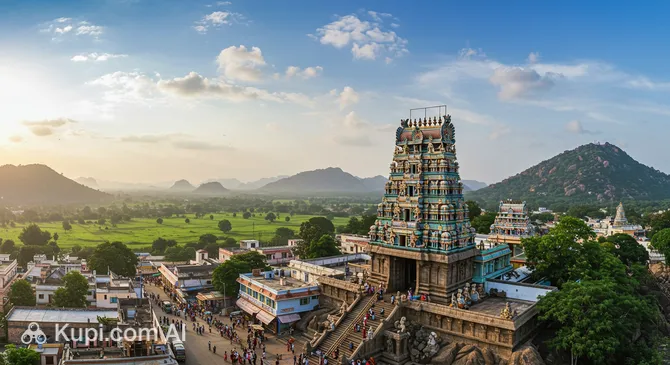
Palani is a small but very significant town located in the state of Tamil Nadu, in southern India. It is famous for its deep spiritual atmosphere and is one of the most important pilgrimage centers for Hindus. The town is nestled at the foot of the picturesque Palani Hills, part of the Western Ghats, which gives it a special charm.

The population of Palani is 126,751 people. The climate here is predominantly tropical, with warm summers and milder, pleasant weather in the winter months, making it an attractive destination to visit for much of the year.

Palani. Illustration.
Source: Kupi.com AI

The crown jewel of Palani, attracting millions of pilgrims and tourists, is the Arulmigu Dhandayuthapani Swamy Temple (Murugan Temple), dedicated to the god Murugan. This ancient temple rises majestically on a hilltop, and the ascent itself—whether by numerous steps, funicular, or cable car—is part of an unforgettable experience. In addition to this famous sanctuary, Palani charms visitors with the beauty of its surrounding nature and the opportunity to experience the ancient traditions and culture of the region.

Palani is a place where you can not only visit holy shrines but also find peace, enjoy the tranquility, and take in the scenic landscapes of South Indian nature. If you are looking for spiritual enrichment and authentic experiences, Palani undoubtedly deserves your attention.

You can find more interesting facts on the Palani city history page.

Weather Overview

In Palani, a warm tropical climate awaits you. The temperature here is comfortable throughout most of the year, with average values ranging from 23.0°C in December to 28.9°C in April. Expect hot weather, especially from March to May, when daytime maximums can reach 33–34.5°C. The town has a pronounced rainy season, which usually falls between May and November, with the highest rainfall (up to 8 mm) occurring in November, and the number of rainy days exceeding 20 per month from June to November. The driest months are February and March, when there is practically no precipitation. To learn more about weather conditions and plan your trip in the best possible way, visit the Palani climate page.

Average monthly temperature

Average monthly precipitation

Interesting Facts

In addition to its main shrines, Palani hides many fascinating stories and features that make it even more attractive to curious travelers. Here are just a few interesting facts about this unique town:

Palani Murugan Temple. Illustration.
Source: Kupi.com AI

Traveler photos:

  • The Idol of Nine Poisons: According to legend, the main deity of the Palani Murugan Temple was created by the sage Bogar from a mixture of nine poisonous substances called "Navapashanam." It is believed that this unique combination gives the idol special healing properties, and the water used to wash the statue is thought to have medicinal powers.

  • Unique "Panchamritham": The temple's famous prasadam (sacred offering), "Panchamritham," is prepared from five natural ingredients—bananas, jaggery (unrefined palm sugar), ghee (clarified butter), honey, and cardamom. Remarkably, this dessert can be stored for months without any preservatives due to its unique composition and preparation method, and it has even received a Geographical Indication (GI tag).

  • The Legend of Idumban and Kavadi Aattam: A legend is associated with Palani about the asura Idumban, who, by the will of the sage Agastya, carried two hills on a yoke (kavadi). Lord Murugan tested him, and Idumban became the first to bring him an offering in this form. This gave rise to the colorful tradition of "Kavadi Aattam"—a ritual dance with a richly decorated yoke that pilgrims perform on their way to the Murugan Temple.

  • One of the Six Main Houses of Murugan: Palani is considered one of the six "Arupadaiveedu"—the six most sacred abodes of Lord Murugan in Tamil Nadu. Each of these sites is associated with a specific stage of the deity's life or a specific deed, and Palani symbolizes his ascetic aspect after a dispute with his parents.

How to Get There

There are several ways to reach Palani, but the most convenient for many travelers, especially those arriving from afar, is to fly into one of the nearest airports and then transfer by taxi or bus. There is no airport in Palani itself, but several air hubs are located within reasonable reach.

The nearest major airport is Coimbatore International Airport (IATA: CJB), located in the city of Coimbatore, approximately 82 km from Palani. This is a fairly large airport from which Palani can be reached by taxi or regular bus in about 2–2.5 hours. Another popular option is Madurai Airport (IATA: IXM), located in the city of Madurai at a distance of about 93 km. The journey from this regional airport to Palani will take approximately 2.5–3 hours. For those looking for more international flight options, Cochin International Airport (IATA: COK) in the city of Kochi is suitable. It is located further away, about 127 km from Palani, but it is a major international hub; the drive from here to Palani takes about 3.5–4 hours.

For convenience, here is summary information on the main airports from which you can reach Palani:

AirportPassenger trafficDistance
Coimbatore International Airport3.3 mln82 km
Madurai Airport1.4 mln93 km
Cochin International Airport11.2 mln127 km
Tiruchirapalli International Airport1.8 mln135 km
Salem130 132159 km

In addition to air travel, Palani can be reached by land. The town has good bus connections with major cities in Tamil Nadu and neighboring regions of India. A bus trip can be an economical option, also allowing you to enjoy views of South Indian nature. Although Palani itself does not have its own major railway station, nearby railway junctions are located in cities such as Dindigul or Coimbatore, from where you can continue your journey to Palani by bus or taxi. It is recommended to check schedules and ticket availability in advance, especially during the peak tourist season and major festivals.

Main Attractions

Palani, one of the key spiritual centers of India, opens the gates to a world of ancient shrines for pilgrims and tourists. The town is famous for its temples, each of which holds a unique history and a special atmosphere, attracting those seeking spiritual enlightenment and cultural enrichment.

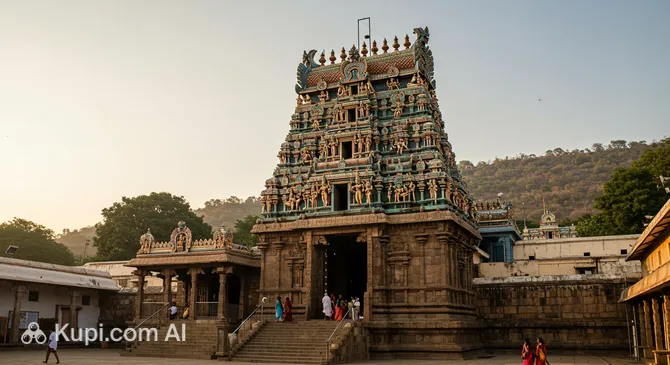
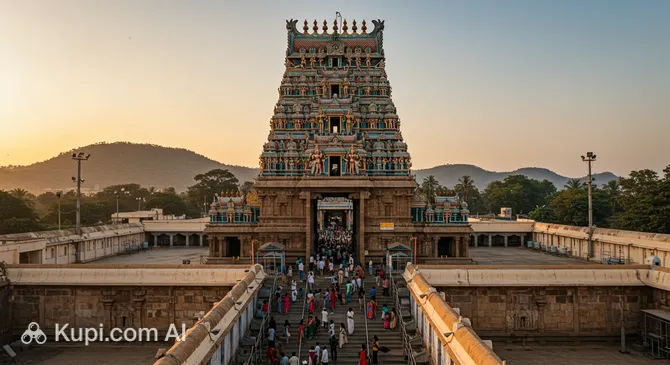
The main sanctuary and symbol of Palani is the Palani Murugan Temple (Arulmigu Dhandayuthapani Swamy Thirukkoil), majestically perched atop Sivagiri Hill. This temple is one of the six most revered temples of Lord Murugan (Arupadaiveedu) in Tamil Nadu, drawing millions of devotees annually. The ascent to the temple—whether on foot via numerous steps, by funicular, or by cable car—is an integral part of the pilgrimage and offers breathtaking panoramic views of the surrounding landscapes. Inside the sanctuary, visitors can feel a powerful spiritual energy and a sense of awe before the main deity, Lord Murugan.

Palani Murugan Temple. Illustration.
Source: Kupi.com AI

Traveler photos:

At the foot of Palani Hill lies another significant temple—the Thiru Avinankudi Murugan Temple. It is believed to be the oldest temple in Palani, the place where Lord Murugan appeared as a young ascetic after a dispute with his parents. Many pilgrims visit this temple before ascending to the main shrine on the hill. It charms with its peaceful atmosphere, beautiful Dravidian architecture, and provides a quiet place for prayer and reflection.

Thiru Avinankudi Murugan Temple. Illustration.
Source: Kupi.com AI

Traveler photos:

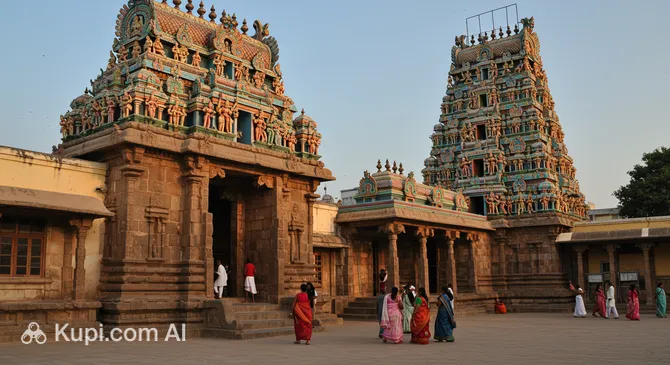
Not far from the main sanctuaries is the Periya Nayaki Amman Temple (Ooramabalam), dedicated to the goddess Parvati, consort of Lord Shiva and mother of Murugan. This vast temple complex, built in the traditional Dravidian style, impresses with its high gopurams (gateway towers) and intricately carved columns. The temple plays an important role in local religious rites and festivals, and visiting it offers an opportunity to get closer to the Hindu traditions and cultural heritage of the region.

Periya Nayaki Amman Temple (Oorambalam). Illustration.
Source: Kupi.com AI

Traveler photos:

Visiting these sacred sites in Palani is not just sightseeing, but a deep immersion into the spiritual atmosphere and centuries-old culture of South India, leaving lasting impressions and a sense of tranquility.

Local Cuisine

The cuisine of Palani is a vibrant reflection of the culinary traditions of the state of Tamil Nadu, with an emphasis on vegetarian dishes and the use of fresh local products. As an important pilgrimage center, Palani offers unique culinary experiences closely linked to the spiritual life of the town, where even food can be a sacred offering.

Be sure to try the famous Panchamritham—a unique sweet offering from the Palani Murugan Temple, made from five natural ingredients (bananas, jaggery, ghee, honey, and cardamom). This is not just a dessert, but part of the cultural heritage of Palani. Classic South Indian dishes are also widespread: airy idlis (steamed rice cakes), crispy dosas (thin pancakes made from rice and lentil flour), and savory vadas (fried lentil donuts), served with aromatic sambar (lentil soup with vegetables) and various chutneys. A traditional Tamil lunch, served on a banana leaf and consisting of rice with several types of curry, vegetables, and rasam, is also an integral part of the local gastronomic experience.

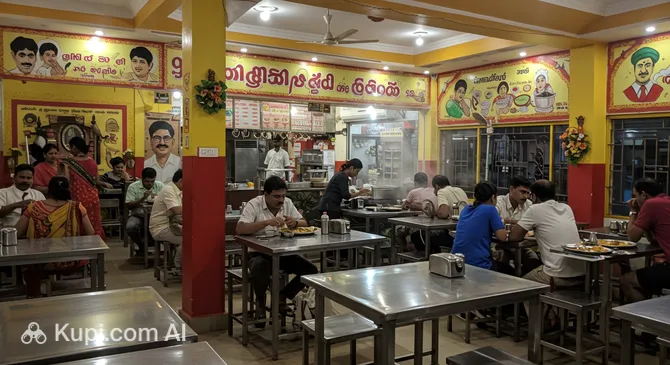
While vegetarian cuisine dominates, meat dishes can also be found in Palani. Biryani is particularly popular. One well-known place to taste aromatic biryani is Thalappakatti Restaurant, which offers hearty and delicious versions of this dish.

Thalappakatti Restaurant. Illustration.
Source: Kupi.com AI

Traveler photos:

As for drinks, you should try traditional South Indian filter coffee (kaapi), strong and aromatic, often served with frothed milk. Tea (masala chai), refreshing lassi (a yogurt-based drink), and fresh juices from local fruits are also popular. In hot weather, there's nothing better than the cool water of a tender coconut.

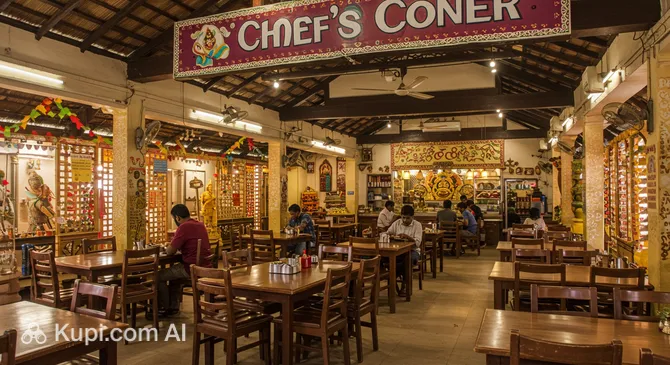
The food culture in Palani is diverse. Locals and pilgrims often prefer simple and inexpensive eateries (messes) and small restaurants offering authentic home cooking. Street food also plays an important role, especially near temple complexes, where you can find a variety of snacks and sweets. The town also has larger restaurants, such as Chef's Corner, which offer a wider selection of dishes in a comfortable setting. The main thing that unites the gastro scene of Palani is the freshness of the ingredients and rich, but not overly spicy, flavors that will appeal to many tourists.

Travel Tips

Welcome to Palani! To ensure your spiritual journey and introduction to this unique South Indian town go as smoothly and pleasantly as possible, we have gathered some practical tips.

  1. Clothing and Essentials:

    Palani has a tropical climate, so light, breathable cotton clothing is ideal year-round. During the monsoon season (usually May to November), bring a light raincoat or umbrella. For visiting temples, such as the Murugan Temple, modest clothing is mandatory: shoulders and knees must be covered for both men and women; a scarf or shawl can be useful. Comfortable shoes are absolutely necessary, especially if you plan to climb to the temple by steps (although there is a funicular and cable car). Don't forget sunscreen, a hat, and sunglasses. For electronics, you will need an adapter for Indian sockets (types D, M, sometimes C).

  2. Transport:

    For short distances in Palani, auto-rickshaws (tuk-tuks) are most commonly used. Always agree on the price beforehand or ensure the driver has turned on the meter. Local buses connect different parts of the town and surroundings but can be overcrowded. For long-distance trips or greater comfort, you can hire a taxi. Popular ride-hailing apps like Ola or Uber may have limited coverage in a small town like Palani; local taxi stands are more reliable. Renting a car is usually not required for tourists and is not recommended due to local traffic conditions and the availability of other options.

  3. Finances:

    The local currency is the Indian Rupee (INR). It's best to exchange major currencies (USD, EUR, GBP) at authorized exchange offices or banks in major cities before arriving in Palani or upon arrival at major airports, as choices in the town itself may be limited. Credit/debit cards are accepted in large hotels and some shops, but always have enough cash with you for small establishments, markets, and paying for auto-rickshaws. International cards may not work everywhere; notify your bank of your trip. ATMs are available, but they may not always work with all international cards or may run out of cash, especially during festivals. An approximate daily budget (excluding accommodation) might be 1500–3000 INR. Tipping is welcome but not always mandatory; in restaurants, it's common to leave 5–10%, and for rickshaw drivers, rounding up the amount is sufficient.

  4. Health and Safety:

    Pharmacies (medical shops) are available in Palani, where you can buy basic medications. Some may not operate 24/7, so it's useful to have a small first-aid kit with you. For serious health issues, it is better to seek help in larger neighboring cities such as Coimbatore or Madurai, which have better-equipped clinics. Be sure to take out travel insurance. Palani is generally a safe town, especially in temple areas. However, be mindful of your belongings in crowded places to avoid pickpocketing. Try not to walk alone in poorly lit or deserted areas at night. Drink only bottled or purified water.

  5. Communication:

    The main language spoken is Tamil. Some locals may also understand Hindi. English is common in tourist areas, hotels, and among young people, but not everywhere. Learning a few phrases in Tamil, such as "Vanakkam" (Hello/Hi), "Nandri" (Thank you), and "Evvalavu?" (How much?), will be very useful and appreciated by locals. A local SIM card (operators Airtel, Jio, Vodafone Idea) can be purchased at airports or official stores in large cities (you will need a copy of your passport/visa and a photo); activation can take several hours. Wi-Fi is available in most hotels, but public hotspots can be rare. Useful apps include Google Maps and a translator.

  6. Local Etiquette:

    A slight nod of the head or the "Vanakkam" gesture (palms joined at chest level, as in "Namaste") is usually used when greeting. Handshakes are common when interacting with men; it's better not to offer your hand to women first unless she does so. Be sure to remove your shoes before entering temples and homes. Use your right hand for eating, passing, and receiving items, as the left hand is traditionally considered unclean. Public displays of affection are not accepted. Always ask for permission before taking photos of people, especially in or near temples.

  7. What to Avoid:

    Do not point your finger at people or sacred objects; use an open palm or a nod of the head instead. Try not to show anger or impatience in public—this is considered very impolite. Stay calm even if things don't go as planned.

  8. Additional Tip:

    Temple Visiting Time: The Main Murugan Temple can be very crowded, especially during festivals (e.g., Thaipusam, Panguni Uthiram) and on Tuesdays, Fridays, and weekends. Try to visit early in the morning or on a weekday to avoid large crowds. Check the schedule of pujas (religious rituals) to catch the most interesting ceremonies.

Palani offers a deeply spiritual and culturally rich experience. We hope these tips make your trip to this sacred city of India more comfortable and unforgettable.

Entertainment & Nightlife

Palani is, above all, a deeply spiritual center, and its unique atmosphere shapes the character of evening and nighttime activities. Here, you won't find noisy nightclubs, neon-lit bar districts, or 24-hour parties in the conventional sense. Nightlife in Palani is more suited for quiet relaxation, peace, and enjoying the local culture at a more measured, contemplative pace.

The main evening activity for many visitors and locals is dinner at one of the town's numerous restaurants. After a busy day of visiting temples, it's pleasant to relax and enjoy traditional South Indian cuisine or other dishes. For example, you can visit Thalappakatti Restaurant, famous for its aromatic biryanis, or stop by Chef's Corner, which offers a diverse menu. Dinner for two at such mid-range restaurants might cost around 800–1500 Indian Rupees, depending on your choice of dishes. Drinks like fresh juice or traditional lassi usually cost between 50–150 Rupees. These establishments offer a pleasant atmosphere for an evening meal and a chance to explore local culinary delights.

Chef's Corner. Illustration.
Source: Kupi.com AI

Traveler photos:

Instead of the lively night streets characteristic of megacities, evenings in Palani can be spent taking leisurely walks through the well-lit central areas. Occasionally, you can browse local shops that may stay open until late evening, especially during festival periods. Many visitors find a special charm in the silence and tranquility that descends upon the town after the temples close, allowing them to feel its unique energy more deeply. Specialized night markets or concert venues with regular programs are generally not found here.

The evening atmosphere in Palani is mostly quiet and family-oriented. Most establishments, including restaurants, close relatively early, usually by 10:00 PM – 11:00 PM. The dress code in restaurants is casual; however, when walking near temple grounds in the evening, it is still recommended to stick to a modest style of clothing. For getting around after dark, it is most convenient to use auto-rickshaws (don't forget to agree on the price beforehand) or order a taxi through your hotel. In terms of safety, Palani is considered quite peaceful; nonetheless, standard precautions like staying in well-lit areas and being mindful of personal belongings are always advisable.

As for daytime entertainment, the main focus in Palani is undoubtedly its famous temples, such as the majestic Murugan Temple. The town is not known for large amusement parks, numerous modern art museums, or an active theatrical life in the secular sense. Its main appeal lies in its rich spiritual heritage, cultural identity, and the beauty of the surrounding nature, which can be explored during daylight hours.

Parks & Museums

Palani, being primarily a sacred pilgrimage site, offers its guests a unique combination of spiritual heritage and natural beauty, which largely replace traditional urban parks and museums. Instead of vast park zones, you can enjoy the peaceful landscapes of the Palani Hills and the landscaped grounds of the temples, while the ancient sanctuaries themselves act as living museums preserving a wealth of culture and history.

Although Palani does not have large municipal parks in the conventional sense, its natural beauty and well-maintained temple grounds more than compensate for this. The Palani Hills themselves, on and at the foot of which the town is located, are a picturesque green zone. The ascent to the main Palani Murugan Temple opens up breathtaking views of the surroundings, and the temple area at the top of the hill offers space for quiet contemplation. The areas around the Thiru Avinankudi Murugan Temple at the foot of the hill are also well-kept and promote peace, allowing visitors to rest in the shade and enjoy the calm atmosphere of this ancient place. These spaces are ideal for meditation or simply quiet relaxation, allowing you to immerse yourself more deeply in the spiritual atmosphere of the town.

There are no separate major museums or art galleries in the classical sense in Palani. However, the town's cultural and historical heritage is so rich that its main temples are themselves priceless treasures. The majestic Palani Murugan Temple, the ancient Thiru Avinankudi Murugan Temple, and the impressive Periya Nayaki Amman Temple (Ooramabalam) are not just places of worship but true monuments of Dravidian architecture. Their walls, gopuram towers, columns, and inner sanctuaries are decorated with exquisite carvings, sculptures, and murals depicting mythological stories and the history of the region. Visiting these temples provides a unique opportunity to touch centuries-old traditions, art, and the spiritual life of South India, studying them like open-air exhibits.

For a deeper immersion into the atmosphere of Palani and to find authentic experiences, besides visiting the main temples, take a walk along the less busy trails around the hills—they offer beautiful views, and you can feel the tranquility of nature. Also, look out for small, lesser-known shrines scattered throughout the town and its surroundings; they often have their own special aura and can provide unexpected moments of peace away from the main tourist flows, allowing you to see another, more intimate side of this amazing place.

Getting Around

Getting around Palani is quite simple, thanks to several types of transport catering to both locals and the numerous pilgrims and tourists. Although the public transport system here is not as extensive as in megacities, it manages well with providing access to all key points of the town, including the famous temples.

The main form of public transport in Palani is local buses. They run on various routes, connecting the bus station, markets, residential areas, and, of course, the approaches to the temple complexes. Buses are the most economical way to get around. Fares are usually paid in cash directly to the conductor on the bus; tickets are also issued by them. Be prepared for the fact that during peak hours and major festivals, buses can be overcrowded. Schedules may not always be strict, but buses run frequently throughout the day.

The most popular and flexible way to move short and medium distances in Palani is by auto-rickshaws (also known as "tuk-tuks"). They are easy to find in almost any part of the town. It is vital to agree on the cost of the trip with the driver beforehand, as meters are not always used or may be out of order. Auto-rickshaws are convenient for door-to-door trips and can be useful if you are traveling in a small group.

A special place in Palani's transport system is occupied by the means of ascent to the main Murugan Temple, located on the hill. For this, there is a funicular (winch railway) and a cable car (winch and ropeway). These are not just transport but part of the experience, as they offer scenic views. Tickets for the funicular and cable car are purchased at ticket offices at the foot of the hill. On holidays and weekends, there may be queues here.

For more comfortable trips, especially if you have luggage, are heading out of town, or prefer a private transfer, you can use taxi services. Taxis can be found at special ranks or ordered through your hotel. As with auto-rickshaws, it is recommended to clarify the cost of the trip before it begins.

Public transport in Palani usually starts early in the morning and finishes late in the evening. At night, the availability of buses and auto-rickshaws may be limited. Overall, transport in Palani is considered affordable. Always have small cash with you for convenience. When planning your movements, especially to the temples, take into account possible waiting times and the influx of people during peak hours.

Accommodation

When planning a trip to Palani, you will find that the town offers a variety of accommodation options to suit the needs of both pilgrims and tourists with different budgets. The range of available housing includes budget guesthouses (often called "lodges"), simple hotels, more comfortable mid-range hotels, and some apartments that may be suitable for families or long stays. Luxury resorts in Palani itself are rare, as the main focus is on serving the needs of pilgrims.

When choosing a place to stay, many tourists prefer areas located in close proximity to the main sanctuary—the Palani Murugan Temple—or near the central bus station, providing easy access to both attractions and transport links. Staying at the foot of the hill or along the main roads leading to the temple is also a popular choice.

Since Palani is a major pilgrimage center, especially during significant religious festivals (such as Thaipusam or Panguni Uthiram), it is strongly recommended to book accommodation in advance. During peak periods, the demand for hotels increases sharply, and finding a suitable option on the spot can be difficult. Booking ahead will help ensure a comfortable stay and avoid extra hassle.

The price range for accommodation in Palani varies from very budget options to mid-priced hotels. You can book housing through popular online platforms and travel aggregators, or directly by contacting the hotel. Some small guesthouses may not have an online presence, and booking them is possible by phone or upon arrival, but this carries a certain risk, especially during busy seasons.

Nearby Cities

For those who want to explore the surrounding area, Palani serves as an excellent starting point for day trips to several interesting nearby places:

CityPopulationDistance
Kodaimangalam8 5542 km
Balasamudram16 2424 km
Palaiya Ayakkudi30 8484 km
Kalaiyamputhur13 0136 km
Chinna Kalaiyamputtur8 9336 km

These nearby destinations offer insight into the region's diverse culture and landscapes. For example, Kodaikanal, known as the "Princess of Hill Stations," entices travelers with its picturesque lakes, including the famous star-shaped Kodaikanal Lake, refreshing waterfalls like Silver Cascade, and the cool, invigorating climate of a popular hill station. A trip here promises magnificent panoramic views and an unforgettable holiday in the heart of nature. In turn, Dharapuram will be of particular interest to history and ancient architecture lovers, as it is one of the oldest towns in the region, known for its ancient temples that bear witness to a rich cultural past. Each of these trips promises new experiences and a deeper acquaintance with the unique features of southern India, whether its natural beauty, historical treasures, or distinctive local traditions.

Shopping & Souvenirs

Shopping in Palani offers a unique experience closely linked to its status as an important pilgrimage center in India. You won't find huge modern shopping complexes here, but you can immerse yourself in the atmosphere of traditional trade. The town is famous primarily for religious paraphernalia, ritual items, local crafts, and its famous prasadam—Panchamritham. Shopping in Palani is more of an opportunity to bring home a piece of the spiritual atmosphere and authentic souvenirs than a hunt for brands.

The main shopping spots in Palani are concentrated around the main temples, especially near the Palani Murugan Temple and the Thiru Avinankudi Murugan Temple. The streets leading to these shrines and the squares at their foot are dotted with numerous small shops, stalls, and street vendors. Here you can find a wide range of goods oriented toward pilgrims and tourists. Busy trade is also observed in the area of the central bus station.

There are no large modern shopping centers in the Western sense in Palani. Shopping here is more traditional, centered on small shops and market rows. If larger retail establishments are found, they usually specialize in everyday goods or traditional products and are not tourist attractions in themselves.

While Palani may not have one large centralized tourist market, small local markets are scattered throughout the town, selling fresh fruits, vegetables, flowers, and daily necessities. The market rows and numerous stalls near the temple complexes offer a special flavor. Here, the atmosphere of market trade mixes with religious fervor, and you can find both souvenirs and ritual supplies.

From Palani, it is worth bringing back souvenirs that reflect its spiritual significance and local traditions. Be sure to buy Panchamritham—the famous temple prasadam, which is sold in special packaging and is the town's calling card. Also popular are images and statues of Lord Murugan made from various materials (metal, wood, stone). You can find ritual items such as copper water vessels, incense, and prayer beads (rudraksha, tulasi). Pay attention to the products of local artisans, such as textiles with traditional patterns, small wooden crafts, or palm leaf products.

Shops in Palani, especially those near temples, often operate from early morning until late evening to serve pilgrims. Typical opening hours for most shops are approximately 9:00 AM – 10:00 AM to 8:00 PM – 9:00 PM, but they may vary. During major festivals, trade can be even more lively and prolonged. The main method of payment, especially in small shops and markets, is cash (Indian Rupees). Some larger shops and hotels may accept credit or debit cards, but it is better to always have a sufficient supply of cash with you.

The Tax Free system for tourists on goods purchased in Palani, as in most small towns in India, is practically non-existent. This service is more characteristic of large international airports and specialized stores in major tourist centers when purchasing expensive goods for export. Therefore, when making purchases in Palani, you should not count on a VAT refund.
Reached the end of the page?

That means the route is fully explored