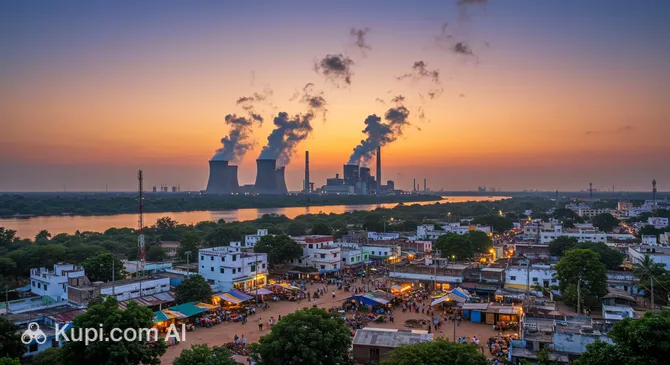
Ramagundam is a dynamic industrial hub located in the state of Telangana in sunny India. Known as the "City of Energy," it is filled with an atmosphere of creation and a rhythmic work pace, stretching along the banks of the majestic Godavari River. This is a place where the power of modern technology meets the traditional Indian way of life, creating a unique portrait of an industrial giant.
Ramagundam. Illustration.
Source: Kupi.com AI
The city occupies a strategic position in the Godavari coal valley, and its population, according to urban agglomeration data, exceeds 240,000 people. The foundation of life here consists of energy enterprises and mines, which form a distinct landscape dominated by the silhouettes of power plants. If you are attracted to modern industrial heritage and the history of the development of the energy power of the region, Ramagundam will be an interesting discovery for you.
The city's main attractions are the massive NTPC thermal power plant and the ancient Lord Rama Temple, located in the historic part of the settlement. The city serves as an important transit hub and offers travelers the opportunity to see India from the perspective of its industrial potential. We invite you to visit this energetic city and feel its unique working pulse.
Weather Overview
The climate in Ramagundam is dry continental, characterized by extreme temperature fluctuations throughout the year. The most challenging period is summer (from March to May), when the thermometer often reaches +40°C, creating very hot conditions. If you are planning a visit, it is useful to check the weather in Ramagundam expected in the near future.
The monsoon season, which lasts from June to September, has a significant impact on city life. Heavy rainfall occurs during this time, especially in July and August (average rainfall in July can exceed 440 mm). Expect a very hot and dry summer, followed by a wet rainy season that brings long-awaited coolness but also significant humidity.
The most favorable time for a visit is considered to be the winter months—from November to February. During this period, the average air temperature is a comfortable +23°C...+25°C, and nights bring a pleasant freshness (minimum around +17°C). This is the ideal time for walking around the city and exploring the surroundings without exhausting heat or heavy rains.
Average monthly temperature
Average monthly precipitation
Interesting Facts
The city's name has a sacred origin: "Ramagundam" is formed from the name of the god Rama and the word "gundam," which in the Telugu language means "sacred pond" or source.
The city is home to NTPC Ramagundam—the first thermal power plant in India to receive the ISO 14001 international environmental management certification.
Ramagundam is the only city in the Peddapalli district with the status of a municipal corporation, even though it is not the administrative center of the district itself.
The city's economy is inextricably linked to the Godavari Valley, where the richest coal deposits are located, providing fuel for the region's energy giants.
The social character of the city is unique: historically, more than half of its residents are connected to the working class employed in the energy and mining industries, creating a special atmosphere of a "labor polis."
How to Get There
Ramagundam is an important transport hub for the state of Telangana, ensuring good connectivity with major centers in southern and central India. Most travelers arrive here via regional transport corridors linking the city with Hyderabad, which is approximately 225–250 kilometers away. If you are planning a trip, research in advance how best to get to Ramagundam based on your route.
Air service is available through the local Ramagundam Airport (RMD), which handles domestic flights. However, for international travel, visitors most often use Hyderabad Airport, from where the city can be reached by bus or taxi in 4–6 hours. It is worth considering that roads in the industrial zone can be busy with heavy freight transport, especially during peak hours.
Railway transport is one of the most convenient ways to reach the city. Ramagundam station is located on a major line and receives trains from many cities across the country. A rail trip from Hyderabad usually takes between 3 to 5 hours, which is significantly faster than traveling by road, given potential highway traffic.
Station
Passenger traffic
Distance
Secunderabad Junction railway station
10
181 km
Secunderabad Junction railway station
10
181 km
Hyderabad Deccan railway station
8
187 km
Bidar railway station
3
231 km
Hazur Sahib Nanded railway station
7
236 km
Main Attractions
Although Ramagundam is primarily a major industrial center, it possesses several interesting locations worth visiting. The main spiritual landmark of the city is the Lord Rama Temple, located in the old part. The city was named in honor of this deity, and a visit to the temple allows tourists to experience local religious traditions and architecture away from the factory quarters.
For fans of industrial aesthetics, the main point of interest is the NTPC Thermal Power Station. This is one of the largest stations in South India and has become a true symbol of the region. While access to the grounds may be restricted, the view of this massive structure is impressive in its power and technology, reflecting the city's status as the energy heart of Telangana state.
A natural attraction of the city is the Godavari River, on whose banks it is situated. Here you can find places for peaceful walks and relaxation by the water. Although tourist infrastructure on the coast is minimally developed, the river offers a pleasant contrast to the noisy industrial zones. Additionally, as an idea for a day trip, you can consider visiting the Sri Raja Rajeshwara pilgrimage center in neighboring Vemulawada, which is famous for its unique atmosphere.
Local Cuisine
The culinary scene in Ramagundam is steeped in the traditions of Telangana state and focused on hearty, spicy Telugu cuisine. Rice is at the heart of most dishes, complemented by a variety of sauces and spices. If you want to experience the local flavor, be sure to try pulao or the classic idli rice cakes, served with rich sambar broth and spicy coconut chutneys.
Legumes and vegetable dishes, such as dal, hold a special place in the residents' diet. Street food is represented by numerous stalls where you can grab a snack of hot samosas or bajji. A characteristic feature of the local cuisine is its spiciness—the people of Telangana are famous for their love of chilies. During festival periods, such as Bathukamma, many traditional sweets prepared according to ancient recipes go on sale.
Among beverages, hot Indian tea (masala or regular with milk) is the absolute leader, which locals drink throughout the day. In hot weather, refreshing nimbu pani (spiced lemonade) is popular. Restaurants and eateries are mainly concentrated around markets and the railway station, offering budget-friendly and authentic meals. This is simple and honest food designed to energize a working city.
Travel Tips
Visiting a unique industrial center like Ramagundam requires some preparation to ensure your trip is comfortable and safe. We have prepared several tips to help you better navigate life in this "energy heart" of the region.
Clothing and Essentials: Choose light clothing made of natural fabrics, as it can be very hot in the region. In the dry season, the city can be dusty due to mining operations, so a protective mask or a light scarf will not be out of place. When visiting temples, remember the modest dress code (shoulders and knees should be covered).
Transport: The main way to get around is by auto-rickshaws. Always agree on the price in advance or use mobile apps to call a taxi. Avoid traveling during shift changes (morning and evening) when the roads are most congested.
Finances: There are many ATMs in the city, but small shops and rickshaws only accept cash rupees. Cards work in large hotels and some stores. Keep a supply of small bills with you.
Health: Drink only bottled water and avoid ice in street cafes. Due to the industrial nature of the city, people with sensitive respiratory systems should monitor the air quality.
Communication: The main language is Telugu, but English is understood by hotel staff and young people. Knowing a few phrases in Telugu (for example, "Namaskaram" — a greeting) will win the sympathy of the locals.
Local Etiquette: Be sure to remove your shoes when entering homes and temples. Indians are very friendly, but respect their personal space, especially in working-class neighborhoods.
What to Avoid: It is not recommended to walk alone in remote mining areas or near slums after dark. Also, avoid photographing restricted facilities without special permission.
Best Time: Plan your visit for the winter months (November–February), when the temperature is most comfortable for walking.
By following these simple rules, you will be able to fully appreciate the power and hospitality of Ramagundam. Have a pleasant journey!
Entertainment & Nightlife
The entertainment scene in Ramagundam reflects its status as a working-class city. There is virtually no traditional "nightlife" in the Western sense—with an abundance of clubs and bars—here. Main entertainment is focused on family leisure and local cultural events. In the evening, residents prefer to spend time in local cinemas, which show the latest Indian film releases, or taking walks in the central districts.
A true atmosphere of celebration and fun takes over the city during major festivals such as Bathukamma, Diwali, or Holi. During these periods, the streets are transformed, fairs and public events are held, which become an excellent occasion for tourists to get acquainted with the culture of Telangana state. The main festivities usually take place in the central squares and markets.
For more active evening leisure or shopping, locals often head to neighboring Karimnagar or plan trips to Hyderabad. In Ramagundam itself, night activity quiets down quite early, as the city lives according to the working rhythm of the enterprises. If you decide to go for a walk in the evening, it is recommended to choose well-lit central streets or the Godavari riverbank, and for transportation, it is better to use official taxi services or rickshaws.
Parks & Museums
Due to its industrial nature, Ramagundam does not have a large number of classic museums or extensive park complexes. The main green zones of the city were created for the relaxation of local residents and to support the ecology in the area of industrial operations. The most popular place for walks is the banks of the Godavari River, where the natural landscape allows for a temporary escape from the industrial surroundings.
There are no specialized historical museums in the city; however, the territory of the NTPC thermal power plant itself is sometimes viewed as an "open-air museum" for those interested in industrial architecture and energy. In the old part of the city, small temple gardens are of interest; although they are not large in area, they create islands of tranquility and traditional lifestyle.
For those looking for more organized park recreation or cultural exhibitions, it is recommended to head to neighboring Karimnagar, where the choice of museums and recreational zones is wider. In Ramagundam itself, greenery is represented mainly by small squares within the residential colonies of energy workers and miners, which serve as social hubs for the local population.
Getting Around
The public transport system in Ramagundam is primarily represented by buses and nimble auto-rickshaws. The bus network connects major residential areas with industrial zones and the railway station. Traveling by bus is the most budget-friendly way to get around, but during peak hours, when work shifts at the power plant and mines change, transport can be very overcrowded.
The most popular and convenient means of transport for tourists are auto-rickshaws. They easily maneuver through traffic and can take you to any point in the city. It's best to agree on the fare in advance, as meters are rarely used. Distances within Ramagundam are relatively small, and a trip from the station to the center usually takes no more than 15–20 minutes, provided there are no traffic jams caused by trucks.
Taxi services and aggregators like Ola or Uber also operate in the city, which are particularly convenient for trips to the airport or neighboring towns. Bicycle or scooter rentals are not common here, and pedestrian zones are poorly developed, so it is better to rely on motorized transport for comfortable travel. Keep in mind that due to the city's industrial status, there is a lot of dust on the roads, so a trip in a closed taxi may be preferable to an open rickshaw.
Accommodation
The hotel sector in Ramagundam is primarily geared towards specialists arriving on business trips and transit travelers. Budget hotels and guest houses predominate here, offering a basic set of amenities for a comfortable night's stay. The main concentration of such establishments is found in the areas adjacent to the railway and bus stations, which is very convenient for those making a brief stopover.
For longer stays, one can find apartments or corporate guest houses associated with large enterprises, though access to the latter may be restricted. The price range for accommodation in the city is quite affordable: a standard room in a local hotel costs on average between 500 and 2,000 rupees per night. There are no luxury five-star complexes in the city itself, so tourists seeking a high level of service usually head to nearby major centers.
When planning a trip, it is recommended to book accommodation in advance, especially if your visit coincides with major regional holidays or energy sector business forums. Areas near the Godavari River are considered quieter for staying compared to the noisy industrial center. Most bookings are made through popular Indian online platforms or directly upon arrival.
Nearby Cities
Ramagundam serves as an excellent starting point for exploring the northern districts of Telangana state, where the industrial landscape gives way to historic temples and picturesque agricultural scenery. Proximity to important transport arteries allows for easy planning of day trips to neighboring settlements.
One of the most interesting destinations is the city of Karimnagar, located about 65 km away. It is famous for its markets, silver filigree jewelry, and proximity to the historic Elgandal Fort. It is also worth visiting Peddapalli—the administrative center of the district, which is very close and offers a calmer provincial atmosphere. For those interested in local life and small temples, Kamanpur and Mancherial are interesting points on the map.
City
Population
Distance
Kamanpur
11 048
10 km
Naspur
31 244
12 km
Mancherial
89 935
15 km
Manthani
17 927
20 km
Peddapalli
41 171
20 km
Exploring the surroundings of Ramagundam will help you better understand the diversity of India, where massive factories sit alongside quiet villages. We recommend not limiting yourself only to the city limits and setting aside time for a trip to neighboring towns to see the real life of the Telangana region.
Shopping & Souvenirs
Shopping in Ramagundam is practical in nature and concentrated in traditional markets and shopping streets. Here you won't find huge, ultra-modern mega-malls, but you can immerse yourself in the atmosphere of a classic Indian bazaar. Main commercial activity bustles around the central square and near the railway station, where you can buy everything from everyday clothing to electronics.
In local markets, it's worth paying attention to textiles and cotton clothing, which are traditionally popular in Telangana. Ramagundam is also famous for its spice shops: fragrant chilies, turmeric, and other seasonings are always fresh and of high quality here. For tourists, handicrafts brought from neighboring rural areas can be of interest, especially during festivals.
Typical shop hours are from 10:00 AM to 8:00 PM, though small shops may close for a midday break. In most market outlets, payment in cash (Indian Rupees) is preferred, although larger stores are beginning to accept bank cards and mobile payments. Don't forget to bargain at the bazaar—it's an important part of the local social culture!