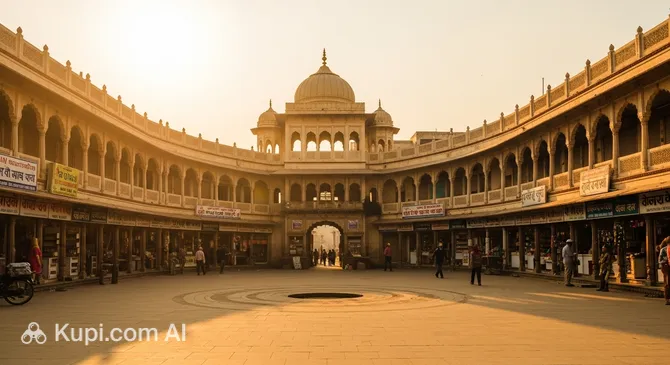
Sri Ganganagar is a fascinating city in the northern part of the state of Rajasthan, often referred to as the "food basket" of India. Founded in the early 20th century by Maharaja Ganga Singh, it literally emerged from the sands of the Thar Desert thanks to an ambitious project to build the Ganga Canal, which transformed arid lands into fertile plantations.
Sri Ganganagar. Illustration.
Source: Kupi.com AI
The history of Sri Ganganagar is inextricably linked to the development of irrigation. Initially, it was a small settlement called Ramnagar, but after colossal transformations, the city was renamed in honor of its founder. Today, it is an important agricultural and industrial center with a population of about 237,000, which has preserved the atmosphere of a hardworking provincial oasis.
Although the city is not a typical tourist hub, it attracts visitors with its authenticity and the opportunity to see India without embellishment. We invite you to get to know this unique place, where modern farms sit alongside traditional markets, and the sound of irrigation canals serves as a reminder of the man-made miracle that changed the face of the desert.
Weather Overview
The climate of Sri Ganganagar is characterized by a pronounced continental nature and extreme temperature fluctuations. Summers here can be incredibly hot, with the thermometer in June rising to +40°C and above, while dry winds from the Thar Desert bring dust. In winter, night temperatures sometimes drop to +5...+7°C, creating a noticeable contrast with the daytime warmth.
When planning your trip, be sure to check the weather in Sri Ganganagar for your chosen dates. Expect a very hot summer with rare thunderstorms during the monsoon period (July-August) and sunny, dry winters. The most comfortable time for a visit is from October to March, when pleasant warmth sets in and the average daytime temperature ranges between +20...+28°C.
Average monthly temperature
Average monthly precipitation
Interesting Facts
The city was named after its founder, Maharaja Ganga Singh, an outstanding reformer who personally oversaw the project to turn the desert into agricultural land.
Thanks to an advanced canal system, this region became a leader in mustard and wheat production, earning the honorary title of the "food basket of Rajasthan."
The literacy rate in Sri Ganganagar has historically been higher than the Indian average, making it an important educational center in the north of the state.
Ganganagar District was officially formed in 1949, almost immediately after India gained independence, and became a symbol of the successful development of arid lands.
The city is the birthplace of Ravindra Kaushik, one of India's most famous intelligence officers, whose biography served as the basis for many books and films.
How to Get There
Sri Ganganagar is located in the northern part of the state of Rajasthan, at a considerable distance from major metropolises. Detailed information on how to get to the city will help you plan your route in the most optimal way, taking into account the specifics of regional transport.
There is currently no airport in the city. The nearest air hubs are in Bikaner (about 300 km away) and Jaipur. Most travelers arrive at the major airports in Delhi or Jaipur and then continue their journey by land transport.
The most popular and convenient way to travel is by rail. Trains from Delhi take about 7–9 hours, connecting Sri Ganganagar with key cities across the country. Bus services are also well-developed: regular flights run between the city and the main centers of Rajasthan, Punjab, and Haryana. Travel time by bus can range from 8 to 10 hours depending on road conditions.
Station
Passenger traffic
Distance
Bahawalnagar Junction railway station
5
61 km
Bathinda railway station
7
107 km
Okara Cantonment railway station
5
107 km
Faisalabad Railway Station
6
183 km
Lahore Junction Railway Station
12
190 km
Main Attractions
Although Sri Ganganagar is a young city focused on agriculture, it has several places that deserve travelers' attention. One of the main spiritual shrines is the Gauri Shankar Temple, built of terracotta stone and dedicated to the gods Shiva and Parvati. Its architecture and peaceful atmosphere attract both pilgrims and ordinary tourists.
Also worth visiting in the city and its surroundings are the Balaji Dham temple and the unique mausoleum Laila Majnu ki Mazar. According to local legends, this place is connected with the love story of Laila and Majnu, and those who believe in the power of eternal devotion come here. Another iconic site is the Nagi War Memorial, erected in memory of the valor of warriors.
For those who want to feel the real rhythm of local life, a visit to Gol Bazaar is a must. This is the central market square, where the daily hustle and bustle, aromas of spices, and crowded stalls create the unique flavor of provincial India. Here you can see how the city lives away from the main tourist routes.
Local Cuisine
The culinary traditions of Sri Ganganagar reflect the rich heritage of Rajasthan with a noticeable influence from neighboring Punjab. The local diet is based on dishes made from wheat, mustard, and fresh dairy products. Be sure to try the classic Dal Baati Churma—a hearty lentil soup with baked wheat balls, which is the region's signature dish.
Among local establishments, the Pagoda Hotel & Restaurant stands out, where you can try traditional Rajasthani sets in a cozy setting. Also noteworthy is Masala Darbar, which offers a wide selection of spicy North Indian dishes prepared with fresh local ingredients.
Don't forget to refresh yourself with a glass of cool lassi (a yogurt drink) or warm up with fragrant masala tea. Street food in the city markets is a great opportunity to try mutton kebabs and various sweets such as gattaman, the taste of which you will remember for a long time.
Travel Tips
A trip to Sri Ganganagar will reveal the real, non-touristy India to you. These practical tips will help make your stay in the city comfortable and safe.
Clothing and gear: Choose light clothing made of natural fabrics (cotton, linen) to protect against the heat. If you plan to visit temples, be sure to cover your shoulders and knees. During the winter months (December-January), it can be cool in the evenings, so bring a light jacket or sweater.
Transport: The best way to get around the city is by auto-rickshaws. It is cheap and convenient for short distances. For trips out of town, it is better to book a taxi through your hotel or use regular buses.
Finances: The main currency is the Indian Rupee. In markets and rickshaws, only cash is accepted, so always carry small bills with you. Cards are only accepted in major hotels and some modern restaurants.
Health and safety: Drink only bottled water and avoid ice in street drinks. During the dry season, use scarves or masks for dust protection. The main pharmacies are concentrated in the city center.
Communication: The main languages are Hindi and Punjabi. English is understood by hotel staff and young people, but it is useful to learn a few basic phrases in Hindi for communicating in the markets.
Local etiquette: Always remove your shoes when entering homes and temples. Greet people with the traditional Namaste gesture; it always wins the favor of the locals.
What to avoid: Do not walk alone in poorly lit industrial outskirts late at night. Also, try not to photograph people without their explicit consent.
Extra tip: Visit the city during the Diwali festival or local harvest fairs—this is the best time to see Sri Ganganagar in all its glory.
This city will reward the patient traveler with its sincerity and the bright colors of the real Indian province. Have a pleasant journey!
Entertainment & Nightlife
Entertainment in Sri Ganganagar is of a quiet nature, typical for an agricultural region. The nightlife here is not as vibrant as in major metropolises, but there are several modern venues in the city. For example, A Square Lounge & Bar offers a stylish atmosphere and a good selection of drinks for an evening out.
Fans of a more energetic pastime should check out the Pyramid Night Club. This is a popular spot among local youth, where you can find modern music and relax with friends. Large complexes like the ARG Resort and Marriage Palace also often serve as cultural centers, hosting celebrations and themed evenings.
During the day, residents prefer to spend time in cinemas or at bustling markets. Overall, the city's atmosphere lends itself to leisurely contemplation of local life. For those seeking large-scale concerts or noisy parties, the best option would be to head to Jaipur, but for a quiet evening after sightseeing, local establishments are quite sufficient.
Parks & Museums
Due to Sri Ganganagar's relative youth and industrial focus, there are practically no classic museums here. The city's main cultural landmarks are its squares and memorial sites. One such object is Shahid Udham Singh Square, named after the famous revolutionary and now an important venue for city events.
Green zones in the city are represented mainly by small squares and private farms, such as Mangat Farm. Thanks to the irrigation canals that permeate the city, a kind of "green corridor" is created. Residents often relax near the water bodies, which serve as natural coolers in the hot climate of the Thar Desert.
For those looking for a full park experience, it is worth paying attention to the landscaped areas at large hotels and farms. Although the scale of public greenery is less than in large cities, the well-maintained gardens at agricultural centers provide an idea of how irrigation has transformed this arid region.
Getting Around
The transport system in Sri Ganganagar is simple and functional, perfectly meeting the needs of a provincial center. The main way to get around the city is by auto-rickshaws and cycle-rickshaws. This is the fastest and most affordable transport, capable of maneuvering through the narrow streets of the shopping districts. It is always best to agree on the fare with the driver in advance.
City buses connect the outskirts with the central squares, but they can be crowded during peak hours. For trips to neighboring cities, there is a central bus station with regular departures. The railway station is a key transport hub connecting the city with the largest metropolises in the north of the country.
Tourists should take into account that during the harvest season, the number of trucks and agricultural machinery on the roads increases, which can lead to traffic jams. For more comfortable long-distance trips, you can use taxi services or rent a car with a driver through local services.
Accommodation
Accommodation options in Sri Ganganagar are primarily geared towards business travelers and transit tourists. Mid-range hotels and budget guesthouses predominate here, providing the necessary comfort. One of the highest quality options is the Orbit Inn Resort & Hotel, which offers modern rooms and decent service.
The Ratan Resort is also popular, often chosen for a relaxing getaway or for hosting celebrations. In the city center, especially around the railway station and the Gol Bazaar area, you can find many small hotels that are convenient for those who want to be in the heart of the action.
The price range for accommodation in the city is very affordable. If your trip coincides with major festivals or agricultural fairs, we recommend booking accommodation in advance through reliable online services to ensure the best choice of rooms.
Nearby Cities
Sri Ganganagar serves as an excellent starting point for exploring the border areas of the northwestern part of the state. Very close by is the city of Abohar, known for its extensive fruit orchards and a sanctuary where you can see rare antelopes.
An interesting destination for a day trip is Hanumangarh, home to the ancient Bhatner Fort, considered one of the oldest fortresses in the country. Also worth noting is Pilibangan, whose surroundings hold archaeological traces of ancient civilizations. If you have more time, you can head to Bikaner to see its majestic palaces.
City
Population
Distance
Abohar
145 302
41 km
Pilibangan
37 288
51 km
Fazilka
76 492
57 km
Hanumangarh
129 654
57 km
Raisinghnagar
28 330
59 km
Exploring these nearby cities will allow you to delve deeper into the region's history and see how diverse and multifaceted Rajasthan is beyond its most famous tourist routes.
Shopping & Souvenirs
Shopping in Sri Ganganagar is primarily about visiting traditional bazaars where you can feel the true local flavor. The main commercial heart of the city is Gol Bazaar. Here you can find literally everything: from fragrant spices and locally produced mustard oil to high-quality cotton products.
Since the region is a major center for cotton cultivation, textiles here are of high quality and very affordable. As souvenirs, it is worth bringing back traditional Rajasthani embroidery, handmade leather goods, and local sweets that keep well and travel easily.
Shops are usually open from 10:00 AM to 8:00 PM, although many stalls in the markets may close for a afternoon break. Payment at most outlets is in cash, although larger establishments are starting to accept bank cards. Do not hesitate to bargain in the markets—it is an important part of the local trading culture.