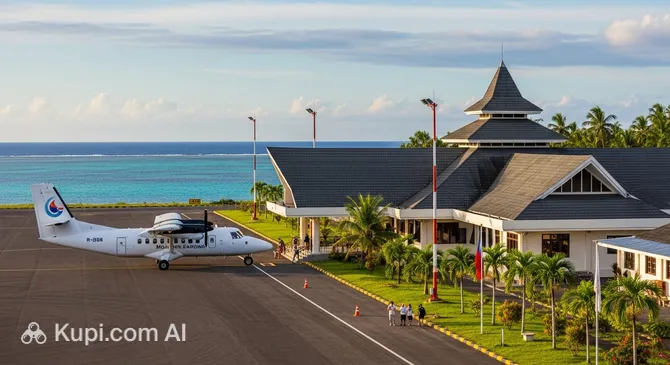
Frans Kaisiepo Airport, also known by its historical name Mokmer, is not merely a transport hub but a true legend of the Pacific region with a rich military past. Its famous runway, built during the Second World War, is considered one of the longest in this part of the world and is capable of accommodating even the heaviest airliners, which is a rarity for remote islands. Upon arrival, travellers immediately feel the atmosphere of exotic Indonesia: the terminal building is immersed in tropical greenery, and the fresh sea breeze serves as a reminder that the best beaches and coral reefs are very close by.
| Characteristic | Value |
|---|---|
| IATA code | BIK |
| ICAO code | WABB |
| City | Biak |
| Country | Indonesia |
| Time zone | Asia/Jayapura |
| Popular airlines | Sriwijaya Air, Lion Air, Wings Air |
| Schedule | Live departures board |
Airport Features and Highlights
Frans Kaisiepo Airport combines unique historical heritage with natural beauty, turning arrival on the island into a distinct little adventure.
- Unique Runway: The airport's main pride is its runway, measuring 3,571 metres in length. Inherited from a massive Allied airbase, it allows the airport to receive all types of modern aircraft without weight restrictions.
- Scenic Approach: Aircraft often approach from the ocean side, flying low over turquoise waters and colourful coral reefs. A window seat guarantees you one of the most breathtaking aerial excursions before you even touch the ground.
- No Queues: Despite its high status and capabilities, passenger traffic here remains moderate. This ensures a calm atmosphere, quick passport control, and baggage claim without unnecessary bustle.
- Proximity to the City: The airport is located practically within the city limits. The journey to most hotels or the seaport takes just 5–10 minutes by taxi, which is incredibly convenient after a long flight.
- Historical Atmosphere: The airport surroundings attract military history enthusiasts, as echoes of mid-20th-century events can still be found here. The terminal itself, though simple, is adorned with elements of traditional Papuan architecture, creating a special local flavour.
