Support

Indonesia

About the Country

Indonesia is a remarkable country of a thousand islands, stretching between the Indian and Pacific Oceans. As the world's most populous Muslim-majority nation, it offers a unique blend of vibrant culture and shared heritage. It is the world's largest archipelago, captivating visitors with its kaleidoscope of cultures, languages, and traditions. A journey here promises an incredible variety of experiences, from delving into ancient history to enjoying idyllic beaches.
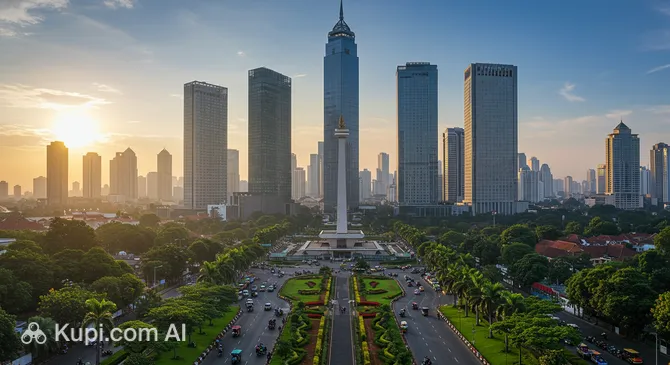
Jakarta. Source: Kupi.com Binoculars

The nation's capital, Jakarta, is a dynamic metropolis that blends modern skyscrapers with historic quarters. But the true charm of Indonesia lies in its nature: active volcanoes, emerald rice terraces, dense tropical forests with unique flora and fauna, and endless white-sand beaches with coral reefs. The warm, equatorial climate makes the country an attractive year-round destination.

Indonesia offers something for every traveller. You can explore the cultural heart of Bali, the town of Ubud, known for its arts and spiritual practices, or visit the famous sea temple of Tanah Lot, perched on a rock in the ocean. The hospitality of the local people, the exotic cuisine with its abundance of delicious halal options, and the overall atmosphere of relaxation and adventure make Indonesia a truly unforgettable destination. Visitors are encouraged to dress modestly, especially when visiting religious sites, to show respect for the local culture.
Currency

The national currency of Indonesia is the Indonesian Rupiah (IDR). Indonesian Rupiah banknotes feature a vibrant design, depicting prominent figures from Indonesian history, as well as the country's cultural and natural landmarks. Due to the relatively low value of a single rupiah, banknotes in large denominations are in circulation, which may seem unusual for tourists.

Currency can be exchanged at banks, official money changers, and some hotels. It is advisable to use official establishments to avoid scams and unfavourable exchange rates that may be offered by street money changers. In major tourist centres, hotels, restaurants, and shops, international credit cards are widely accepted. However, in smaller towns, at local markets, and for transport, it is preferable to have cash on hand.

Visa Requirements

When planning a trip to Indonesia, it's essential to understand the visa requirements in advance. For citizens of the United Arab Emirates, a visa is required for entry. The most convenient option for tourists is the Visa on Arrival (VOA), which can be obtained either upon landing at designated airports in Indonesia or applied for online as an Electronic Visa on Arrival (e-VOA) before you travel.

Regardless of the method, you will need a valid passport with a validity of at least six months from your planned date of entry into Indonesia. The VOA allows for an initial stay of 30 days and can be extended once for another 30 days, for a total maximum stay of 60 days. You may also be required to present a return or onward flight ticket and confirmation of your hotel booking. Visa regulations are subject to change, so it is highly recommended to check the latest information on the official Indonesian Immigration website or with the Embassy of Indonesia in the UAE before your departure.

We'll tell you if you need a visa

Specify where you are going, or
Your citizenship
Destination

Time Zones

As a vast archipelago, Indonesia is spread across three time zones. The western part of the country, including the islands of Sumatra and Java, along with West and Central Kalimantan, follows Western Indonesian Time (WIB, UTC+7). Central Indonesia, which covers Bali, the Lesser Sunda Islands, Sulawesi, and the provinces of East, South, and North Kalimantan, uses Central Indonesian Time (WITA, UTC+8). The eastern regions, such as the Maluku Islands and Papua, adhere to Eastern Indonesian Time (WIT, UTC+9).

When planning your journey across Indonesia, particularly if your itinerary involves flights or ferry crossings between different island groups, it is crucial to account for these time differences. This will help to avoid any confusion with transport schedules, hotel check-in times, and planning excursions.

How to Get There

The most convenient way to reach Indonesia, a nation spread across thousands of islands, is by air. The country has numerous international airports, with the primary gateway being Soekarno-Hatta International Airport in Jakarta, the nation's capital. Direct flights are readily available from the UAE's major hubs, with carriers like Emirates and Etihad Airways offering non-stop services. A direct flight from Dubai to Jakarta typically takes around eight to eight and a half hours. Popular tourist destinations like Bali (Ngurah Rai International Airport in Denpasar) are also well-connected with international flights, including options from the UAE.

Given Indonesia's island geography, overland travel into the country from abroad is limited and not the primary method for most tourists. However, ferry services operate between some Indonesian islands and neighbouring countries like Malaysia and Singapore. Cruise liners also frequently include Indonesian ports in their itineraries, offering a scenic way to arrive in the country. For travel within the archipelago, domestic flights and ferries are the key modes of transport.

When planning your trip to Indonesia, it is advisable to book flights and accommodation in advance. This is especially important if you are travelling during the peak tourist season, which is typically the dry season from May to September. Other busy periods include major holidays such as Eid, Christmas, and New Year, which are popular travel times for residents of the UAE. Booking ahead will not only help you save money but also guarantee availability for your desired dates.

For clarity, here is a summary of the main airports:

Airport Name City Passenger Traffic
Soekarno-Hatta International AirportJakartaVery Large
Ngurah Rai International AirportDenpasarLarge
Juanda International AirportSurabayaLarge
Sultan Aji Muhammad Sulaiman AirportBalikpapanMedium
Kualanamu International AirportMedanMedium

Indonesia is a kaleidoscope of islands, each with its own unique allure. As the world's largest Muslim-majority country, it is an exceptionally welcoming destination for travellers from the UAE, with halal food and prayer facilities widely available. From vibrant, energetic cities to serene resort areas, there is a destination to suit every taste. The nation's capital, Jakarta, a vast metropolis on the island of Java, often serves as the starting point for exploring the archipelago. It offers guests an immersion into history through its many museums and a chance to experience modern Indonesian culture, including a visit to the magnificent Istiqlal Mosque, the largest in Southeast Asia.

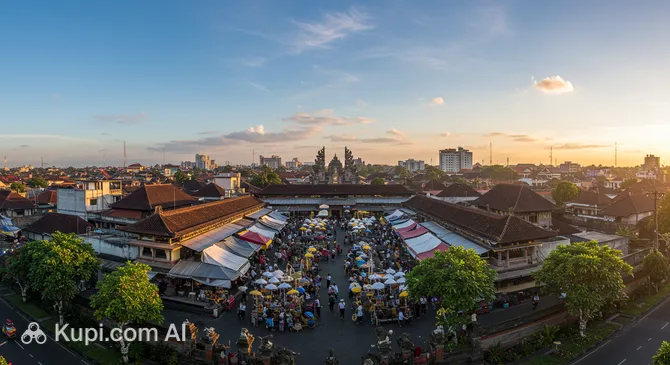
A particular favourite among travellers is, of course, Bali. Its administrative centre, Denpasar, greets visitors with vibrant markets and distinctive architecture, serving as a convenient gateway for exploring the famous beaches and ancient temples of the 'Island of the Gods'. When visiting the island's sacred temples, it is important to dress modestly, and a sarong is often required to show respect. No less interesting is Malang, located in the mountainous region of East Java. This city charms with its cool climate, elegant colonial architecture, and is an excellent base for trips to the famous Mount Bromo.

Denpasar. Source: Kupi.com Binoculars

On Java, it is also worth visiting Surabaya, Indonesia's second-largest city. It is an important economic hub with a rich history reflected in its colonial buildings and monuments. For those seeking picturesque mountain scenery and a cooler climate, Bandung in West Java is an ideal choice. It is known for its tea plantations, volcanic landscapes, and excellent opportunities for bargain shopping at its factory outlets.

Top Attractions

Indonesia, the nation of a thousand islands, captures the imagination with its diverse array of attractions. From ancient temples to unique nature reserves, there is something here for everyone. Let's explore some of the most iconic places you should visit.

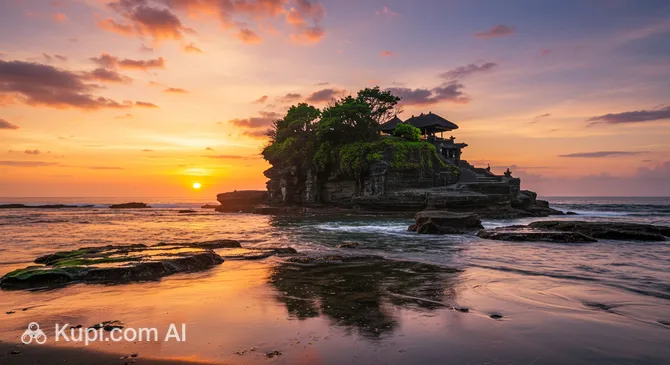
One of the most photographed and spiritually significant places in Bali is Tanah Lot. This Hindu temple, picturesquely situated on a rock formation in the sea, is especially beautiful at sunset. Its legends and stunning views make it a must-see for any traveller. As this is a sacred Hindu site, visitors are reminded to dress modestly by covering their shoulders and legs; sarongs are often available to borrow at the entrance.

Tanah Lot. Source: Kupi.com Binoculars

Nature and animal lovers should definitely visit the Sacred Monkey Forest in Ubud. This is not just a park but a true sanctuary where hundreds of long-tailed macaques roam freely amongst ancient temple ruins and lush tropical greenery. Here, you can observe the daily lives of these fascinating creatures in their natural habitat. Visitors should keep their belongings secure, as the monkeys are known for their curiosity and may try to snatch loose items.

Sacred Monkey Forest Sanctuary. Source: Kupi.com Binoculars

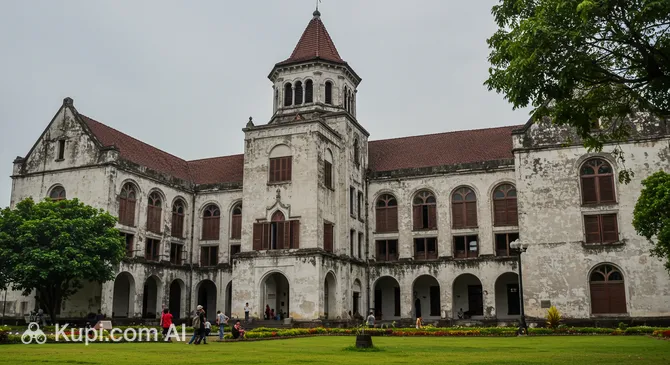
In the city of Semarang on Java, you will find the impressive historical building of Lawang Sewu, which translates to "A Thousand Doors". Formerly the headquarters of the Dutch East Indies Railway Company, this structure is a striking example of colonial architecture. It holds many stories and legends, attracting both history enthusiasts and those intrigued by local folklore and mystery.

Lawang Sewu. Source: Kupi.com Binoculars

Best Time to Visit

When planning a trip to Indonesia, it is important to consider the two main seasons that determine the best time to visit. The high season generally runs from May to September. During this time, the weather is predominantly dry and sunny, creating ideal conditions for beach holidays, diving, snorkelling, and volcano trekking, for instance, near Malang in Java or on Lombok. The air temperature is comfortable and humidity is lower than in other months. However, you should be prepared for a large number of tourists and, consequently, higher prices for accommodation and flights, especially on popular islands like Bali.

The low season, or rainy season, lasts approximately from October to April. This period sees more rainfall, but this does not mean it rains continuously; often, these are short but intense downpours, mainly in the afternoon or at night, while the morning can be sunny. The advantages of travelling at this time include fewer tourists, a more relaxed atmosphere, and a significant drop in prices. Nature comes alive, with everything turning a vibrant, emerald green, which is especially beautiful for photography. The downsides can be increased humidity and the possibility that some activities, such as trekking in remote areas, may be restricted due to weather conditions.

When choosing your travel dates, it is also worth considering local holidays. For example, Nyepi (the Balinese New Year, usually in March) is a unique Day of Silence in Bali when the entire island, including the airport, comes to a complete standstill. The end of Ramadan, known locally as Idul Fitri (the dates for which vary), is accompanied by mass domestic travel as people return to their hometowns, which can heavily impact the availability of transport and hotels. Indonesia is a vast country, and the climate can differ in its various parts; for example, the dry season in the Maluku Islands may occur at a different time of year. Therefore, before your trip, it is always wise to check the weather forecast for the specific islands or regions you plan to visit, whether it is Ubud with its rice terraces or the bustling capital, Jakarta. For travellers from the UAE, it is reassuring to know that as a Muslim-majority country, halal food is widely available throughout Indonesia, and prayer facilities are common.

Traditions

Indonesia is a country with a rich cultural heritage, where respect for tradition plays an important role in daily life. When interacting with locals, it is customary to use your right hand for greetings (a light handshake or the traditional "salam" greeting without touching, by placing your palms together at chest level), passing objects, and eating, as the left hand is considered unclean. The head is regarded as sacred, so try to avoid touching another person's head, even a child's. Indonesians are very hospitable, and if you are invited into a home, a small token of appreciation or a souvenir from your country will be valued. It is important to remember to dress modestly, especially when visiting temples, mosques, and other religious sites – shoulders and knees should be covered. Often, you can rent a sarong at the entrance to such places.

There are also rules at the dining table: if you eat with your hands, use only your right hand. You should not start your meal before your hosts or elders. In public and during personal conversations, try to remain calm and not raise your voice, as a public display of anger is considered extremely impolite. Remove your shoes before entering a private home or mosque. To avoid offending locals, refrain from pointing at anyone or anything with your index finger (it is better to use the thumb of your right hand with the other fingers folded into your palm) and do not sit with your legs stretched out towards another person, especially if they are older than you. Two of the most important holidays that offer insight into the country's culture are Independence Day (17 August), celebrated nationwide with parades and festivals, and Eid al-Fitr (also known as Lebaran), which marks the end of the holy month of Ramadan and is a time for prayer, forgiveness, and family celebrations.

Entertainment

Indonesia offers an incredible variety of entertainment to suit any traveller's taste. Fans of outdoor activities will find a true paradise here: from world-renowned diving and snorkelling among coral reefs to surfing the legendary waves of Bali and Lombok. Trekking enthusiasts can hike to active volcanoes, explore dense jungles, or enjoy the picturesque rice terraces. Water sports such as rafting and kayaking are also widely available.

For connoisseurs of cultural experiences, Indonesia is a treasure trove of ancient traditions and art. Numerous temple complexes, such as Tanah Lot, impress with their architecture and atmosphere. You can attend traditional dance and music performances, visit museums detailing the country's history and ethnography, or explore art galleries showcasing the work of local artisans. Don't miss the chance to discover unique crafts like batik or wood carving. When visiting temples and other religious sites, it is important to dress modestly by covering your shoulders and knees.

As darkness falls, popular tourist areas come alive with diverse evening entertainment. From stylish rooftop lounges and beach clubs with vibrant music to cosy restaurants where you can enjoy local and international cuisine – there is something for everyone. As a Muslim-majority country, halal food is widely available across Indonesia, even in tourist areas like Bali. For shopping, visitors typically bring back batik products, silver jewellery, carved wooden statuettes, coffee, and spices. Major cities like Jakarta or Surabaya with its Tunjungan Plaza offer modern shopping centres, which are generally well-equipped with clean and comfortable prayer rooms (musholla). Meanwhile, tourist areas are filled with small shops and markets.

Family travellers will also find plenty to do in Indonesia. In addition to beach holidays, many resorts offer entertainment for children of all ages. These include water parks, zoos, and bird parks where you can get acquainted with the region's exotic fauna, such as a visit to the Sacred Monkey Forest. Interactive museums and cultural centres that offer special programmes for younger visitors are also popular.

Currency rates

Planning a trip? That's wonderful! To ensure the financial aspects of your journey don't come as a surprise, it's important to remember that currency exchange rates are constantly changing. Therefore, we strongly advise you to monitor the latest rates both before you fly and throughout your trip. For this, you can use the data provided below—we monitor currency exchange rates 24/7 and strive to provide the most up-to-date information.

IDR currency exchange rate as of 02.01.2026

1 AED
~ 4522.84 IDR
1 AMD
~ 43.54 IDR
1 AUD
~ 11055.83 IDR
1 AZN
~ 9755.15 IDR
1 BYN
~ 5653.55 IDR
1 CAD
~ 12134.45 IDR
1 EUR
~ 19510.29 IDR
1 GBP
~ 22614.20 IDR
1 HUF
~ 50.76 IDR
1 INR
~ 184.57 IDR
1 KGS
~ 189.93 IDR
1 KRW
~ 11.50 IDR
1 KZT
~ 32.73 IDR
1 PLN
~ 4628.02 IDR
1 RUB
~ 210.59 IDR
1 SAR
~ 4422.33 IDR
1 SGD
~ 12922.40 IDR
1 TRY
~ 386.72 IDR
1 UAH
~ 392.67 IDR
1 USD
~ 16583.75 IDR
1 UZS
~ 1.38 IDR

Reached the end of the page?

That means the route is fully explored