Support

Lao, People's Dem. Rep.

About the Country

Laos, a landlocked country in the heart of Southeast Asia, charms travellers with its unspoiled nature, tranquil atmosphere, and rich cultural heritage. It is a place where time seems to flow more slowly, allowing you to savour every moment. Laos offers a unique combination of jungle-clad mountains, the winding Mekong River, and ancient traditions, making it an exceptionally appealing destination to explore.

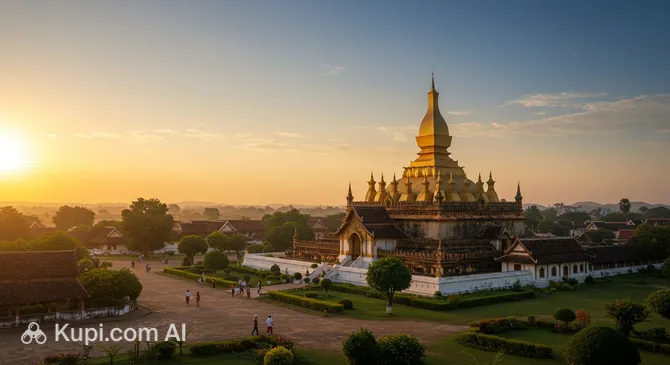
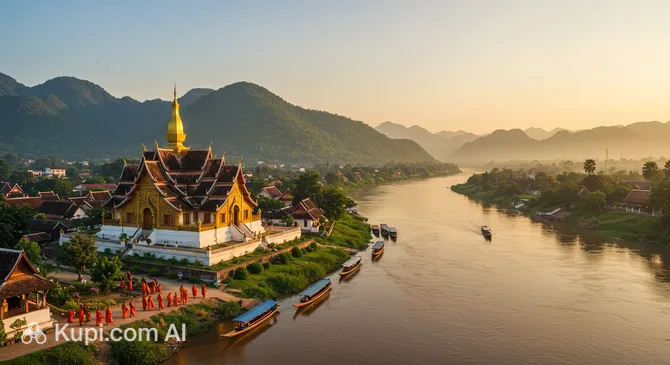
The culture of Laos is deeply influenced by Buddhism, which is reflected in its numerous gilded temples and the peaceful way of life of the local people. The nation's capital, Vientiane, is a surprising mix of colonial French architecture, traditional markets, and magnificent stupas like Pha That Luang. Equally captivating is the ancient city of Luang Prabang, a UNESCO World Heritage site, with its historic monasteries and the famous morning alms-giving ceremony for monks (sai bat).

Vientiane. Source: Kupi.com Binoculars

For nature lovers, Laos offers breathtaking karst landscapes, emerald rice paddies, and picturesque waterfalls, among which Kuang Si is especially famous. Opportunities for active holidays include mountain trekking, kayaking on the rivers, or exploring the mysterious caves around Vang Vieng. This country is a true treasure for those seeking authentic experiences, serenity, and immersion in a unique culture away from the bustling tourist trails.

Currency

The national currency of Laos is the Lao kip (international code: LAK). Banknotes of various denominations are mainly in circulation, while coins are rarely used. The banknotes typically feature national symbols, portraits of prominent figures, or the country's landmarks. It is important to note that cash is preferred for daily transactions, especially outside of major tourist centres.

You can exchange currency for Lao kip at banks and official exchange offices, which are most commonly found in major cities like Vientiane and in tourist areas. It is advisable to avoid exchanging money with street money changers due to the risk of fraud or unfavourable rates. In some tourist spots, particularly near the border with Thailand, Thai baht or US dollars may be accepted, but it is better to have the local currency for everyday expenses. Credit cards are primarily accepted in large hotels, some restaurants, and shops in tourist areas; however, their use is not as widespread as in other countries. Therefore, it is always useful to carry a sufficient amount of cash, especially if you plan to visit the more remote parts of Laos.

Visa Requirements

When planning a trip to Laos, travellers from the UAE should familiarise themselves with the visa requirements. UAE citizens require a visa to enter Laos for tourism. Fortunately, this can be obtained in two convenient ways: as a Visa on Arrival or as an electronic visa (e-Visa) applied for online before travelling.

The e-Visa is often the easiest option, allowing you to complete the application and submit documents online. The tourist e-Visa is typically a single-entry permit, valid for 60 days from the date of issue, allowing a stay of up to 30 days. The standard processing time is approximately three business days. To enter Laos, your passport must be valid for at least six months from your planned entry date. Other documents that may be required include proof of return flights, hotel booking confirmations, and passport-sized photographs. As visa regulations can change, it is highly recommended to verify the most current information on the official Laotian e-Visa portal or with the nearest embassy before your trip.

We'll tell you if you need a visa

Specify where you are going, or
Your citizenship
Destination

Time Zones

When planning your trip to Laos, you will not have to worry about changing time zones within the country. The whole of Laos operates on a single time zone, Indochina Time (ICT), which is UTC+7. This means the time is the same across all regions, including the capital, Vientiane, and other popular tourist destinations. For travellers from the UAE, it is useful to know that Laos is three hours ahead of Gulf Standard Time (UTC+4).

Thanks to the absence of internal time differences, you can easily plan your movements and excursions without any fear of time-related confusion. Simply set your watch to the local time upon arrival and enjoy your journey through this amazing country.

How to Get There

The easiest way to get to Laos is by air. The country has several international airports, with the main gateway being Wattay International Airport in the capital, Vientiane. For travellers from the UAE, there are no direct flights to Laos, but convenient one-stop connections are available. Popular routes from Dubai (DXB) and Abu Dhabi (AUH) involve a layover in major Asian hubs like Bangkok, Hanoi, Singapore, or Kuala Lumpur. Airlines such as Emirates, Etihad Airways, Thai Airways, and Singapore Airlines frequently operate these routes, often in partnership with regional carriers like Lao Airlines or Thai AirAsia.

As Laos shares long land borders with Thailand, Vietnam, Cambodia, China, and Myanmar, entering the country by land is a popular option, especially for those on a wider tour of Southeast Asia. There is a well-developed bus network connecting Laos with its neighbours, particularly Thailand and Vietnam. Some border crossings also permit entry with a rented vehicle or a taxi. Rail connections with neighbouring countries are also expanding, offering new travel possibilities. Whichever method you choose, it is advisable to book tickets and plan your itinerary in advance, especially if your trip coincides with the peak tourist season or national holidays.

For your reference, here is a summary of the main airports:

Airport Name City Passenger Traffic
Wattay International AirportVientianeMajor
Luang Prabang International AirportLuang PrabangMedium
Pakse International AirportPakseSmall
Savannakhet AirportSavannakhetSmall
Oudomxay AirportOudomxaySmall

Laos invites travellers with its unique combination of ancient culture, a tranquil atmosphere, and breathtaking natural landscapes. The country offers cities steeped in history and spirituality, as well as places perfect for outdoor activities and enjoying the beauty of nature. Every corner of Laos has something special to offer, from discovering age-old traditions to exploring picturesque river valleys and mountains. For visitors from the UAE, it's a destination that provides both serene escapes and adventure, with a growing number of facilities catering to Muslim travellers.

Luang Prabang. Source: Kupi.com Binoculars

One of the most iconic places in Laos is undoubtedly Luang Prabang. This former royal capital, a UNESCO World Heritage site, charms visitors with its magnificent temples, peaceful streets, and the famous morning alms-giving ceremony to monks. When visiting temples or observing this sacred tradition, it is important to dress modestly, covering shoulders and knees to show respect. Equally interesting is Vientiane, the nation's current capital. Here, you can see a harmonious blend of French colonial architecture and Buddhist sanctuaries, such as the golden Pha That Luang stupa, all set to the unhurried rhythm of modern life. Halal food options are available in both cities, with a variety of Indian and local restaurants catering to Muslim visitors. In Vientiane, the Jamia Masjid offers a clean and welcoming environment for prayers.

For those seeking adventure and outdoor recreation, Vang Vieng is an excellent choice. Surrounded by impressive karst mountains, this town is famous for kayaking, tubing down the Nam Song River, and exploring numerous caves. Meanwhile, the city of Pakse in the south serves as the gateway to the Bolaven Plateau, known for its coffee plantations and waterfalls, as well as the Four Thousand Islands archipelago on the Mekong River. While more remote, halal food can still be found in Pakse, often at Indian restaurants.

Top Attractions

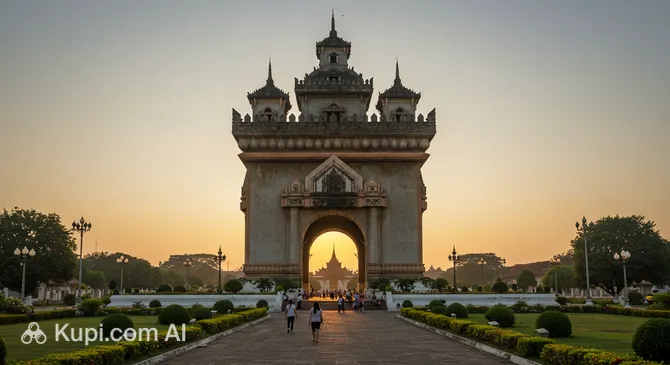
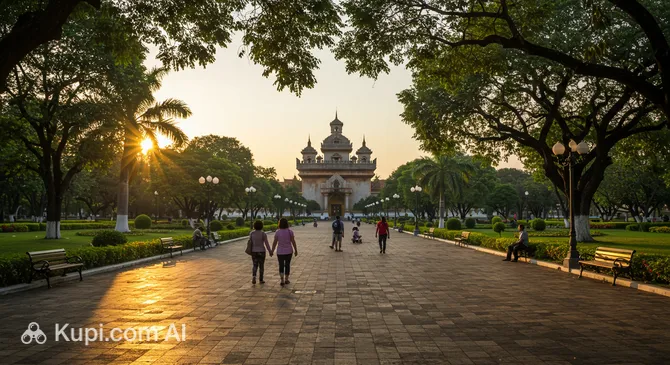
One of the landmarks of the Laotian capital, Vientiane, is the monumental Patuxai, also known as the Victory Gate. This impressive structure, dedicated to the soldiers who fought for independence, is adorned with traditional Laotian motifs and bas-reliefs. The top of the arch offers a panoramic view of the city, making it a popular spot for tourists. As it is a respected monument, visitors are encouraged to dress modestly.

Patuxay (Victory Monument). Source: Kupi.com Binoculars

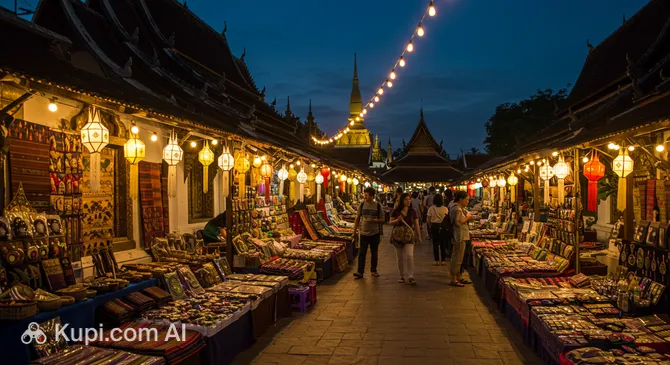
A must-do for visitors to the ancient capital of Laos, Luang Prabang, is a visit to the famous Luang Prabang Night Market. Every evening, the city's main street transforms, filling with rows of vendors offering a variety of souvenirs, handmade crafts, textiles, jewellery, and local delicacies. While it can be challenging to find certified halal Laotian food, visitors can look for vegetarian and seafood options. The market is an excellent place to immerse yourself in the local atmosphere and find unique gifts.

Luang Prabang Night Market. Source: Kupi.com Binoculars

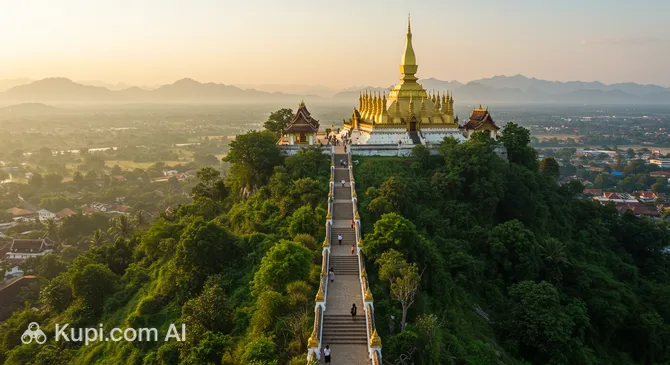
In the heart of Luang Prabang rises Mount Phou Si – a sacred site and one of the city's best viewpoints. The climb up the staircase, surrounded by temples and Buddha statues, is rewarded with stunning views of the city, the Mekong River, and the surrounding landscapes, especially at sunrise or sunset. At the summit is the small stupa, Wat Chom Si. As this is a religious site, visitors should dress respectfully by covering their shoulders and knees.

Mount Phousi. Source: Kupi.com Binoculars

Not far from the city of Pakse, on a high hill, lies the impressive temple complex of Wat Phu Salao. Its main attraction is the huge golden statue of a seated Buddha, which is visible from afar. From here, there are breathtaking views of the Mekong River and Pakse itself. This site attracts both pilgrims and tourists seeking to enjoy its beauty and serenity. Visitors should wear modest clothing when visiting this temple complex.

Wat Phou Salao. Source: Kupi.com Binoculars

Best Time to Visit

The best time to visit Laos largely depends on your preferences and travel plans. The high season traditionally runs from November to March. During this period, the weather is most comfortable, with predominantly dry and warm days, while the nights can be cool, especially in the northern regions and mountains. This is the ideal time for sightseeing, trekking, and outdoor activities. However, it is worth noting that the high season sees the largest influx of tourists, and prices for accommodation and services can be higher.

The low season, or rainy season, is from May to October. At this time, Laos is hot and humid, with frequent but usually brief downpours that most often occur in the afternoon. The advantages of travelling during the low season include fewer tourists, lower prices, and incredibly lush, green scenery. However, some roads, particularly in remote areas, may be washed out, and certain activities, such as river rafting, might be restricted due to high water levels. An important event to consider when planning is the Lao New Year (Boun Pi Mai) celebration in April. It is a vibrant and popular festival, but it falls during the hottest period just before the rainy season begins.

Overall, Laos has a tropical monsoon climate, which can vary slightly by region. The northern mountainous regions, such as those around Luang Prabang, can be cooler than the southern plains, for instance, near Pakse. Therefore, when planning your trip, it is always advisable to check the weather forecast for the specific places you intend to visit.

Traditions

Laos is a country with a rich culture and ancient traditions, and showing respect for them will help you better understand the local people and make your journey more pleasant. The traditional Lao greeting is called the 'nop', which consists of a slight bow with your palms pressed together at the chest or face. The higher the hands are held, the more respect is shown. Touching someone's head is considered impolite, as the head is regarded as a sacred part of the body. Laotians are very hospitable, and being invited into their home is a great honour. A small gift for the hosts, such as fruit or sweets, will be appreciated but is not obligatory. When visiting temples and in public places, especially in rural areas, modest clothing is recommended: shoulders and knees should be covered. It is customary to remove your shoes before entering a temple or a private home.

At the dining table in Laos, there are also specific rules. The staple food is sticky rice, which is eaten by hand by rolling it into small balls. For other dishes, a spoon and fork are used (the fork helps to push food onto the spoon, which is then brought to the mouth), or chopsticks. While halal food is not widespread, it can be found in major cities like Vientiane and Luang Prabang, where there are a number of Indian and Malaysian restaurants catering to Muslim visitors. It is considered rude to point your feet at people or sacred objects, or to step over people who are sitting or lying down. One of the most vibrant and important festivals is Boun Pi Mai, the Lao New Year, which is celebrated in April. It is marked by the traditional splashing of water, which symbolises purification and good wishes. Overall, the Lao people are very calm and friendly. Public displays of anger or loud arguments are not acceptable. Maintain a smile and a calm demeanour, and you will surely feel the warmth and hospitality of this amazing country.

Entertainment

Laos offers travellers a diverse range of recreational opportunities, harmoniously blending natural beauty with a rich cultural heritage. Fans of active recreation will appreciate opportunities for trekking through picturesque mountains, kayaking on rivers, exploring mysterious caves, and cycling amidst emerald landscapes. The cultural programme in Laos is rich with visits to ancient temples and monasteries, where you can learn about Buddhist traditions. When visiting these sacred sites, it is important to dress modestly by covering your shoulders and knees. The experience is enhanced by visits to small museums that narrate the country's history and ethnography. In some towns, you can also attend traditional music and dance performances, immersing yourself in the local culture.

Evening entertainment in Laos is typically calm and relaxed. In cities like Vientiane and Luang Prabang, you will find cosy restaurants serving local and international cuisine, with several establishments offering halal options. You can spend a pleasant evening at the riverside cafés and eateries along the Mekong at sunset or explore the lively night markets. This is not a country for loud, all-night discos, but rather a place for heartfelt conversations and enjoying the atmosphere. Shopping in Laos is primarily about purchasing unique handmade items, such as silk fabrics, silver jewellery, carved wooden figures, and aromatic local coffee. The main shopping spots are often the night markets and small shops in tourist centres.

For a family holiday, Laos offers a calm and safe environment. While there are no large theme parks, shared nature walks, meeting the friendly local people, interacting with elephants at ethical sanctuaries, or leisurely boat trips along the rivers can be an unforgettable experience for both children and adults. The country encourages unhurried exploration and discovery, allowing everyone to find an activity they enjoy and take home vivid memories.

Currency rates

Planning a trip? Wonderful! To ensure the financial aspects of your journey do not come as a surprise, it is important to remember that currency exchange rates are constantly changing. Therefore, we strongly advise you to monitor the latest rates both before your departure and throughout your trip. For this, you can use the data provided below—we monitor currency exchange rates 24/7 and strive to provide the most up-to-date information.

Reached the end of the page?

That means the route is fully explored