Support

Myanmar

About the Country

Myanmar, a country in Southeast Asia also known as Burma, entices travellers with its mysterious beauty and rich culture. It is a land of ancient temples, golden pagodas, and untouched nature, where time seems to slow down. The former capital and largest city, Yangon, is a bustling centre that preserves its colonial heritage and impressive religious shrines.
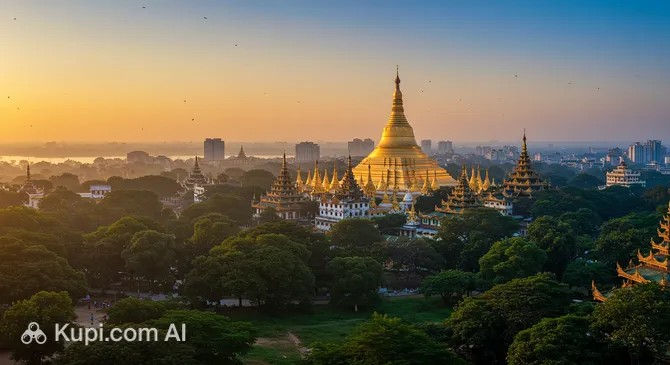
Yangon. Source: Kupi.com Binoculars

The cultural heritage of Myanmar is truly unique. Thousands of Buddhist temples and monasteries are scattered across the country, creating a unique atmosphere of spirituality. When visiting these sacred sites, travellers should dress modestly by covering their shoulders and knees. One of the most revered shrines is the magnificent Shwedagon Pagoda in Yangon, glittering with gold and precious stones, where shoes and socks must be removed before entering. Ancient cities such as Bagan, accessible via Nyaung-U, with its thousands of stupas, capture the imagination and transport you back through the centuries.

Myanmar's nature is diverse and picturesque: from the white sandy beaches of the Bay of Bengal to the majestic mountains in the north and the tranquil waters of Inle Lake. The tropical climate ensures warmth all year round, with distinct dry and wet seasons. Myanmar leaves the impression of a country with deep traditions, incredibly friendly people, and a sense of genuine discovery, far from the well-trodden tourist trails.
Currency

The national currency of Myanmar is the Myanmar kyat (international code – MMK). Banknotes in circulation feature various denominations, often displaying portraits of national heroes like General Aung San or the country's iconic landmarks. It is advisable to carry notes of different values for convenience, as obtaining change from large banknotes can be difficult, especially at local markets.

For travellers from the UAE, it is best to carry US Dollars (USD) to exchange for kyat, as this is the most widely accepted foreign currency. Ensure your USD notes are in pristine condition, as marked, creased, or worn-out bills may be rejected. Exchange your currency at official counters in airports, banks, or licenced money changers in major cities like Yangon. Avoid exchanging money with street vendors due to the risk of unfavourable rates and potential scams. While major hotels and some restaurants in tourist areas may accept credit cards, Myanmar is largely a cash-based economy. Therefore, it is highly recommended to always have a sufficient amount of kyat, particularly when travelling to more remote regions.

Visa Requirements

When planning a trip to Myanmar, it is essential to familiarise yourself with the visa requirements in advance. For citizens and residents of the UAE, a visa is required to enter Myanmar; visa-free access is not available. The most convenient method for many travellers is to apply for an electronic visa (e-Visa) through the official portal of the Myanmar Ministry of Immigration and Population. A tourist e-Visa typically permits a single entry for a stay of up to 28 days and is valid for 90 days from the date of issue. As there is no embassy or consulate of Myanmar in the UAE, the e-Visa is the primary and most straightforward application method. To apply for a visa and enter the country, you will need a valid passport with at least six months' validity remaining at the time of entry. You may also be required to provide return flight tickets, confirmation of a hotel booking, and a medical insurance policy. As visa regulations can change, it is strongly recommended that you verify the most current information on the official Myanmar e-Visa portal before your journey.

We'll tell you if you need a visa

Specify where you are going, or
Your citizenship
Destination

Time Zones

When planning a trip to Myanmar, you will not have to worry about changing time zones within the country. The whole of Myanmar operates on a single time zone, known as MMT (Myanmar Time), which is UTC+6:30. For travellers from the UAE, this means Myanmar is 2 hours and 30 minutes ahead of local time.

This means the time will be the same whether you are in the largest city, Yangon, or in other regions of the country, which simplifies planning transfers and excursions. Simply set your watch to the local time upon arrival, and you will not need to change it for the duration of your stay in Myanmar.

How to Get There

There are several ways to get to Myanmar, but the most common and convenient method is by air. The country's main gateway is Yangon International Airport, which receives flights from many countries in Southeast Asia and other parts of Asia. For travellers originating from the UAE, direct flights are available from Dubai to Yangon. Myanmar Airways International operates non-stop flights on this route, with an average flight time of around 5 hours and 45 minutes. Alternatively, several airlines offer one-stop connections, often via regional hubs like Bangkok, Singapore, or Kuala Lumpur.

It is possible to enter Myanmar overland through several border crossings with neighbouring countries, such as Thailand or India. However, it is essential to check the current border crossing regulations and visa requirements for specific checkpoints in advance, as these can change. International rail services to Myanmar are limited, but bus routes from border towns in neighbouring countries may be available. Sea transport, such as scheduled passenger ferries, is not a primary means of entry for most tourists, although some cruise liners may include Myanmar in their itineraries. In all cases, it is advisable to book tickets, especially for flights, well in advance to secure the best prices and availability, particularly if your trip coincides with the peak tourist season.

For your reference, here is a summary of the main airports:

Airport Name City Passenger Traffic
Yangon International AirportYangonMajor
Mandalay International AirportMandalayMedium
Nyaung U AirportNyaung UMinor
Sittwe AirportSittweMinor
Heho AirportHehoMinor

Myanmar, a country with a rich history and unique culture, offers travellers a variety of destinations to explore. From ancient capitals that preserve the grandeur of past eras to picturesque resorts on the Andaman Sea coast, there is something here for everyone. For Muslim travellers, halal food is readily available in major cities and towns, often identified by the number '786' at eateries. Immerse yourself in the atmosphere of bustling cities, explore ancient temple complexes, or relax on sandy beaches.

Among the most notable places is Yangon, the former capital and the country's largest city, known for its colonial architecture and the magnificent Shwedagon Pagoda. Equally interesting is the ancient city of Bago, where you can see a huge reclining Buddha statue and other historical monuments. When visiting sacred sites such as pagodas and temples, visitors are required to dress modestly, ensuring shoulders and knees are covered, and to remove footwear before entering. For those seeking a beach holiday, the resort of Chaungtha offers a relaxing atmosphere and golden sands. And the town of Nyaung-U serves as the gateway to the famous Bagan temple valley, one of Southeast Asia's most impressive archaeological sites. These and other cities in Myanmar are ready to reveal their secrets and provide you with an unforgettable experience.

Yangon. Source: Kupi.com Binoculars

Top Attractions

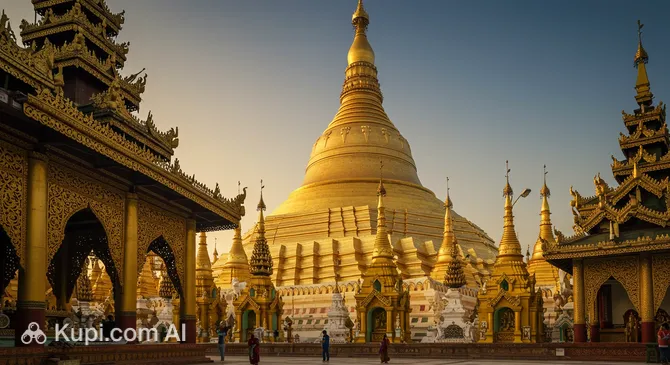
Myanmar, a country with a rich history and culture, is renowned for its magnificent pagodas and ancient shrines. One of the most iconic and revered is the Shwedagon Pagoda. This majestic stupa, covered in gold and crowned with precious stones, rises above Yangon and is visible from many parts of the city. It is believed to house the relics of four previous Buddhas, making it a major pilgrimage centre for Buddhists worldwide. In the evening, when the pagoda is illuminated, it is a truly unforgettable sight. When visiting, it is important to dress modestly by covering shoulders and knees; shoes and socks must also be removed before entering.

Shwedagon Pagoda. Source: Kupi.com Binoculars

No less important and revered is the Mahamuni Pagoda in Mandalay. It houses the famous Mahamuni Buddha image which, according to tradition, was created in the lifetime of Gautama Buddha himself and is one of the few exact likenesses of him. Every day, devotees apply layers of gold leaf to the statue (except for the face), which gives it its distinctive appearance. Only men are permitted to apply the gold leaf. The site has a special spiritual atmosphere and attracts many pilgrims and tourists. As with other holy sites, visitors are expected to dress respectfully, ensuring their knees and shoulders are covered.

Mahamuni Pagoda. Source: Kupi.com Binoculars

In the very heart of Yangon, at a busy intersection, lies the Sule Pagoda. Its uniqueness lies not only in its age (it is believed to be over 2,500 years old) but also in its role as a key landmark in the planning of the modern city by the British. The pagoda has an octagonal shape and, according to legend, contains a strand of the Buddha's hair. It is not only a religious site but also an important historical and cultural symbol. Travellers will find a variety of halal food options nearby, often identified by the number "786" on signboards.

Sule Pagoda. Source: Kupi.com Binoculars

Best Time to Visit

When planning a trip to Myanmar, it is important to consider the changing climatic seasons to ensure your journey is as comfortable as possible. The high season, which is considered the best time to visit the country, runs from November to February. During this period, the weather is most favourable, with predominantly sunny days, moderate temperatures, and low humidity, which is ideal for sightseeing, such as visiting the ancient temples of Bagan, strolling through Yangon, or exploring Inle Lake. However, you should be prepared for a larger number of tourists and, consequently, higher prices for accommodation and services.

The low season, or rainy season, occurs from May-June to October. During this time, Myanmar is hot and humid, with frequent heavy, though usually brief, downpours, which are especially intense in coastal areas and the Irrawaddy Delta. The advantages of travelling during this period can be significantly fewer tourists and lower prices. Nature comes alive, becoming particularly lush and green. The transitional period from March to May is characterised by very hot and dry weather, especially in central regions like Mandalay and Bagan, where temperatures can reach 40°C. An important event to consider is the celebration of the Myanmar New Year, Thingyan (Water Festival), in mid-April. This is a vibrant and cheerful time, but many establishments may be closed, and travel can be difficult. In autumn, usually in October, the colourful Thadingyut Festival of Lights takes place.

The climate in Myanmar can vary slightly depending on the region. For example, the mountainous areas of Shan State can be cooler, especially at night, even during the hot season, while coastal resorts are best visited during the dry season. When visiting religious sites like temples and pagodas, a modest dress code is required for both men and women, covering shoulders and knees. It is also customary to remove shoes and socks before entering. For Muslim travellers, Halal food is available, particularly in larger cities like Yangon, where you can find Indian and local restaurants serving Halal meals; look for the "786" symbol or ask for "Ba-li". While dedicated prayer facilities are not widespread in tourist areas, mosques can be found in all major cities. Therefore, when choosing a time for your trip, it is advisable to check the specific weather conditions for the places you plan to visit to ensure your journey through this amazing country leaves only pleasant memories.

Traditions

When travelling to Myanmar, you will be immersed in a culture where respect and politeness play a key role. The traditional greeting, "Mingalaba", accompanied by a slight bow, especially towards elders, will be warmly appreciated. When interacting with people, try to avoid touching their head, as it is considered the most sacred part of the body. Do not point at people or objects with your index finger; it is better to use an open palm. Pay special attention to your clothing: when visiting pagodas, monasteries, and other religious sites, you must cover your shoulders and knees, and also remove your shoes and socks before entering. This rule also applies when entering private homes. Also, try not to point the soles of your feet at people or religious images, as this is considered impolite.

The people of Myanmar are renowned for their hospitality. If you are invited into a home, politely accept any refreshments offered, which are usually tea or light snacks. While not strictly required, a small symbolic gift, such as fruit or sweets, is a pleasant gesture. At the table, it is customary to eat with your right hand or use a spoon and fork; the left hand is traditionally considered unclean and is not used for eating or passing items. This is a custom that may be familiar, as it is also observed in Islamic tradition. For travellers seeking halal food, options are available, particularly in larger cities with Muslim communities and in some hotels. Among the most significant holidays is Thingyan (the Water Festival), a New Year celebration in April, which involves joyful water-throwing to symbolise purification. Another is Thadingyut (the Festival of Lights) in October, when streets and temples are decorated with thousands of lights to mark the end of Buddhist Lent. Showing respect for local customs, such as giving way to monks or avoiding public displays of affection, will make your journey even more pleasant and harmonious.

Entertainment

Myanmar offers travellers a diverse range of leisure and entertainment options that go far beyond simple sightseeing. Fans of active holidays can explore picturesque landscapes while trekking through the hills or embark on fascinating boat trips on lakes and rivers, such as Inle Lake. The cultural programme is rich with visits to ancient temple complexes, like the famous Shwedagon Pagoda, and an introduction to traditional arts and crafts. You can visit numerous monasteries, observe the life of monks, and immerse yourself in the unique atmosphere of Buddhist culture. When visiting religious sites, it is important to dress modestly by covering shoulders and knees, and you will be required to remove your footwear.

Nightlife in Myanmar is rather tranquil and mainly centred in large cities such as Yangon. Here you can find cosy restaurants offering local and international cuisine, with many establishments providing halal options. For a pleasant evening, there are also numerous lounges and cafés. For shopping enthusiasts, Myanmar is a true paradise. Items from local artisans are especially popular: lacquered boxes, silk fabrics, and precious stones—particularly rubies and jadeite—as well as traditional puppets and souvenirs. Large markets, such as Bogyoke Aung San Market in Yangon, and modern shopping centres, like Junction City, offer a wide selection of goods. Major shopping centres and mosques often have dedicated prayer facilities.

For a family holiday, Myanmar can also offer interesting options. These can include educational excursions to natural beauty spots, visits to elephant sanctuaries, or participation in cultural workshops where children can learn something new. Although the country does not have large Western-style theme parks, the very atmosphere of exploring ancient cities and discovering an unusual culture can be a fascinating adventure for the whole family. Thus, Myanmar can surprise with its variety of leisure activities, offering everyone something to enjoy.

Currency rates

Planning a trip? Excellent! To ensure the financial aspects of your journey don't come as a surprise, it's important to remember that currency exchange rates are constantly changing. The official currency in Myanmar is the Myanmar Kyat (MMK). Therefore, we strongly advise you to monitor the current rates, both before you fly and throughout your trip. You can use the data provided below for this purpose – we monitor currency exchange rates 24/7 and strive to provide the most up-to-date information.

MMK currency exchange rate as of 02.01.2026

1 AED
~ 568.91 MMK
1 AMD
~ 5.48 MMK
1 AUD
~ 1395.55 MMK
1 AZN
~ 1229.94 MMK
1 BYN
~ 710.73 MMK
1 CAD
~ 1523.77 MMK
1 EUR
~ 2456.85 MMK
1 GBP
~ 2818.77 MMK
1 HUF
~ 6.39 MMK
1 INR
~ 23.22 MMK
1 KGS
~ 23.90 MMK
1 KRW
~ 1.45 MMK
1 KZT
~ 4.12 MMK
1 PLN
~ 582.23 MMK
1 RUB
~ 26.50 MMK
1 SAR
~ 557.12 MMK
1 SGD
~ 1625.86 MMK
1 TRY
~ 48.66 MMK
1 UAH
~ 49.41 MMK
1 USD
~ 2090.39 MMK
5.75 UZS
~ 1 MMK

Reached the end of the page?

That means the route is fully explored