Support

Heho

About

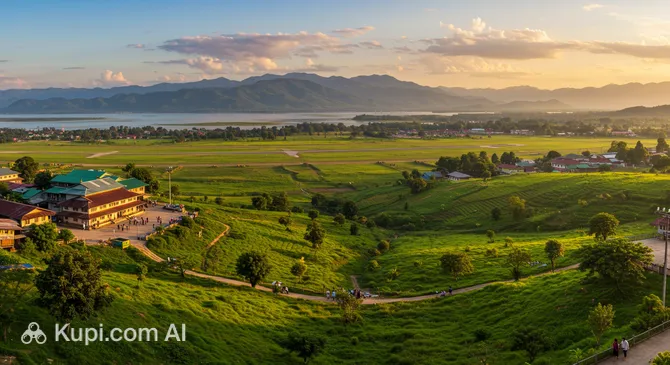
Welcome to Heho, a modest yet pivotal town located in the scenic Shan State of Myanmar. While it is most famous for being the primary air gateway to the region's major tourist destinations, this settlement offers a genuine glimpse into the agricultural heart of the country. Its rolling landscapes and rural atmosphere provide a calm and refreshing welcome to travelers arriving to explore the highlands.

Heho. Source: Kupi.Binoculars

Geographically, the town is situated at an elevation that grants it a pleasant, temperate climate, often cooler than the central plains. The area is surrounded by fertile farmland where local communities cultivate a variety of crops, painting the countryside in vibrant shades of green and gold. Those interested in the history of Heho will discover that it has long served as a quiet rural center, gradually transforming into an essential logistical link for visitors seeking the natural wonders of the state.

Although small, Heho has its own unique charm. It is best known for its vibrant market days, where villagers from surrounding hill tribes gather to trade produce and livestock, offering a colorful spectacle of local culture. The town serves as the starting point for the scenic drive to Inle Lake, a journey that takes you through picturesque avenues lined with old trees and traditional ox carts.

Whether you are landing here to begin an adventure on the water or simply passing through, Heho serves as the perfect introduction to the serene beauty of the Shan hills. It is a humble yet welcoming starting point for an unforgettable journey through one of the most picturesque regions in Southeast Asia.

Weather Overview

The climate in this region is generally mild and temperate, largely due to its elevation in the Shan hills. Visitors planning a trip should check the detailed weather in Heho to pack appropriately, as conditions vary significantly between seasons. Generally, the area enjoys comfortable daytime temperatures that rarely become oppressively hot, making it a pleasant destination for outdoor exploration.

The year is characterized by distinct wet and dry periods. The dry season, spanning from November to April, offers sunny skies and cooler air, with January being the coldest month when nighttime temperatures can drop to around 10.4°C. Conversely, the wet season runs from May through October, bringing frequent rainfall; July is particularly damp with rain occurring almost every day. April marks the peak of the heat, with average highs reaching nearly 30°C before the monsoon rains arrive.

Interesting Facts

Beyond the main attractions, Heho holds many fascinating secrets that reveal its deep historical and cultural roots. While most visitors see it merely as an arrival point, this town possesses unique characteristics that define its identity within the Shan State.
  • A WWII Legacy: The town's airport, now the main gateway for tourists, has a dramatic past. It served as a strategic airbase during World War II and was utilized by both the Japanese forces and the Allied powers, playing a critical role in the aerial campaigns of the region.

  • The Potato Capital: The distinct, iron-rich red soil surrounding the town is not just visually striking; it is incredibly fertile. This geological feature has made Heho a primary center for potato cultivation in Myanmar, supplying fresh produce to markets all across the country.

  • Home of the Danu: Unlike some neighboring areas dominated by the Shan people, Heho is a significant settlement for the Danu ethnic group. Visitors interacting with the locals may notice unique cultural traditions and dialects that differ from those found in other parts of the state.

How to Get There

Reaching this part of the Shan State is an adventure in itself, offering travelers a chance to witness the transition from the central plains to the rolling highlands. Most visitors choose to fly, as it is the most convenient method, but overland journeys offer their own scenic rewards. For a detailed breakdown of routes and tips, you can read more about how to get to Heho and plan your arrival seamlessly.

The most direct way to arrive is by flying into Heho Airport (HEH), which serves as the primary gateway for the entire Inle Lake region. Located just 4.1 km from the town center, it is a bustling regional hub that welcomes daily flights from major cities like Yangon and Mandalay. Upon landing, the journey into town or towards the lake is quick and easy, taking approximately 25 minutes by taxi. It is a medium-sized facility that handles a significant flow of tourists eager to explore the Shan hills.

Alternatively, international travelers might consider arriving via Mandalay International Airport (MDL), located in the city of Mandalay. While this airport is significantly larger and offers more international connections, it is situated about 138.3 km away from Heho. The overland transfer from Mandalay involves a scenic but longer drive through winding mountain roads, taking roughly 3 hours and 50 minutes by car. This option is suitable for those who wish to combine a visit to the ancient royal capital with their trip to the mountains.

For clarity, here is a summary of the main airports in the vicinity:

Airport Name City Passenger Traffic Km from City
Mandalay International Airport Mandalay Large 138.3
Heho Airport Heho Medium 4.1
Nay Pyi Taw Airport Naypyidaw Medium 138.0
Mae Hong Son Airport Mae Hong Son Small 198.2
Loikaw Airport Loikaw 121.4

Main Attractions

While often viewed primarily as a gateway to the famous Inle Lake, Heho possesses its own quiet charm and a few points of interest that are well worth a visit. The town offers an authentic look at the daily lives of the Shan State's diverse ethnic groups, free from the heavy commercialization found in larger tourist hubs.

The most famous attraction in town is the Heho Market. Operating on the traditional five-day rotating schedule common in the Shan hills, this market is a bustling epicenter of local trade. On market days, the area transforms into a kaleidoscope of colors as members of the Danu, Pa-O, and Taungyo tribes descend from the surrounding villages. It is an excellent place for tourists to observe traditional attire, purchase local handicrafts, and see the vast array of fresh produce that grows in the region's fertile red soil.

Scattered throughout the landscape and near the main roads, visitors will notice clusters of Ancient Stupas. Unlike the polished and gold-leafed pagodas found in major cities, many of Heho's stupas are weathered and partially covered in vegetation, offering a sense of raw, untouched history. These crumbling structures, set against the backdrop of vibrant red earth and green fields, provide a striking contrast and a wonderful opportunity for photographers seeking atmospheric shots of the region's heritage.

For those who appreciate nature and agriculture, the Red Earth Countryside surrounding Heho is an attraction in itself. The town is known for its incredibly fertile soil, which gives the terrain a distinctive rusty hue. Walking or driving through these agricultural zones reveals a patchwork of potato farms, mustard fields, and cabbage plots. It is a peaceful experience that showcases the scenic beauty of the highlands, with rolling hills and cool breezes that offer a refreshing break from the tropical heat of the plains.

Local Cuisine

The culinary landscape of Heho is deeply rooted in the agricultural abundance of the Shan State, offering travelers a taste of fresh, locally grown ingredients. Due to the town's fertile red soil, the vegetables here—particularly tomatoes, cabbages, and the famous Heho potatoes—are exceptionally flavorful. The local food scene is dominated by Shan cuisine, which is distinct from the curries found in central Myanmar; it is generally lighter, less oily, and relies heavily on savory, sour, and spicy flavor profiles.

One dish that every visitor must try is Shan Noodles (Shan Khauk Swe). Unlike the noodle dishes found elsewhere, the version here typically consists of sticky rice noodles served in a savory broth with chicken or pork cooked in tomatoes. Another regional specialty is Shan Tofu, which is unique because it is made from yellow split peas or chickpeas rather than soybeans. You can enjoy it as Tofu Nway (warm, creamy tofu served with chili oil and nuts) for breakfast, or sliced and deep-fried as a crispy snack later in the day.

For those looking to quench their thirst, the local Green Tea (Ye Nway Gyan) is a staple of daily life. It is usually served complimentary at every table in eateries and tea shops, acting as a palate cleanser between savory bites. Since the Shan hills are also a coffee-growing region, travelers can find excellent, robust local coffee at roadside stops. In the evenings, you might encounter locally brewed rice wines, which are popular in the rural villages surrounding the town.

Dining in Heho is less about fine dining restaurants and more about authentic, casual experiences. The heart of the food culture is undoubtedly the Heho Market. On market days, stalls overflow with street food vendors selling grilled meats, steamed buns, and fried snacks to bustling crowds of locals. For a more relaxed meal, the town's traditional Tea Shops serve as social hubs where people gather to exchange news over cups of sweet milky tea and plates of savory pastries.

Travel Tips

Preparing for a trip to Heho means getting ready for the refreshing cool air of the Shan State and the rustic charm of rural Myanmar. These practical tips will help you navigate the local customs and logistics, ensuring your journey through this agricultural hub is as smooth and enjoyable as possible.

  1. Clothing and Gear: Due to the higher elevation, Heho is significantly cooler than Yangon or Mandalay, especially in the evenings and early mornings. Pack light layers, such as a fleece or windbreaker, to stay comfortable. Comfortable, closed-toe walking shoes are essential, as the famous red soil can be dusty in the dry season and muddy during the rains. If you plan to visit any local stupas, remember to dress modestly by covering your shoulders and knees.
  2. Transportation: Public transport options like buses or trains are virtually non-existent for short trips within the town. The primary mode of transport for visitors arriving at the airport is by taxi. Prices to major destinations like Nyaung Shwe (for Inle Lake) are typically fixed. It is advisable to arrange your transfer in advance through your hotel, though taxis are readily available at the airport arrivals area.
  3. Finances: The local currency is the Myanmar Kyat (MMK). While there are ATMs at the airport, they can occasionally be out of service, and banking facilities in the town itself are limited. It is highly recommended to carry sufficient cash, particularly for small purchases at the Heho Market or roadside stalls. International credit cards are rarely accepted outside of major hotels.
  4. Health and Safety: Heho is a quiet and generally safe rural town, but standard precautions apply. Pharmacies here are small and may not stock specific international brands, so bring a personal medical kit with essentials. Always drink bottled water and avoid tap water. Since this is a farming region, insect repellent is necessary to protect against mosquitoes, especially around dusk.
  5. Communication: The primary language is Burmese, though many locals also speak Shan or Danu dialects. English is spoken by airport staff and taxi drivers catering to tourists, but it is less common in the village market. Learning a friendly "Mingalabar" (Hello) goes a long way. SIM cards from major providers can usually be purchased at the airport upon arrival for reliable mobile data.
  6. Local Etiquette: The culture in Shan State is polite and conservative. When handing money or a gift to someone, use your right hand while supporting your elbow with your left hand as a sign of respect. Always remove your shoes and socks before entering any religious site or a local home. It is also polite to ask for permission before taking close-up photos of the villagers, especially at the market.
  7. What to Avoid: Never point your feet at people or religious images, as the feet are considered the lowest and dirtiest part of the body. Avoid public displays of affection, such as hugging or kissing, as this is considered inappropriate in traditional Myanmar culture and may make locals uncomfortable.
  8. Market Day Wisdom: If your visit coincides with the rotating 5-day market, arrive early in the morning (around 7:00 AM to 9:00 AM). This is when the market is most lively and authentic before the midday heat sets in. It is the perfect opportunity to buy fresh local fruits like avocados or papayas at incredibly low prices.

By keeping these simple guidelines in mind, you will be well-equipped to appreciate the unique rhythm of life in Heho. Embrace the slower pace, enjoy the cool mountain breeze, and let the genuine hospitality of the Shan people make your visit truly memorable.

Entertainment & Nightlife

Travelers arriving in Heho should adjust their expectations regarding nightlife; this is a quiet, rural town rather than a party destination. The concept of a "night out" here is distinctly local and revolves around relaxation rather than high-energy entertainment. As the sun sets over the Shan hills, the town settles into a peaceful slumber, and the streets become quiet relatively early. For visitors who choose to stay overnight instead of immediately transferring to Inle Lake, the evening entertainment is centered on savoring a quiet meal and enjoying the cool mountain air.

The primary form of nightlife in Heho, as in much of Myanmar, is the traditional Beer Station. These are casual, open-air establishments where locals gather after work to drink draft beer, eat barbecue, and watch football matches on TV. The atmosphere is laid-back, unpretentious, and friendly. You won't find dress codes or cover charges here; instead, you will find plastic chairs, lively conversation, and a genuine slice of local culture. These spots are typically located along the main highway that serves as the town's central artery.

For dining and drinks, the options are modest but authentic. Small, family-run eateries scattered along the main road serve a variety of Chinese and local Shan dishes, offering a reliable spot for an evening beer and dinner. For travelers seeking a more established venue with a comfortable setting, the restaurants at various hotels near the airport are the best alternatives. These venues offer a subdued environment perfect for enjoying a quiet glass of wine or a cocktail before retiring for the night, providing a calm contrast to the rustic buzz of the roadside stalls.

Practical advice for a night in Heho focuses on timing and transport. The town shuts down early, with most restaurants and beer stations closing their kitchens by 9:00 PM. It is best to head out for dinner around 7:00 PM to ensure you are served. Transport at night is limited; taxis do not typically roam the streets looking for fares. It is crucial to arrange a ride back to your accommodation in advance or have your hotel call a trusted driver for you. The streets are generally safe for walking, but they are dimly lit, so carrying a flashlight is recommended.

During the daylight hours, entertainment in Heho shifts towards immersive local experiences, particularly shopping for souvenirs and cultural engagement. Rather than just sightseeing, visitors can actively participate in the local commerce by browsing for unique Shan handicrafts, such as hand-woven bags and traditional fabrics, often sold at excellent prices compared to larger tourist hubs. Photography enthusiasts will also find endless entertainment in capturing the vibrant contrast of the red earth against the blue sky, while nature lovers can enjoy leisurely hikes through the farmland to witness the region's agricultural lifestyle firsthand.

Parks & Museums

Unlike larger cities with manicured botanical gardens and grand national museums, Heho’s charm lies in its raw, open landscapes and "living" culture. The town does not possess formal urban parks or dedicated museum buildings; instead, the entire region serves as an open-air gallery of agricultural beauty, while its history is preserved within the walls of active religious sites rather than glass display cases.

For those seeking green spaces and natural immersion, the Red Earth Highlands function as the area's most significant natural attraction. These are not enclosed parks but vast, rolling expanses of fertile terrain that surround the town. Visitors can take leisurely walks along the edges of the fields, where the vibrant rust-colored soil contrasts strikingly with the lush green crops and blue skies. It is a photographer's paradise and offers a peaceful environment for hiking, far removed from the noise of urban life.

Another key natural feature is the network of Tree-Lined Avenues that radiate from the town center towards the highway. Many of the roads connecting Heho to the rest of the Shan State are shaded by massive, ancient trees with sprawling canopies. These natural tunnels provide a cool respite from the sun and are perfect for a scenic stroll or a bicycle ride, offering a sense of the region's established history and connection to nature.

In terms of cultural repositories, the local Shan Monasteries (Kyaungs) act as the town's de facto museums and art galleries. These active religious centers are often built with traditional wood craftsmanship and house collections of Buddha images, intricate carvings, and religious texts that have been preserved by monks for generations. A visit to a local monastery offers a quiet, respectful look at the artistic heritage and spiritual history of the community, allowing tourists to see artifacts in their original context rather than in a sterile exhibit.

For travelers specifically interested in a formal museum experience, the Shan State Cultural Museum in the nearby capital of Taunggyi (approximately an hour’s drive away) is the primary institution for the region. While not located within Heho itself, it is the closest comprehensive facility where visitors can explore historical costumes, traditional weapons, musical instruments, and artifacts representing the diverse ethnic groups of the Shan hills. It provides the historical context that complements the rural experience of Heho.

Insider Tip: For a truly authentic "gallery" experience, simply walk through the village lanes during the late afternoon. The fences and homes are often adorned with woven bamboo crafts and drying crops, offering a genuine, uncurated look at the local lifestyle that no museum could replicate.

Getting Around

Travelers visiting Heho should be aware that the public transport infrastructure here is vastly different from that of a modern metropolis. As a small rural town serving primarily as a transit hub, there are no metro systems, trams, trolleybuses, or formal municipal bus lines operating within the town limits. The local transport network is informal, rustic, and relies heavily on road-based vehicles that connect the town to neighboring villages and the airport.

For the local population, the primary equivalent of a public bus is the shared pick-up truck, often referred to as a "line car." These vehicles run on specific routes between Heho, Taunggyi, and Aungban, picking up and dropping off passengers along the main road. While they offer an authentic and incredibly cheap way to travel, they are often crowded, with passengers sitting on benches in the covered truck bed. Long-distance air-conditioned buses passing through the town can also be flagged down for journeys to larger cities, but they are not suitable for short trips within Heho itself.

The payment system for all forms of transport in Heho is exclusively cash-based. There are no travel passes, smart cards, or mobile ticketing apps available for local transit. Fares for shared pick-ups are fixed and very low, usually collected by a conductor during the journey. For taxis and private transfers, prices are generally quoted in the local currency. It is essential to carry sufficient cash in small denominations, as drivers often struggle to provide change for large banknotes.

For the vast majority of tourists, the most practical and comfortable option is the private taxi. This is particularly true for those arriving at the airport and heading to Inle Lake or Kalaw. At the airport, there is typically a taxi counter with fixed rates to popular destinations, eliminating the need for intense bargaining. However, if you hail a taxi on the street in the town center, you will need to negotiate the fare with the driver before getting into the car, as meters are non-existent.

Alternatives to standard taxis include motorbike taxis, which are popular for short hops within the town or to nearby villages. These are easily identifiable by drivers waiting at street corners, often wearing vests. They are faster and cheaper than cars but offer less comfort and safety. Car rental without a driver is virtually impossible to find in this region; instead, "car rental" almost always implies hiring a car with a local driver for the day, which is an excellent way to explore the surrounding countryside at your own pace.

Since the town center is quite compact, walking is a viable and pleasant alternative for getting around the immediate area. You can easily stroll from the main road to the market or local eateries without the need for transport. However, for any travel involving luggage or leaving the town limits, securing a private transfer remains the most reliable advice for a smooth journey.

Accommodation

Accommodation in Heho is relatively limited compared to the major tourist hubs nearby, such as Nyaung Shwe or Kalaw. As a small transit town primarily serving the airport, the options here are functional and modest rather than luxurious. Travelers will mostly find simple guesthouses, roadside motels, and a few mid-range hotels designed for short stays. The focus is on convenience for those arriving late or catching an early morning flight, rather than providing resort-style amenities.

The most convenient area to stay is undoubtedly near the Heho Airport and along the main highway that runs through the town. Staying in this vicinity ensures a stress-free transfer to the terminal, often taking just a few minutes by taxi. While the town center offers a few local guesthouses that provide a glimpse into daily life, they are basic and cater more to local travelers than international tourists seeking high-end comfort.

For those planning to spend a night here, it is important to manage expectations regarding facilities. Most accommodations provide clean but essential amenities, such as private bathrooms and air conditioning or fans, but may lack reliable Wi-Fi or extensive dining menus. If you are looking for luxury resorts or boutique hotels with lake views, it is advisable to transfer directly to Inle Lake, which is about an hour's drive away.

Booking Tip: Since the number of hotels in Heho is small, rooms can fill up quickly if a large flight is delayed or cancelled. If you know you need to stay near the airport for logistical reasons, it is highly recommended to book your room in advance. However, for smaller, family-run guesthouses, you may find that they do not appear on major international booking platforms, and arrangements might need to be made via phone or upon arrival.

In terms of pricing, accommodation in Heho generally falls into the budget to lower-mid-range category. Prices are typically reasonable, reflecting the simple nature of the lodgings. While some established airport hotels may accept credit cards, smaller establishments almost exclusively operate on a cash-only basis. Travelers should ensure they have enough Myanmar Kyat on hand to cover their stay and any incidental expenses.

Nearby Cities

For those looking to explore the surroundings, Heho serves as an excellent base for day trips to several interesting nearby locations:

City Population Distance (km)
Mandalay 1,319,452 156
Naypyidaw 1,160,242 132
Kyaukse 741,071 121
Taunggyi 381,639 23
Natogyi 250,000 144

Taunggyi is the closest and most popular destination for a day trip from Heho. As the capital of Shan State, this mountain-top city sits on a high ridge, offering refreshing cool air and panoramic views of the surrounding valleys. It is a melting pot of cultures, home to Pa-O, Shan, and Intha communities, and is renowned for its bustling markets and the spectacular Fire Balloon Festival held annually in November.

For travelers willing to venture a bit further, Mandalay presents a rich historical experience. Although the journey takes longer, this former royal capital is the cultural heart of the country. Visitors can explore the majestic Mandalay Palace, walk across the iconic U Bein Bridge, and visit numerous ancient pagodas that dot the landscape, making it a worthwhile extension to any trip in the region.

Another interesting stop is Kyaukse, a town with deep historical roots located north of Heho. It is famous for its unique Elephant Dance Festival, where performers don elaborate papier-mâché elephant costumes. The town offers a quieter, more authentic glimpse into local traditions away from the main tourist trail.

These nearby destinations offer a glimpse into the diverse culture and landscapes of the region.

Shopping & Souvenirs

Shopping in Heho offers a distinct departure from the polished retail experiences of modern cities. As a rural town primarily focused on agriculture and logistics, it does not possess high-end boutiques or designer outlets. Instead, the shopping scene here is authentic and utilitarian, centered around the daily needs of the local farming communities. For tourists, this presents a unique opportunity to engage with the local culture through trade, purchasing fresh regional produce and simple, handcrafted goods directly from the people who make and grow them.

The town does not have designated shopping districts in the traditional sense. Most commercial activity is concentrated along the Main Road (National Highway 4) that cuts through the center of the town. This strip is lined with small, family-run general stores, pharmacies, and tea shops. Here, visitors can find basic travel supplies, snacks, and locally produced beverages. It is a functional area rather than a leisure destination, but it provides a fascinating look at the slow-paced commerce of the Shan State.

Travelers expecting to find shopping malls or department stores will not find them in Heho. The town’s infrastructure is modest, and the concept of a large, enclosed shopping complex has not reached this part of the highlands. For those in desperate need of a more modern retail environment or electronics, the nearest options would be in the state capital, Taunggyi, which is about an hour's drive away. In Heho, the "department store" is often a well-stocked corner shop.

The true heart of the local economy is the Heho Market. This is one of the most significant markets in the region, operating on the traditional five-day rotating schedule observed throughout the Shan hills. It is particularly famous for being a major trading hub for livestock, including buffalo and cattle, which is a sight to behold even if you aren't buying. Beyond animals, the market is a treasure trove of fresh produce, spices, and dried goods. It is the best place to witness the vibrant mix of ethnic groups, including the Danu and Pa-O people, who come down from the hills to trade.

When it comes to souvenirs, the best items to bring back from Heho are edible or agricultural. The region is renowned for its high-quality green tea and coffee, which make excellent, lightweight gifts. Due to the potato-rich soil, you can also find unique local snacks like homemade potato chips. For non-food items, look for traditional Shan bags (woven shoulder bags) and bamboo handicrafts sold at the market. These items are practical, durable, and directly support the local artisans.

Opening hours in Heho reflect the town's early-to-rise nature. The morning market is busiest between 7:00 AM and 10:00 AM and winds down by noon. Regular shops along the main road typically open around 8:00 AM and close by 8:00 PM or 9:00 PM. Payment is almost exclusively in cash. Credit cards are virtually useless in local shops and markets, so it is essential to carry a sufficient amount of Myanmar Kyat in smaller denominations to facilitate easy transactions with vendors.

Visitors should be aware that Tax-Free shopping or VAT refund schemes are not available in Heho. The trade here is informal and local; receipts are rarely issued, and prices are often negotiated verbally. The price you agree upon is the final price, with no additional taxes to be reclaimed at the airport.
Reached the end of the page?

That means the route is fully explored