Support

Philippines

About the Country

The Philippines is an amazing archipelago country in South-East Asia, consisting of more than seven thousand islands, each with its own unique charm. It is a place where Eastern culture meets Western heritage, creating a unique flavour. The country attracts travellers with its white sandy beaches, emerald rice terraces, active volcanoes, and rich underwater world. With convenient direct flights from the UAE, it's an accessible destination for an unforgettable holiday.
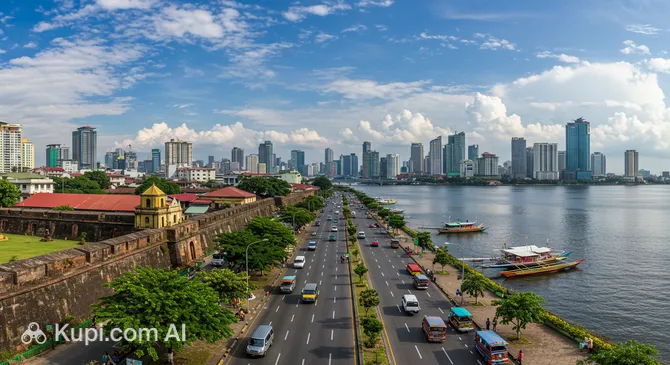
Manila. Source: Kupi.com Binoculars

The Philippines is famous for its tropical climate, making it an attractive year-round holiday destination. You can expect not only paradise islands but also bustling cities, most notably the capital, Manila, a city of contrasts where modern skyscrapers stand alongside historic colonial-era districts. The country is increasingly catering to Muslim travellers, with a growing number of halal-certified restaurants and hotels available, particularly in major cities like Manila. The nature of the Philippines is strikingly diverse: from the famous Chocolate Hills on the island of Bohol to volcanoes and coral reefs, perfect for diving and snorkelling.

Besides the capital, it is worth visiting cities like Cebu City, the country's historic heart, or enjoying the entertainment offered by attractions such as Sky Ranch Tagaytay. Filipinos are known for their hospitality and friendliness, which creates a special, warm atmosphere for tourists. A trip to the Philippines always promises vivid impressions, exotic landscapes, and a chance to experience a unique culture.

Currency

The national currency of the Philippines is the Philippine Peso (PHP). Banknotes feature portraits of distinguished Filipino figures and images of the country's iconic natural landmarks. Coins of various denominations are also in circulation. It is advisable to exchange currency at official banks or licensed exchange points, which are found in airports, shopping centres, and tourist areas. For travellers from the UAE, it is often better to exchange UAE Dirhams (AED) for US Dollars (USD) before departure and then exchange the US Dollars for Philippine Pesos upon arrival, as you may get a less favourable rate for AED in the Philippines. Avoid exchanging money with street money changers due to the risk of fraud or poor exchange rates.

Credit cards, primarily Visa and Mastercard, are widely accepted in major cities, hotels, restaurants, and shopping centres. However, in smaller towns and on remote islands, cash is the preferred method of payment. It is therefore always useful to carry a sufficient amount of local currency for small purchases and services. Cash is essential for things like paying for a taxi or buying a local SIM card right after you arrive.

Visa Requirements

When planning a trip to the Philippines, it is important to understand the visa requirements in advance. For citizens of the United Arab Emirates holding a UAE passport, a visa is not required for tourism or business trips for a stay of up to 30 days. UAE residents who hold other passports should check the specific visa rules based on their nationality.

Regardless of visa requirements, all travellers must complete the mandatory eTravel registration online within 72 hours before their departure to receive a QR code for presentation upon arrival. Furthermore, to enter the Philippines, you will need a passport that is valid for at least six months beyond your intended stay. You may also be required to present a return or onward ticket, proof of accommodation, and have adequate travel insurance. As visa and entry rules can change, it is strongly recommended to always check the latest information on the official websites of the Philippine embassy or consulate before you travel.

We'll tell you if you need a visa

Specify where you are going, or
Your citizenship
Destination

Time Zones

When planning your trip to the Philippines, you will not have to worry about changing time zones within the country. The entire Philippines operates on a single time zone, Philippine Standard Time (PST). It is set at UTC+8, which is 8 hours ahead of Coordinated Universal Time. For travellers from the UAE, this means the Philippines is 4 hours ahead of Gulf Standard Time (UTC+4).

This means the time in Manila will be the same as on any other island in the archipelago, whether it is the popular Boracay or the remote Palawan. The single time zone makes it much simpler to plan transfers and activities during your Philippine adventure.

How to Get There

The most convenient way to get to the Philippines, an archipelagic nation in Southeast Asia, is by air. For travellers from the UAE, there are direct flights available from major hubs like Dubai and Abu Dhabi. National carriers such as Emirates and Etihad Airways, along with Philippine Airlines and Cebu Pacific, operate regular non-stop services. The primary gateway to the country is Ninoy Aquino International Airport in Manila, which handles the majority of international arrivals. Other major international airports are located in cities such as Cebu and Clark, which also receive connecting flights from the UAE.

Given that the Philippines consists of over 7,000 islands, overland transport from other countries is not possible. While sea travel via international ferries or cruise liners exists, it is far less common for direct arrival compared to air travel and is more frequently used for inter-island journeys or travel from neighbouring island nations. When planning your trip, especially during peak tourist season, it is highly recommended to book flights in advance to secure the best fares and availability.

For your reference, here is a summary of the main international airports in the Philippines:

Airport Name City Passenger Traffic
Ninoy Aquino International AirportManilaVery Large
Mactan-Cebu International AirportCebu CityLarge
Clark International AirportAngeles CityMedium
Francisco Bangoy International AirportDavao CityMedium
Puerto Princesa International AirportPuerto PrincesaMedium

The Philippines is a country of thousands of islands, each offering something unique, from bustling metropolises to secluded, idyllic beaches and cool mountain resorts. It has perfect spots for lovers of outdoor activities and lively parties, as well as for those seeking tranquillity and a connection with nature.

Manila. Source: Kupi.com Binoculars

The heart of the country is its capital, Manila, a city of contrasts where modern skyscrapers stand alongside the colonial architecture of the historic Intramuros district. It is a major transport hub and cultural centre, offering a rich sightseeing programme. Another significant urban centre is Cebu City, the oldest city in the Philippines, attracting tourists with its rich history, religious shrines, and proximity to magnificent dive sites. For those who dream of white sandy beaches and azure seas, the ideal choice is Malay, the municipality that is home to the famous island of Boracay, known for its picture-postcard views and vibrant nightlife.

If you prefer a cooler climate and picturesque mountain landscapes, consider Tagaytay. This popular resort is situated on a ridge overlooking Taal Volcano and its surrounding lake, offering fresh air, numerous restaurants with panoramic views, and opportunities for a peaceful retreat. Regardless of your preferences, the Philippines can offer you an unforgettable journey, full of vivid impressions and new discoveries.

Top Attractions

The Philippines is not only a paradise of idyllic beaches but also a country with a rich culture and a host of interesting places. There is something for everyone here, from breathtaking natural wonders to historical shrines and modern entertainment complexes.

One of the most popular places for family fun and exciting experiences is Sky Ranch Tagaytay. This amusement park offers rides to suit all tastes, and its famous Ferris wheel provides stunning panoramic views of the surrounding area, including the Taal Volcano.

Sky Ranch Tagaytay. Source: Kupi.com Binoculars

For those interested in the spiritual side of the Philippines, a visit to the Minor Basilica of Our Lady of the Rosary of Manaoag is a must. It is one of the country's most revered pilgrimage sites, known for its miraculous icon and beautiful architecture. To maintain the solemnity of this sacred place, visitors are advised to wear modest attire, ensuring shoulders and knees are covered.

Minor Basilica of Our Lady of the Rosary of Manaoag. Source: Kupi.com Binoculars

Fans of shopping and city life will love Ayala Center Cebu. This is not just a shopping mall, but an entire complex with a multitude of international and local brand stores, restaurants, cinemas, and green areas for relaxation. For visitors seeking halal food, the centre offers several options, including Persian Palate, which serves Iranian and Mediterranean dishes.

Ayala Center Cebu. Source: Kupi.com Binoculars

To immerse yourself in the authentic atmosphere and sample local delicacies, head to the Mahogany Market in Tagaytay. Here you can find the freshest fruits, vegetables, and meat, as well as try the famous Filipino soup, "bulalo", served piping hot. This hearty beef shank soup is a regional speciality; however, visitors should confirm with the vendor that the preparation is halal.

Mahogany Market. Source: Kupi.com Binoculars

Best Time to Visit

When planning a trip to the Philippines, it is important to consider the two main climatic seasons, which significantly influence the travel experience. The high season, or dry season, usually lasts from November to April. During this time, the weather is most favourable: plenty of sunshine, low humidity, and calm seas create ideal conditions for beach holidays, diving, snorkelling, and exploring the numerous islands. The advantages of this period are the comfortable weather and an abundance of events, including colourful Christmas celebrations and Holy Week (Semana Santa), which attract many tourists. However, be prepared for higher prices for accommodation and flights, as well as a large number of holidaymakers at popular resorts.

The low season, or rainy season, in the Philippines occurs from May to October. This period is characterised by hot and humid weather with frequent, but often brief, downpours. The highest probability of typhoons is from July to September. Despite this, the low season has its advantages: significantly fewer tourists, lower prices for hotels and flights, and the islands' incredibly lush and vibrant greenery. However, some sea excursions and activities may be limited due to weather conditions, and some smaller establishments on the islands might close temporarily.

Given that the Philippines is an archipelago consisting of over 7,000 islands, the climate can vary noticeably even within the same season in different regions. For example, the eastern coasts may receive more rainfall while the west experiences dry weather. Therefore, it is always recommended to check the weather forecast for the specific islands you plan to visit before your trip. Some unique natural phenomena, such as the whale shark watching season in certain areas, also occur in different months, which is worth considering when planning your unforgettable journey.

Traditions

Filipinos are famous for their warmth and hospitality. When greeting local people, you will notice that handshakes are common, especially between men, along with a warm smile and a slight nod. It is important to remember that pointing with a finger is considered impolite; instead, Filipinos may use a lip-pointing gesture, puckering them forward in the direction of an object. Showing respect to elders is a key aspect of the culture, so using the polite particles "po" and "opo" (similar to "sir/ma'am" or a polite "yes") when speaking with them will be highly appreciated, although this is not strictly expected of tourists. If you are invited to someone's home, it is a great honour. It is customary to bring a small gift for the hosts, such as sweets, fruits, or a souvenir from your country. Refusing offered food may be seen as impolite, so try to taste at least a little of what is offered.

When visiting the Philippines, it is worth considering certain cultural nuances in behaviour and dress. Light clothing is suitable for daily life; however, for visits to churches and other religious sites, choose modest outfits that cover your shoulders and knees. In some establishments in major cities, for example, in Manila, a smart-casual dress code may be in effect. At the table, it is customary to wait to be invited to eat; Filipinos often eat with a fork and spoon (the spoon in the right hand and the fork in the left to guide food onto the spoon). The main holidays that deeply reflect the culture are Christmas (Pasko), which has one of the longest celebration periods in the world in the Philippines, starting as early as September, and Holy Week (Semana Santa), which is observed with great reverence and numerous religious processions. To avoid misunderstandings, try not to raise your voice in public and be patient, as the concept of "Filipino time" means that things can move at a leisurely pace. A respectful attitude towards local traditions will make your journey even more pleasant and memorable.

Entertainment

The Philippines offers tourists an incredible variety of entertainment to suit every taste. Thanks to its island geography, the country is a true paradise for lovers of active recreation. Diving and snorkelling in crystal-clear waters among coral reefs, surfing at world-famous spots, kayaking, and sailing are just a small part of the available water activities. On land, fascinating hiking trails through tropical forests, volcano trekking, and exploring picturesque rice terraces await you.

The cultural programme in the Philippines is no less rich. In major cities such as Manila and Cebu City, you can visit numerous museums, discover colonial architecture, explore historic churches, and see modern art galleries. When visiting churches and other places of worship, it is advisable to dress modestly, covering shoulders and knees, to show respect for the sacred sites. Shopping here is also a pleasure: from huge modern malls with global brands to colourful local markets where you can buy authentic souvenirs, pearl jewellery, handmade textiles, and exotic delicacies. Many tourists bring home items made from seashells, coconut wood, and local crafts.

As evening falls, life in the Philippines continues, especially in tourist areas and large cities. Numerous restaurants offer both local and international cuisine, with halal options widely available in major hubs and tourist spots. The evening scene is vibrant with live music and cafés. For a family holiday, there are also plenty of options: from visiting theme parks and water parks to interactive museums and oceanariums. Nature parks and reserves offer educational tours that will be interesting for both adults and children.

Currency rates

Planning a trip? That's wonderful! To ensure the financial aspects of your journey don't come as a surprise, it's important to remember that currency exchange rates are constantly changing. Therefore, we strongly advise you to monitor the latest rates both before your departure from the UAE and throughout your trip. You can use the data provided below for this purpose—we monitor currency exchange rates 24/7 and strive to provide the most up-to-date information.

PHP currency exchange rate as of 02.01.2026

1 AED
~ 15.95 PHP
6.51 AMD
~ 1 PHP
1 AUD
~ 39.10 PHP
1 AZN
~ 34.46 PHP
1 BYN
~ 19.93 PHP
1 CAD
~ 42.69 PHP
1 EUR
~ 68.82 PHP
1 GBP
~ 78.94 PHP
5.58 HUF
~ 1 PHP
1.54 INR
~ 1 PHP
1.49 KGS
~ 1 PHP
24.65 KRW
~ 1 PHP
8.66 KZT
~ 1 PHP
1 PLN
~ 16.32 PHP
1.35 RUB
~ 1 PHP
1 SAR
~ 15.62 PHP
1 SGD
~ 45.57 PHP
1 TRY
~ 1.36 PHP
1 UAH
~ 1.39 PHP
1 USD
~ 58.59 PHP
205.05 UZS
~ 1 PHP

Reached the end of the page?

That means the route is fully explored