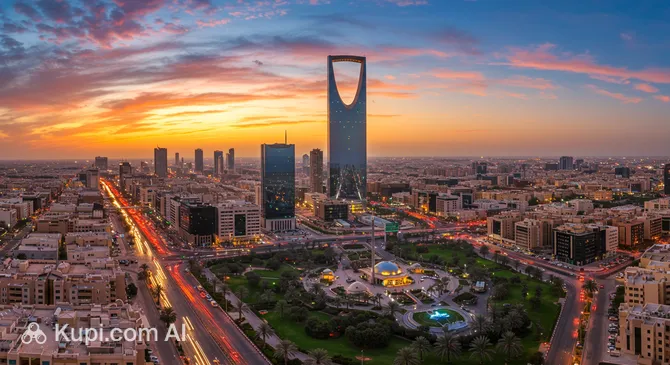
Saudi Arabia, which occupies most of the Arabian Peninsula, is a country where ancient traditions meet impressive modern development. It is a land with a rich history and culture that is increasingly opening its doors to travellers from all over the world. The nation's capital, Riyadh, is a prime example of this blend, offering both historic quarters and futuristic skyscrapers.
Illustration.
Source: Kupi.com AI
The cultural heritage of Saudi Arabia is inextricably linked to its role as the cradle of Islam. It is home to the two holy cities for Muslims – Mecca and Medina – which attract pilgrims from across the globe. Beyond its religious landmarks, the country captivates with its diverse natural landscapes: from the vast deserts with their unique ecosystems to the picturesque Red Sea coast with its coral reefs.
A journey to Saudi Arabia promises to be an unforgettable experience, full of discovery. The country offers a unique immersion into Arab culture, an opportunity to see ancient archaeological sites, enjoy the hospitality of its people, and witness magnificent modern projects. From bustling souqs to the tranquillity of desert oases, Saudi Arabia is ready to surprise and inspire.
Currency
The national currency of Saudi Arabia is the Saudi riyal (SAR). Banknotes typically feature portraits of the reigning kings and significant Islamic and cultural landmarks of the country. You can exchange currency at banks and specialised exchange bureaus, which are widely available in cities and airports. It is advisable to avoid exchanging money with private individuals to prevent fraud or unfavourable rates.
Credit and debit cards, mainly Visa and Mastercard, are accepted in most hotels, large shopping centres, and restaurants in major cities like Riyadh. However, when visiting smaller shops, traditional markets (souqs), or travelling to smaller towns, it is wise to carry a sufficient amount of cash. ATMs are also quite common, especially in urban areas, allowing you to withdraw cash from international cards. It is recommended to check with your bank beforehand about the terms and any possible fees for overseas withdrawals.
Visa Requirements
The great news for UAE citizens is that they do not need a visa to enter Saudi Arabia, as both nations are part of the Gulf Cooperation Council (GCC). UAE nationals can travel freely between the two countries, often using just their national ID card.
For non-GCC nationals residing in the UAE, Saudi Arabia has significantly simplified the visa process. Many expatriate residents can apply for an electronic visa (e-visa) online, provided they meet certain criteria. Generally, this requires a passport with at least six months' validity and a UAE residency visa valid for at least three months. The multiple-entry tourist e-visa is typically valid for one year and permits a stay of up to 90 days per visit. This visa can also be used to perform Umrah (outside of the Hajj season). Alternatively, some nationalities may be eligible for a visa on arrival.
Regardless of your visa status, it is always wise to carry a passport with a validity that covers your entire trip, along with proof of accommodation and return tickets. As visa regulations can change, we strongly recommend checking the latest information on the official Saudi visa portal or with the Kingdom of Saudi Arabia's embassy or consulate in the UAE before you travel.
We’ll tell you if you need a visa
Enter where you’re going, or
Your citizenship
Destination
Time Zones
When planning a trip to Saudi Arabia, you will not need to worry about changing time zones within the country. The entire Kingdom of Saudi Arabia operates on a single time zone — Arabia Standard Time (AST), which is UTC+3. This means the time in Riyadh, Jeddah, Makkah and other cities will be the same, which greatly simplifies scheduling transfers and activities.
How to Get There
Saudi Arabia, a country of rich history and culture, attracts travellers from all over the world. As a neighbouring country to the UAE, it is exceptionally well-connected, making it a prime destination for both short getaways and longer stays.
For residents of the UAE, the quickest and most convenient way to travel is by air. Numerous daily direct flights are operated by national carriers such as Emirates, Etihad, flydubai, and Air Arabia from major hubs like Dubai, Abu Dhabi, and Sharjah. These flights serve several key Saudi cities, with the main international gateways being the capital's airport in Riyadh and the major hub in Jeddah. With short flight times, reaching the Kingdom is a simple affair.
For those preferring a road trip, travelling to Saudi Arabia overland by car is a popular and straightforward option from the UAE. A well-developed road network connects the two countries via the Al Ghuwaifat-Al Batha border crossing. This route is frequently used by residents, especially for pilgrimages. Other land borders connect the Kingdom with Jordan, Kuwait, Qatar, Oman, and Yemen. While passenger sea travel is less common for tourists, some ports on the Red Sea and the Arabian Gulf can accommodate private yachts and specialised cruise ships. Regardless of your chosen method of travel, it is highly recommended to book tickets and plan your itinerary in advance, particularly if your trip coincides with the Hajj or Umrah seasons or major national holidays, when demand for transport services increases significantly.
Saudi Arabia offers travellers an amazing variety of destinations, from ancient cities with a rich history to ultra-modern megacities and picturesque coastal areas. There is something for everyone here, whether it's immersing oneself in the culture, exploring historical monuments, or discovering ambitious projects of the future.
Illustration.
Source: Kupi.com AI
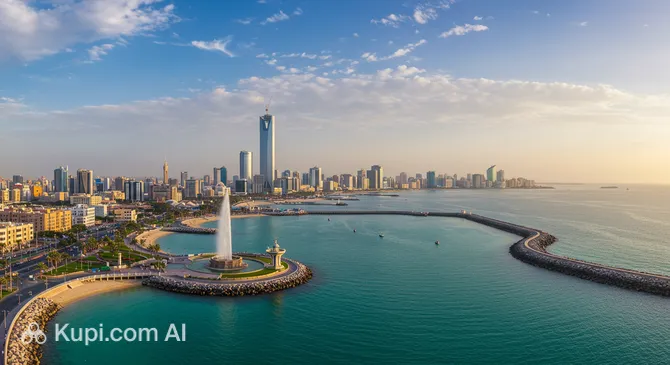
Among the country's most notable cities is Jeddah – the historic gateway to the holy places and a bustling Red Sea port, famous for its old quarter, Al-Balad, a UNESCO World Heritage Site. You can delve deep into history and spiritual heritage in Medina, one of the most important centres of the Islamic world. For those interested in modernity and business, Al Khobar offers developed infrastructure and beautiful waterfronts. And the ambitious Neom project, being built on the Red Sea coast, offers a glimpse into the future of technology and innovation.
The nation's capital, Riyadh, also deserves special attention, impressing with its blend of traditional architecture and modern skyscrapers, and serving as the main business and cultural centre. These cities are just a small part of what Saudi Arabia has to offer its guests, with each one revealing a unique facet of the country and promising unforgettable experiences.
Top Attractions
Saudi Arabia is a country with a rich history and culture, offering travellers unique experiences. It is home to the holiest sites in the Islamic world, modern metropolises, and amazing natural landscapes. When planning your trip, be sure to include several key attractions in your itinerary to gain a deeper understanding of this fascinating country.
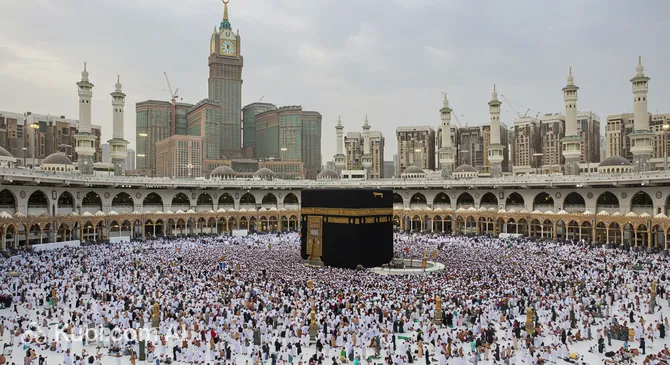
One of the most significant and revered landmarks is the Masjid al-Haram in Makkah. This is the largest mosque in the world, and its courtyard contains the Kaaba, the main holy site of Islam. Every year, millions of pilgrims from all over the world flock here to perform Hajj and Umrah. The architecture of the mosque is striking in its grandeur and beauty, and the atmosphere is filled with deep spirituality. Please note that entry to the city of Makkah is restricted to Muslims only.
Illustration.
Source: Kupi.com AI
Traveler photos:
Equally important is the Al-Masjid an-Nabawi (The Prophet's Mosque) in Madinah. This is the second holiest site in Islam and the burial place of the Prophet Muhammad. The mosque is famous for its Green Dome, which rises above the Prophet's tomb, and its impressive scale. A visit to this mosque is an unforgettable experience, thanks to its historical significance and peaceful atmosphere. Entry to the central area of Madinah, including the mosque, is for Muslims, and visitors are expected to dress modestly.
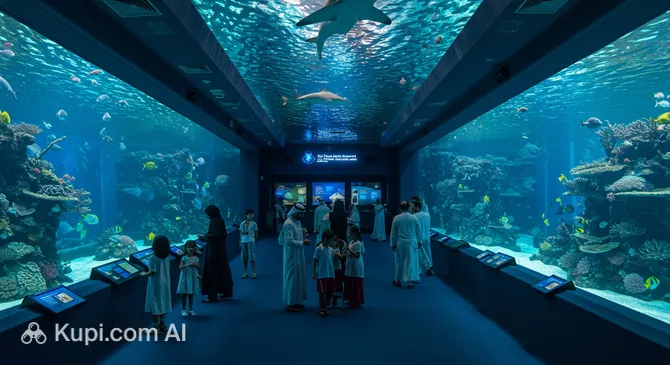
For those interested in the marine world and modern entertainment, a visit to the Fakieh Aquarium in Jeddah is a must. It is the first aquarium in Saudi Arabia, offering visitors the chance to discover the diverse inhabitants of the Red Sea and other aquatic ecosystems. Here you can see sharks, rays, dolphins, and many other sea creatures, making it an excellent destination for a family outing.
Illustration.
Source: Kupi.com AI
Traveler photos:
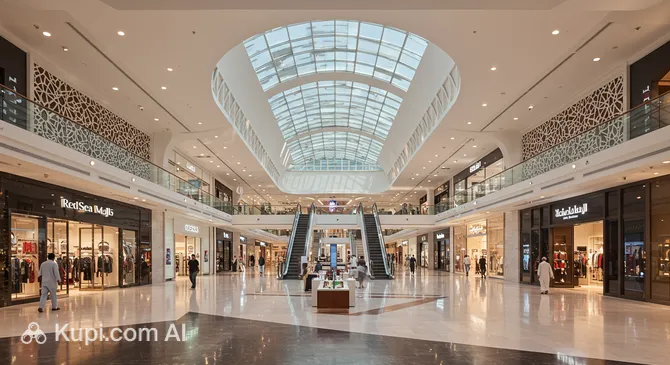
Fans of shopping and contemporary architecture will love the Red Sea Mall in Jeddah. It is one of the largest shopping centres in the city, offering a wide selection of international and local brands, restaurants, cafes, and entertainment zones. In addition to shopping, you can have a wonderful time here, enjoying the modern infrastructure, which includes dedicated prayer rooms and numerous halal dining options suitable for the whole family.
Illustration.
Source: Kupi.com AI
Traveler photos:
Best Time to Visit
The best time to visit Saudi Arabia is during the cooler season, which typically runs from October to March. During these months, the weather is most comfortable for travelling and sightseeing, with pleasant daytime temperatures and evenings that can be quite cool, especially in the capital, Riyadh, and northern regions near Tabuk, where temperatures can even drop to freezing point in winter. This is the ideal time to explore ancient cities like Medina (where access for non-Muslims is restricted) or enjoy coastal areas such as Jeddah. However, it is worth noting that this is also the peak tourist season, which can mean more visitors and higher prices for accommodation and flights.
The summer months, from April to September, are considered the low season in Saudi Arabia due to extremely high temperatures, which can exceed 45-50°C in some central and eastern regions, like the area around Al-Hofuf. Travelling during this period can be challenging, although it attracts fewer tourists and offers potentially lower prices. If your trip falls in the summer, it is best to opt for coastal cities such as Dammam or Al-Khobar, where the sea breeze provides some relief from the heat, or the mountainous regions in the southwest, like the area around Taif, which enjoys a more moderate climate.
When planning your trip, it is important to consider the timing of major religious events such as the Hajj (the pilgrimage to Mecca) and the month of Ramadan, as their dates change annually according to the lunar calendar. During these periods, life in the country changes noticeably, and there may be restrictions on visiting certain places and different operating hours for establishments. The country also hosts various cultural festivals, such as 'Riyadh Season', which usually take place during the cooler time of year. As the climate in Saudi Arabia can vary significantly by region, it is always advisable to check the weather forecast for the specific locations on your itinerary.
Traditions
The culture of Saudi Arabia is deeply rooted in Islamic traditions, which is reflected in all aspects of life, including communication and hospitality. When greeting local people, especially men, a light handshake with the right hand is customary, accompanied by the traditional phrase 'As-salamu alaykum' (peace be upon you). When interacting with women, it is best to wait for them to initiate any physical contact, such as a handshake, to avoid any awkwardness. Hospitality here is a sacred duty: you may be warmly invited for Arabic coffee (qahwa) and dates, and it is a gesture that should be accepted with gratitude. A small souvenir from your home country would be a thoughtful gesture for your hosts, but avoid alcohol or products made from pigskin.
Respect for local customs is also shown through the dress code. Tourists, particularly women, are advised to wear modest, conservative clothing. In public places, it is advisable for women to wear loose-fitting clothes that cover the arms and legs (such as an abaya); this is especially important when visiting religious sites. Men should also avoid wearing shorts that are above the knee and overly revealing vests. At the table, if you are eating in the traditional way without cutlery, use only your right hand, as the left hand is considered unclean in local customs. It is also important not to show the soles of your feet towards other people when sitting on the floor, as this can be perceived as a sign of disrespect.
The main religious holidays include Eid al-Fitr, which marks the end of the holy month of Ramadan, and Eid al-Adha, the festival of sacrifice. Saudi National Day is celebrated on 23 September. To ensure your journey is comfortable and leaves you with only pleasant memories, remember some general rules: avoid public displays of affection between a man and a woman, always ask for permission before photographing people (especially women), and refrain from criticising the religion, the royal family, or local customs. The consumption of alcohol and the importation of pork are strictly forbidden. Showing tact and respect for local traditions will help you to better understand the country and enjoy its unique atmosphere.
Entertainment
Saudi Arabia offers tourists an increasingly diverse range of entertainment, combining ancient traditions with modern aspirations. Fans of outdoor activities will find a wealth of opportunities here: from thrilling diving and snorkelling in the crystal-clear waters of the Red Sea to exciting desert safaris by jeep or camel. Hiking is also developing in some of the country's mountainous regions, such as the Asir mountains, revealing impressive landscapes to travellers. For those seeking adventures on the water, various water sports are available.
The cultural programme in Saudi Arabia is rich and multifaceted. The country prides itself on its rich historical heritage, which can be explored in numerous museums and at archaeological sites like Al-Ula and Diriyah. Although traditional theatres and concert halls in the Western sense are only just beginning to develop, various festivals and cultural events that introduce local arts and music are becoming more frequent. Shopping is an essential part of any trip: from the lively traditional markets (souqs), where you can buy spices, Arabian perfumes, carpets, dates, and local handicrafts, to the ultra-modern shopping centres in cities like Riyadh, which offer global brands.
Evening entertainment in Saudi Arabia has its own character and is mainly centred around restaurants, cosy cafes with local flavour, and strolls along modern waterfronts or through historic quarters. The atmosphere is generally calm and conducive to socialising. For family entertainment, more options are continually emerging: modern theme parks, water parks, and entertainment centres offer a variety of attractions and activities for children of all ages, especially in major cities. This makes Saudi Arabia an attractive destination for travellers with diverse interests.
Currency rates
Planning a trip? Excellent! To avoid any financial surprises during your travels, it’s important to remember that currency exchange rates are constantly changing. Therefore, we strongly advise keeping track of the latest rates both before you fly and throughout your trip. To help with this, you can use the data provided below — we monitor exchange rates 24/7 and strive to provide the most current information.