Support

Jordan

Cities in the country

About the Country

Jordan is a captivating country in the heart of the Middle East, where ancient history beautifully merges with modern Arab culture, offering travellers from the UAE unforgettable experiences. Situated at a crossroads of civilisations, it preserves the legacy of numerous eras and peoples, from the Nabataeans to the Romans and Ottomans. It is a land of stunning contrasts, inviting you to explore both its vibrant cities and its serene, silent deserts.
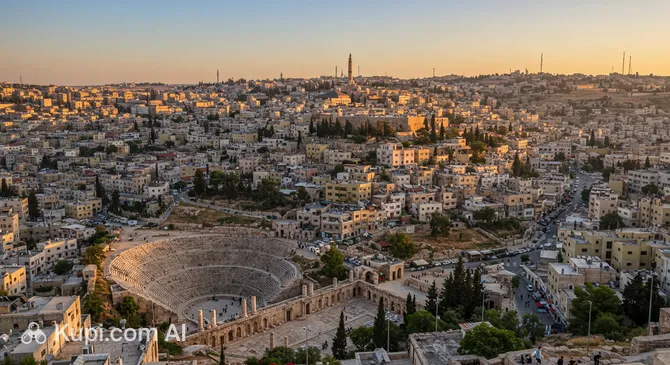
Amman. Source: Kupi.com Binoculars

The heart of Jordan beats to the rhythm of its rich past. The country is famed for the world-famous marvel of ancient Petra, a city carved directly into rose-red cliffs. Equally impressive are other historical treasures, such as the magnificently preserved Jerash Archaeological Site, which transports visitors back to the grandeur of the Roman Empire. Jordan's contemporary life thrives in its capital, Amman, a dynamic city where ancient ruins stand alongside stylish restaurants and art galleries.

Beyond its historical treasures, Jordan fascinates with its diverse natural landscapes. You can embark on a thrilling journey through the spectacular desert landscapes of Wadi Rum, experience the unique sensation of floating in the therapeutic waters of the Dead Sea, or unwind on the beautiful Red Sea coast in the resort city of Aqaba. The country's climate is primarily desert, with hot summers and mild, pleasant winters, making it an ideal year-round destination. The renowned hospitality of the Jordanian people, rooted in a welcoming Arab tradition, is sure to leave you with the warmest memories of your trip.
Currency

The currency of Jordan is the Jordanian dinar (international code: JOD). One dinar is divided into 100 piastres (also known as qirsh) or 1,000 fils. However, fils are rarely used today due to their low value. Jordanian dinar banknotes feature portraits of rulers from the Hashemite dynasty, alongside significant architectural and natural sites, making them small works of art in their own right.

For travellers from the UAE, it is useful to know that the Jordanian dinar has been pegged to the US dollar at a fixed rate of approximately 1 USD = 0.709 JOD since 1995. This is similar to the UAE dirham's own peg to the dollar, which ensures a stable and predictable exchange rate between the AED and JOD. You can exchange foreign currency for Jordanian dinars at banks, licensed exchange offices (which often offer more favourable rates than banks), and some hotels. Exchange offices are widely available at airports, in major cities like Amman, and in tourist centres. It is advisable to avoid exchanging money with unauthorised individuals to prevent getting an uncompetitive rate. Credit cards, mainly Visa and MasterCard, are accepted in most hotels, restaurants, and large shops, especially in tourist areas. However, for smaller purchases at local markets, in small cafés, or for paying taxi fares, it is always best to have cash on hand.

Visa Requirements

When planning a trip to Jordan, it's important to understand the visa requirements in advance. For citizens of the United Arab Emirates, visa-free entry is permitted for stays of up to 90 days. For other UAE residents, visa regulations depend on your nationality. Many expatriate nationalities can obtain a visa on arrival at international airports, such as in Amman, or at certain land border crossings. Alternatively, it is possible to arrange a visa beforehand through the Jordanian embassy or consulate in the UAE.

To enter Jordan, you will need a valid passport with at least six months of validity from your intended date of entry. Although not always strictly required for a visa on arrival, it is highly recommended to also carry proof of hotel reservations, return flight tickets, and a travel insurance policy. As visa regulations can change, we strongly advise checking the most current information with the official Jordanian embassy or consulate in the UAE before you travel.

We'll tell you if you need a visa

Specify where you are going, or
Your citizenship
Destination

Time Zones

When planning a trip to Jordan, you will not have to worry about changing time zones within the country. The whole of Jordan operates on a single time zone, Arabia Standard Time (AST), which is UTC+3. This means the time in Amman, Petra, and on the coasts of the Red or Dead Seas will be the same.

For travellers from the UAE, it is useful to know that Jordan's time is one hour behind the UAE's Gulf Standard Time (UTC+4). In October 2022, Jordan abolished seasonal daylight saving time changes and permanently adopted the UTC+3 time zone, which simplifies travel planning. This single, consistent time makes it much easier to organise transfers and excursions around the country, allowing you to focus on enjoying Jordan's rich history and culture without constantly checking your watch when moving from one region to another.

How to Get There

Getting to Jordan is easiest by air. The country's main gateway is Queen Alia International Airport (AMM), located near the capital, Amman. It receives flights from numerous cities across Europe, the Middle East, Asia, and North Africa. From the UAE, there are many direct flights available with carriers such as Emirates, Etihad Airways, flydubai, and Air Arabia. Convenient connecting flights through major international hubs are also an option. Another important airport is located in the resort city of AqabaKing Hussein International Airport (AQJ), which primarily serves charter and seasonal flights, as well as routes from neighbouring countries.

For those who prefer overland travel or are combining a visit to Jordan with trips to neighbouring countries, there are land border crossings. It is possible to enter by bus or car from neighbouring countries like Saudi Arabia and Israel. Driving from the UAE is a viable option, with the route passing through Saudi Arabia. Border crossings with Iraq and Syria also exist; however, before planning such a route, it is critically important to check the latest information on the operational status of the checkpoints, security, and visa regulations. Sea travel is also available: the port of Aqaba on the Red Sea receives ferries, notably from Egypt (Nuweiba), which can be an interesting option for travellers exploring the region.

When planning your trip, especially during the popular tourist seasons (spring and autumn), it is advisable to book your flights well in advance. This will not only help you save money but also guarantee seats on your preferred flights. The same applies to some international bus routes or ferry crossings if you choose this mode of travel.

For clarity, here is a summary of the main airports:

Airport Name City Passenger Traffic
Queen Alia International AirportAmmanMajor
King Hussein International AirportAqabaMedium

Jordan offers travellers an amazing variety of cities and resorts, each with its own unique character and atmosphere. From ancient ruins to modern metropolises and picturesque coastlines, there is something here for everyone. The heart of the country is undoubtedly its capital, Amman, a dynamic city where ancient history blends harmoniously with modern life. Here you will find impressive Roman amphitheatres and citadels, as well as lively souqs, galleries, and restaurants offering delicious halal cuisine.

Amman. Source: Kupi.com Binoculars

For lovers of beach holidays and scuba diving, a real gem is Aqaba, Jordan's only coastal resort on the Red Sea, famous for its coral reefs and crystal-clear water. If you are drawn to history, be sure to visit Jerash, one of the best-preserved Roman cities outside of Italy, which impresses with its colonnades, temples, and theatres. No less interesting is the city of Madaba, known as the 'City of Mosaics', where you can see the famous 6th-century mosaic map of the Holy Land.

These and many other cities and resorts in Jordan await exploration, offering a unique opportunity to immerse yourself in the rich culture and history of the Middle East. Each of these destinations can provide unforgettable experiences and reveal new facets of this amazing country.

Top Attractions

Jordan is a country with a rich history, and its attractions can transport you back thousands of years. Here, every stone breathes antiquity, and modern cities exist in harmony with monuments of past eras.

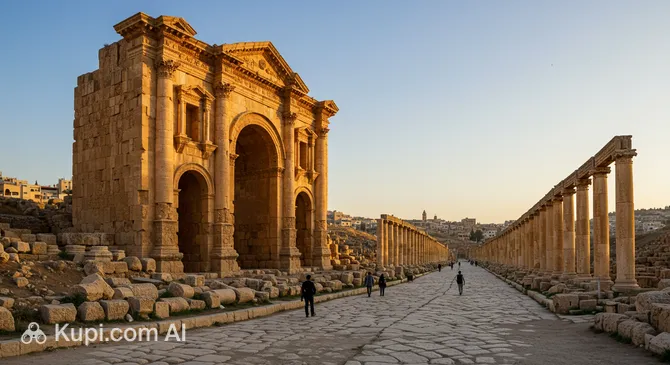
One of Jordan's main treasures is the Jerash Archaeological Site. It is one of the best-preserved Roman cities outside of Italy. Strolling along its paved streets, you will see majestic colonnades, temples, theatres, and triumphal arches that will amaze you with their scale and the skilful work of ancient craftsmen. Jerash allows you to literally touch history and imagine life during the Roman Empire.

Jerash Archaeological Site. Source: Kupi.com Binoculars

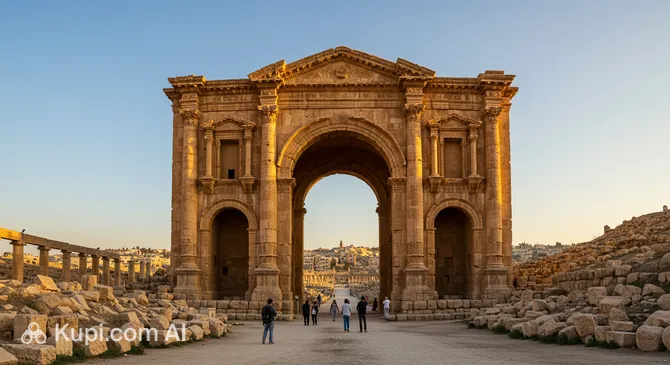
Not far from the main Jerash complex stands the famous Arch of Hadrian. This monumental arch was built to honour the visit of the Roman Emperor Hadrian in 129 AD. Its impressive size and detailed reliefs serve as a reminder of the greatness and power of Rome, as well as the importance of Jerash (then called Gerasa) as a major commercial and cultural centre of that time.

Arch of Hadrian. Source: Kupi.com Binoculars

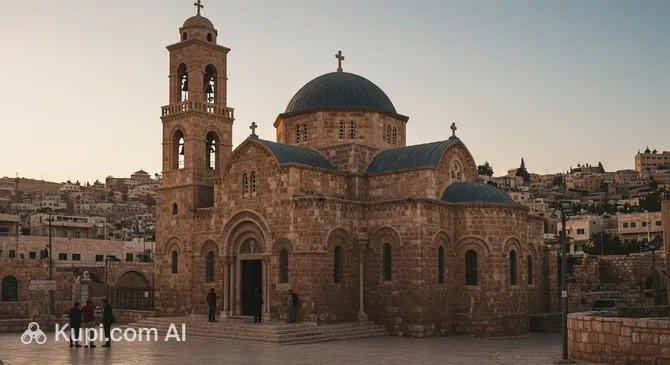
In the city of Madaba, you will find the unique Greek Orthodox Church of St. George. Its main treasure is the famous 6th-century mosaic map of the Holy Land. This ancient mosaic, laid on the church floor, depicts Jerusalem and other significant biblical sites, representing a priceless historical and religious artefact. A visit to the church is an opportunity to see one of the most important cartographic works of the early Christian era. As it is an active place of worship, visitors are kindly requested to dress modestly, covering shoulders and knees.

St George's Greek Orthodox Church. Source: Kupi.com Binoculars

Best Time to Visit

The best time to visit Jordan is during the spring (from March to May) and autumn (from September to November). In these periods, the weather is most comfortable for travelling around the country, with warm, sunny days and pleasant, cool evenings. This is the ideal time for exploring attractions such as Petra, Jerash, or the Wadi Rum desert, as well as for outdoor activities. However, it is worth noting that the high season attracts more tourists, which can affect the prices of accommodation and services, as well as the crowds at popular sites.

Summer (from June to August) in Jordan is hot, especially in the central and southern areas, including Petra and Wadi Rum, where temperatures can become very high. During this time, it may be more comfortable on the Red Sea coast in Aqaba. Winter (from December to February) is the low season. The weather turns cool, especially in Amman and the northern regions, where rain and even snow in the mountains are possible. However, in the south, in Aqaba and at the Dead Sea, the weather remains mild. The benefits of the low season include fewer tourists and lower prices, but some attractions may have shorter opening hours. It is also important to be aware that the dates of Ramadan (the holy month of fasting) change annually and may affect the opening hours of establishments and the availability of some services.

Traditions

Jordan is a country with deep-rooted traditions of hospitality and respect, where etiquette is given great importance. Greetings play a significant role; a standard handshake, which may last longer than is customary in the West, is the norm. When interacting with local people, it is customary to use the right hand for greetings, eating, and passing items. You may often be invited for tea or coffee – this is a sign of special regard, and it is considered impolite to refuse. If you are invited to a home, a small gift, such as sweets or pastries (avoid alcohol unless you are certain of your hosts' preferences), is a welcome gesture, although not strictly required. Jordanians greatly appreciate politeness and a sincere interest in their culture, and they always respond with warmth.

When visiting Jordan, it is important to be mindful of dress codes, especially when entering religious sites like mosques: women are advised to cover their head, shoulders, and knees, while men should wear long trousers and shirts that cover their shoulders. Modest attire is also preferred in public places. At the dining table, particularly if dishes are served on a communal platter, it is customary to eat with the right hand, as the left hand is traditionally considered unclean. Avoid public displays of affection and always ask for permission before photographing people, particularly women and the elderly. The most significant holidays reflecting cultural values are Eid al-Fitr (the festival of breaking the fast after Ramadan) and Eid al-Adha (the festival of sacrifice). Observing these simple rules and showing respect for local customs will make your journey truly comfortable and help you to gain a deeper understanding of this fascinating country.

Entertainment

Jordan offers a diverse range of leisure opportunities to suit a wide variety of interests. Fans of active holidays will find impressive hiking trails through desert canyons, especially in the Wadi Rum area, as well as excellent conditions for diving and snorkelling in the crystal-clear waters of the Red Sea off the coast of Aqaba. The cultural programme is rich with visits to ancient cities and world-renowned archaeological sites, such as the well-preserved Jerash archaeological complex. Numerous museums, particularly in the capital, Amman, introduce the country's rich history and traditions, while theatres and galleries offer an insight into the region's contemporary art scene.

Evening life in Jordan is mainly concentrated in major cities like Amman, where you can find numerous restaurants offering both local and international cuisine; many establishments provide halal options. One popular choice is the Jubran Restaurant, and there are also many cosy cafés and shisha lounges. While lively nightclubs are not as common as in some other countries, a welcoming atmosphere and the opportunity for a pleasant evening are assured. Shopping in Jordan is an opportunity to purchase unique souvenirs: handmade crafts, Bedouin jewellery, famous cosmetics based on Dead Sea minerals, spices, and oriental sweets. Modern shopping centres, such as City Mall in the capital or Irbid City Centre, offer a wide selection of well-known brands.

For a family holiday, Jordan also offers appealing options. Many hotels are geared towards guests with children, offering suitable facilities and entertainment programmes. Exciting desert jeep tours, learning about the Bedouin way of life, and the chance to float in the unique waters of the Dead Sea can be an unforgettable experience for the whole family. Visits to historical sites can also capture the interest of young travellers if the information is presented in an engaging way, and some resort areas offer water parks and other children's entertainment.

Currency rates

Planning a trip? Wonderful! To ensure the financial aspects of your journey do not come as a surprise, it is important to remember that currency exchange rates are constantly changing. Therefore, we strongly advise you to monitor the latest rates both before your departure and throughout your trip. For this, you can use the data provided below—we monitor currency rates 24/7 and strive to provide the most up-to-date information.

Reached the end of the page?

That means the route is fully explored