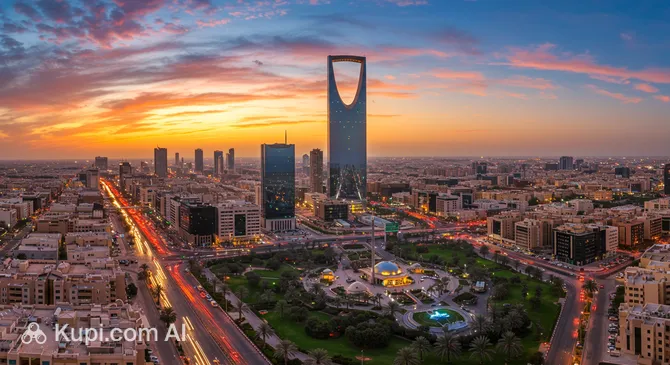
Riyadh, the vibrant capital of Saudi Arabia, stands as a testament to the nation's rapid modernization while honoring its deep-rooted traditions. Situated on the Najd plateau in the center of the Arabian Peninsula, this bustling metropolis is home to over 7 million people. It serves as the political and administrative heart of the kingdom, offering a fascinating mix of gleaming skyscrapers and expansive boulevards set against a backdrop of golden desert sands.
Riyadh. Illustration.
Source: Kupi.com AI
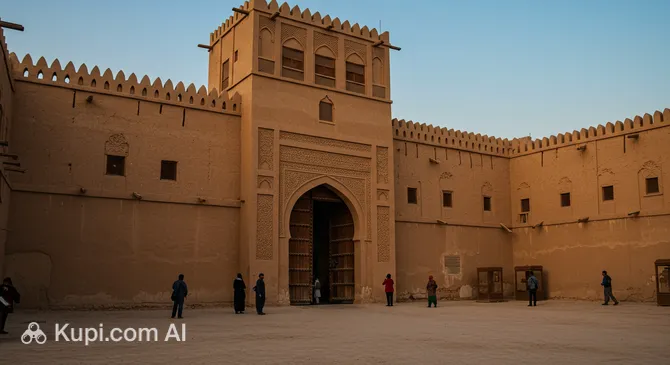
To truly understand the local culture, one must delve into the history of Riyadh, which traces its transformation from a small walled settlement to a global business hub. Visitors are often captivated by the contrast between the historic Masmak Fortress, with its clay and mud-brick walls, and the futuristic Kingdom Centre tower that dominates the skyline. The city is also the gateway to the UNESCO World Heritage site of At-Turaif in Diriyah, allowing travelers to walk through the ancestral home of the Saudi state.
The city experiences a desert climate, characterized by hot summers and mild winters, making the cooler months an ideal time to explore its lively souqs and lush parks. Whether you are traveling for business or leisure, Riyadh invites you to experience its unique Arabian hospitality, world-class dining, and a thriving arts scene that is reshaping the region's cultural landscape.
Weather Overview
Riyadh experiences a typical desert climate, characterized by long, sweltering summers and short, mild winters. The city is known for its arid conditions and abundant sunshine, with clear blue skies dominating for most of the year.
The summer months, spanning from June to September, bring intense heat. During this period, average temperatures range from 32.8°C to 36.1°C, while daily highs frequently exceed 42°C in July and August. Rainfall is virtually non-existent during this season, creating a very dry atmosphere.
Conversely, winter offers a pleasant escape from the heat. From December to February, the weather becomes much cooler and more comfortable for exploration. Average temperatures sit between 14.5°C and 17.1°C, though travelers should pack layers as nights can get chilly, with lows dropping to around 8.5°C in January.
Precipitation remains low throughout the year, but brief showers are possible during the transition seasons and winter. January and April typically see the most activity, with about 3 wet days each. For a more comprehensive forecast to help you pack, you can check the detailed report on weather in Riyadh.
Average monthly temperature
Average monthly precipitation
Interesting Facts
Beyond the main attractions, Riyadh holds many fascinating secrets that reveal the depth of its heritage and the scale of its ambition. Here are some intriguing details that often escape the casual observer:
A Name Rooted in Greenery: The name "Riyadh" translates to "The Gardens" in Arabic. While this might seem ironic for a modern metropolis surrounded by desert, it historically referred to the area's fertile past as an oasis fed by seasonal wadis, where orchards and greenery once flourished.
A Piece of History in the Door: If you visit the Al Masmak Palace Museum, look closely at the heavy wooden main gate. You can still see the tip of a spear embedded in the door, a remnant of the pivotal battle in 1902 that led to the recapture of the city.
Water from the Sea: Despite being located deep in the heart of the desert, the city sustains its massive population with desalinated water pumped all the way from the Persian Gulf. This engineering marvel involves pipelines stretching nearly 400 kilometers across the sands to bring fresh water to the capital.
Camel Capital: On the outskirts of the city lies Souq Al Jamal, one of the largest camel markets in the world. It is a bustling hub of traditional commerce where thousands of camels are traded, highlighting the enduring importance of this animal in Bedouin culture.
Al Masmak Palace Museum. Illustration.
Source: Kupi.com AI
Traveler photos:
How to Get There
As the capital of Saudi Arabia, Riyadh is a major transportation hub, making it easily accessible for travelers from around the globe. Whether you are arriving by air or considering overland routes, there are several convenient options to reach this bustling metropolis. You can find detailed information on all available routes, including driving directions and public transport tips, in our guide on how to get to Riyadh.
The primary entry point for most international and domestic visitors is King Khaled International Airport (RUH). Situated approximately 27 km from the city center, this is a major international airport handling millions of passengers annually. It serves as a key hub connecting the Kingdom to major cities worldwide. A trip from the airport to downtown Riyadh typically takes around 60 minutes by taxi or car, depending on traffic conditions. For those looking for alternative regional connections, Al-Ahsa Airport (HOF) is another facility, though it is located in the city of Hofuf, roughly 290 km away. A transfer from Hofuf to Riyadh typically takes approximately 3 to 3.5 hours by road, making it a viable option for those exploring the wider region.
For clarity, here is a summary of the main airports:
Beyond air travel, Riyadh is well-connected by a modern railway network. The Saudi Arabia Railways (SAR) operates comfortable train services linking Riyadh to other major cities such as Dammam in the east and destinations to the north. The main railway station is located within the city, offering a scenic and relaxing alternative to driving. Additionally, an extensive network of intercity buses operated by SAPTCO provides affordable road links to Riyadh from virtually every corner of the Kingdom and neighboring countries.
Main Attractions
Riyadh is a city where the past and future converge, offering visitors a diverse array of experiences ranging from deep historical dives to soaring modern heights. The capital's attractions cater to history buffs, nature lovers, and those seeking urban adventures, making it a dynamic destination for any traveler.
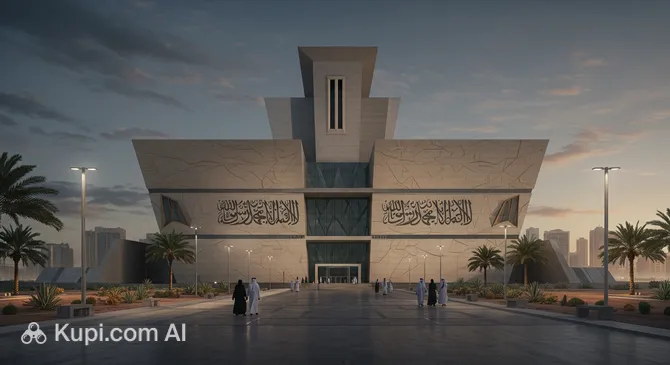
One of the most significant cultural landmarks is the National Museum of Saudi Arabia. Located within the King Abdulaziz Historical Centre, this architectural marvel houses eight galleries that chronicle the history of the Arabian Peninsula from ancient times to the modern era. Tourists are drawn here for the immersive exhibits, rare artifacts, and the opportunity to gain a profound understanding of the Kingdom's heritage and Islamic culture.
National Museum of Saudi Arabia. Illustration.
Source: Kupi.com AI
Traveler photos:
For a completely different perspective, the Kingdom Centre Sky Bridge is an absolute must-visit. Suspended 300 meters above the ground on the 99th floor of the iconic Kingdom Centre tower, this bridge offers breathtaking panoramic views of the sprawling metropolis. It is particularly interesting at sunset or night when the city lights create a mesmerizing tapestry below, making it the perfect spot for memorable photography.
Kingdom Centre Sky Bridge. Illustration.
Source: Kupi.com AI
Traveler photos:
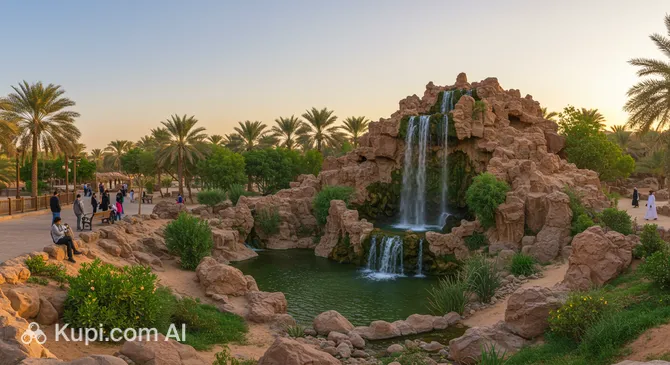
Those seeking a break from the urban bustle will find serenity at the Wadi Namar Waterfall. Part of a larger environmental rehabilitation project, this attraction features a stunning man-made waterfall that cascades into a long lake lined with palm trees and pedestrian walkways. It is a favorite among locals and tourists alike for picnics, leisurely strolls, and enjoying a refreshing contrast to the surrounding desert landscape.
Wadi Namar Waterfall. Illustration.
Source: Kupi.com AI
Traveler photos:
Another vibrant outdoor destination is King Abdullah Park, located in the Al-Malaz district. Known for its vast green spaces and beautifully landscaped gardens, the park is famous for hosting spectacular dancing water fountain shows that light up the evenings. It is an excellent venue for families, offering play areas and wide paths, and serves as a lively hub during national celebrations and festivals.
Local Cuisine
The culinary landscape of Riyadh is a delicious reflection of its heritage, offering a rich blend of traditional Najdi flavors and modern international gastronomy. At the heart of the local cuisine is Kabsa, often considered the national dish of Saudi Arabia. This fragrant meal consists of spiced rice cooked with meat—usually lamb or chicken—garnished with nuts and raisins. Another staple worth trying is Jareesh, a hearty porridge made from crushed wheat and yogurt, which offers a comforting taste of Bedouin tradition. For those with a sweet tooth, Kleija, a biscuit filled with date molasses and spices, is a beloved local treat.
When it comes to beverages, the culture is deeply rooted in hospitality. The most iconic drink is Gahwa (Arabic coffee), a yellowish coffee brewed with cardamom and saffron, traditionally served in small cups alongside premium dates. Tea is also popular, particularly sweet mint tea or milk-infused Karak tea. It is important for visitors to note that alcohol is strictly prohibited throughout Saudi Arabia. Instead, the city has a vibrant culture of "Saudi Champagne"—a refreshing non-alcoholic mix of apple juice, sparkling water, and fruit slices—as well as a booming specialty coffee scene and sophisticated mocktail bars.
Riyadh's food culture is diverse, ranging from traditional floor seating in heritage restaurants to ultra-modern fine dining establishments. Dining out is a major social activity, and the city comes alive at night with families and friends gathering to eat. For a trendy atmosphere combining shopping and gastronomy, Laysen Valley is a premier destination featuring a collection of upscale eateries and cafes in a contemporary setting.
Laysen Valley. Illustration.
Source: Kupi.com AI
Traveler photos:
In addition to high-end venues, the city offers excellent casual dining options. Burger enthusiasts often recommend The California Burger for its fresh ingredients and classic style. For those seeking a quick but delicious bite, Dank Sandwich is known for its creative fillings and hearty portions. Whether you are exploring bustling street markets or air-conditioned dining complexes like The Zone, Riyadh promises a memorable gastronomic journey.
Travel Tips
Visiting Riyadh is an exciting journey into the heart of the Arabian Peninsula, but navigating its unique blend of deep-rooted traditions and rapid modernization requires a bit of local know-how. To help you make the most of your trip and travel with confidence, here are some essential practical tips for your stay in the Saudi capital.
Clothing and Gear: Modesty is the golden rule in Riyadh. While the dress code has relaxed, both men and women should dress conservatively in public, covering shoulders and knees. For women, a loose-fitting abaya is no longer legally mandatory for tourists but remains a culturally respectful and convenient choice. Pack lightweight, breathable fabrics for the scorching summer heat, but bring a jacket or sweater for the winter months and the powerful air conditioning found indoors.
Transportation: The most convenient way to get around is by using ride-hailing apps like Uber, Careem, or local alternatives like Jeeny. Taxis are available but can be harder to hail on the street. While the new Riyadh Metro is transforming the city's transit, a car is often still necessary to reach many scattered attractions. Renting a car is an option, but be prepared for heavy traffic and aggressive driving styles.
Finances: The local currency is the Saudi Riyal (SAR). Riyadh is becoming increasingly cashless; credit cards and contactless payments (like Apple Pay) are accepted almost everywhere, from malls to small cafes. However, carrying a small amount of cash is useful for traditional souqs or small tips. Tipping is not mandatory but is appreciated for good service, typically around 10-15% in restaurants.
Health and Safety: Riyadh is generally a very safe city for tourists with low crime rates. Pharmacies, such as the ubiquitous Nahdi chain, are easy to find, and many operate 24/7. The desert air is extremely dry, so staying hydrated is crucial—always carry water with you. In case of emergency, dial 997 for an ambulance or 999 for the police.
Communication: English is widely spoken, especially in the hospitality, business, and retail sectors, so you will rarely face language barriers. However, learning a few Arabic phrases like "Salam Alaykum" (Peace be upon you) and "Shukran" (Thank you) goes a long way with locals. It is highly recommended to buy a local SIM card (STC, Mobily, or Zain) at the airport upon arrival for reliable navigation and internet access.
Local Etiquette: Saudis are known for their hospitality. When greeting someone of the same gender, a handshake is common. However, men should wait for a woman to extend her hand first. Always use your right hand for eating, drinking, or passing items, as the left hand is considered unclean. If you are invited to a local's home, remember to take off your shoes before entering.
What to Avoid: Strictly avoid any Public Displays of Affection (PDA), as this is culturally frowned upon and can attract negative attention. Additionally, never photograph people—especially women or government buildings—without asking for explicit permission first. Be aware that alcohol is strictly illegal in Saudi Arabia; do not attempt to bring it into the country or look for it.
Late-Night Culture: Riyadh is a nocturnal city. Due to the midday heat, the city truly comes alive after sunset. Malls, restaurants, and parks often stay open very late, sometimes until 1:00 or 2:00 AM. Plan your day accordingly: rest during the hot afternoon and enjoy the vibrant atmosphere and cooler temperatures in the evening.
By keeping these tips in mind, you will find Riyadh to be a welcoming and fascinating destination. Embrace the local customs, enjoy the late-night energy, and get ready to experience the warm Arabian hospitality that makes this city so special.
Entertainment & Nightlife
Entertainment and Nightlife:
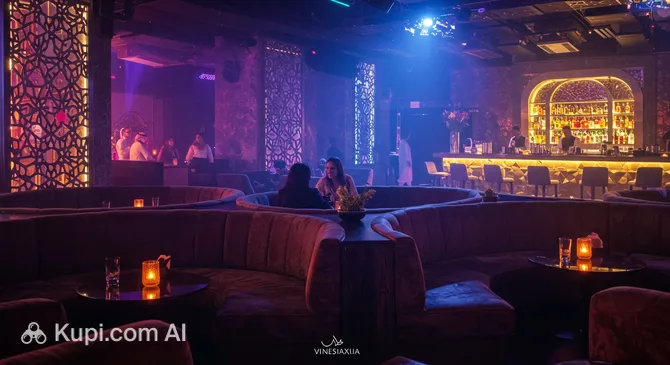
Riyadh is truly a nocturnal city. As the desert heat subsides after sunset, the capital transforms into a vibrant hive of activity where the streets are often busier at midnight than at noon. While you will not find traditional Western-style nightclubs or alcohol-serving bars due to local laws, the nightlife scene is incredibly energetic, centered around sophisticated lounges, bustling cafes, late-night dining, and social gatherings that last well into the early hours.
For those seeking a chic atmosphere with stunning views, the Mercury Lounge is a prime destination. Known for its elegant decor and relaxed ambiance, it offers a sophisticated setting to enjoy artisanal mocktails and gourmet bites while overlooking the city lights. It is a perfect example of Riyadh's modern social scene—upscale, trendy, and lively.
Mercury Lounge. Illustration.
Source: Kupi.com AI
Traveler photos:
The city is dotted with dynamic districts where the action happens. Tahlia Street is one of the most famous thoroughfares, lined with high-end cafes and restaurants where locals cruise in luxury cars and gather on terraces. For a more contained but equally vibrant experience, The Zone is an open-air complex that comes alive at night. With its dancing fountains and pedestrian-friendly layout, it is a favorite spot for families and friends to shop, dine, and socialize under the stars.
If you are looking for a place that blends music, food, and a lively crowd, Midtown offers a great vibe. Venues like this often feature live DJ sets or background music that sets a spirited mood, making them popular hangouts for the city's youth. The dress code in these areas is generally "smart casual"—while you should still dress modestly, you will see plenty of high fashion and trendy styles.
Midtown. Illustration.
Source: Kupi.com AI
Traveler photos:
Beyond the lounges and dining hubs, Riyadh offers plenty of entertainment for thrill-seekers and families. Al Watan Park, located surrounding the iconic Riyadh Water Tower, is a fantastic place to visit. It features amusement rides, beautifully landscaped gardens, and a miniature map of Saudi Arabia that you can explore by boat or foot. During the day, cultural enthusiasts can explore the city's museums, but places like this park are best enjoyed in the cooler evening air.
Practical Nightlife Tips:
Most social venues stay open very late, often until 2:00 AM or 3:00 AM on weekends. Prices in upscale lounges can be comparable to major global cities, so budget accordingly. Getting around at night is safe and easy; ride-hailing apps like Uber and Careem are the most reliable way to hop between districts. Riyadh is generally very safe for night walks, especially in busy areas like Boulevard Riyadh City or the Diplomatic Quarter, where security is high and the atmosphere is welcoming.
Parks & Museums
Beyond its gleaming skyscrapers and bustling markets, Riyadh offers a surprising array of tranquil green spaces and rich cultural institutions that invite visitors to pause and reflect. The city has invested heavily in creating lush environments and preserving its heritage, resulting in a diverse landscape where history buffs and nature lovers alike can find their own slice of paradise.
For a relaxing escape from the urban energy, Prince Sultan bin Abdulaziz Park is a favorite among locals. This expansive green lung is perfect for families and joggers, offering well-maintained walking paths and shaded areas for picnics. It provides a quiet respite where you can observe local life unfolding at a leisurely pace. Another significant outdoor venue is Al Suwaidi Park, which is well-known for hosting community events and cultural festivals. Its vibrant atmosphere and family-friendly facilities make it a great spot to experience the city's social spirit in an open-air setting.
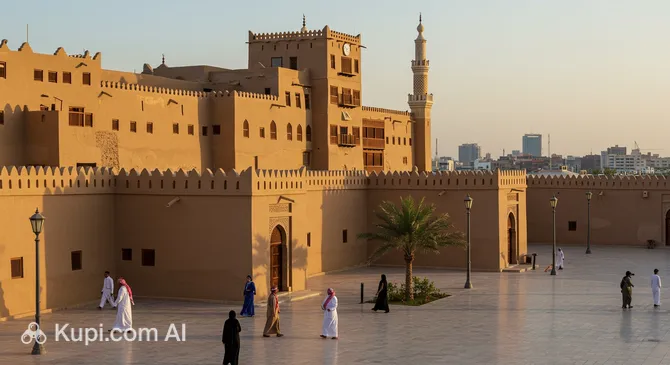
To deepen your understanding of the Kingdom's royal history, a visit to the Murabba Palace is essential. Built by King Abdulaziz outside the old city walls, this mud-brick complex offers a fascinating glimpse into the lifestyle of the royal family before the oil boom. The palace is a masterpiece of traditional Najdi architecture, featuring a central courtyard and distinctively decorated walls, allowing tourists to step back in time and appreciate the simplicity and elegance of the past.
Murabba Palace. Illustration.
Source: Kupi.com AI
Traveler photos:
On the other end of the cultural spectrum lies the Misk Art Institute. This dynamic hub is dedicated to supporting local artists and fostering creative expression. It regularly hosts exhibitions, workshops, and events that showcase contemporary Saudi art and design. For travelers interested in the modern cultural evolution of the region, this institute provides an inspiring look at the voices shaping the future of Saudi creativity.
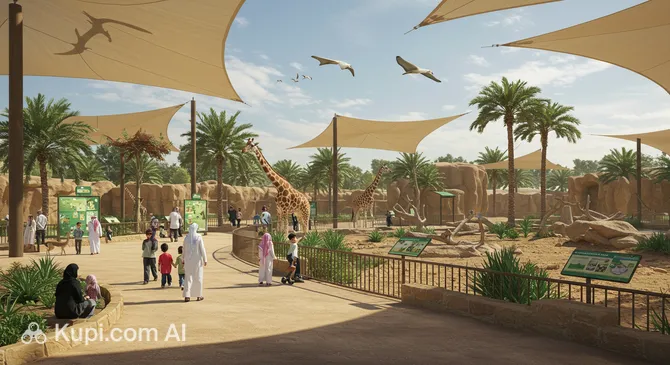
Animal lovers and families should not miss the Riyadh Zoo. As one of the largest zoos in the Kingdom, it houses a diverse collection of wildlife, including the popular Elephant Zone. It is an educational and entertaining destination where visitors can see animals from around the world, including a dedicated Giraffe and Zebra Exhibit, making it a delightful day out for children and adults alike.
Riyadh Zoo. Illustration.
Source: Kupi.com AI
Traveler photos:
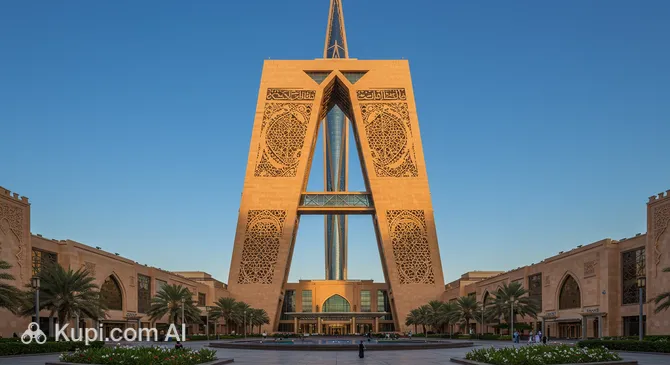
For a truly unique architectural experience, seek out the Tuwaiq Palace in the Diplomatic Quarter. While it functions primarily as a cultural center and event venue, its design is a stunning insider gem. The structure mimics the form of a desert tent seamlessly blended with massive stone walls, earning it international architectural awards. Even a drive by or a visit to its surroundings offers a striking contrast to the typical glass towers of the city center.
Getting Around
Navigating Riyadh has become significantly easier in recent years thanks to the massive expansion of its public transportation network. The city has moved beyond its heavy reliance on private cars with the introduction of a world-class integrated transit system designed to connect major districts, business hubs, and attractions efficiently.
The backbone of this new system is the Riyadh Metro, a state-of-the-art automated train network consisting of six colored lines that span across the metropolis. It is one of the largest urban transit projects in the world, featuring driverless trains and iconic stations like the futuristic King Abdullah Financial District station. The metro is designed with three classes of service: First Class for a premium experience, Family Class for women and families, and Standard Class for general commuters. Complementing the metro is the extensive Riyadh Bus network, which includes dedicated Bus Rapid Transit (BRT) lanes and community lines that reach deeper into residential neighborhoods.
To travel on both the metro and buses, you will need to use the unified payment system known as darb. Tourists can purchase a rechargeable darb card at ticket vending machines located in all metro stations and select bus stops. Alternatively, you can download the official mobile app to buy digital tickets and scan a QR code to board. Fares are generally calculated based on time, with a standard 2-hour pass being a very affordable option for short trips, while 3-day or 7-day passes are excellent value for visitors planning extensive sightseeing.
Operating hours for the public transport system typically run from 6:00 AM to midnight, with extended service hours on weekends. It is important to validate your ticket or tap your card both when entering and exiting the metro stations or buses to avoid penalties. When using the metro, pay attention to the platform indicators to ensure you are boarding the correct carriage corresponding to your ticket class, as fines apply for sitting in the wrong section.
Despite the new public transit options, ride-hailing apps remain an extremely popular and convenient alternative, especially for reaching specific destinations not directly served by the train or bus. Apps like Uber, Careem, and local providers like Jeeny are widely used, reliable, and overcome any language barriers since the destination is set digitally. Traditional green taxis are also available and can be flagged down on the street, but it is always widely recommended to ensure the meter is running or to agree on a fare beforehand.
For those who prefer total independence, car rental is a common choice given the city's grid-like layout and wide highways. However, driving can be intense for newcomers due to heavy traffic and fast-paced local driving styles. If you choose to drive, be aware that parking can be challenging in older districts, though most modern malls and attractions offer ample parking facilities.
Accommodation
Where to Stay:
Riyadh offers a diverse spectrum of accommodation options that cater to every type of traveler, ranging from ultra-luxurious skyscrapers to practical budget-friendly lodgings. As a major business and tourism hub, the city is well-equipped with world-class hospitality brands, boutique properties, and an increasing number of serviced apartments which are ideal for families or longer stays. Whether you are looking for opulence or simple comfort, you will find a place that suits your needs and budget.
When choosing where to stay, location is key in this sprawling metropolis. The Olaya district is widely considered the heart of the city, offering easy access to major commercial centers, high-end shopping, and dining. It is a perfect base for those who want to be in the middle of the action. For travelers interested in history and culture, the Al-Malaz neighborhood provides a more central location near the National Museum and traditional markets. Alternatively, the Diplomatic Quarter offers a serene, high-security environment with lush gardens, making it a favorite for those seeking peace and quiet within the city limits.
For a truly iconic stay, the Kingdom Centre Hotel is a top choice. Located within the famous Kingdom Centre tower, it places guests in one of the most recognizable landmarks in Saudi Arabia, offering unparalleled views of the skyline and direct access to luxury shopping. It represents the pinnacle of high-end accommodation in the capital.
Kingdom Centre Hotel. Illustration.
Source: Kupi.com AI
Traveler photos:
If you prefer a getaway that feels removed from the urban bustle, Brant Chalets offers a distinct resort-style experience. These types of accommodations are becoming increasingly popular for visitors looking to relax in a more private and spacious setting, often featuring amenities like private pools and outdoor seating areas, perfect for enjoying the desert evenings.
Booking Tips and Prices:
Accommodation prices in Riyadh vary significantly. Luxury 5-star hotels are comparable to major global capitals, while mid-range hotels and furnished apartments offer excellent value. It is highly recommended to book your accommodation well in advance, especially if you are visiting during the cooler winter months (November to March) or during the "Riyadh Season" festival, when the city is busiest. Most hotels can be easily booked via major online platforms or directly through their websites.
Nearby Cities
For those looking to explore the surroundings, Riyadh serves as an excellent base for day trips to several interesting nearby locations.
Located just a short drive south of the capital, Al Kharj is one of the most accessible getaways. It is historically significant for its role in the kingdom's agriculture and is home to the King Abdulaziz Palace. Nearby, nature enthusiasts can visit the deep water wells or explore the mesmerizing Ain Heet Cave, which features an underground lake.
For travelers willing to venture a bit further, Hofuf acts as the gateway to the Al-Ahsa Oasis, a UNESCO World Heritage site. It boasts the world's largest date palm oasis and the stunning Al Qara Mountain, known for its cool limestone caves. Although the distance is greater, the modern train service from Riyadh makes visiting this cultural gem feasible.
To the north lies Buraydah, the heart of the Al Qassim region. It is famous globally for hosting the largest date festival in the world. A visit here offers a deep dive into traditional Saudi market culture and the region's rich agricultural heritage.
These nearby destinations offer a glimpse into the diverse culture and landscapes of the region.
Shopping & Souvenirs
Shopping in Riyadh is a tale of two cities: one of ancient, scent-filled alleyways and another of glittering, air-conditioned architectural marvels. For tourists, the capital offers a retail therapy experience that ranges from hunting for authentic Bedouin artifacts to browsing the latest high-end international fashion collections.
For a taste of old Arabia, Souq Al Zal is the place to be. Located in the historic district near Deera Square, this market has been the commercial heart of the city since 1901. It is a sensory overload in the best possible way—the air is thick with the aroma of burning oud (agarwood) and musk. Here, you can find traditional items such as hand-woven carpets, dallah (coffee pots), spices, and the mishlah (traditional men's cloak). The daily auctions, particularly on Friday evenings, are a cultural spectacle where locals bid on antiques and rare swords, offering a fascinating glimpse into Saudi heritage.
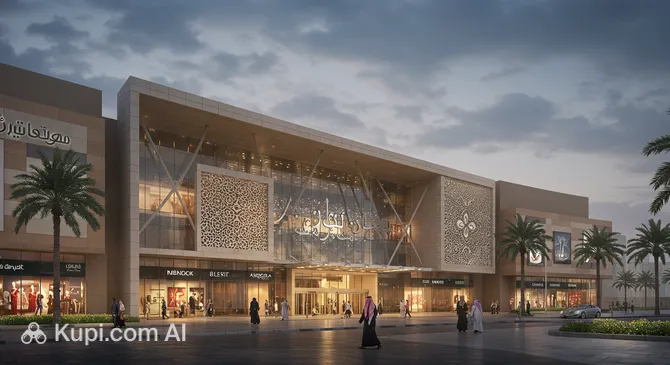
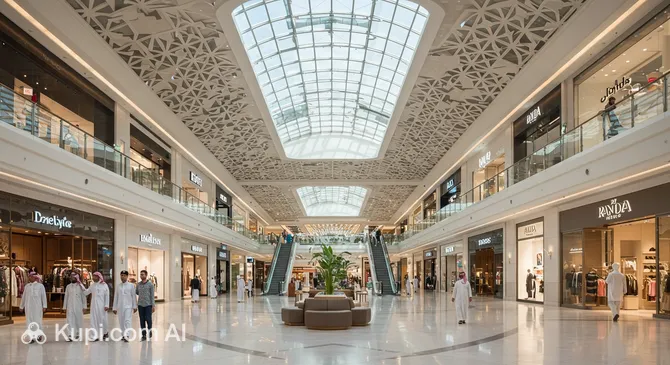
In stark contrast, the city's modern malls are palaces of commerce and entertainment. Given the desert heat, these sprawling complexes serve as town squares where families gather. The Kingdom Centre is not just a landmark but a premier destination for luxury shopping, housing prestigious brands within its sleek interior. For a more family-oriented experience, malls like Riyadh Park and Al Nakheel Mall offer a mix of high-street fashion, cinemas, and indoor play areas.
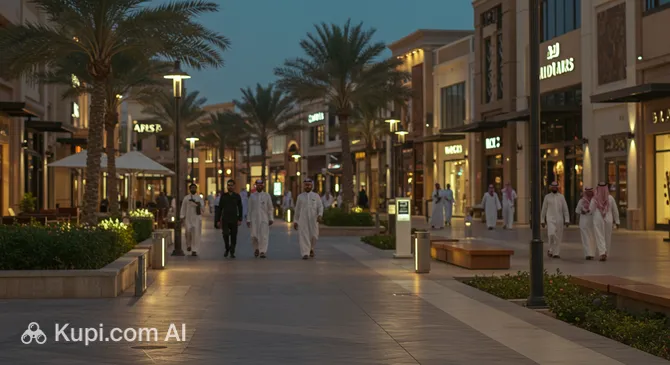
Recently, Riyadh has embraced open-air lifestyle complexes that blend retail with fine dining and promenade-style walking. The Zone is a standout example, featuring a beautiful outdoor setting with dancing fountains and upscale boutiques. It is particularly enchanting at night when the weather cools down and the lights reflect off the water, creating a vibrant atmosphere for shoppers and diners alike.
The Zone. Illustration.
Source: Kupi.com AI
Traveler photos:
Another trendy destination is Laysen Valley, which offers a curated selection of shops amidst striking modern architecture. It is an ideal spot for those looking to combine a shopping spree with a gourmet meal in a sophisticated environment. Whether you are looking for luxury dates to take home or the latest designer handbag, Riyadh's diverse shopping scene ensures you won't leave empty-handed.