Support

King Fahd International Airport

About the Airport

King Fahd International Airport (DMM) is not merely an air gateway to Dammam and the entire Eastern Province of Saudi Arabia, but a veritable city within a city. Amazingly, with an area of 776 square kilometres, it exceeds the size of the neighbouring country of Bahrain, making it the largest airport in the world by land area. Opened for commercial flights in 1999, this modern hub features unique architecture combining Islamic motifs with high-tech design and has quickly become a key transport node in the region.
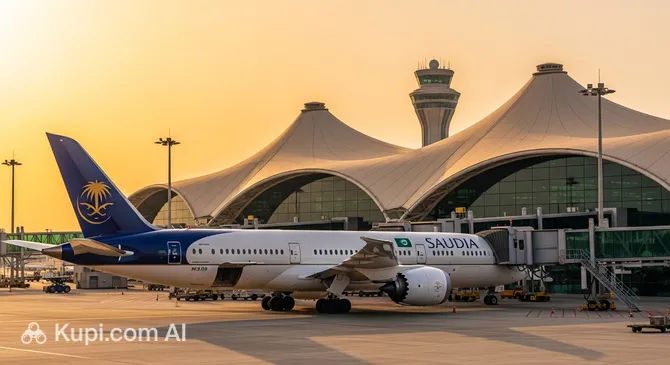
King Fahd International Airport. Source: Kupi.com Binoculars

For the convenience of travellers, we have compiled key information about the airport in one table.

IATA Code DMM
ICAO Code OEDF
City Dammam
Distance to Centre approx. 25 km
Status International
Annual Passengers over 10 million
Popular Airlines Saudia, Flynas, flyadeal
Schedule online board "King Fahd International Airport"

King Fahd Airport is renowned not only for its size but also for its infrastructure. The six-level passenger terminal offers everything needed for a comfortable wait: from numerous restaurants and cafes to an extensive duty-free area, which was the first of its kind in Saudi airports. Facilities for passengers include children's play areas, business lounges, and round-the-clock prayer rooms. In addition to the main terminal, there are separate terminals for employees of the oil company Saudi Aramco and for members of the Royal Family, highlighting the special status of this aviation hub.

Contact Information

  • Official Website: For the most up-to-date information on flights, services, and regulations, visit the airport's official website: www.kfia.gov.sa.
  • Information Desk Phone: For general inquiries and information, you can call +966 9200 11233.
  • Airport Address: King Fahd International Airport, King Fahd Road, Dammam, Saudi Arabia.
  • Email: For written correspondence, you can use the email of the Dammam Airports Company (DACO): daco-info@daco.sa.
  • Social Media: The airport maintains an active presence on social media. For example, their official account on X (formerly Twitter) is @DACO_KSA, where important updates are published.
  • Lost Luggage Information: If your luggage has been lost, you should first contact your airline's representative at the airport. The airport's Lost and Found service can also provide assistance.
  • Passenger Support Contacts: For immediate assistance and consultations regarding your stay at the airport, it is recommended to use the main information desk phone number.

How to Get to the Airport

King Fahd International Airport (DMM) is located approximately 35-40 kilometres northwest of the centre of Dammam, so it is advisable to plan your route in advance. Travel time from the city centre is usually between 30 to 45 minutes, but this can increase during peak hours. There are several convenient ways to reach the terminal.

Taxis and Ride-Hailing Services are the most popular and convenient options. You can use official taxis or book a car via mobile apps such as Uber or Careem, which are widely used in Saudi Arabia. The trip will cost more than public transport but ensures comfort and door-to-door service. It is recommended to check the fare in the app before booking, as it may vary depending on demand.

For a more budget-friendly journey, you can use public transport. SAPTCO (Saudi Public Transport Company) buses run between the airport and key locations in Dammam and neighbouring cities like Khobar. This is the most economical method; however, intervals between buses can be significant, so be sure to check the schedule in advance to avoid missing your flight. This option is best suited for travellers with light luggage.

If you value independence in your movements, car rental is an excellent solution. Offices of all major international and local rental companies operate at the airport and in the city. Having a car is particularly convenient if you plan to explore not only Dammam but also other cities in the Eastern Province. For those arriving at the airport in their own or a rented car, both short-term and long-term parking facilities with varying tariffs are available.

Terminals and Map

King Fahd International Airport in Dammam boasts a unique and well-thought-out structure that makes it convenient for passengers. Unlike many major airports around the world, there is no separation into multiple distinct buildings for domestic and international flights here. All commercial passenger traffic is handled in a single, yet very large, six-level main terminal. This significantly simplifies navigation and eliminates the need to transfer between different buildings.

Orienting yourself in the main terminal is quite simple thanks to its vertical organisation. Each level has a clear purpose. The Third Level is the arrivals area, where passengers go through passport control, collect luggage, and exit to the city. The Fourth Level is entirely dedicated to the departures area: this is where check-in counters and baggage drop-off points are located. After check-in, passengers ascend to the Sixth Level, where the boarding gates and the main waiting area with shops and restaurants are found.

In addition to the main passenger terminal, there are two specialised ones on the airport grounds. The Royal Terminal is designed to serve members of the Royal Family of Saudi Arabia, officials, and heads of state. It is completely autonomous and used for government needs. There is also a separate terminal serving flights for the oil company Saudi Aramco to transport its employees.

Completing all formalities typically does not take much time thanks to the efficient organisation of processes. However, as with any major hub, waiting times may increase during peak hours and seasons. It is recommended to arrive at the airport at least 3 hours before an international flight and 2 hours before a domestic one. All signage in the terminal is in Arabic and English, which helps in navigating the flow of passengers easily.

Airport History

The history of King Fahd International Airport in Dammam is the story of an ambitious project that evolved into one of the world's most outstanding aviation complexes. The design and construction of the airport began in 1983, yet its path to becoming a civilian hub was unusual. Before its official opening for commercial flights, the complex played a vital strategic role: in the early 1990s, during the Gulf War, it served as a key airbase for coalition forces.

The airport was officially opened for passenger traffic on 28 November 1999. From that moment, it became the main transport hub for the Eastern Province of Saudi Arabia. The project was conceived as ultra-modern and massive, which is reflected in its infrastructure. The main six-storey terminal, thoughtful logistics, and equipment that was cutting-edge for its time allowed it to immediately take its place among the leading airports in the region.

The airport's main record and achievement, listed in the Guinness World Records, is its territory. King Fahd International Airport is the largest in the world by land area, covering approximately 776 square kilometres. It is important to understand that a large part of this land is undeveloped, but the sheer fact of possessing such vast territory makes it unique. This space includes not only runways and terminals but also significant reserve zones for future expansion.

Among interesting historical and architectural facts, it is worth noting the presence of a magnificent mosque on the airport grounds, capable of accommodating up to two thousand worshippers. Its domed architecture blends harmoniously with the modern look of the complex. Additionally, the airport features a separate Royal Terminal, intended for receiving official delegations and members of the Saudi Royal Family. Since its opening, the airport has been continuously modernised to meet the growing needs of passengers and remain one of the key transport centres of the Middle East.

Services and Amenities

King Fahd International Airport offers passengers a wide range of services to make their stay comfortable and pleasant. Being one of the largest airports in the world by area, it is well-equipped to meet the needs of travellers, whether for a short transfer or a long wait for a flight.

Within the terminals, you will find numerous restaurants and cafes to suit every taste: from famous global fast-food chains to establishments offering local and international cuisine. After passing through security control, you gain access to duty-free shops where you can purchase perfumes, cosmetics, tobacco products, and souvenirs. Additionally, the airport features fashion boutiques, electronics stores, and bookshops.

For those who value enhanced comfort, VIP lounges and airline lounges are available. Here, passengers can relax in a quiet atmosphere, enjoy complimentary snacks and beverages, read the latest press, or catch up on work. Free Wi-Fi is available throughout the airport, and numerous charging stations for gadgets ensure you always stay connected.

Financial matters can be handled at bank branches, ATMs, and currency exchange counters located in both the arrivals and departures areas. In case of need, passengers can seek medical assistance at the 24-hour medical centre. For travellers with children, play areas and mother-and-child rooms are provided, while passengers with reduced mobility can rely on special assistance, ramps, and equipped restrooms.

If you have a long layover or an early flight, a hotel offering comfortable rooms is located directly on the airport premises. Business travellers can utilise the services of the business centre or rent a conference room for meetings and negotiations.

Where to Eat

At King Fahd International Airport, travellers will find plenty of options for a snack or a full meal. Dining establishments cater to every taste and budget — from cosy coffee shops to full-service restaurants. An important feature is that all food offered at the airport complies with Halal standards, simplifying choices for many passengers.

In the public area of the airport (landside), before passing through security, there are cafes and restaurants where you can relax while waiting for a flight or meeting arrivals. Typically, you will find coffee shops here offering aromatic coffee, pastries, and light snacks. This is a great place for those who wish to grab a bite in a less bustling environment before flying.

After passing passport control and screening, in the departures zone (airside), the selection of establishments becomes even wider. For those rushing to board, fast-food outlets from famous international chains offering burgers, sandwiches, and drinks are ideal. If you have time, you can settle into one of the restaurants serving both international and Middle Eastern cuisine and order a full hot lunch or dinner.

Being in Saudi Arabia, even at Dammam airport, it is worth experiencing the local flavour. Try traditional Arabic coffee with dates or order a mezze platter, which often includes hummus, mutabal, and fresh bread. For vegetarians, there are quite a few suitable dishes, especially among Middle Eastern options — salads, falafel, and vegetable stews. Passengers on a gluten-free diet are advised to check ingredients with restaurant staff.

Food prices at the airport are generally higher than in the city and range from moderate in food courts to higher in full-service restaurants. Most key cafes and restaurants, especially in the departures zone, operate 24/7 or have extended hours to serve passengers on all flights, regardless of the time of day.

Travel Tips

Travelling through King Fahd International Airport, located in the city of Dammam, will be more comfortable if you familiarise yourself with some specifics in advance. This gigantic airport has its own characteristics, and knowing a few tips will help you avoid unnecessary stress and save time.

Arrival Time and Check-in. For international flights, it is recommended to arrive at the airport 3-4 hours before departure, and for domestic flights — 2 hours. Queues for check-in and security can be long, especially during peak seasons. Whenever possible, check in online to save time at the airline counters.

Security Checks. Be prepared for thorough security screening. All electronic devices, including laptops and power banks, must be removed from hand luggage. Keep your boarding pass and passport handy. Procedures may take longer than you are used to, so do not leave this until the last minute.

Customs Rules and Hand Luggage. This is one of the most important aspects when travelling to Saudi Arabia. It is strictly prohibited to bring alcohol (even if purchased in Duty-Free elsewhere), pork and pork products, as well as materials that may be considered offensive to Islamic culture into the country. Customs officers may thoroughly check luggage and carry-on bags. Standard restrictions on liquids (up to 100 ml per container) also apply.

Transfer Passengers. King Fahd Airport is a major transit hub. Ensure you have enough time between flights, as the terminals are large and moving around can take time. If you have a long layover, check visa requirements for exiting into the city. The transit area features food courts, shops, and comfortable rest zones.

Seat Selection and Savings. When choosing a seat on the plane, note that departures from or approaches to Dammam offer impressive views of desert landscapes — choose a window seat for this. To save money, bring an empty water bottle and fill it at drinking fountains after passing security. Prices for food and drinks at the airport can be high.

In Case of Flight Delay. If your flight is delayed, first contact your airline representative for information on the flight status and possible options (meals, accommodation). The airport offers free Wi-Fi, numerous cafes and shops, as well as prayer rooms to pass the waiting time.

Reached the end of the page?

That means the route is fully explored