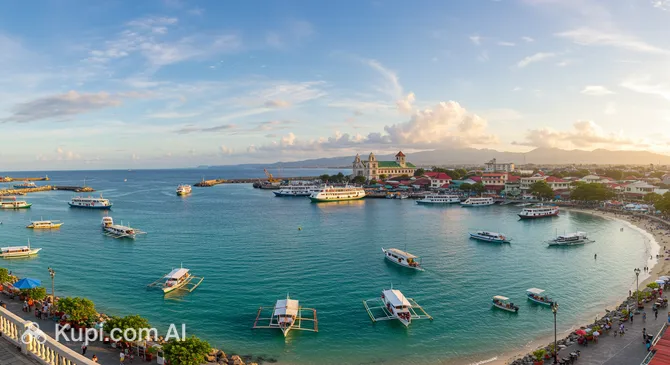
Welcome to Tagbilaran, the vibrant capital of the province of Bohol. Often referred to as the "City of Friendship," this bustling urban hub offers a warm and inviting atmosphere for travelers exploring the beautiful Philippines. As the principal gateway to the island, the city strikes a perfect balance between modern convenience and provincial charm, making it an essential stop for anyone visiting the region.
Tagbilaran. Illustration.
Source: Kupi.com AI
Geographically, Tagbilaran is situated on the southwestern tip of Bohol, facing the sea and the nearby island of Panglao. The city is home to approximately 105,000 residents and enjoys a tropical climate that is generally warm and sunny year-round. Those interested in the past can delve into the rich history of Tagbilaran, which is deeply rooted in significant events such as the famous Sandugo or Blood Compact, a historic treaty of friendship between Spanish explorer Miguel López de Legazpi and Datu Sikatuna.
The city is not just a transit point but a destination with its own unique appeal. Visitors can admire the Blood Compact Shrine, which commemorates the historic alliance and offers panoramic views of the Bohol Sea. Tagbilaran also serves as the perfect launchpad for adventures to the pristine beaches of Panglao Island, connected by causeways, and the iconic Chocolate Hills further inland. Whether you are here to explore heritage sites or start an island adventure, Tagbilaran awaits with open arms.
Weather Overview
Tagbilaran features a tropical climate that remains warm and inviting throughout the year, making it a great destination for sun-seekers. The city experiences consistent temperatures, with monthly averages generally hovering between 26°C and 28°C. The warmest period typically occurs around May, where daytime highs can reach nearly 30°C, while the months of January and February offer slightly cooler but still very comfortable conditions.
Humidity and rainfall are constant companions in this region, although the intensity varies by season. The weather in Tagbilaran is generally driest from February to April, which are the best months for outdoor activities as they have fewer rainy days. In contrast, the rest of the year, particularly from October to December, sees frequent precipitation with over 25 wet days per month, so packing a raincoat or umbrella is highly recommended for trips during these times.
Average monthly temperature
Average monthly precipitation
Interesting Facts
Beyond the main attractions, Tagbilaran holds many fascinating secrets and unique cultural traits that add depth to its character. From curious local ordinances to interesting historical etymologies, the city offers plenty of surprises for the observant traveler.
The city's name is steeped in legend, with one popular theory suggesting it derives from the phrase "Tago Bilaan," meaning "to hide from the Bilaan." This refers to a time in history when early settlers would seek refuge in the area to escape raids from rival groups, highlighting the city's historical role as a sanctuary.
Tagbilaran is famous for its unique public transport culture; a local city ordinance requires every tricycle-for-hire to display a Bible verse or a moral slogan on the back of the vehicle. This quirky rule has led to the city having some of the most "inspiring" traffic in the country, with thousands of tricycles spreading positive messages throughout the streets.
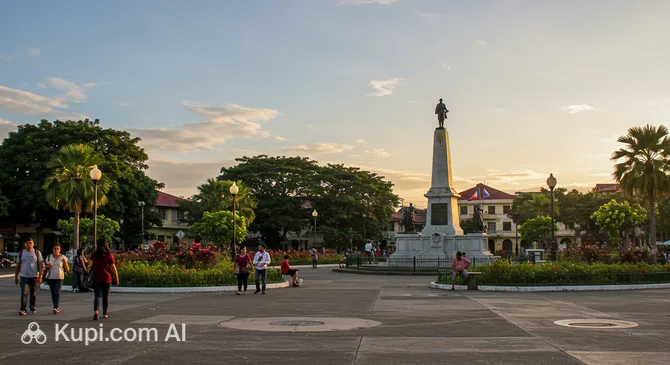
The city center features Rizal Plaza, a gathering spot that has earned a reputation for its massive population of pigeons. Locals and visitors alike flock here to feed the birds, drawing playful comparisons to famous European squares, albeit on a much smaller, tropical scale.
While the Blood Compact is the most famous historical event associated with the area, Tagbilaran also celebrates the Saulog Festival. This vibrant annual event honors St. Joseph the Worker and features energetic street dancing that showcases the resilience and gratitude of the Tagbilaranons, distinct from the province-wide Sandugo festivities.
Rizal Plaza. Illustration.
Source: Kupi.com AI
Traveler photos:
How to Get There
Reaching this charming provincial capital is relatively straightforward, with options to suit various travel styles. Whether you are arriving from international destinations or neighboring islands, the city serves as a central transport hub for the province. For a complete guide on logistics and routes, you can read more about how to get to Tagbilaran to plan your journey effectively.
The most convenient gateway for travelers is the Bohol-Panglao airport (IATA: TAG). Although it serves the entire province, it is located just about 16 km from the heart of Tagbilaran. The drive typically takes around 45 minutes by taxi or shuttle. This facility handles a significant volume of passengers, making it a busy regional hub with modern amenities. Direct flights from Manila and other key cities land here regularly, allowing you to start your Bohol adventure immediately upon arrival.
Alternatively, many visitors choose to fly into Mactan-Cebu International Airport (IATA: CEB), situated in Cebu City. This is a major international gateway located approximately 71 km from Tagbilaran across the Cebu Strait. While it is not in the city itself, it offers a wider range of international flight connections. From Cebu, travelers can easily catch a fast ferry to Tagbilaran's seaport, a journey that adds a scenic maritime element to the trip.
For clarity, here is a summary of the main airports in the vicinity:
While Tagbilaran is often seen as a gateway to the rest of Bohol, the city itself possesses a collection of urban conveniences and leisure spots that are worth exploring. From modern shopping complexes to dining venues that showcase local flavors, the city offers a comfortable and lively environment for travelers to recharge and enjoy the local lifestyle.
One of the most popular commercial hubs in the area is the Island City Mall. Situated slightly away from the congested downtown streets, this sprawling complex is the go-to destination for shopping, entertainment, and dining in the province. Tourists will find it convenient for stocking up on travel essentials, catching a movie, or simply enjoying the cool air-conditioning while browsing through a wide variety of retail stores and restaurants.
Island City Mall. Illustration.
Source: Kupi.com AI
Traveler photos:
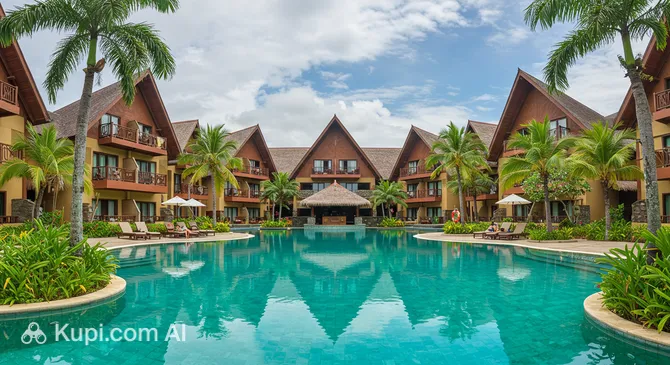
For a more scenic experience, the Bohol Tropics Resort offers a delightful escape by the water. Although primarily a hotel, it is well-regarded for its accessible location overlooking the bay, making it a fantastic spot to watch the sunset. Visitors often appreciate the resort's open-air dining areas where they can enjoy a meal with a refreshing sea breeze and a view of the local outrigger boats gliding by.
Bohol Tropics Resort. Illustration.
Source: Kupi.com AI
Traveler photos:
Food enthusiasts looking to sample authentic Filipino dishes should consider a visit to JJ's Seafood Village. This establishment is a favorite among locals for family gatherings and celebrations, known for its generous portions and fresh seafood catches. It provides a lively atmosphere where tourists can immerse themselves in the local dining culture and taste regional specialties in a casual, friendly setting.
JJ's Seafood Village. Illustration.
Source: Kupi.com AI
Traveler photos:
Another central landmark is the BQ Mall, located right in the heart of the city's busiest district. As one of the established commercial centers, it is always buzzing with activity and serves as a convenient stop for quick purchases or a fast meal. Its central location makes it an easy meeting point and offers a glimpse into the everyday hustle and bustle of Tagbilaran's residents.
Local Cuisine
The culinary scene in Tagbilaran is a delightful reflection of Bohol’s coastal geography and agricultural abundance. As a port city, fresh seafood is a staple here, often prepared simply to highlight its natural sweetness. One dish you simply must try is Kinilaw, a local version of ceviche where fresh raw fish is cured in coconut vinegar, calamansi (local lime), ginger, onions, and chili peppers. It is a refreshing appetizer that perfectly captures the flavors of the island. Another savory favorite is Chicken Halang-halang, a spicy soup or stew made with coconut milk, ginger, and chili, offering a creamy yet fiery kick that locals adore.
For those with a sweet tooth, Tagbilaran is the perfect place to sample Bohol’s famous Kalamay. This sticky, sweet delicacy is made from coconut milk, brown sugar, and ground glutinous rice, typically packaged inside smooth coconut shells. It is ubiquitous in local markets and makes for a popular snack or souvenir. You should also look out for treats made from Ubi (purple yam), as Bohol is renowned for producing some of the finest varieties of this root crop, often turned into jams, ice creams, and pastries.
To quench your thirst, nothing beats the tropical freshness of a chilled Buko juice (young coconut water) or a ripe mango shake, which are widely available at nearly every dining establishment. For an authentic local alcoholic experience, adventurous travelers might try Tuba, a traditional wine made from coconut sap. If it has been aged for several months to a year, it becomes Bahalina, a smooth, deep-red wine that is often shared among friends during gatherings.
The dining culture in Tagbilaran is casual and unpretentious. While there are upscale restaurants, many locals prefer the laid-back atmosphere of open-air eateries and grill houses. Barbecue culture is huge here, with the aroma of marinated pork and chicken grilling over charcoal filling the evening air. For a convenient taste of this grill culture within the city center, you can visit the Grill Bar at BQ Mall. It is a popular spot to unwind with a cold drink and a plate of grilled favorites after a day of exploring.
Grill Bar at BQ Mall. Illustration.
Source: Kupi.com AI
Traveler photos:
Travel Tips
To ensure your visit to Tagbilaran is as smooth and enjoyable as possible, a little preparation goes a long way. These practical tips will help you navigate the "City of Friendship" with ease, allowing you to focus on the warm hospitality and beautiful surroundings.
Clothing and Gear: Given the tropical humidity, lightweight and breathable fabrics like cotton or linen are your best friends. Pack comfortable walking shoes for exploring the city streets and sandals for the beach areas. If you plan to visit religious sites like the St. Joseph the Worker Cathedral, remember to dress modestly; bring a scarf or shawl to cover your shoulders if you are wearing sleeveless tops. Don't forget a universal power adapter (Type A, B, or C) for your electronics, as the standard voltage is 220V.
Transportation: The most common way to get around Tagbilaran is by tricycle (a motorcycle with a sidecar). For short distances within the city, they are affordable and abundant. You can hire them for a "special trip" (private ride) or share the ride with others for a lower fare. Jeepneys are available for longer routes to neighboring towns. Car and scooter rentals are also popular options if you want the freedom to explore the rest of Bohol at your own pace.
Finances: The local currency is the Philippine Peso (PHP). While major establishments like Island City Mall and hotels accept credit cards, cash is king for tricycles, local markets, and small eateries. ATMs are widely available in the city center and shopping malls. Tipping is not strictly mandatory but is highly appreciated; leaving 10% or rounding up the bill is a kind gesture for good service.
Health and Safety: Tagbilaran is generally a safe and peaceful city, but it is always wise to keep an eye on your belongings in crowded areas. Tap water is not recommended for drinking; stick to bottled or purified water which is cheap and readily available. Pharmacies like Mercury Drug and Rose Pharmacy are easy to find in the city center, with some branches operating 24/7 for any medical needs.
Communication: English is an official language in the Philippines and is widely spoken and understood in Tagbilaran, making communication very easy. The local dialect is Boholano (a variant of Cebuano). Knowing a simple "Salamat" (Thank you) will earn you warm smiles. You can easily purchase a local SIM card (Globe or Smart) at the airport, seaport, or any mall to stay connected with 4G/LTE data.
Local Etiquette: Filipinos are known for their friendliness. A simple smile is the best way to greet locals. When interacting with elders, being polite and soft-spoken is valued. The concept of "Filipino Time" means events might start slightly later than scheduled, so patience is a virtue here.
What to Avoid: Avoid losing your temper or raising your voice in public. Public displays of anger are considered rude and cause a "loss of face" for everyone involved. It is always better to handle frustrations calmly and with a smile. Also, avoid refusing food offered by a host if you are invited into a home, as it can be seen as impolite; a small taste is sufficient.
Local Insight: When taking a tricycle, always agree on the fare before you hop in, especially if you are a tourist. Drivers are generally honest, but clarifying whether you are paying for a "special" (private) ride or a regular shared fare prevents misunderstandings upon arrival.
Armed with these practical insights, you are well-equipped to experience the best of Tagbilaran. Embrace the laid-back island vibe, connect with the friendly locals, and enjoy a hassle-free adventure in this charming provincial capital.
Entertainment & Nightlife
Entertainment and Nightlife:
Nightlife in Tagbilaran is defined by a relaxed and friendly atmosphere rather than the high-energy clubbing scenes found in larger metropolises like Manila or Cebu. The city comes alive after sunset with a laid-back vibe, where the focus is on good conversation, live acoustic music, and enjoying a cold drink with friends. The main artery of the city, C.P. Garcia Avenue (often just called CPG), and the areas surrounding the port are where most of the evening action is concentrated, offering a mix of local bars, videoke joints, and casual dining spots.
For those looking to unwind with a view, the Grill Bar at BQ Mall is a popular choice. Located on the upper levels, it offers an open-air setting where you can enjoy local appetizers and beverages while overlooking the city lights. It is a fantastic spot to start your evening, characterized by a casual dress code and a mix of locals and tourists enjoying the cool night breeze.
If you are in the mood for something more energetic, the Bohol Tropics Resort is a well-known establishment that often hosts nightlife events. It has historically been home to one of the city's few disco clubs, attracting a younger crowd looking to dance. Even if you aren't into clubbing, the resort's bars provide a sophisticated setting for a nightcap by the bay.
Live music is a staple of Filipino nightlife, and JJ's Seafood Village is a reliable venue to catch talented local bands. While primarily a restaurant, it transitions into a lively social hub in the evenings, where large groups gather to enjoy music that ranges from classic hits to contemporary pop. The atmosphere here is family-friendly yet festive, making it a safe and enjoyable option for travelers of all ages.
For a truly local experience, take a walk around Rizal Plaza in the early evening. As the sun sets, the area often fills with food carts and families enjoying the cooler air. It is a great place to witness the community spirit of Tagbilaran, sample inexpensive street food, and mingle with residents in a safe, open environment.
Daytime entertainment in the city is more low-key, focusing on culture and leisure. You can visit the local branch of the National Museum to learn about Bohol's natural and cultural heritage. For movie lovers, the cinemas at the BQ Mall offer a modern movie-going experience, screening both Hollywood blockbusters and local Filipino films, providing a perfect escape from the midday heat.
BQ Mall. Illustration.
Source: Kupi.com AI
Traveler photos:
When planning your night out, keep in mind that most establishments in Tagbilaran close earlier than in major capital cities, with many bars winding down around midnight or 1:00 AM. Prices are generally very affordable, with beers and cocktails costing significantly less than in tourist-heavy beach resorts. To get around, tricycles are the primary mode of transport. They are available at night, though drivers may ask for a slightly higher fare for late-night trips; it is always best to agree on the price before hopping in. The city is generally safe for night walks, especially in well-lit downtown areas, but standard travel precautions should always apply.
Parks & Museums
While Tagbilaran is primarily known as a bustling commercial and transport hub, the city maintains a collection of green spaces and cultural institutions that offer a deeper look into the soul of Bohol. Beyond the busy avenues, travelers can find serene parks, historical landmarks, and museums that preserve the rich heritage and natural beauty of the province.
The beating heart of the city's public life is Rizal Plaza. Located directly in front of the St. Joseph the Worker Cathedral and the Provincial Capitol, this square serves as the city's primary "living room." It is a shaded oasis where locals gather to relax, chat, and feed the resident pigeons. For tourists, it offers a perfect vantage point to observe local life and admire the surrounding colonial-era architecture. In the evenings, the plaza often transforms into a lively space with families enjoying the cooler air and street food vendors setting up nearby.
For those seeking a more rugged natural experience, Banat-i Hill offers a rewarding escape within the city limits. Situated in the district of Bool, this is the highest point in Tagbilaran. A hike to the top provides a commanding panoramic view of the city, the vast Mindanao Sea, and the neighboring island of Panglao. It is a favorite spot for fitness enthusiasts and nature lovers who want to enjoy a stunning sunrise or sunset away from the urban noise.
Cultural explorers should not miss the National Museum Bohol, housed in the beautifully restored Old Provincial Capitol building. This architectural gem is a museum in itself, showcasing the grandeur of American colonial design. Inside, visitors can explore comprehensive exhibits detailing Bohol's unique geology—including the formation of the Chocolate Hills—as well as its rich biodiversity and archaeological history. It provides an essential educational context before exploring the rest of the island.
Tagbilaran is also the site of one of the Philippines' most significant historical events. The Blood Compact Shrine (Sandugo Shrine) in Barangay Bool marks the spot where the Spanish explorer Miguel López de Legazpi and Datu Sikatuna forged a treaty of friendship in 1565. The site features a compelling bronze sculpture by the National Artist Napoleon Abueva, a Boholano native. It stands as a powerful symbol of diplomacy and hospitality, set against a backdrop of the open sea.
Another architectural landmark worth visiting is the St. Joseph the Worker Cathedral. While it has undergone several renovations over the centuries, it remains a spiritual anchor for the predominantly Catholic population. The church's interior features beautiful ceiling paintings and altars that reflect the deep religious devotion of the Tagbilaranons.
For a glimpse into the city's past that few tourists see, take a walk through Sitio Ubos. Located near the port area, this district was once the center of trade and commerce during the Spanish era. Here, you can still find remnants of coral stone houses and ancestral homes that survived the test of time, offering a quiet, atmospheric contrast to the modern developments uptown.
Getting Around
Public transport in Tagbilaran is delightfully simple and informal compared to the complex networks found in major global capitals. There are no subways, trams, or trains here. Instead, the city relies heavily on road-based transportation, with the iconic tricycle (a motorcycle with an attached passenger sidecar) serving as the primary way to get around the city center. These vehicles are everywhere, nimble enough to navigate narrow streets and convenient for door-to-door service. For slightly longer distances or travel between districts, you will see multicabs and jeepneys, which follow fixed routes and are painted in vibrant colors.
The payment system in Tagbilaran is strictly cash-based. There are no travel cards, tap-to-pay terminals, or mobile ticketing apps for local city transport. You simply pay the driver directly. It is essential to carry small denominations of the Philippine Peso (PHP), specifically coins and bills of 20, 50, or 100 pesos. Drivers often do not have change for large bills like 500 or 1,000 pesos. Fares are very affordable; a standard shared tricycle ride within the city proper typically costs a small fixed amount per person, while hiring the vehicle for a "special" (private) trip will cost significantly more and should be negotiated before you board.
For tourists, navigating this system requires a bit of local know-how. Tricycles operate on two models: "regular," where you share the ride with other passengers and the driver stops to pick up or drop off people along the way, and "special," which is a private charter. If you are in a hurry or carrying luggage, ask for a "special trip." Operating hours are flexible, generally running from early morning (around 5:00 AM) until late at night. However, finding a ride after 10:00 PM can be more difficult and may command a higher price. There are no tickets to validate; just hop in, tell the driver your destination, and pay upon arrival.
If you prefer more comfort or independence, there are alternatives. Taxis are available but are not as commonly hailed on the street as in Manila or Cebu; they are mostly found waiting at the airport, seaport, or major shopping malls like Island City Mall. Car and scooter rentals are extremely popular among visitors who want to explore Tagbilaran and the rest of Bohol at their own pace. Several rental agencies operate near the port and airport, offering daily rates. Ride-hailing apps are not the standard here, so do not rely on them for immediate city transport.
A unique feature of Tagbilaran's public transport is the local ordinance requiring tricycles to display a Bible verse or moral slogan on the back of their sidecars. As you travel through the city, you will find yourself reading hundreds of different inspiring messages, giving the traffic a distinct character found nowhere else. Additionally, the Integrated Bus Terminal (IBT) in the Dao district serves as the main hub for buses and jeepneys heading to other towns in Bohol, making it the key connection point if you plan to venture beyond the city limits.
Accommodation
Accommodation in Tagbilaran caters to a wide spectrum of travelers, ranging from backpackers seeking simple lodgings to families looking for resort-style comfort. As the capital city and main entry point to Bohol, the hospitality sector here is well-developed, offering a mix of budget-friendly hostels, practical business hotels, and mid-range coastal resorts. While the ultra-luxury villas are typically found on the neighboring Panglao Island, Tagbilaran provides excellent value for money and convenient access to urban amenities.
When choosing where to stay, location is key. The downtown area, particularly around C.P. Garcia Avenue and near major shopping centers, is ideal for those who prioritize convenience. Staying here puts you within walking distance of restaurants, banks, and transport terminals. Alternatively, the coastal areas along the city's edge offer a more relaxed atmosphere. These spots are perfect for travelers who want to enjoy sea views and a refreshing breeze while still being just a short tricycle ride away from the city center.
For a stay that combines the accessibility of the city with the leisure facilities of a vacation spot, the Bohol Tropics Resort is a standout option. It is well-regarded for its sprawling grounds, swimming pools, and location right by the bay, offering guests a resort experience without leaving the city limits. Establishments like this are popular venues for local events and provide a comfortable base for exploring the province.
Booking Tips and Prices:
The cost of accommodation in Tagbilaran is generally affordable. Budget rooms and guesthouses can often be found for as low as $15 to $25 USD per night, while comfortable mid-range hotels typically range from $30 to $60 USD. Booking is straightforward, with most reputable hotels listed on major international online travel platforms. However, for smaller inns, direct booking via social media or phone is still common.
A crucial tip for travelers is to book your accommodation well in advance if you plan to visit during the Sandugo Festival in July or the Christmas holiday season. During these peak times, hotels fill up quickly with both domestic and international tourists, and prices may rise slightly due to the high demand.
Nearby Cities
For those looking to explore the surroundings, Tagbilaran serves as an excellent base for day trips to several interesting nearby locations. Just a short drive across the causeways lies the municipality of Panglao, a world-renowned destination famous for its pristine white sand beaches and vibrant marine life, making it perfect for sunbathing and diving enthusiasts. Closer to the city, Dauis offers a mix of history and nature, home to the stunning Assumption of Our Lady Shrine and the mystical Hinagdanan Cave with its underground lagoon.
Heading north along the coast, the town of Loon provides a glimpse into heritage and resilience, known for its coastal scenery and the grand staircase known as "Inang-angan." These neighboring towns are easily accessible by public transport or rented scooter, allowing visitors to experience the diverse landscapes of Bohol and even nearby Cebu within a single day.
City
Population
Distance
Baclayon
22 461
7 km
Corella
9 479
8 km
Dauis
52 492
9 km
Maribojoc
22 178
9 km
Alburquerque
11 246
10 km
These nearby destinations offer a glimpse into the diverse culture and landscapes of the region, ranging from historic island towns to bustling coastal municipalities.
Shopping & Souvenirs
As the commercial heartbeat of Bohol, Tagbilaran offers the most comprehensive shopping experience in the province. While it may not feature the massive luxury complexes found in the national capital, the city provides a perfect mix of modern convenience and local charm. Travelers can easily find everything from travel essentials and electronics to fashion and authentic regional handicrafts, making it a practical and enjoyable place to engage in some retail therapy.
The premier destination for shopping enthusiasts is the Island City Mall. Often referred to simply as "ICM" by locals, this spacious complex is located a short distance from the city center and stands as the largest mall in Bohol. It features a vast department store, modern cinemas, and a well-stocked supermarket that is ideal for replenishing supplies. Visitors will also find a dedicated section for local products, making it a convenient one-stop shop for gifts and necessities.
For those who prefer to stay within the bustling downtown area, the BQ Mall is the go-to spot. Its central location makes it incredibly accessible for tourists exploring the city on foot or by tricycle. This lively establishment is packed with a variety of boutiques, gadget shops, and dining outlets. It serves as a hub of daily activity for residents and is an excellent place to experience the local commercial vibe while picking up any last-minute items.
No trip to Tagbilaran is complete without shopping for pasalubong, or souvenirs to bring home. The city is the best place to purchase Bohol’s signature treats, such as Kalamay, a sticky and sweet delicacy made from coconut milk and brown sugar, typically packaged in coconut shells. You should also look for Peanut Kisses, a popular local confection shaped like the famous Chocolate Hills. These edible souvenirs, along with locally woven baskets and raffia crafts, can be found in the malls or at the various souvenir stalls scattered around the port area.