Public transport in Manila is a bustling and complex network that serves as the lifeline of the metropolis. Navigating it can be an adventure in itself, offering a mix of modern railway systems and traditional, uniquely Filipino modes of travel. Understanding the different options available is key to getting around the city efficiently, especially given the heavy traffic conditions often encountered on major roads.
The backbone of the city's mass transit consists of the rail systems: the Light Rail Transit (LRT) and the Metro Rail Transit (MRT). These elevated trains are the fastest way to traverse the city's major thoroughfares. The LRT has two lines (LRT-1 and LRT-2) connecting north to south and east to west, while the MRT-3 runs along EDSA, the main circumferential highway. While these trains are affordable and efficient, they can get extremely crowded during peak hours, with long queues often extending outside the stations.
For street-level transport, the most iconic option is the Jeepney. These colorful, elongated jeeps follow specific routes painted on their sides and are the most affordable way to travel short to medium distances. They operate on a hop-on, hop-off basis; you simply flag one down to board and say "para" (stop) when you want to get off. For a more comfortable bus experience, Point-to-Point (P2P) Buses are highly recommended. These air-conditioned buses run on fixed schedules with fewer stops and are a popular choice for traveling between major business districts and shopping malls.
Another common mode of transport for short distances within neighborhoods is the Tricycle, a motorcycle with an attached sidecar. They are perfect for navigating narrow streets where buses and jeepneys cannot pass. UV Express vans are also widely available, functioning as shared taxis that follow set routes, offering a balance between the speed of a taxi and the affordability of public transit.
Regarding payment, the system is a mix of modern technology and cash. For trains and some modern buses, the beep™ card is the standard payment method. This stored-value contactless card can be purchased and reloaded at any train station and select convenience stores. It saves you the hassle of lining up for single-journey tickets every time you ride. However, for traditional jeepneys and tricycles, cash is king. It is essential to carry smaller bills and coins, as drivers often cannot change large denominations.
For tourists seeking convenience and comfort, ride-hailing apps are the most practical alternative. Grab is the dominant car-booking service, offering safe, air-conditioned rides with transparent pricing. If you are a solo traveler looking to beat the traffic, motorcycle taxi apps like Angkas, JoyRide, and Move It are very popular and can weave through gridlocked streets much faster than cars. Regular metered taxis are also available, but always ensure the driver turns on the meter before starting the trip.
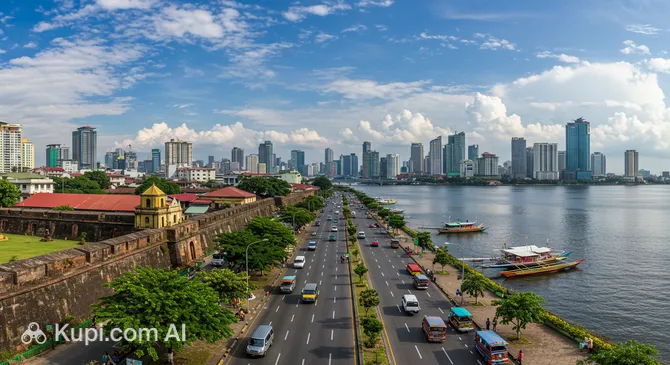
A unique and scenic alternative to road transport is the Pasig River Ferry Service. This boat system runs along the Pasig River, connecting the historic district of Intramuros to business hubs like Makati and Pasig. It is often less crowded than land-based options and offers a different perspective of the city skyline, allowing you to bypass the congestion on the bridges and highways.
Operating hours for trains typically run from around 5:00 AM to 10:00 PM or 11:00 PM, depending on the line and day of the week. Jeepneys and buses often operate longer hours, with some routes running 24/7. To make your journey smoother, try to travel during off-peak hours (roughly 10:00 AM to 4:00 PM) to avoid the rush hour crush. Always keep your belongings secure in front of you, especially in crowded trains or jeepneys, and have your payment ready before boarding.