Support

Clark International Airport

About the Airport

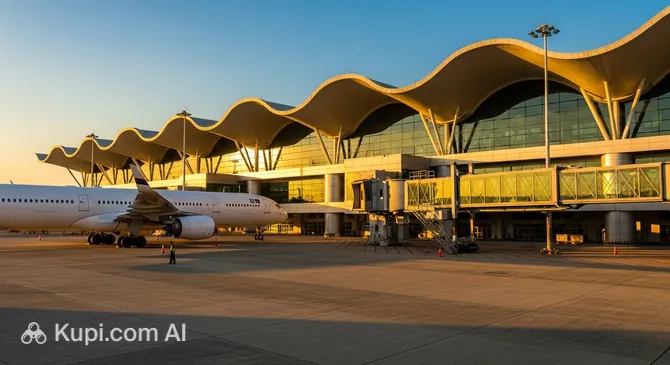
Clark International Airport. Source: Kupi.com Binoculars

Clark International Airport (CRK), located in the province of Pampanga, is not just a gateway to the Philippines, but a modern and high-tech transport hub. It welcomes travellers with a futuristic design inspired by the surrounding landscapes and offers comfort and convenience from the very first minutes of your stay. Clark Airport serves as an excellent alternative to Manila's capital airport, catering to the Central and Northern Luzon regions and providing access to numerous tourist destinations. Thanks to its innovative infrastructure and high level of service, it has repeatedly been recognised as one of the most beautiful and efficient airports in the world.

IATA Code CRK
ICAO Code RPLC
City Angeles City
Distance to Centre Approx. 13 km
Status International
Annual Passengers ~ 2.4 million (2024)
Popular Airlines Cebu Pacific, Philippine Airlines, Scoot
Schedule Clark Airport Online Board

Airport Features and Advantages

Clark Airport stands out for its new passenger terminal, which opened for commercial operations in 2022. Its architecture, inspired by local mountains such as Mount Arayat, creates a sense of spaciousness and natural light. The terminal is equipped with modern contactless technologies: from self-service check-in and baggage drop to systems allowing security clearance without presenting documents at every step.

For the convenience of passengers, the airport provides numerous amenities, including a variety of restaurants, shops, ATMs, as well as dedicated rest zones and prayer rooms. Furthermore, at the SM City Clark shopping mall located nearby, a flight check-in facility is available, allowing passengers to drop off luggage in advance and spend time shopping before their flight. Due to its strategic location and excellent transport connections, Clark Airport is becoming an increasingly popular entry point for travellers wishing to explore the beauties of the Philippines.

Contact Information

To contact Clark Airport representatives and obtain the latest information, you can use the following details:

  • Official Website: crk.com.ph — here you will find flight schedules, news, and detailed information about services.
  • Help Desk Phone: +63 (45) 599 2888. You can call this number for general inquiries regarding airport operations.
  • Address: Clark International Airport, Clark Freeport Zone, Pampanga, Philippines.
  • Email: For official inquiries, you can use the address listed on the website or the feedback form in the "Contacts" section.
  • Social Media: The airport actively maintains social media pages where important updates are published. You can find them, for example, on Facebook by searching for "Clark International Airport".
  • Lost Luggage Information: If your luggage has been lost or damaged, contact your airline's representative at the airport immediately. For items left within the terminal building, please contact the information desk.
  • Passenger Support Service: Most issues can be resolved by visiting the information desk in the main terminal hall or by calling the help desk.

How to Get to the Airport

Getting to Clark International Airport (CRK) from the centre of Angeles City and its surroundings can be done in several ways, each with its own advantages depending on your budget and preferences. The trip from the city centre usually takes 20 to 40 minutes, but it is always advisable to allow extra time for traffic, especially during peak hours.

One of the most affordable options is public transport. Although there is no direct train or metro route to the airport, you can use the famous Philippine jeepneys. They usually run to the main Dau Bus Terminal, from where you can transfer to another jeepney or shuttle heading towards the airport. Also, from major cities such as Manila, comfortable P2P (point-to-point) buses operate to Clark, delivering passengers directly to the terminal. This is a convenient and inexpensive method if you are travelling from further away.

For greater comfort, especially if you are travelling with luggage, taxis or ride-hailing services are ideal. The most popular app in the Philippines is Grab. Booking a car through the app guarantees a fixed price and allows you to avoid bargaining with drivers. This is the fastest and most convenient "door-to-door" way to get to the airport. The cost of the trip will be higher than public transport, but quite reasonable.

If you value independence and plan to explore the region, consider renting a car. Several international and local rental companies have offices at the airport and in the city. Having your own transport will give you the freedom to move throughout the Clark Freeport Zone. For those arriving at the airport in their own or rented vehicle, parking with zones for short-term and long-term stays is provided.

Terminals and Map

Clark Airport (CRK) boasts a modern and passenger-friendly terminal. Major passenger operations—both international and domestic—are concentrated in one large, new building. This significantly simplifies navigation and eliminates the need to move between different buildings, which is particularly convenient for transit passengers or those travelling with a large amount of luggage.

The terminal layout is intuitive. Departure and Arrival zones are clearly separated, typically on different levels. The upper levels usually house check-in counters and security checkpoints leading to boarding gates. The lower levels are designated for arriving passengers, featuring baggage claim areas and customs control. Numerous signs in English are installed everywhere, along with flight information screens, making it easy to find your way.

Thanks to modern design and thoughtful logistics, completing all pre-flight formalities at Clark Airport usually takes little time. On average, you should allow about 1-1.5 hours for check-in and security during periods of low congestion. However, during peak hours or holidays, waiting times may increase, so it is recommended to arrive at the airport in advance—2-3 hours before international flights and 1.5-2 hours before domestic ones.

For comfortable navigation, simply follow the signs and monitor your flight information on the screens. Airport staff are friendly and always ready to help if you have any questions. Since all major operations take place in one building, you won't have to worry about complex transfers or searching for the right terminal—everything is under one roof.

Airport History

The history of Clark International Airport (CRK) is unique and closely intertwined with the military history of the Philippines. Its origins date back to the early 20th century when Fort Stotsenburg of the US Army was established on this site in 1903. In 1919, an aviation unit appeared here, named Clark Field in honour of Major Harold M. Clark, a pioneer of American aviation. Over the decades, Clark Field developed into one of the largest and most important overseas US Air Force bases, playing a key role during World War II and subsequent conflicts.

A turning point in the airport's history was the eruption of Mount Pinatubo in June 1991. The massive cataclysm covered the base in tons of ash and pyroclastic flows, causing colossal damage to the infrastructure. This event accelerated the withdrawal of American troops, and in 1992 the base was officially handed over to the Philippine government. Thus began a new stage—the transformation from a military facility into a civil and commercial centre.

In 1993, the Clark Special Economic Zone was created, and the former airbase began its life as Clark International Airport. Since then, it has gone through several stages of modernisation and expansion. Initially focused on cargo and charter flights, the airport eventually became an important hub for budget airlines, offering an alternative to the congested Manila airport. The most significant reconstruction in recent years is the opening of the new modern passenger terminal in 2022, which significantly increased capacity and comfort levels, affirming Clark's status as a key international airport for the Central Luzon region and Angeles City.

Interesting fact: before its closure, Clark Air Base exceeded Singapore in area and was home to thousands of American service members and their families, representing a true "city within a city". Today, the airport is a vivid example of the successful conversion of a military object into a thriving civilian hub that continues to grow and develop.

Services and Amenities

Clark International Airport (CRK) offers passengers modern and comfortable service meeting all the basic needs of travellers. In the spacious terminal, you will find various dining outlets: from fast-food chains to cafés where you can try local cuisine. For those wishing to shop, Duty Free stores are open with a wide assortment of perfumes, confectionery, souvenirs, and other goods.

Free Wi-Fi is available throughout the airport, allowing you to stay connected. There are plenty of power outlets and charging stations for electronic devices. If you prefer to wait for your flight in a more comfortable setting, several premium lounges are at your service, including the Plaza Premium Lounge, where you can relax, have a snack, and work in silence.

For financial matters, the airport has ATMs and currency exchange points. A medical clinic is available in case medical assistance is needed. Information desks are always ready to help passengers with any questions regarding their stay at the airport and onward journey.

The airport is well-equipped for passengers with special needs. Nursing rooms are provided for travellers with children. Passengers with reduced mobility can rely on staff assistance, as well as use ramps and specially equipped restrooms. For those needing rest between flights, several hotels offering convenient accommodation are located in the immediate vicinity of the terminal.

Dining

At Clark International Airport (CRK), travellers will find diverse dining options to suit any taste and budget. Whether you are looking for a quick snack before departure or a full meal, there is plenty to choose from in both the public area and after security control.

In the public area (landside), where you can spend time with well-wishers, you will mostly find coffee shops and fast-food restaurants. This is an ideal place to have a coffee or a snack without rushing. Here you will find both popular international chains and local establishments. After passing passport and customs control, in the airside departure zone, the choice becomes even wider: from lounges offering refreshments and light snacks to restaurants with à la carte service.

Be sure to take the opportunity to try Filipino cuisine. Some restaurants in the departure zone offer authentic local dishes—this is a great chance to enjoy the flavours of the country before flying out. Look for menu items such as Chicken Adobo or hearty soups. For those adhering to special diets, such as Halal, vegetarian, or gluten-free, it is recommended to study the menu carefully. In most establishments, you can find salads, rice dishes, and vegetables, but for complete assurance, it is best to consult with the staff.

The price range varies: from budget options at fast-food outlets to mid-range and higher prices in full-service restaurants. Most establishments operate according to flight schedules, and some key cafés and eateries are open 24/7, which is especially convenient for passengers on night flights. If you are short on time, coffee shops or kiosks with ready-made food are the best choice. If you have an hour or more, you can comfortably settle in one of the restaurants and enjoy a leisurely lunch or dinner.

Travel Tips

Travelling through Clark Airport can be comfortable and predictable if you prepare in advance. Here are a few tips to help you navigate and avoid unnecessary stress during your trip to Angeles City.

Arrival Time and Check-in: For international flights, it is recommended to arrive at the airport at least 3 hours before departure, and for domestic flights—1.5-2 hours. This time is usually sufficient for a calm check-in, baggage drop, and security screening. To save time, use the online check-in service if your airline provides it.

Security and Hand Luggage: When going through security, be prepared to remove laptops, tablets, and other large gadgets from your hand luggage. Remember the standard restriction on carrying liquids: all must be in containers of no more than 100 ml and packed in a single transparent bag. Power banks are permitted only in hand luggage; packing them in checked baggage is prohibited.

Seat Selection and Transfers: If you want to admire the views, choose a window seat. If you need quick access to the exit and more legroom, an aisle seat is your choice. Transfer passengers should carefully watch for "Transfers/Connections" signs to avoid exiting into the general area and going through passport control again if not required.

Customs Control: Upon arrival in the Philippines, you will need to pass customs control. Familiarise yourself in advance with the list of goods subject to mandatory declaration and duty-free import allowances. Generally, there are restrictions on the import of tobacco, certain beverages, and specific food products.

Saving Time and Money: To save money, bring an empty water bottle and fill it at drinking fountains after the security zone. Research airport transfer options in advance: often a ride via ride-hailing apps works out cheaper than official airport taxi services. Having a small amount of local currency (Philippine Peso) will also help avoid unfavourable exchange rates at the airport.

In Case of Flight Delay: If your flight is delayed, first contact your airline representative for information. Depending on the length of the delay, you may be provided with vouchers for food or drinks. Clarify your rights as a passenger—they may differ depending on the carrier and the country's legislation.

Reached the end of the page?

That means the route is fully explored