Support

Naga Airport

About the Airport

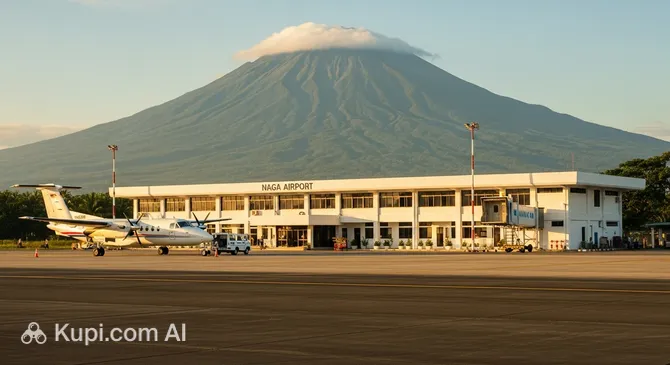
Naga Airport. Source: Kupi.com Binoculars

Naga Airport is not merely a transport hub, but a truly atmospheric gateway to the "heart" of the Bicol region, where your journey begins with breathtaking views of the majestic Mount Isarog. Situated amidst emerald green rice paddies, this compact air terminal allows tourists to immerse themselves in the tropical rhythm of life almost instantly upon landing. The airport serves as the main starting point for outdoor enthusiasts heading to the famous water sports complex, and for pilgrims visiting the shrines of Naga City.

IATA Code WNP
ICAO Code RPUN
City Pili
Distance to centre 12 km (to Naga City centre)
Status Domestic
Passengers per year About 200,000
Schedule

Features and Advantages of the Airport

Naga Airport possesses a unique charm that distinguishes it from large international hubs. Its infrastructure and location dictate a special character for flights and passenger service.

Scenic approach for landing. One of the main impressions for passengers is the view from the window during descent. Aircraft fly in close proximity to Mount Isarog, revealing a stunning panorama of volcanic slopes and the lush greenery of the Camarines Sur province. This is an excellent opportunity to take beautiful photos even before disembarking.

Type of aircraft served. Due to the relatively short runway, the airport primarily accepts turboprop aircraft (such as the ATR 72 or Bombardier Q400). Flying on such aircraft occurs at a lower altitude than on jet liners, turning the flight into a genuine aerial excursion over the islands.

Intimacy and speed. Thanks to the small size of the terminal, all procedures — from check-in to baggage claim — are completed very quickly. There are no long walkways or confusing corridors here: after stepping off the plane, you will find yourself outside and in transport literally within 10–15 minutes, which is especially valuable for tired travellers.

Contact Information

To contact Naga Airport (WNP) and obtain necessary information, please use the following contact details. Please note that this is a regional airport managed by the Civil Aviation Authority of the Philippines (CAAP), so some communication channels may be centralised.

  • Official Website: The airport does not have its own separate website. General information about its status and operations is published on the portal of the Civil Aviation Authority of the Philippines (CAAP), which is responsible for its operation.
  • Help Desk Phone: A direct public telephone number for passengers is often unavailable or not advertised. For information on flight status, schedules, or bookings, it is recommended to contact your airline directly.
  • Airport Address: Airport Road, San Jose, Pili, Camarines Sur, Philippines.
  • Email: There is no specialised email address for general passenger inquiries. For official correspondence, CAAP contact details should be used.
  • Social Media: Naga Airport does not maintain official pages on social networks. News and updates may be published on the resources of airlines operating flights to this airport.
  • Lost Luggage Information: For all issues related to lost, delayed, or damaged luggage, you must contact exclusively the Lost & Found service of your airline. Airport staff are not authorised to resolve these issues.
  • Passenger Support Service: Support regarding tickets, check-in, and special services on board is provided by the air carrier. For questions concerning terminal infrastructure, please approach the duty airport staff on site.

How to Get to the Airport

You can get to Naga Airport (WNP), located in the municipality of Pili and serving Naga City, in several ways. The choice depends on your budget, amount of luggage, and comfort preferences. On average, the trip from Naga City centre to the airport takes about 20-40 minutes, but time may vary depending on traffic conditions.

Public Transport is the most economical option. In the Philippines, jeepneys (local minibuses) and tricycles (motorcycles with a passenger sidecar) are widely common. This is a great way to experience local colour, although it is not always convenient if you have a lot of luggage. A jeepney ride will cost just 15–30 Philippine pesos. A more comfortable tricycle will take you to the airport for approximately 150–250 pesos, but it is better to agree on the price with the driver in advance.

Taxi and Transfer are the most convenient and fastest ways to get to the airport. You can hail a taxi in the city or book a car via one of the local apps (such as Grab). A trip from the centre of Naga to the airport will cost approximately 300–500 Philippine pesos. Also, many hotels offer transfer services for their guests, which is ideal if you are travelling with family, heavy suitcases, and value predictability and comfort.

Car Rental provides maximum freedom of movement. If you plan to actively explore the region, renting a car can be an excellent solution. Car rental points are located in Naga City. There is parking at Naga Airport where you can leave a car for a short or long term, which is convenient for those travelling in their own or rented transport.

Terminals and Map

Naga Airport (WNP) represents a small regional airport serving domestic flights. Its structure is simple and intuitive, making it convenient for passengers unaccustomed to huge aviation hubs.

The airport operates only one passenger terminal, which serves both departing and arriving flights. Due to its compact dimensions, navigation within it presents no difficulties whatsoever. All main zones — check-in counters, security screening area, waiting lounge, and baggage claim area — are located in one building a short distance from each other. Transfers between terminals do not exist as there is only one.

The terminal layout is extremely simple. Upon entering the building, you immediately find yourself in the general area where check-in counters of several airlines are located. After receiving a boarding pass and checking in luggage, passengers proceed to the security screening area, beyond which lies a small waiting hall (pre-departure area) with several boarding gates. The arrival zone is a separate room with one baggage claim belt, from where passengers exit to the taxi stand and greeters.

Considering the small passenger flow, the time for completing all formalities here is minimal. Check-in for the flight and security screening usually take no more than 20-30 minutes. Nevertheless, it is recommended to arrive at the airport typically 1.5–2 hours before departure to avoid rushing in case of unforeseen circumstances or an increase in passenger numbers on holidays.

Navigation tip: getting lost in Naga Airport is practically impossible. Simply follow the signs or move along with the flow of other passengers. Airport staff are always ready to help and suggest the direction. The main advantage of this airport is its simplicity and speed of service, which allows you to save time and nerves before the flight.

Airport History

The history of Naga Airport (WNP), located in the municipality of Pili, is closely intertwined with key events in the history of the Philippines. Its creation dates back to the Second World War when it was built by the United States Air Force as a strategic military airfield. After the war ended, the facility was demilitarised and handed over to the Philippine government, after which it was repurposed into a civil airport, beginning to serve the growing needs of Naga City and the entire Camarines Sur province.

Since its transformation into a civil facility, the airport has gone through several important stages of modernisation. In different years, works were carried out to expand and strengthen the runway, which allowed for the acceptance of more modern types of aircraft. The passenger terminal was also reconstructed multiple times to increase capacity and improve the level of comfort for travellers. These improvements were aimed at supporting economic growth and tourism development in the Bicol region, for which the airport serves as the main air gateway.

One of the most significant moments in the modern history of the airport is connected with the tragic event of 2012. The aircraft carrying the respected political figure and former mayor of Naga, Secretary Jesse Robredo, crashed on its way to the airport. This tragedy left a deep mark in the hearts of Filipinos, and in recognition of his merits, a proposal was put forward to rename the airport in his honour. Although the name remains the same in international aviation codes, many locals unofficially call it Jesse M. Robredo Airport, which underscores its cultural and symbolic significance for the region.

Services and Facilities

Naga Airport (WNP) is a small domestic airport serving the city of Pili and its surroundings. Despite its compact size, it offers a basic set of services to make waiting for a flight more comfortable.

Within the terminal territory, you will find several small kiosks and eateries where you can buy light snacks, refreshing drinks, and souvenirs to remember your trip. The selection of catering establishments and shops is limited, so for a full meal or shopping, it is better to allocate time in the city.

Regarding zones of increased comfort, information about the presence of specialised VIP lounges is absent, which is typical for small regional airports. General waiting halls are available for passengers. Access to Wi-Fi may be limited or provided for a fee. In the waiting hall, you can find sockets for charging electronic devices, however, their quantity may be small, so it is recommended to have a portable power bank with you.

There are usually no full-fledged bank branches or currency exchange points at the airport. It is recommended to exchange money in advance at one of the banks in Naga City or Pili. An ATM for cash withdrawal may be located on the premises. Also, a medical point is provided at the airport for first aid.

Mother and child rooms may be available for passengers with children, but it is better to clarify their availability and location at the information desk. Passengers with limited mobility are provided with assistance during boarding and disembarking. To do this, it is necessary to notify your airline in advance about the need for special services. The terminal is equipped with basic accessibility elements.

There are no hotels directly on the territory of Naga Airport. The nearest accommodation options can be found in the town of Pili or in the larger neighbouring Naga City, which can be reached by taxi or other transport. Specialised business centres and conference rooms are absent at the airport.

Where to Eat

Naga Airport (WNP), being a compact regional airport, offers a modest but sufficient selection of establishments to have a snack or drink coffee before departure. Dining options are mainly concentrated in the single terminal and are easy to find.

Instead of large restaurant chains, here you will find several small cafes and kiosks offering both light snacks and more substantial meals. This is an excellent opportunity to try something from the local cuisine. Pay attention to dishes from the Bicol region, known for their vibrant taste thanks to coconut milk (gata) and chilli peppers. Also, local delicacies are often found on sale, for example, snacks and sweets made from pili nuts — a wonderful option for a quick bite and an edible souvenir.

Most food outlets are located in the general departure hall, before passing security control (landside). After screening (airside), the choice is usually very limited, so it is better to eat in advance. The opening hours of establishments are usually tied to the flight schedule and may be irregular. Prices for food and drinks are moderate, but as in any airport, slightly higher than in the city.

For a quick snack, pastries, sandwiches, or packaged local snacks are ideal. If you have time for a more substantial lunch, look for a cafe serving hot Filipino dishes with rice. Regarding special dietary needs, finding specialised vegetarian, vegan, gluten-free, or Halal dishes here may be difficult. Travellers with strict dietary restrictions are advised to bring food with them.

Travel Tips

To ensure your journey through Naga Airport (WNP) goes as smoothly as possible, take advantage of these useful tips. This airport, serving the city of Pili and its surroundings in the Philippines, although small, requires standard preparation from travellers.

Arrival time and check-in. For domestic flights, which are the main ones for this airport, it is recommended to arrive 1.5–2 hours before departure. This time will be sufficient to check in luggage, complete registration, and pass security screening without rushing. Procedures here usually go faster than in major hubs, but it is better to have a time buffer.

Seat selection on the plane. If you want to enjoy the views, choose a window seat. Upon departure from Naga or during landing, you can see the picturesque landscapes of the Bicol region. An aisle seat is suitable for those who value the opportunity to stretch their legs and want to be the first to exit the plane upon arrival.

Hand luggage rules. Standard international rules apply here as well. You cannot take liquids in containers larger than 100 ml, as well as any sharp, piercing, or cutting objects in your hand luggage. Ensure that all valuables, documents, electronics (especially power banks), and necessary medicines are in the bag you take with you into the cabin.

For passengers with connections. Naga Airport mainly operates direct flights to Manila. If you have a further connection planned in the capital, clarify with the airline in advance whether your luggage will be checked through automatically. Always allow sufficient time for connections in major airports, such as Ninoy Aquino International Airport (MNL).

Customs control. Since the airport serves primarily domestic airlines, most passengers do not need to pass customs control. This procedure is undergone by tourists arriving in the country via international flights at the first airport of entry.

Saving time and money. To save time, check in for your flight online if your airline provides such an option. To save money, try to book tickets in advance and consider travelling light, only with hand luggage, to avoid paying for checked baggage. You can also take an empty water bottle with you and fill it at a drinking fountain after the security zone.

In case of flight delay. If your flight is delayed, remain calm. Approach your airline's counter for up-to-date information on the flight status and clarify possible options, such as rebooking or the provision of food vouchers. A charged phone, a book, or a downloaded film will help pass the waiting time.

Reached the end of the page?

That means the route is fully explored