Support

San Jose

About the Airport

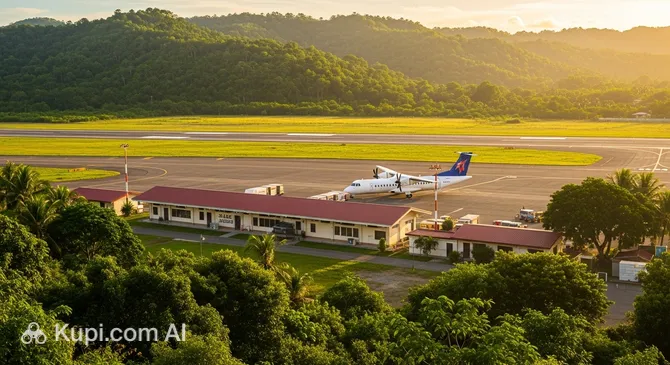
San Jose. Illustration.
Source: Kupi.com AI

San Jose Airport (SJI) serves as a key aerial gateway to the province of Occidental Mindoro, offering travellers access to one of the most picturesque and pristine parts of the Philippine archipelago. Unlike bustling metropolitan hubs, this airport welcomes guests with a relaxed island atmosphere, where the runway harmoniously neighbours tropical landscapes. For many tourists, this is where an exciting adventure begins, leading to the famous Apo Reef and the secluded beaches of Pandan Island.

PropertyValue
IATA CodeSJI
ICAO CodeRPUH
CitySan Jose
CountryPhilippines
TimezoneAsia/Manila
Top AirlinesCebgo
ScheduleOnline Timetable

Features and Advantages of the Airport:

  • Strategic Location: The airport is located just 3–4 kilometres from the city centre of San Jose. Its proximity to the settlement allows you to reach a hotel or the port in literally 10–15 minutes by a local tricycle, making logistics incredibly simple and affordable.
  • Gateway to Natural Wonders: This is the nearest aviation hub for those planning to visit Apo Reef Natural Park — the second-largest coral reef in the world after the Great Barrier Reef, as well as the popular resort on Pandan Island.
  • Historical Significance: The airfield has a rich past: during World War II, it was known as McGuire Field and was used by the US Air Force. Today, this adds a special historical flair to the location.
  • No Queues: Thanks to the low passenger flow and compact terminal, check-in and baggage claim procedures are very fast, saving travellers from long waits.

Contact Information

San Jose Airport (SJI) is a small domestic airport serving the island of Mindoro. Finding detailed and direct contact data can be challenging as management is centralized. Below is the essential information that will be useful for travellers.

  • Official Airport Website: San Jose Airport does not have its own official website. It is managed by the Civil Aviation Authority of the Philippines (CAAP), and general information may be available on their portal.
  • Information Desk Phone: There is no direct public phone number for inquiries at the airport. For information regarding flights, bookings, and other travel-related matters, it is recommended to contact your airline directly.
  • Airport Address: San Jose Airport (SJI), Labangan, San Jose, Occidental Mindoro, Philippines.
  • Email: A dedicated email address for passengers is not provided.
  • Airport Social Media: The airport does not maintain official pages on social networks.
  • Lost Luggage Information: If your luggage has been lost or damaged, you should immediately contact your airline's Lost & Found service at the arrival airport.
  • Passenger Support Contacts: The best way to get support is to contact representatives of the airline you are flying with. They can assist with most issues, from check-in to ticket changes.

How to Get to the Airport

Getting to San Jose Airport, which serves the city of San Jose on Mindoro Island, is quite simple due to its close proximity to the city centre. The journey usually takes no more than 15-30 minutes depending on your location, traffic, and the chosen mode of transport. The main ways to reach the terminal are via ground transport.

Public Transport. The most budget-friendly, yet most authentic way, is to use local transport services. In the Philippines, this primarily means jeepneys (local shared taxis) and moto-taxis (tricycles). Jeepneys run on specific routes, and you will need to find one heading towards the airport. Tricycles can take you directly to the terminal from any point in the city. This is an excellent option for light travellers wishing to save money. The cost of the trip is minimal, but please be prepared for the lack of air conditioning and limited space for luggage.

Taxi and Transfers. A more comfortable and faster method is to order a taxi or arrange a transfer in advance. This option is ideal if you have a lot of luggage, are travelling with family, or simply value comfort. The cost will be higher than public transport, but you will get a "door-to-door" service. It is recommended to agree on the price with the taxi driver in advance or use the services of official carriers to avoid inflated rates.

Car Rental and Parking. For those who prefer maximum freedom of movement, car rental services are available in the city. This allows you not only to easily reach the airport but also to explore the surroundings of San Jose at your own pace. Parking is available at the airport where you can leave your car for the duration of your trip. This option is the most costly but also the most flexible.

Although San Jose Airport is convenient for local flights, for travel to more remote regions of the country or international flights, travellers often use larger hubs such as Kalibo International Airport or Boracay Airport (Caticlan), located on neighbouring islands.

Terminals and Map

San Jose Airport (SJI) is a small and compact regional airport, so its structure is extremely simple and intuitive. Travellers should not expect a complex system of terminals like in major international hubs, which makes navigating it very easy.

The airport consists of one main terminal that serves all flights — both arrivals and departures. It is a single building where all areas necessary for the passenger are concentrated. Since there are no transfers between terminals, you will not waste time moving around the airport.

The terminal layout is logical and straightforward. Upon entry, you find yourself in the general area with check-in counters. After receiving a boarding pass and checking in luggage, passengers proceed to a small waiting hall before boarding. The arrival area with the luggage claim belt is also located in this same building, literally a few steps from the main hall. Everything is arranged as compactly as possible.

Due to the low passenger volume, passing through check-in and security screening usually takes minimum time — often no more than 20-30 minutes. However, to avoid any surprises, it is recommended to arrive at the airport generally 1.5-2 hours before your flight's departure.

The main recommendation for navigation is simply to follow the visual signs. Getting lost here is practically impossible. All infrastructure is in plain sight: from check-in counters to the waiting lounge and the exit. This makes the stay at San Jose Airport calm and predictable, allowing you to start your journey through the Philippines without unnecessary stress.

Airport History

The history of San Jose Airport (SJI), also known as McGuire Field, is inextricably linked with the events of World War II. Its creation was dictated not by civilian needs but by urgent military necessity, making its past particularly significant. The airport was built in 1944 by US Army engineering troops in record time to support the landing of Allied forces and the liberation of Luzon Island.

Initially, the airfield was named McGuire Field in honour of one of the most successful American aces, Major Thomas McGuire. During the war years, it served as an important base for fighters and transport aviation of the US Fifth Air Force. Aircraft that played a key role in air operations in the region took off from its runway. After the war ended and peace was restored, the airfield was handed over to the government of the Philippines and converted into a civilian airport, becoming the main aerial gateway for the city of San Jose and the province of Occidental Mindoro.

With the transition to civilian status, a new stage in the airport's development began. It became a vital transport hub connecting the island with Manila and other parts of the archipelago. Over the decades, the airport has undergone various stages of modernization to meet the growing demands of passenger transport. In recent years, under the management of the Civil Aviation Authority of the Philippines (CAAP), works have been carried out to improve the terminal, runway, and navigation equipment, which has increased the level of safety and comfort for travellers.

Today, San Jose Airport is not just a piece of transport infrastructure, but a living historical monument. It successfully combines its heroic military past with its modern role as an important regional aviation hub that contributes to the development of tourism and the economy of Mindoro Island. For many travellers, their acquaintance with this amazing region begins right here, on land that possesses a rich and significant history.

Services and Amenities

San Jose Airport (SJI) is a small regional aviation hub in the Philippines offering a basic set of services for a comfortable wait before your flight. The infrastructure here is quite modest but meets the main needs of passengers travelling on domestic routes. In the terminal, there are several small kiosks and cafes where you can buy snacks, refreshing drinks, and souvenirs. There are no full-service restaurants or large shops here, however, having a snack before departure is entirely possible.

A general waiting hall is equipped for passengers. VIP halls and business lounges are not available at the airport. Opportunities for connecting to Wi-Fi and charging electronic devices may be limited, so travellers are advised to carry portable power banks. Banking services, including currency exchange, are not provided on the airport territory, so all financial operations are best completed in the city in advance.

The airport provides basic amenities for passengers with special needs. Standard restrooms are available for families with small children. Passengers with reduced mobility are recommended to contact their airline in advance to order assistance services. In case of necessity, there is a first aid station at the airport.

Since San Jose Airport is not a major transit hub, specialized business centres or conference rooms are not provided here. Hotels are also absent on the airport grounds themselves. The nearest accommodation options can be found in the city of San Jose, which is easily accessible by taxi or other local transport.

Where to Eat

When planning a flight from San Jose Airport (SJI), it is important to understand that this is a small regional air hub, and dining options here are quite modest. Do not expect a wide variety of restaurants and cafes as found in large international airports. Nevertheless, having a snack before departure is quite possible.

Inside the single terminal, there are usually several small kiosks or one simple canteen operating. The assortment generally includes basic snacks typical for the Philippines. Here you can buy chips, biscuits, fresh pastries like pan de sal buns, as well as soft drinks, water, and instant coffee. Sometimes more substantial options for a quick bite are on sale, for example, hot sandwiches or steamed siopao buns with filling.

Regarding a full meal, the choice is extremely limited. The best solution would be to eat beforehand at one of the establishments in San Jose city. It is practically impossible to find specialized dietary meals (vegetarian, gluten-free, or halal) at the airport. Prices in local kiosks are very affordable and oriented towards local residents. Food outlets open shortly before the first flight and close after the departure of the last aircraft, so their operation is fully tied to the flight schedule.

Tips for Travellers

Travelling through the airport of San Jose city will be easier and more pleasant if you prepare in advance. Here are some useful tips to help you orient yourself and avoid unnecessary stress.

Arrival Time at the Airport. San Jose Airport (also known as McGuire Field) is small and serves mainly domestic flights. We recommend arriving at least 1.5–2 hours before departure. This time will be sufficient to complete all formalities without rushing, even during peak hours.

Check-in and Security. To save time, use online check-in for your flight if your airline provides such an option. Security checkpoints here are standard, but queues can occur sometimes. Prepare liquids (in containers up to 100 ml, packed in a transparent bag) and electronic devices for separate screening in advance.

Choosing a Seat on the Plane. If you want to enjoy views of the islands from above, choose a window seat. For those who value freedom of movement and want to exit the plane faster upon arrival, an aisle seat is more suitable. On short domestic flights, the difference is not huge, but comfort is always important.

Hand Luggage. It is strictly forbidden to carry sharp objects, weapons, and flammable liquids in hand luggage. Electronic cigarettes and power banks can be carried only in hand luggage; they cannot be checked in. Standard restrictions on carrying liquids apply — up to 1 litre in total, in containers of no more than 100 ml each.

Connecting Passengers. If you have a connecting flight, clarify at check-in whether you will need to collect and re-check your luggage. It is usually easy to orient yourself at San Jose Airport, but always allow extra time in case of unforeseen delays.

Customs Control. Since San Jose Airport serves domestic flights, you will pass all customs and passport formalities at your first international airport of arrival in the Philippines (for example, in Manila or Cebu). Thus, upon arrival in San Jose from another Philippine city, additional control will not be required.

Saving Time and Money. Book a transfer from the airport in advance so as not to overpay on the spot. Bring an empty reusable water bottle with you — after security screening, it can be filled at drinking fountains. Exchanging currency in small airports is often disadvantageous; it is better to do this in advance at a bank.

Flight Delays. In case of a flight delay or cancellation, first approach your airline's counter for information on further actions. Clarify if you are entitled to drinks, meals, or hotel accommodation. Keep your travel insurance contacts with you — it may cover unforeseen expenses.

Reached the end of the page?

That means the route is fully explored