Support

Virac Airport

About the Airport

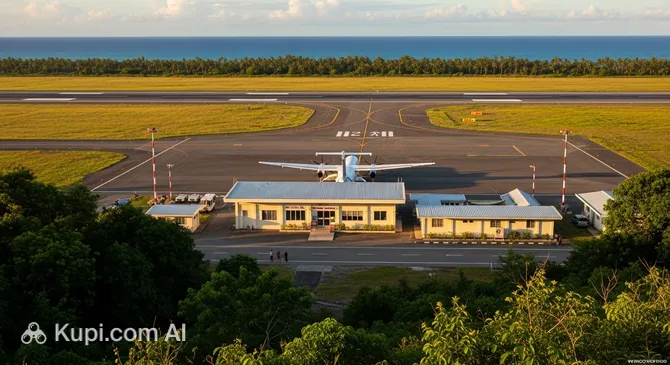
Virac Airport. Source: Kupi.com Binoculars

Virac Airport (VRC) is not merely a runway, but the sole aerial gateway to the picturesque island of Catanduanes, often referred to as the "Land of the Howling Winds." Located in the provincial capital of the same name, this airport serves as the starting point for travelers eager to discover the pristine beaches, surfing spots, and unique nature of the Philippines. Despite its modest size, the airport plays a key role in the region's transport system and accommodates modern aircraft, connecting the island with the mainland. Following a terminal modernization in 2018, it has become significantly more comfortable for passengers.

IATA Code VRC
ICAO Code RPUV
City Virac
Distance to centre approx. 3 km
Status domestic
Annual passengers approx. 53,000
Popular Airlines Cebu Pacific
Schedule Virac Airport online flight board

The main advantage of Virac Airport is its compactness and strategic location. It is situated very close to the city centre, making transfers quick and inexpensive. As the only airport on the island, it provides an exclusive yet reliable connection to Manila, from where you can continue your journey to other destinations. The airport is classified as a Principal Class 1 domestic hub and is operated by the Civil Aviation Authority of the Philippines (CAAP). Although there isn't a vast selection of shops or restaurants here, its primary function—to quickly and conveniently deliver you to the natural beauties of Catanduanes—is performed excellently.

Contact Information

  • Official Website: Virac Airport does not have its own dedicated official website. Information about the airport can be found on the portal of the Civil Aviation Authority of the Philippines (CAAP), which manages most airports in the country.
  • Help Desk Phone: To contact the airport administration, you may try calling the local CAAP office. Please note that connecting can sometimes be difficult. Number: +63 (52) 811-1636.
  • Airport Address: Virac Airport (VRC), Barangay San Isidro, Virac, Catanduanes, 4800, Philippines.
  • Email: A direct email address for general public access is typically not published. For official inquiries, it is recommended to use the contact forms on the CAAP website.
  • Social Media: Virac Airport does not maintain official social media pages. News and updates may be published on the pages of the airlines operating flights to the city.
  • Lost Luggage Information: For issues regarding lost or damaged luggage, you should contact the airline directly. Airport staff do not handle luggage tracing.
  • Passenger Support Contacts: For questions related to booking, ticket changes, carriage rules, and flight check-in, please contact your airline's customer support. For general questions regarding airport operations, you may contact the phone number listed above.

How to Get to the Airport

Virac Airport (VRC) is located quite close to the city centre of Virac, making the journey there quick and convenient. The transport system here reflects the island charm of the Philippines, offering simple and accessible ways to get around.

Public Transport

The main and most popular form of public transport in Virac is the motorcycle taxi (tricycle). These three-wheeled motorcycles with a passenger sidecar can be found everywhere. A trip from the city centre to the airport on a tricycle is not only a budget-friendly option but also an authentic way to experience local life. There are no dedicated bus routes to the airport, so the tricycle is your primary choice.

Taxis and Transfers

Standard metered taxis are practically non-existent in Virac. Their role is fulfilled by the same tricycles, which can be hired for a "special trip" (private trip). In this case, you will not share the transport with other passengers. Be sure to agree on the fare with the driver in advance. A more comfortable option is to book a hotel transfer. Many hotels and resorts on Catanduanes Island offer airport pickup for their guests, which is particularly convenient after a long flight.

Car Rental

For those planning to actively explore Catanduanes Island, renting a car or motorcycle is a good solution. Several local companies offer such services. It is better to book a vehicle in advance, especially during the peak tourist season. This will give you complete freedom of movement around the island.

Travel Time and Cost

  • Travel Time: The trip from Virac centre to the airport usually takes no more than 10-15 minutes.
  • Cost: A tricycle ride is very affordable, but the price may vary. Always confirm the cost before starting your journey. A hotel transfer will cost more but ensures comfort and a fixed price.

Airport Parking

Virac Airport has a small parking area located directly in front of the terminal. It is suitable for short-term parking if someone is dropping you off or picking you up. Facilities for long-term parking may be limited, so it is best to clarify this upon arrival.

Terminals and Map

The airport of Virac (VRC) is a small regional airport in the Philippines serving domestic flights. Its structure is very simple and straightforward, making it convenient for passengers unaccustomed to huge aviation hubs.

The airport consists of one small terminal that handles both departing and arriving flights simultaneously. Thanks to its compact size, getting lost here is practically impossible. All infrastructure is located in one building, and moving between zones takes just a few minutes. Since there is only one terminal, there is no need for transfers between buildings.

The terminal layout is intuitive. Upon entering, you immediately find yourself in the general area where check-in counters are located. After receiving a boarding pass, passengers proceed through the single security checkpoint, which leads to a small departure waiting lounge. The arrival zone is equally simple: after disembarking from the aircraft, passengers walk to the building where the baggage claim belt is located. The entire process from leaving the plane to collecting suitcases usually happens very quickly.

The time required for formalities, such as check-in and security screening, is minimal due to the low passenger volume. Nevertheless, it is recommended to arrive at the airport 1.5-2 hours before departure to go through all procedures without rushing. For navigation, simply follow the signs, and if any questions arise, you can always ask the airport staff. The main tip is not to worry about complex logistics, as the entire structure of Virac Airport is aimed at quick and simple passenger service.

Airport History

The history of Virac Airport (VRC) is inextricably linked with the development of the entire island province of Catanduanes. Its roots go back to the time before World War II, when the US Army Corps of Engineers built the first airstrip on this site. Initially, it was a small auxiliary airfield, which, however, laid the foundation for future aviation connections between the island and the rest of the Philippines.

After the war ended, the airfield was transferred to civilian use and began its long journey of development. A key stage in its history was the modernization of the runway: it was lengthened and paved with asphalt. This allowed for the reception of larger and more modern turboprop aircraft, significantly improving the region's transport accessibility. In recent years, specifically between 2017 and 2020, the airport underwent major reconstruction. During the works, the passenger terminal was expanded and renovated, and general infrastructure was improved to enhance comfort and safety.

Virac Airport has repeatedly played a critical role during natural disasters. The province of Catanduanes is known as the "Land of the Howling Winds" due to frequent and powerful typhoons. In such moments, the airport becomes the main artery for delivering humanitarian aid, medicines, and conducting rescue operations. This vital function is one of the most significant pages in the airport's history.

Although Virac Airport may not boast record passenger numbers on a national scale, its main achievement is providing a stable and reliable link for the isolated island with the mainland. From a modest military strip, it has transformed into a modern and functional aerial gateway that not only welcomes tourists but also serves as a reliable support for local residents in any situation.

Services and Amenities

Virac Airport (VRC) is a compact regional hub that provides passengers with a basic set of services necessary for a comfortable wait before departure. Since the airport is small, its infrastructure is focused on meeting the key needs of travellers.

Within the terminal, there are several small cafes and kiosks where you can buy light snacks, sandwiches, soft drinks, and coffee. There are also souvenir shops offering locally made products—a great opportunity to buy last-minute gifts. The choice of establishments and shops is limited but quite sufficient for a short wait.

There are no specialized business lounges or VIP halls at Virac Airport. A general waiting hall with seating is equipped for all passengers. Access to free Wi-Fi may be limited or unavailable, and the number of stations for charging gadgets is small, so it is recommended to bring a portable power bank.

There are no full-service bank branches or currency exchange points at the airport. It is recommended to take care of currency exchange in major cities beforehand. Occasionally, an ATM can be found in the terminal, but its operation is not always stable.

For emergencies, there is a first aid station at the airport. Passengers with children and travellers with reduced mobility should contact their airline in advance to request necessary assistance and clarify the availability of special facilities, such as nursing rooms or ramps.

There are no hotels directly within the airport building, however, many accommodation options are available in the city of Virac itself, which can be easily reached by taxi or tricycle. Conference room rental or business centre services are not provided at the airport.

Where to Eat

Virac Airport (VRC) is a small regional airport, so the choice of dining establishments here is quite modest but allows you to satisfy your hunger before departure. Do not expect major restaurant chains or extensive food courts here. All the few dining points are located mainly in the general area before passing security control (landside).

Inside the terminal building, there are several small kiosks and eateries offering simple and filling dishes. Here you can quickly have a snack with a sandwich, buy pastries, crisps, or soft drinks. For a more substantial meal, you can order traditional dishes of Philippine cuisine, for example, rice with chicken or local meat dishes. This is a great opportunity to try authentic local food at an affordable price.

Establishments usually open a few hours before scheduled flights and close after their departure. Please note that specialized dietary options, such as vegetarian, vegan, or gluten-free dishes, will likely be unavailable. If you have strict dietary requirements or require Halal-certified meals, it is safer to bring food with you. In general, the airport of Virac offers basic opportunities to have a snack before your flight in a simple and informal setting.

Traveler Tips

To ensure your journey through the airport of Virac goes as smoothly as possible, take advantage of our tips. As this is a small regional airport in the Philippines, processes here usually move faster than in major hubs. Nevertheless, it is recommended to arrive at the airport 1.5-2 hours before a domestic flight departure to complete all formalities without rushing.

To save time, complete online check-in for your flight if your airline provides this option. This will allow you to proceed immediately to the baggage drop counter or, if you are travelling light, to the security checkpoint. During security checks, be ready to present your boarding pass and ID, and remove electronics and liquid containers from your hand luggage.

When choosing a seat on the plane, consider that Catanduanes Island, where the airport is located, is famous for its picturesque landscapes. A window seat will offer you unforgettable views during takeoff and landing. If comfort and the ability to stand up and stretch easily are more important to you, choose an aisle seat. Regarding hand luggage, remember the general rules: liquids are allowed in containers of no more than 100 ml, packed in a transparent bag. Sharp objects, weapons, and flammable substances are prohibited.

Since Virac Airport mainly serves domestic flights, international transfers here are unlikely. If you have a connecting flight in another Philippine city (for example, in Manila), you will most likely need to collect your luggage, exit the arrival zone, and check in again for the next flight. Customs control is passed at the first airport of arrival in the country, so this procedure is absent on domestic flights.

To save money, book tickets in advance and consider bringing light snacks and an empty water bottle, which can be filled after passing security. Airport transfers should also be planned in advance by comparing prices for taxis and local tricycles.

In case of a flight delay, remain calm. First, verify information with your airline representative or on the information board. Depending on the length of the delay, the carrier may be obliged to provide drinks, meals, or accommodation. Since amenities in a small airport may be limited, it is always useful to have a book, a charged power bank, and headphones with you to pass the waiting time comfortably.

Reached the end of the page?

That means the route is fully explored