Support

Catarman National Airport

About the Airport

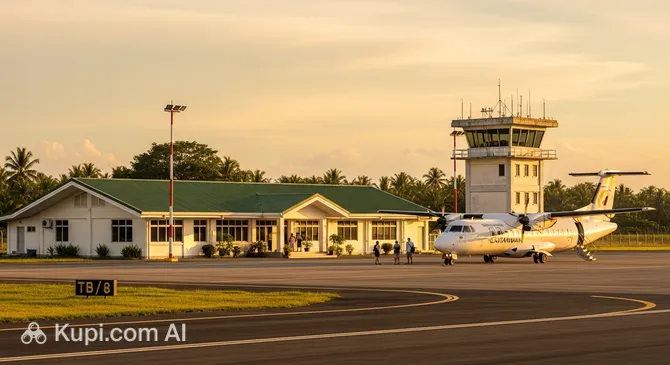
Catarman National Airport. Source: Kupi.com Binoculars

Imagine a cosy aerial haven where, instead of endless corridors and hustle, you are greeted by the rustling of palm trees and a warm tropical breeze. Catarman Airport is exactly such a place, a true "homey" gateway to the picturesque province of Northern Samar. Following recent modernisation, this compact airfield harmoniously combines provincial charm with modern comfort, becoming the first point of introduction for travellers to the authentic culture and nature of the Philippines.

IATA Code CRM
ICAO Code RPVF
City Catarman
Distance to Centre ~2 km (practically within city limits)
Status Domestic (Minor Domestic)
Annual Passengers ~50,000 (estimated capacity)
Schedule Please check with official airline websites

Features and Advantages of the Airport

Despite its modest size, Catarman Airport boasts several advantages that make arriving here a pleasant experience. The main pride of the air harbour is the new passenger terminal, opened after a large-scale reconstruction in 2021. The building has become more spacious, brighter, and more convenient, significantly improving the level of service for guests of the province.

A key feature is its phenomenal proximity to the city. The airport is located in the Dalakit district, literally a few minutes' drive by tricycle from the central square, the market, and major hotels. This saves tourists from long and expensive transfers. Furthermore, thanks to the low passenger traffic, all pre-flight formalities here are completed as quickly as possible and without queues, allowing you to start or end your holiday without unnecessary stress.

Contact Information

Finding direct and up-to-date contacts for a small regional airport like Catarman Airport (CRM) can be challenging. Most administrative questions and communications are centralised through the Civil Aviation Authority of the Philippines (CAAP) or handled via the airlines.

  • Official Website: Catarman Airport does not have its own official website. Information about the country's airports is published on the resources of the Civil Aviation Authority of the Philippines (CAAP).
  • Inquiry Hotline: There is no direct public telephone number for general inquiries. For questions regarding flight schedules and tickets, it is recommended to contact your airline directly.
  • Airport Address: Catarman National Airport, Catarman, Northern Samar, Philippines.
  • Email: A dedicated email for general passenger inquiries is not published. Please use your airline's communication channels.
  • Social Media: The airport does not maintain official pages on social networks.
  • Lost Luggage Information: If your luggage has been lost or damaged, you should immediately contact your airline's Lost & Found service at the arrival airport.
  • Passenger Support Contacts: The best way to get assistance with flight-related issues is to contact the customer support service of the airline you are flying with.

How to Get to the Airport

Getting to Catarman Airport (CRM) from the centre of the city of the same name is quite simple, as it is located very close by. Depending on your budget and preferences, you can choose one of several convenient methods. The trip from the centre of Catarman to the terminal usually takes no more than 10–15 minutes.

Public Transport

The most authentic and budget-friendly way to get around in the Philippines is by local transport. In Catarman, this primarily means tricycles (motorcycles with a passenger sidecar) and jeepneys. You can hail a tricycle on almost any street. This is an ideal option for solo travellers or couples with light luggage. The cost of the trip will be minimal, but it is better to agree on the price with the driver in advance.

Taxi and Transfer

For greater comfort, especially if you are travelling with family or have many suitcases, it is better to choose a taxi or book a private transfer. Although taxis in the traditional sense may not be abundant, you can always find a private carrier. As with the tricycle, be sure to agree on the cost before starting the trip. Some hotels also offer transfer services for their guests, which is a reliable and convenient option.

Car Rental and Parking

If you prefer complete freedom of movement, you can rent a car. However, it is worth considering the peculiarities of local traffic. This option is more suitable for experienced drivers. Catarman Airport generally has parking where you can leave a car for both short and long terms. This is a convenient solution for those arriving at the airport in their own or rented transport.

Terminals and Map

Catarman Airport (CRM) is a small regional airport, so its structure is extremely simple and understandable for any traveller. There is one passenger terminal operating here, which serves all domestic flights — both departures and arrivals. Thanks to its compact size, navigating the building presents no difficulties whatsoever.

The terminal layout is intuitive. Upon entering, you immediately find yourself in the general area where airline check-in counters are located. After receiving a boarding pass and checking in luggage, passengers proceed to the security screening zone, beyond which lies a small pre-departure area. The arrival zone is a separate wing or room where baggage claim takes place. Since there is only one terminal, transitions between different zones take literally a few minutes.

All procedures, including flight check-in and security screening, usually proceed very quickly thanks to the low passenger volume. Nevertheless, it is recommended to arrive at the airport generally 1.5–2 hours before departure to complete all formalities without rushing. During the departure times of the single flight, the small waiting hall may become crowded, but critical queues generally do not occur.

Orienting yourself in Catarman Airport is incredibly easy: all key points — from the entrance to the boarding gate — are within direct line of sight. Signs will help you find your way, but most likely, you won't even need them. The main advantage of this airport is its simplicity, which makes the start and end of a journey maximally comfortable and eliminates the stress associated with navigating major aviation hubs.

Airport History

The history of Catarman Airport (CRM) dates back to the days of World War II. It was built in 1944 as a military airfield by the US Navy construction battalions, known as the "Seabees". Initially, the runway was intended for fighter jets providing support to Allied forces during the liberation of the Philippines. This military past laid the foundation for the future development of air travel in the region.

After the war ended, the airfield was demilitarised and transferred to the management of civil authorities. From that moment, it began functioning as a domestic airport serving the city of Catarman and the province of Northern Samar. For decades, it played a key role in ensuring transport accessibility for this remote region, contributing to its economic growth and tourism development.

A significant stage in the airport's modern history began in the 21st century. In response to growing passenger traffic and the need to meet modern standards, large-scale modernisation was undertaken. A key event was the opening of the new passenger terminal in 2023. This project allowed not only for an increase in the airport's capacity but also radically improved the quality of service, creating a comfortable and modern environment for travellers.

Today, Catarman Airport is an important transport hub that continues to develop. Its history is a vivid example of how a military facility can transform into vital civil infrastructure, opening the region to new opportunities, investments, and tourists wishing to discover the beauties of Northern Samar.

Services and Facilities

Catarman Airport (CRM) is a small regional airport in the Philippines, so the range of services here is basic but sufficient for waiting comfortably for a domestic flight. The terminal infrastructure is simple and functional, focused on the key needs of travellers.

Dining and Shopping. Inside the terminal, there are several small kiosks where you can buy soft drinks, coffee, and light snacks, such as sandwiches or pastries. The selection of shops is small and mainly represented by souvenir stalls offering local crafts and commemorative items.

Waiting Areas and Amenities. A general waiting hall is available for all passengers. There are no specialised VIP or business lounges at the airport. Access to Wi-Fi may be unstable or unavailable, so it is better to rely on mobile data. The number of power outlets for charging gadgets is limited, so it is recommended to bring a portable power bank.

Financial and Medical Services. There are no bank branches or currency exchange points on the airport territory. All financial operations are recommended to be carried out in advance in the city of Catarman. Generally, there is a first aid station at the airport for emergency cases.

Services for Passengers with Special Needs. The airport is accessible for passengers with reduced mobility, but to receive assistance, such as a wheelchair, you must contact your airline in advance. There are no dedicated mother-and-child rooms or play areas here. There are also no hotels directly at the airport, but the nearest accommodations are located in the city, just a few minutes' drive away. Business travellers should note that there are no conference rooms or business centres at the airport.

Where to Eat

Catarman Airport (CRM) is a small regional airport, so the choice of dining establishments here is quite limited. Do not expect large chain restaurants or food courts here, as seen in international hubs. The infrastructure is oriented towards meeting the basic needs of passengers waiting for their flights.

Typically, several small kiosks or cafeterias operate within the airport grounds. They are located mainly in the general area before the security checkpoint (landside). Here you can buy drinks (water, soda, instant coffee), packaged snacks (chips, biscuits), and possibly simple local pastries. Sometimes these places offer quick and filling meals, such as instant noodles or simple sandwiches.

For a full meal, opportunities are practically non-existent. However, if you are lucky, you might find simple Filipino dishes in one of the kiosks, such as siopao (steamed buns with filling) or rice with a ready-made topping. This is a good option for a quick and inexpensive snack in the local style. Prices here are usually very affordable and do not differ much from those in the city.

Passengers with specific dietary requirements (vegetarians, vegans, or those observing a Halal or gluten-free diet) are strongly advised to bring food with them. Finding specialised dishes at Catarman Airport is practically impossible. The opening hours of local cafeterias are usually tied to the flight schedule: they open shortly before the first departure and close after the last flight leaves.

Travel Tips

To ensure your journey through the airport of Catarman city goes smoothly, take advantage of these useful tips. Being a small regional airport, it offers a calmer atmosphere than large international hubs, but preparation is always the key to success.

Arrival Time and Check-in. For domestic flights, which are primarily what this airport serves, it is recommended to arrive 1.5-2 hours before departure. This time is usually sufficient to check in for the flight and pass security control without rushing. To save time, use online check-in if your airline provides such an option. This will allow you to head straight to baggage drop or security screening if you are travelling with hand luggage only.

Security Checks and Hand Luggage. Security procedures here are standard. Remember the restrictions on carrying liquids: all containers must be no more than 100 ml in volume and packed in a transparent bag. Electronic devices, such as laptops and power banks, will need to be removed from your bag for separate scanning. Power banks are permitted only in hand luggage. To avoid unpleasant surprises, verify your airline's rules in advance.

Seat Selection and Transfers. If you have the opportunity to choose a seat on the plane, select a window seat to enjoy stunning views of the islands of the Philippines during takeoff and landing. Catarman Airport is not a major transfer hub, so if you have a connecting flight, you will most likely have to collect your luggage and check in again at the next airport (for example, in Manila or Cebu). There is no customs control here, as it is a domestic airport; all customs formalities are passed at the first international airport of arrival in the country.

Savings and Flight Delays. To save money, travel light to avoid excess baggage fees. Bring an empty water bottle with you, which can be filled after passing security control. In case of a flight delay or cancellation, immediately contact a representative of your airline for information regarding rebooking or possible compensation. Remain calm and keep the airline's contact details and your booking number at hand.

Reached the end of the page?

That means the route is fully explored