Support

Kalibo International Airport

About the Airport

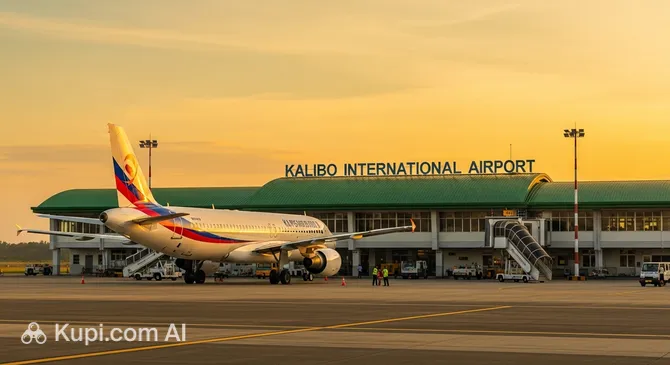
Kalibo International Airport. Source: Kupi.com Binoculars

Kalibo International Airport is your aerial gateway to a tropical paradise, often serving as the first step towards the white sandy beaches of Boracay. Unlike its "younger brother" in Caticlan, this airport boasts a longer runway, allowing it to accommodate larger liners and direct international flights, including those from South Korea and China. Upon landing here, you immediately enter the relaxed rhythm of the Philippine province of Aklan, where the journey continues with a scenic drive through rice fields and jungles to the ferry crossing.

IATA Code KLO
ICAO Code RPVK
City Kalibo
Distance to Centre 3 km
Status International
Passengers per Year Over 1.1 million (2023)
Schedule Available online

Kalibo Airport, while not distinguished by gigantic dimensions, has its undeniable advantages and features important for tourists:

  • Reliability in Any Weather: Thanks to its ability to accommodate larger aircraft and the presence of night lighting, flights to Kalibo are less frequently cancelled or diverted due to wind or sunset compared to the neighbouring Caticlan airport.
  • Budget Savings: Tickets to Kalibo are often significantly cheaper than flights landing directly near Boracay. Many travellers choose this route precisely for economic reasons, compensating for the price difference with a 1.5-hour transfer.
  • Transport Accessibility: Right at the terminal exit, tourists are met by numerous counters offering "door-to-door" transfers. Buses and minivans run to the Caticlan port almost around the clock, adjusting to flight arrivals.
  • International Access: The airport actively serves direct charter and scheduled flights from East Asia, making it a convenient hub for tourists combining visits to several Asian countries.

Contact Information

Below you will find contact information for Kalibo International Airport (KLO). Please note that for the most accurate flight information (schedules, delays, baggage allowance), it is always best to contact your airline directly.

  • Official Website: The airport is managed by the Civil Aviation Authority of the Philippines (CAAP). There is no dedicated official website for Kalibo Airport; general information can be found on CAAP portals or checked with air carriers.
  • Information Desk Phone: +63 36 262 3264. Recommended for calls regarding general questions about terminal operations.
  • Airport Address: Access Road, Kalibo, 5600 Aklan, Philippines.
  • Email: A direct public email address for contacting the airport is not provided. It is recommended to use the telephone for communication.
  • Social Media: Official and verified social media pages for the airport are currently absent. Information should be verified through the official channels of airlines.
  • Lost Luggage Information: If your luggage was lost or damaged during the flight, you must immediately contact your airline's Lost & Found service at the arrival airport. For items left in the terminal building, please contact the airport information desk.
  • Passenger Support Contacts: Support regarding tickets, check-in, and flight status is provided by your airline. For questions regarding infrastructure and services within the airport itself, you can contact the general information desk phone.

How to Get to the Airport

Kalibo International Airport (KLO) is a key transport hub for travellers heading to the world-famous island of Boracay and other resorts on Panay Island. Getting to it from the city of Kalibo or arranging a transfer to other points in the Philippines is quite simple thanks to several convenient options.

Public Transport. The main mode of transport for short trips within Kalibo and its surroundings are motorised tricycles. A trip from the city centre to the airport will take about 15-20 minutes. This is the most authentic and budget-friendly way to travel. It is best to agree on the price with the driver in advance. For those going to Boracay, counters for numerous companies offering transfers on buses and minivans to the ferry jetty in Caticlan are located right at the arrival terminal exit. The journey takes 1.5–2 hours and is the most popular way to reach the resort.

Taxis and Transfers. Although standard taxis are less common in Kalibo than tricycles, you can always book a private transfer. This is especially convenient if you are travelling with family, a large amount of luggage, or simply value comfort. The driver will meet you with a sign in the arrival hall, eliminating the need to look for transport on the spot. Transfers can be booked online in advance.

Car Rental and Parking. For those who prefer maximum freedom of movement, car rental services are available at Kalibo Airport. This is a great opportunity to explore Panay Island on your own. There is a parking lot at the terminal where you can leave a car for both short and long terms. Rental services are provided by both local and international companies.

Terminals and Map

Kalibo International Airport (KLO) is a compact and functional aviation hub that serves as the main gateway for tourists heading to Boracay. Its structure is simple and intuitive even for first-time visitors. The airport consists of two separate terminals located in close proximity to each other.

International Terminal (Terminal 1) handles all flights from abroad. This is the main building where the majority of foreign tourists arrive. Inside, you will find check-in counters, passport control, customs, and a small departure hall with a few Duty-Free shops, souvenir stalls, and cafes. Despite its modest size, the terminal handles passenger flow well, although it can get quite crowded during peak hours.

Domestic Terminal (Terminal 2) is designed to service flights within the Philippines, for example, to Manila or Cebu. It is smaller and simpler than the international one, with a minimal set of services. Walking between the terminals takes just a few minutes — they are literally a few steps away from each other, which is very convenient when planning connecting flights.

Navigation in the airport will not cause difficulties thanks to its small size and clear signs. Arrival and departure zones are clearly separated. After landing, you will quickly reach the baggage claim hall, and upon departure, you will go through standard procedures: flight check-in, payment of the terminal fee (if not included in the ticket), passport control, and security screening.

Important Tip: Due to the popularity of the destination and the manual processing of many procedures, queues can form at check-in and security. It is recommended to arrive at the airport in advance: at least 3-4 hours before an international flight and 2-3 hours before a domestic one. This will allow you to complete all formalities without rushing and wait comfortably for your flight.

Airport History

The history of Kalibo International Airport (KLO) is closely linked to the development of tourism on the world-famous island of Boracay. Initially, this transport hub had a completely different purpose. The airport was founded as a military airfield during World War II, built by the US Army Corps of Engineers. After the war, it was handed over to the government of the Philippines and functioned for many years as a small domestic airport serving primarily local flights.

A key stage in the airport's development was the tourism boom in Boracay in the late 20th and early 21st centuries. The growing flow of foreign travellers required the creation of more convenient logistics. Consequently, a decision was made to upgrade the airport to international standards. In 2008, a new terminal was opened, and the runway was widened and lengthened, allowing it to accommodate medium-haul aircraft such as the Airbus A320 and Boeing 737 operating international flights.

One of the significant events in the airport's recent history was the temporary closure of Boracay Island for rehabilitation in 2018. For six months, passenger traffic practically ceased, which was a serious test for the air harbour. However, after the reopening of the revitalised resort, Kalibo Airport experienced a new surge in popularity, confirming its status as the main gateway to one of the world's best beaches. This event also prompted further modernisation of infrastructure to improve passenger service quality.

Today, Kalibo International Airport is one of the busiest in the country, especially in the segment of international charter and budget airlines. It is constantly developing, with work underway to expand the terminal and improve navigation equipment. An interesting fact: despite the presence of Caticlan Airport closer to Boracay, it is Kalibo that receives the majority of large international flights due to its longer runway, playing a vital role in the economy and tourism appeal of the entire Aklan region.

Services and Facilities

International Airport Kalibo (KLO), being the key gateway to the popular island of Boracay, offers passengers all necessary services for a comfortable wait for their flight. Although the airport is not large, there are several cafes and eateries where you can try both local dishes and familiar fast food. In the departure zone, there are duty-free shops and souvenir stalls where you can buy gifts, local delicacies, and travel essentials.

For the convenience of travellers, charging stations for mobile devices are provided in the terminal. Access to Wi-Fi is also available, although speed and connection conditions may vary. Before departure or immediately upon arrival, you can use ATMs and currency exchange points to withdraw cash or exchange money for Philippine Pesos.

Passengers preferring enhanced comfort can utilise the services of lounges. They typically offer more comfortable seating, beverages, snacks, and more stable internet access in a quiet environment. For information on access and costs, it is recommended to check with the airport information desks, as conditions may depend on the airline or loyalty program membership.

The airport is equipped for the needs of passengers with special requirements. Ramps and accessible toilets are provided for people with disabilities. For travellers with small children, there is a mother and child room where you can take care of your baby in a quiet setting. In case of necessity, a medical unit operates at the airport, ready to provide first aid.

Although there are no hotels within the airport grounds, numerous hotels for every taste and budget are located in the immediate vicinity, many of which offer transfers for their guests. There are no specialised business centres or conference halls at Kalibo Airport, but basic conditions for work can be found in the premium waiting lounges.

Where to Eat

Kalibo International Airport (KLO), being an important transport hub for tourists heading to Boracay, offers a basic but sufficient selection of establishments for a snack before departure. Dining options here focus mainly on quick service and do not imply fine dining restaurants, but you certainly won't go hungry.

Before Security (Landside)

In the public area of the airport, before passing passport control and security, there are several small cafes and kiosks. Here you can find both local and international snacks. This is the best place for a full, albeit simple, meal. Prices here are generally slightly lower than in the departure zone. This is also your last chance to try authentic Philippine dishes if you haven't managed to do so earlier. Look for establishments offering rice with chicken or meat dishes (adobo), as well as local pastries.

After Security (Airside)

In the departure hall, the choice is more limited and oriented towards passengers waiting for their flight. Here you will find several coffee shops where you can order coffee, tea, soft drinks, as well as sandwiches, pastries, and packaged snacks. There are also small counters offering various beverages. These establishments are ideal for a quick snack, but not for a substantial meal.

What to Try and Prices

If you have the opportunity, be sure to try local pastries, such as pan de sal (bread rolls) or ensaymada (sweet pastry with cheese). Prices at Kalibo Airport are higher than in the city but remain acceptable by international airport standards. The average bill for coffee and a sandwich will be a moderate amount. Most establishments operate according to the flight schedule, opening a few hours before the first departures and closing after the last ones.

Important Information for Passengers with Special Dietary Needs

It should be noted that the selection for vegetarians, vegans, or people adhering to a gluten-free or Halal diet is extremely limited. There are no specialised cafes, and finding a suitable dish may be difficult. If you have strict dietary restrictions, it is strongly recommended to bring food with you to avoid inconvenience.

Travel Tips

To ensure your journey through Kalibo International Airport goes as smoothly as possible, take advantage of our tips. Serving as the gateway to the famous island of Boracay, this airport has its own specific features, and a little preparation will help avoid unnecessary stress. It is one of the key transport hubs in the Philippines, so it can get quite crowded during the high season.

Check-in and Security: Whenever possible, complete online check-in to save time at the counter. Remember that the airport may charge a terminal fee, which is not always included in the ticket price — it is better to check this with your airline in advance. Security screening procedures are standard, but due to the influx of tourists, queues can move slowly.

Tips for Connecting Passengers: If you are flying in transit through Kalibo, pay special attention to the details of your itinerary. In most cases, especially when flying with different airlines or on separate tickets, you will have to collect your luggage, pass customs control (if arriving on an international flight), and then check in again for the next flight at the appropriate terminal. Always verify the procedure with your airline to avoid unpleasant surprises.

Seat Selection: If you are flying during the day, choose a window seat — picturesque views of the Philippines islands open up during takeoff and landing. For greater comfort and the ability to stretch your legs, an aisle seat is more suitable.

Hand Luggage: Standards for carrying liquids (up to 100 ml) and the ban on sharp objects apply here as well. Pack all valuables, documents, and electronics in your hand luggage. Do not forget a portable charger, as the number of power outlets in the waiting hall may be limited.

Customs Control: Upon entering the Philippines, you will need to fill out a customs declaration. Declare cash if the amount exceeds the established limit. Upon departure, customs officers may inquire about the origin of expensive souvenirs, so keep receipts for major purchases.

Saving Money: To avoid overpayment for excess weight, weigh your luggage before travelling to the airport. Take a light snack and an empty water bottle with you (it can be filled after security), as prices for food and drinks at the airport are typically higher.

In Case of Flight Delay: In the event of a flight delay, stay calm and contact your airline representative. Given that Kalibo Airport has a basic set of amenities, having a book, a movie on a tablet, or a charged power bank will help pass the time. During long delays, the airline is obliged to provide drinks or meals.

Reached the end of the page?

That means the route is fully explored