Support

Masbate Airport

About the Airport

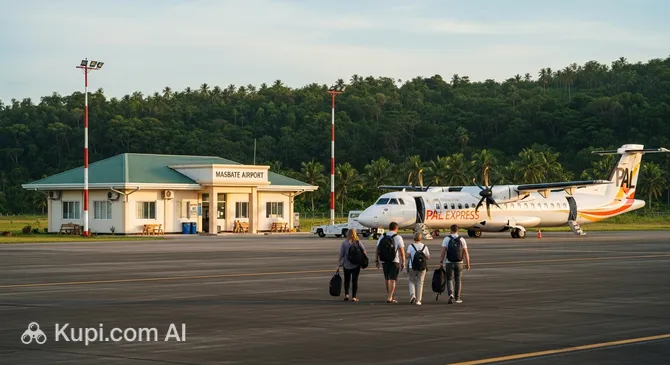
Masbate Airport. Source: Kupi.com Binoculars

Moises R. Espinosa Airport, better known as Masbate Airport, is not just a transport hub, but the true gateway to the "Rodeo Capital" of the Philippines. Located practically within the city limits, this air harbour offers travellers a unique experience: the adventure here begins immediately after stepping off the plane. From the height of the flight, a breathtaking panorama of turquoise waters and coastal hills opens up, setting the mood for a relaxed island rhythm even before touching the runway. Despite its modest size, the terminal plays a vital role in the life of the region, connecting this picturesque corner with Manila and Cebu.

IATA Code MBT
ICAO Code RPVJ
City Masbate City
Distance to Centre ~1.5 km
Status Domestic
Passengers per Year ~65,000
Schedule Check airline website

Airport Features and Highlights:

Masbate Airport possesses the unique charm of a provincial air harbour, where simplicity is combined with convenience.

  • Exceptional Accessibility: This is one of the few airports located literally a few minutes' drive from the central part of the city. If you wish and have light luggage, some hotels can even be reached on foot or via a short tricycle ride.
  • Scenic Landing Approach: The runway is located at the very edge of the water, which gifts passengers incredible views during takeoff and landing. This is an excellent opportunity to take beautiful photos directly from the window.
  • Speed of Service: Thanks to the compact terminal and lack of complex navigation, all procedures — from check-in to baggage claim — are completed very quickly. There are no long corridors or tiring queues typical of large hubs here.
  • Safety and Modernisation: In recent years, the runway has been reconstructed and the terminal renovated, which has increased the level of safety and comfort for passengers, accommodating modern turboprop aircraft.

Contact Information

Since Masbate Airport is a small regional airport, most services, including information support and baggage handling, are provided directly by the airlines. Below are general contact details and communication recommendations.

  • Official Website: At the moment, Masbate Airport does not have its own official website. The airport is managed by the Civil Aviation Authority of the Philippines (CAAP), on whose website you can find general information about the country's airports.
  • Inquiry Service Phone: There is no direct public phone number for inquiries at the airport. For all questions regarding schedules, booking, or flight status, it is recommended to contact your airline directly.
  • Airport Address: Airport Road, Masbate City, 5400 Masbate, Philippines.
  • Email: A dedicated email address for passengers is not provided. For communication, please use the official channels (website or call centre) of your air carrier.
  • Social Media: The airport does not have official pages on social networks. News and updates are generally published on the pages of airlines operating flights to Masbate.
  • Lost Luggage Information: If your luggage has been lost or damaged, you must immediately contact your airline's representative counter at the arrival airport. It is the air carrier that bears responsibility for tracing luggage.
  • Passenger Support Contacts: All issues related to passenger support (ticket changes, check-in, special requests) are resolved through your airline's support service.

How to Get to the Airport

Getting to Masbate Airport (MBT) from the city centre of Masbate City is quite simple, as it is located very close to the main districts. The trip usually takes no more than 10-20 minutes, depending on the chosen transport and traffic conditions. The main modes of transport include local public transport, taxis, and car rentals.

Public Transport in the Philippines is represented mainly by tricycles and jeepneys — these are the most authentic ways to experience the local colour.

  • Tricycles: This is the most popular way to move around the city. A motorcycle with a passenger sidecar can be found on almost every corner. A trip to the airport will be quick and inexpensive — approximately 50-150 Philippine Pesos (PHP), but it is always better to agree on the price with the driver in advance.
  • Jeepneys: These colourful buses run on fixed routes. Although this is the cheapest option, it may not be the most comfortable if you have a lot of luggage, and it does not always go directly to the terminal.

Taxis and Transfers are a more comfortable option. Although regular taxis in Masbate are less common than tricycles, they can be ordered by phone or found at special stands. For maximum convenience, especially if you are travelling with family or a large number of suitcases, it is recommended to book a private transfer. This service is often offered by hotels or local travel agencies. The cost will be higher than that of a tricycle, but you get comfort and a fixed price.

Car Rental and Parking. If you plan to actively explore Masbate Island, renting a car can be a good solution. Several rental agencies offer their services in the city. The airport has a simple parking area where you can leave a car for both short and long terms. However, keep in mind that the driving style in the Philippines may be unfamiliar to foreign tourists.

In general, for a quick and budget-friendly trip to the airport from the city centre, a tricycle is best suited. If comfort and predictability are priorities, your choice is a pre-booked transfer. For those planning a trip around the region, it is worth considering other nearby air hubs, such as Bicol Airport (DRP), Catarman Airport (CRM), Roxas Airport (RXS), or Naga Airport (WNP).

Terminals and Map

Masbate Airport (MBT) is a small provincial airport serving the city of Masbate City and the island of the same name. Its structure is very simple, which makes navigation intuitively understandable even for those visiting for the first time.

The airport operates one small passenger terminal, which is used to service all domestic flights. There is no separation into international and domestic zones here, as the airport only receives flights from other cities in the Philippines, mainly from Manila. The departure and arrival zones are located in the same building, in close proximity to each other. After landing, passengers quickly enter the baggage claim area, which is located next to the exit into the city.

The terminal layout is extremely simple: upon entering, you will immediately see several check-in counters, followed by a small security screening area. There is usually one waiting hall with sufficient seating for passengers of a single flight. Since there is only one terminal, there is no need for transfers between terminals. All procedures — from entering the building to boarding the plane — take place within a single space.

Check-in and security screening at Masbate Airport generally take significantly less time than at major airports. Thanks to the low passenger flow, queues here are a rarity. It is recommended to arrive at the airport approximately 1-1.5 hours before departure, however, it is always worth checking current recommendations with your airline. It is practically impossible to get lost here: all key zones are within direct line of sight of each other.

Airport History

Masbate Airport (MBT) has served as the main air gateway to the island province of the same name in the Philippines for many years. Although the exact date of its founding is not widely known, its history is inextricably linked with the development of the region, ensuring connection with other parts of the country, and supporting local tourism. Managed by the Civil Aviation Authority of the Philippines, it is classified as an important domestic airport playing a key role in the island's economy and logistics.

Throughout its history, the airport has undergone several stages of modernisation aimed at improving infrastructure and enhancing flight safety. In recent years, projects to expand and repair the runway, as well as to update the passenger terminal, have been implemented. These improvements were driven by the growing flow of tourists to Masbate City and neighbouring resorts, known for their beaches and diving opportunities. The main goal of modernisation is to allow the airport to accept larger aircraft and serve a greater number of passengers.

One of the most significant and tragic events in the airport's history was the plane crash in August 2012. A small aircraft, carrying the then Secretary of the Interior and Local Government of the Philippines, Jesse Robredo, crashed while attempting an emergency landing at Masbate Airport. This event drew the entire country's attention to the airport and served as an impetus for a further review of safety standards in small aviation.

Today, Masbate Airport is not just a transport hub, but a symbol of connection for the island province with the rest of the world. Its constant development reflects the region's desire for growth and openness to travellers. Every takeoff and landing here is another step towards overcoming geographical isolation and unlocking the rich tourism potential of Masbate Island.

Services and Amenities

Masbate Airport (MBT) is a small regional airport serving the island and province of the same name in the Philippines. Given its size and primarily domestic connections, the range of services here is basic and designed to meet the essential needs of passengers before departure. It is important to understand that this is not a major international hub, so plan your time accordingly.

Dining and Shopping at Masbate Airport are modestly represented. Instead of large restaurants and duty-free zones, you will find several small kiosks and stalls. You can buy light snacks, crisps, refreshing drinks, and water there. Locally made souvenirs are also sold here — an excellent opportunity to take a piece of the island with you. For a full lunch or dinner, it is better to choose an establishment in the city before arriving at the airport.

Regarding comfort and connectivity, there are no specialised premium lounges or VIP halls at the airport. The waiting area is common for all passengers. Wi-Fi access is generally not provided or may be unstable, so it is better to rely on mobile data. The number of charging stations for electronic devices is limited, so having a portable charger (power bank) will be a big plus.

Banking services and currency exchange are not provided directly within the terminal building. It is strongly recommended to perform all financial transactions, including cash withdrawal and money exchange, in advance at banks or exchange offices in Masbate City. There may be a first aid station on the airport premises for emergency cases.

For passengers with reduced mobility, basic amenities such as ramps and accessible toilets are provided. However, to receive assistance with boarding or moving around the terminal, you must notify your airline in advance. There are no specialised services for passengers with children, such as play areas or mother and baby rooms, at the airport.

There are no hotels, business centres, or conference rooms on the territory of Masbate Airport. The nearest hotels and accommodation options are located in the city, which can be easily reached by taxi or tricycle. If you need to work or hold a business meeting, it is best to use the infrastructure of one of the hotels in Masbate City for this purpose.

Where to Eat

Masbate Airport (MBT) is a small regional airport, so the choice of catering establishments here is quite limited and designed primarily for passengers wishing to have a quick snack before departure. Do not expect large restaurants or chain coffee shops here, however, you will not go hungry.

All available food outlets are located in the single terminal of the airport, typically in the public area before security control (landside). Usually, these are several small kiosks or a simple canteen offering a basic assortment. Here you can buy coffee, tea, bottled water, carbonated drinks, as well as various packaged snacks such as crisps, biscuits, and nuts.

For a more substantial snack, you can look for fresh local pastries, for example, pan de sal rolls or sweet ensaymada buns. Sometimes simple ready-made meals packed in lunch boxes are on sale — most often this is rice with chicken or other meat dishes. Prices at the airport are quite affordable, although slightly higher than in the city. The opening hours of retail outlets depend directly on the flight schedule — they open a few hours before departure and close shortly after the departure of the last plane.

For passengers with strict dietary restrictions (vegetarians, vegans, as well as those looking for gluten-free or Halal dishes), finding suitable food will be practically impossible. In this case, it is strongly recommended to bring food with you. For a full lunch or dinner, it is better to choose one of the numerous cafes in Masbate City itself before heading to the airport.

Traveller Tips

To ensure your journey through Masbate Airport goes smoothly and without unnecessary worry, make use of our tips. This small regional airport is the gateway to the beautiful province of Masbate, and knowing a few nuances will make your experience more comfortable.

Arrival Time at the Airport. The airport in Masbate City is small, and procedures here are faster than in large hubs. Nevertheless, to avoid rushing, we recommend arriving 1.5–2 hours before the departure of a domestic flight. This will give you enough time for check-in, baggage drop-off, and security screening.

Check-in and Security. Whenever possible, use online check-in, which is offered by most airlines. This will save your time. Security control here is standard: be prepared to present your boarding pass and ID, as well as remove laptops and liquids from your hand luggage into a separate tray.

Choosing a Seat on the Plane. Flights in the Philippines are often accompanied by breathtaking views of islands and turquoise waters. If you want to enjoy the panorama, choose a window seat. If comfort and the ability to stretch your legs or exit quickly after landing are more important to you, an aisle seat is better suited.

Hand Luggage Rules. Standard international rules apply here as well. You cannot take liquids in containers larger than 100 ml into the cabin (all must be packed in one transparent bag), sharp objects, weapons, and flammable substances. The weight and dimensions of hand luggage are strictly regulated by airlines, especially low-cost carriers, so be sure to check their requirements in advance.

Connecting Passengers. Masbate Airport is usually a final destination, not a transit hub. If you are flying from Masbate with a connection in another city (for example, in Manila or Cebu), allow at least 3-4 hours for the connection to calmly go through all procedures at the next, larger airport.

Customs Control. Since the airport serves primarily domestic flights, customs control is undergone here only in exceptional cases. You will go through the main customs and immigration procedures at the first international airport of arrival in the country.

Saving Time and Money.

  • Check in for your flight online.
  • Travel light to avoid extra charges for excess baggage.
  • Bring an empty water bottle to fill after security screening, and a light snack. The choice of cafes at the airport may be limited.
  • Research transfer options from the airport to the city in advance to avoid overpaying on the spot.

In Case of Flight Delay. Delays, especially due to weather reasons, are not uncommon for island airports. Ensure your phone is fully charged and have a power bank with you. Download films or books so you have something to do. Infrastructure in small airports is limited, so it is better to be prepared for autonomous waiting. Keep your airline's contact details handy to receive information about flight status promptly.

Reached the end of the page?

That means the route is fully explored