Support

Malaysia

About the Country

Malaysia is an amazing country in South-East Asia, comprising two main parts separated by the South China Sea: Peninsular Malaysia and East Malaysia on the island of Borneo. It is a place where modern skyscrapers stand in harmony alongside ancient temples, and bustling metropolises border untouched jungles. The heart of the country and its dynamic capital is Kuala Lumpur, a city of contrasts and vibrant experiences.
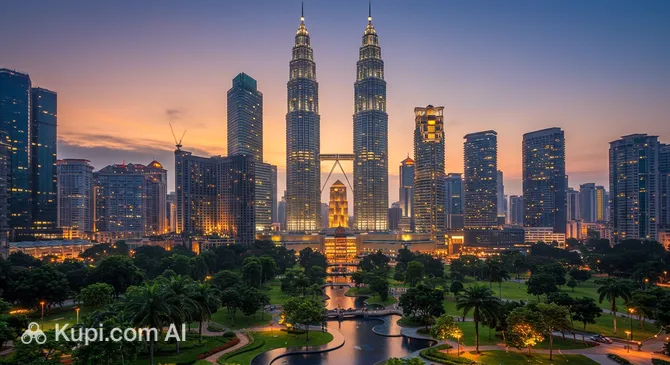
Kuala Lumpur. Source: Kupi.com Binoculars

Malaysia's cultural heritage is woven from the vibrant threads of Malay, Chinese, Indian, and indigenous cultures, which is reflected in its architecture, diverse cuisine with an abundance of halal options, and numerous festivals. Historic cities, such as the colourful Malacca, preserve the country's rich past. Malaysia is also blessed with incredible natural diversity: from dense tropical rainforests and majestic mountains to idyllic islands with white sandy beaches and a rich underwater world. The warm and humid equatorial climate makes the country an attractive year-round travel destination.

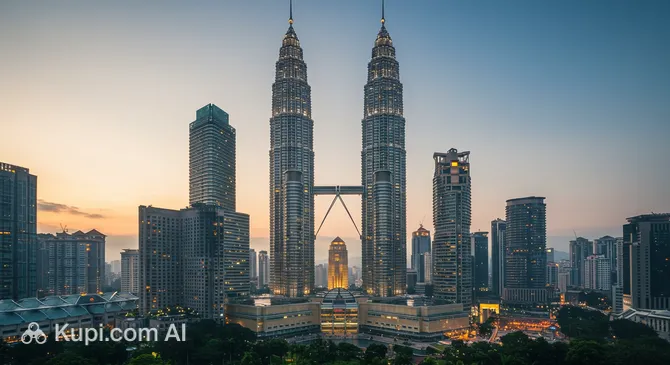
Among the symbols of modern Malaysia are the world-renowned Petronas Towers in Kuala Lumpur, while connoisseurs of history and street art will be captivated by the unique atmosphere of George Town on the island of Penang, a UNESCO World Heritage Site. Malaysia offers travellers a unique combination of urban dynamism, deep cultural immersion, and relaxing nature getaways, leaving a truly unforgettable impression.
Currency

The national currency of Malaysia is the Malaysian ringgit, which has the international code MYR. Ringgit banknotes are distinguished by their colourful design: they often feature portraits of the first Supreme Head of Malaysia, Tuanku Abdul Rahman, as well as motifs reflecting the country's rich cultural heritage, flora, and fauna. Coins denominated in sen are also in circulation (1 ringgit is equal to 100 sen).

It is advisable to exchange foreign currency, such as the UAE Dirham (AED), for ringgits at official banks or licensed money changers, which can be found in cities and tourist centres. The exchange rate at the airport may be less favourable, so it is wise to exchange only a small amount upon arrival for initial expenses. Avoid exchanging currency with unlicensed street money changers. Credit cards (Visa, Mastercard, and others) are widely accepted in hotels, large shops, and restaurants, especially in cities like Kuala Lumpur. Nevertheless, it is always useful to have some cash on hand for small purchases at markets, in small cafés, or for paying for taxi services. As Malaysia is a Muslim-majority country, finding halal food options is straightforward in most eateries.

Visa Requirements

When planning a trip to Malaysia, it is important to clarify the visa requirements in advance. Citizens of the United Arab Emirates do not need a visa for social visits of up to 90 days. However, a key condition for entry is a valid passport with at least six months of validity from the proposed date of entry into the country. Additionally, all foreign citizens travelling to Malaysia are required to complete the Malaysia Digital Arrival Card (MDAC) online within three days prior to arrival.

For UAE residents holding other passports that may require a visa, a tourist visa is generally necessary. This can sometimes be arranged in advance at a Malaysian embassy or consulate, and citizens of many countries are eligible to apply for an electronic visa (eVISA) online. Besides a valid passport, the standard set of documents can include return flight tickets, proof of accommodation, and a valid UAE residence visa. As visa regulations can change, it is strongly recommended to check the latest information on the official website of the Embassy of Malaysia in Abu Dhabi or the official portal of the Immigration Department of Malaysia before your trip.

We'll tell you if you need a visa

Specify where you are going, or
Your citizenship
Destination

Time Zones

When planning a trip to Malaysia, you will not need to worry about changing time zones within the country. The entire territory of Malaysia, including both Peninsular Malaysia and the states of Sabah and Sarawak on the island of Borneo, operates on a single time zone.

It is known as Malaysia Standard Time (MYT) and is set at UTC+8. For travellers from the UAE, this means Malaysia is four hours ahead of Gulf Standard Time (UTC+4). The time in Kuala Lumpur will be the same as in any other part of the country, which makes planning transfers and activities much simpler.

How to Get There

The easiest way to get to Malaysia is by air. The country has several international airports, the main one being Kuala Lumpur International Airport (KLIA), which serves as a major hub for Southeast Asia. For travellers from the UAE, direct flights are available from Dubai and Abu Dhabi. Airlines such as Emirates, Etihad Airways, and Batik Air Malaysia operate non-stop services to Kuala Lumpur. It is recommended to check the latest routes with the airlines, as schedules are subject to change.

For those who prefer to travel overland, Malaysia shares land borders with Thailand to the north and Singapore to the south (via a causeway), as well as with Indonesia on the island of Borneo. Regular bus and train services are available, with routes from Singapore to Kuala Lumpur or Johor Bahru, and from Thailand, being particularly popular. Sea travel is also an option, with ferries connecting Malaysia to some islands in Thailand and Indonesia. Furthermore, Malaysia is a popular destination for cruise liners, which call at the ports of Penang, Port Klang (for Kuala Lumpur), and Langkawi.

Regardless of your chosen mode of travel, it is advisable to book your tickets well in advance, especially if your trip coincides with the peak tourist season (such as during major public holidays or school holidays). This will not only help you save money but also guarantee availability for your desired dates.

For clarity, here is a summary of the main airports:

Airport Name City Passenger Traffic
Kuala Lumpur International AirportKuala LumpurHigh
Penang International AirportGeorge TownMedium
Kota Kinabalu International AirportKota KinabaluMedium
Senai International AirportJohor BahruMedium
Langkawi International AirportKuahLow

Malaysia is a country of amazing contrasts, where modern megacities coexist with ancient towns, and tropical islands beckon with pristine white beaches. There is a destination for every type of traveller: from bustling, skyscraper-filled capitals to serene resorts and historic centres that safeguard a rich, centuries-old heritage.

Kuala Lumpur. Source: Kupi.com Binoculars

Begin your journey in the capital, Kuala Lumpur. This city captures the imagination with its famous Petronas Twin Towers, lively markets, and modern shopping centres. Then, head to Georgetown on the island of Penang, a UNESCO World Heritage site, where you can explore colonial architecture, unique street art, and an incredible variety of delicious halal cuisine. Equally captivating is the ancient city of Malacca, a former major trading port that retains the charm of bygone eras through its Dutch, Portuguese, and British colonial architecture.

For those who love beaches and natural beauty, Malaysia offers gems like the island of Langkawi. Its main town, Kuah, is famous for its stunning beaches, lush mangrove forests, and excellent duty-free shopping. And for a cool mountain retreat filled with entertainment, Genting Highlands is an excellent choice, offering world-class theme parks and family-friendly attractions. Each of these destinations is unique and promises to create unforgettable memories. With abundant halal food and prayer facilities widely available, Malaysia offers a comfortable and welcoming environment for travellers from the UAE.

Top Attractions

Malaysia is a country of amazing contrasts, where modern skyscrapers stand alongside ancient temples, and bustling cities give way to serene beaches and tropical rainforests. There is something here for everyone, but a few iconic places should not be missed to fully appreciate the multifaceted nature of this incredible country.

The calling card of the capital, Kuala Lumpur, and indeed all of Malaysia, is without a doubt the famous Petronas Towers. These two majestic twin skyscrapers, connected by the Skybridge, capture the imagination with their architecture and offer breathtaking panoramic views of the city from the observation deck. This is an essential visit for every guest to the country.

Petronas Twin Towers. Source: Kupi.com Binoculars

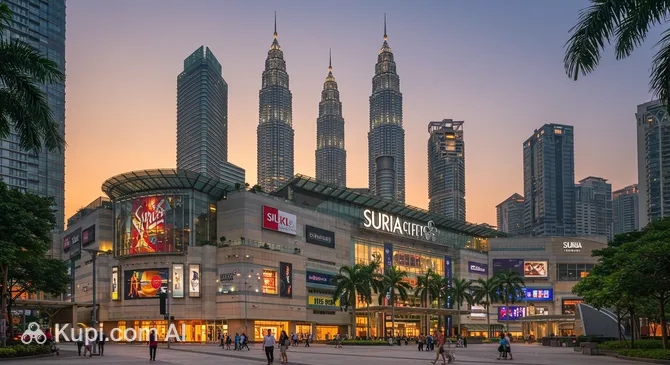
At the foot of the Petronas Towers lies the popular Suria KLCC shopping centre. This is more than just a shopping destination; it is a complete entertainment hub with a multitude of international brands, restaurants for every taste, a cinema, the impressive Aquaria KLCC, and the Petrosains Science Discovery Centre. For visitors' convenience, prayer rooms (surau) are also available. You can easily spend an entire day here enjoying world-class shopping and diverse activities.

Suria KLCC. Source: Kupi.com Binoculars

To immerse yourself in an authentic atmosphere and sample local delicacies, head to the Jonker Street Night Market in the historic city of Malacca. Every weekend, this street transforms into a bustling bazaar where you can find unique souvenirs, antiques, and a wide variety of street food, with many halal options available for Muslim travellers. It is the perfect place for an evening stroll to experience the true character of old Malaysia.

Jonker Street Night Market. Source: Kupi.com Binoculars

Another of Malacca's gems is the Taming Sari Tower. This unique rotating observation tower lifts visitors 80 metres high, offering a stunning 360-degree view over the entire city, its historical landmarks, and the Strait of Malacca. The views are particularly beautiful at sunset, as the city is bathed in the golden rays of the sun.

Taming Sari Tower. Source: Kupi.com Binoculars

Best Time to Visit

When planning a trip to Malaysia, it's important to consider its equatorial climate, which is characterised by high temperatures and humidity all year round, as well as rainy seasons that vary depending on the region. Generally, the "high season" for visiting the west coast of Peninsular Malaysia (including popular destinations like Kuah in Langkawi and Georgetown in Penang) falls between December and February. During this time, the weather is drier and sunnier, making it ideal for beach holidays and sightseeing. For the east coast (including the islands of Redang, Perhentian, and Tioman), the best time to visit is from June to August, when the monsoons subside. Borneo (covering the states of Sabah and Sarawak, including Kota Kinabalu) is most pleasant to visit from March to October. The advantages of the high season are clear—excellent weather—but be prepared for larger crowds and consequently higher prices for accommodation and services.

The low season, or off-season, in Malaysia coincides with the monsoon periods. On the west coast, this is mainly from April to October, although the rain here is often brief and occurs in the afternoon. The east coast is affected by heavy monsoons from November to February, during which time many resorts may be closed and the sea can be rough. In Borneo, the rainy season lasts approximately from October to February. Travelling during the low season has its perks: significantly fewer tourists, lower prices, and the chance to enjoy the lush, green landscape. However, you should be prepared for changeable weather and possible limitations on certain activities. It is also worth considering major festivals such as Eid al-Fitr (known locally as Hari Raya Aidilfitri), Chinese New Year, or Deepavali, the dates of which change annually. During these periods, the country is transformed, offering a unique cultural experience, but the number of domestic tourists also increases sharply. Before your trip, it is always advisable to check the weather forecast for the specific region you plan to visit.

Traditions

Malaysia is a country with a rich cultural heritage, where Malay, Chinese, Indian, and other influences intertwine. Understanding local customs will help you feel more confident and show respect to its residents. When greeting Malaysians, especially elders, a light handshake is common, often followed by placing the right hand over the heart as a sign of sincerity. When interacting with members of the opposite sex, it is best to avoid overly direct and prolonged eye contact. Hospitality is highly valued here; if you are invited to a home, a small souvenir or sweets would be an appropriate gesture of appreciation. When visiting mosques, temples, and other religious sites, as well as some official buildings, modest clothing is required: shoulders and knees must be covered. At some mosques, women may be offered a special robe at the entrance.

At the table, it is customary to use the right hand for eating and passing items, as the left hand is traditionally considered unclean. If you eat with your hands, as many locals do, also use your right hand. As a Muslim-majority country, halal food is widely available throughout Malaysia. Among the most important holidays reflecting the diversity of culture are Hari Raya Aidilfitri (Eid al-Fitr), which marks the end of Ramadan, and Chinese New Year, celebrated with colourful processions and family feasts. To avoid awkward situations, remember that pointing at someone or something with your index finger is considered impolite—it is better to use the thumb of your right hand with the other fingers folded into the palm. Also, try to avoid touching another person's head, as the head is considered a sacred part of the body. Always remove your shoes before entering a Malaysian home or place of worship.

Entertainment

Malaysia offers travellers a wonderful variety of entertainment to suit all tastes. Fans of outdoor activities will find plenty of opportunities here: from thrilling diving and snorkelling by the coral reefs to fascinating treks through ancient rainforests and ascents to picturesque peaks. The country's cultural life is no less rich; numerous museums, art galleries and theatres will introduce you to the rich heritage and contemporary art of Malaysia, reflecting its multicultural character.

In the evening, major cities, especially Kuala Lumpur, come alive with a vibrant nightlife featuring stylish rooftop lounges, bustling cafés, and colourful night markets where you can sample local street food, with many halal options readily available. Shopping in Malaysia is a pleasure in itself: from huge modern shopping centres with global brands to traditional markets where you can purchase unique souvenirs such as batik, pewter items, or local delicacies. For a family holiday, there are also plenty of options, including modern theme parks and water parks that will bring joy to both adults and children.

Currency rates

Planning a trip? Wonderful! To ensure the financial aspects of your journey do not come as a surprise, it is important to remember that currency exchange rates are constantly changing. Therefore, we strongly advise monitoring the current rates both before you fly and throughout your trip. For this, you can use the data provided below — we monitor exchange rates 24/7 and strive to provide the most up-to-date information.

MYR currency exchange rate as of 02.01.2026

1 AED
~ 1.10 MYR
94.47 AMD
~ 1 MYR
1 AUD
~ 2.69 MYR
1 AZN
~ 2.38 MYR
1 BYN
~ 1.37 MYR
1 CAD
~ 2.94 MYR
1 EUR
~ 4.74 MYR
1 GBP
~ 5.44 MYR
81.03 HUF
~ 1 MYR
22.29 INR
~ 1 MYR
21.65 KGS
~ 1 MYR
357.66 KRW
~ 1 MYR
125.65 KZT
~ 1 MYR
1 PLN
~ 1.12 MYR
19.53 RUB
~ 1 MYR
1 SAR
~ 1.08 MYR
1 SGD
~ 3.14 MYR
10.63 TRY
~ 1 MYR
10.47 UAH
~ 1 MYR
1 USD
~ 4.04 MYR
2974.99 UZS
~ 1 MYR

Reached the end of the page?

That means the route is fully explored