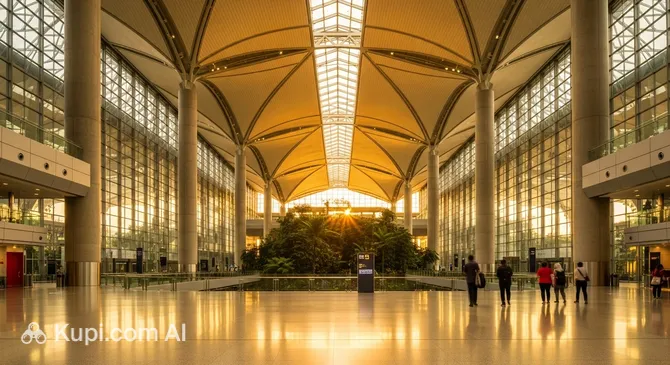
Kuala Lumpur International Airport (KLIA) is not merely a transit hub, but a true architectural masterpiece embodying the unique philosophy of "an airport in the forest, and a forest in the airport." Designed by the renowned Japanese architect Kisho Kurokawa, the complex welcomes travelers with futuristic glass vaults that allow soft tropical light to filter through. Inside the terminals, living nature coexists harmoniously with high technology, turning the wait for a flight into a relaxing stroll through a botanical garden.
| Characteristic | Value |
|---|---|
| IATA code | KUL |
| ICAO code | WMKK |
| City | Kuala Lumpur |
| Country | Malaysia |
| Time zone | Asia/Kuala_Lumpur |
| Popular airlines | Batik Air (Malindo Airways Sdn Bhd dba Batik Air Malaysia), AirAsia, Singapore Airlines, Malaysia Airline, Firefly |
| Schedule | Online timetable |
Airport Features and Highlights
Kuala Lumpur International Airport regularly features in rankings of the world's best aviation hubs thanks to its thoughtful infrastructure and unique services. Here, everyone will find a way to spend their time comfortably before departure.
- A Tropical Forest Inside: The main highlight of the primary terminal is the Jungle Boardwalk. This is a genuine piece of open-air tropical rainforest located right in the centre of the satellite building. Passengers can take a complimentary walk along wooden walkways amidst living trees and waterfalls, enjoying the fresh air.
- Two Giant Terminals: The airport is divided into two complexes: KLIA1 serves traditional airlines, while KLIA2 is the world's largest terminal for low-cost carriers. KLIA2 resembles a massive shopping mall with hundreds of shops and cafes rather than a typical waiting hall.
- High-Speed Transfer: You can reach the city centre quickly and comfortably thanks to the KLIA Ekspres trains. The journey takes just 28 minutes and is considered the most reliable way to avoid the capital's traffic jams.
- Rest for Transit Passengers: For travelers with long layovers, capsule hotels and comfortable lounge zones are provided. Free movie lounges and convenient rest areas can also be found within the terminals.