Support

Sultan Mahmud Airport

About the Airport

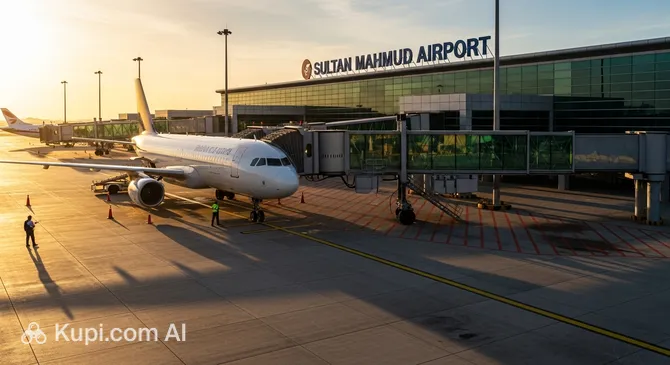
Sultan Mahmud Airport. Source: Kupi.com Binoculars

Sultan Mahmud Airport (TGG) is not just a transport hub, but a true architectural gem designed in the traditional Malay style. Instead of boring glass boxes, you will be greeted by a building resembling a luxurious palace with pitched roofs and elegant galleries. It serves as the main air gateway for travellers heading to the paradise islands of Redang and the Perhentians, as well as the cultural capital of the region.

IATA Code TGG
ICAO Code WMKN
City Kuala Terengganu
Distance to centre ~10 km
Status International
Passengers per year Over 800,000

Airport Features and Highlights:

The airport's main pride is its unique design, inspired by the architecture of Malaysia's east coast. The terminal is adorned with wood carvings and traditional patterns, creating an atmosphere of hospitality from the very first minute of arrival. Despite its compact size, it has everything necessary for a comfortable wait: cosy cafes featuring local cuisine, souvenir shops, and free Wi-Fi.

For tourists, this is the ideal starting point for sea adventures: from here, it is easy to reach the jetties where boats depart for the famous islands with crystal-clear water. The airport is located just a 15–20 minute drive from the city centre, allowing you to quickly begin exploring the region's attractions.

Contact Information

Below you will find contact information for Sultan Mahmud Airport (TGG), which will help you plan your trip and resolve any potential issues.

  • Official Website: Up-to-date information on flights, services, and regulations can be found on the official Malaysia Airports operator website: www.malaysiaairports.com.my.
  • Information Desk Phone: +60 9-667 3670.
  • Address: Sultan Mahmud Airport, 21300 Kuala Nerus, Terengganu, Malaysia.
  • Email: To contact airport representatives, it is recommended to use the feedback form available on the official website.
  • Social Media: News and updates are published on the official Malaysia Airports pages on Facebook, Instagram, and X (formerly Twitter).
  • Lost Luggage Information: For issues regarding lost or damaged luggage, please contact your airline's support service directly. Airport staff do not handle such requests.
  • Passenger Support Contacts: For assistance, you may use the information desk phone number or the feedback form on the airport website.

How to Get to the Airport

Getting to Sultan Mahmud Airport (TGG) from the city centre of Kuala Terengganu is quite simple, as it is located just 11-13 kilometres away. The journey usually takes 20-30 minutes depending on traffic conditions. Here are the main ways to do this.

Taxis and Ride-Hailing Services

This is the most convenient and popular way to get to the airport. In Malaysia, the Grab app (a local equivalent of Uber) is widely used, offering rides at a fixed price. The cost of a trip from the city centre is usually around 20-30 Malaysian Ringgit (MYR), making this option not only comfortable but also affordable. You can also use regular taxi services, but it is recommended to agree on the price in advance or ensure the driver switches on the meter to avoid misunderstandings.

Public Transport

Direct bus connections between the city centre and the airport are poorly developed and can be inconvenient for tourists, especially those with luggage. Although local bus routes (Bas Henti-Henti) operate in the city, their schedules and routes can be confusing for visitors. Therefore, to ensure timely arrival at the airport, it is highly recommended to choose a taxi or a rental car.

Car Rental

If you plan to travel actively around the state of Terengganu, renting a car is an excellent choice. Both local and international rental companies operate in the city and at the airport itself. The road to the airport is well signposted, and having a car will give you complete freedom of movement. Sultan Mahmud Airport provides parking facilities where you can leave your vehicle for a short or long duration.

Terminals and Map

Sultan Mahmud Airport (TGG) is a modern and compact aviation hub serving both domestic and some international flights. Its structure is simple and intuitive, making navigation easy even for first-time visitors.

The airport operates with one main passenger terminal that handles the entire flow of travellers. Thanks to this, there is no need for complex transfers or shuttles—all zones are within the same building. The terminal layout is logical: the ground floor usually houses the arrival and baggage claim zones, while the first floor contains check-in counters, security screening, and departure halls.

The Departure Zone includes airline check-in counters, after which passengers undergo security screening. The process is generally organised efficiently and does not take much time. After screening, you enter the secure area with several boarding gates, small shops, and cafes. The Arrival Zone is also arranged simply: after disembarking, passengers follow the signs to the baggage claim belts and then proceed to the public hall where they can be met.

Check-in and security procedures at Kuala Terengganu airport are usually quite fast due to its small size. On average, all formalities take between 20 to 40 minutes, though waiting times may increase during peak hours or holidays. It is recommended to arrive at the airport 1.5-2 hours before a domestic flight departure to complete all procedures without rushing.

To navigate the terminal, simply follow the clear signs in Malay and English. The airport's compactness is its main advantage: it is practically impossible to get lost here, and all key points, from check-in counters to boarding gates, are within walking distance of each other.

Airport History

The history of Sultan Mahmud Airport (TGG) is a clear example of the region's infrastructure development. Originally, a small runway was located on this site, serving mainly light aircraft. The airport was named in honour of Sultan Mahmud Al-Muktafi Billah Shah, the seventeenth Sultan of the state of Terengganu, highlighting its significance to the local population.

A key stage in the airport's development was a major reconstruction completed in 2008. As part of this project, a completely new, modern terminal was built, capable of handling up to two million passengers per year. This transformation aimed to increase the tourism appeal of Kuala Terengganu and the entire state.

Simultaneously with the construction of the new terminal, the runway was modernised. It was extended, allowing the airport to accommodate larger aircraft such as the Airbus A320 and Boeing 737. Thanks to these changes, Sultan Mahmud Airport received international status and began serving flights from neighbouring countries, which was a significant step for the region's economy and tourism.

Interesting fact: the airport plays an important role not only in civil aviation but also in cultural life. It is one of the key hubs on the east coast of Malaysia for sending pilgrims performing the Hajj. Direct flights are organised specifically for this purpose, significantly simplifying the journey for the faithful.

Today, Sultan Mahmud Airport is a modern and comfortable transport hub that serves as the air gateway to the state of Terengganu, giving travellers access to its famous islands, beaches, and unique culture.

Services and Facilities

Sultan Mahmud Airport (TGG) in Kuala Terengganu offers passengers all the necessary services for a comfortable wait for their flight. Despite its relatively small size, the terminal is well-equipped and designed for traveller convenience.

Restaurants and Shops: At the airport, you will find several cafes and restaurants where you can grab a bite before departure, enjoy local Malaysian cuisine, or have a coffee. For shopping enthusiasts, there are shops selling souvenirs, travel essentials, and Duty Free products where you can purchase perfumes, cosmetics, and other goods at attractive prices.

Lounges and Connectivity: For a more relaxing rest, passengers can use the premium lounge services, which offer snacks, drinks, and a quiet atmosphere. Free Wi-Fi is available throughout the terminal, and special charging zones for electronic devices are provided to ensure you stay connected.

Financial and Medical Services: The airport building houses ATMs and currency exchange counters, making it easy to handle financial matters upon arrival or before departure. In case of need, there is a medical post at the airport to provide first aid.

Services for Passengers with Special Needs: The airport is equipped for the convenience of passengers with children—baby care rooms are available. For travellers with reduced mobility, ramps, special restrooms, and assistance services are provided; you can request these at the information desk or through an airline representative.

Accommodation and Business Services: Although there are no hotels directly within the terminal premises, many hotels to suit every taste and budget are located a few minutes' drive from the airport. For business travellers, basic business services such as workspaces and internet access are usually provided in the premium lounges.

Where to Eat

Sultan Mahmud Airport (TGG) in Kuala Terengganu offers passengers several convenient dining options, located primarily in the main terminal building. Although the selection here is not as vast as in major international hubs, you will easily find a place to have a snack before departure or upon arrival.

The majority of establishments are located in the public zone (landside), before security control. Popular fast-food chains (such as KFC or the local equivalent, Marrybrown) as well as coffee shops offering drinks and pastries usually operate here. After passing security (airside), the choice is generally more limited and may consist of a small cafe or kiosk with drinks and snacks. Therefore, if you plan a full meal, it is better to do so before checking in for your flight.

When travelling through Malaysia, be sure to try local cuisine. In the airport cafes, you can often find classic Malaysian dishes such as Nasi Lemak (rice cooked in coconut milk with various side dishes) or various types of local pastries known as Kuih. This is a great opportunity to enjoy the authentic taste of the region even during a short stop.

Most establishments at the airport hold Halal certification. Vegetarian options are also usually available—look for dishes based on rice and vegetables. Specific vegan or gluten-free meals may be harder to find, so it is recommended to check the ingredients with the staff. Prices at the airport are higher than in the city but remain within an average range. Cafe and restaurant opening hours usually coincide with the flight schedule, opening early in the morning and closing after the last plane departs.

For a quick snack, one of the coffee shops is ideal for grabbing a sandwich and coffee. If you have time for a full lunch, visit one of the cafes serving local cuisine for a heartier and more authentic gastronomic experience before your flight.

Travel Tips

Travelling through Sultan Mahmud Airport will be easier if you follow a few useful tips. Planning and knowing certain nuances will help avoid stress and make the start of your adventure in Malaysia as comfortable as possible.

Arrival Time: To avoid rushing, it is recommended to arrive at the airport at least 2 hours before a domestic flight departure. Although the airport in Kuala Terengganu is not as large as the capital's airports, this time will be sufficient to pass all formalities calmly.

Check-in and Security: Save time by using online check-in, which is offered by almost all airlines. At the security checkpoint, be prepared to remove laptops and other large gadgets from your hand luggage. The procedure usually goes quickly, but it is better to be ready in advance.

Seat Selection: If you want to enjoy beautiful views of the South China Sea coast during takeoff or landing, choose a window seat. For those who value comfort and the ability to stretch their legs, an aisle seat would be the best choice.

Hand Luggage: Remember the standard rules: liquids can be carried in containers of no more than 100 ml, packed in a transparent bag. Sharp objects are prohibited. Power banks are allowed, but they must be carried in hand luggage, not in checked baggage.

Transfer Passengers: If you have a connecting flight, check with your airline in advance whether your luggage will be transferred automatically. The airport is compact, so navigating between terminals and gates will not take much time.

Customs Control: When passing through customs, be prepared to present your luggage for inspection. Familiarise yourself with the current customs regulations of Malaysia to know which goods must be declared and which items are prohibited for import or export.

Saving Time and Money: To save on transfers, you can book a taxi via online apps or use public transport. Bring an empty water bottle with you—after security, it can be filled at drinking fountains, which is much more economical than buying water at airport shops.

Flight Delays: In case of a flight delay or cancellation, contact your airline's counter for information and potential compensation (meals, hotel). Keep a phone charger with you and something to pass the time—a book or a tablet with movies.

Reached the end of the page?

That means the route is fully explored