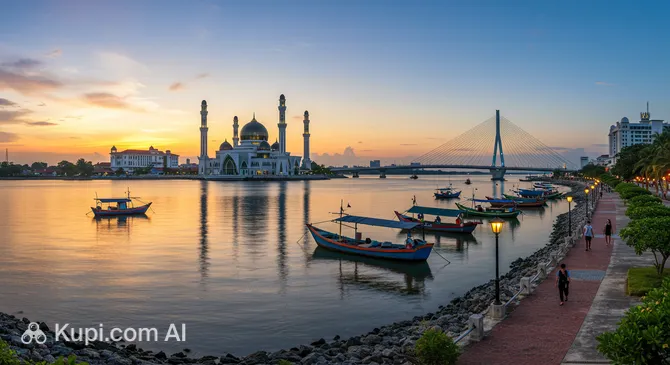
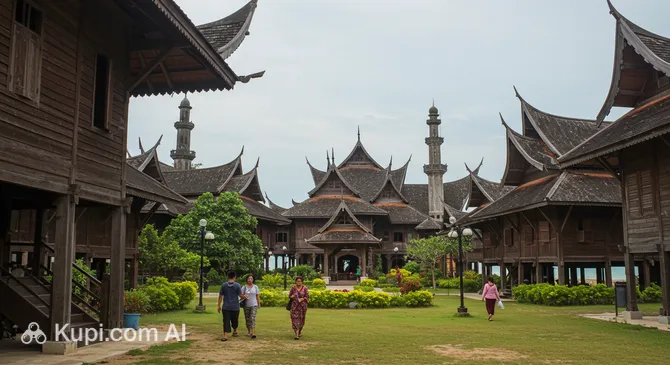
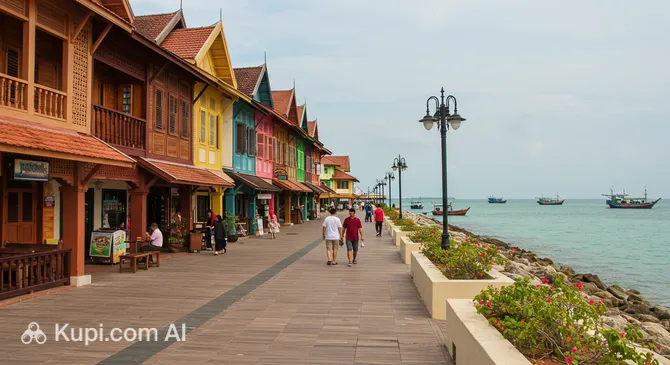
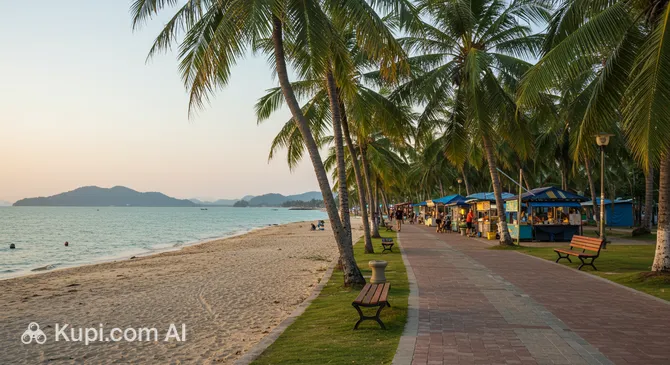
Welcome to Kuala Terengganu, the royal capital of the state of Terengganu and a city that beautifully embodies the soul of the East Coast. Known for its laid-back atmosphere, this coastal gem offers a fascinating blend of deep-rooted Malay traditions, Chinese heritage, and modern development. It serves as a major gateway to beautiful offshore islands, yet possesses a unique charm that makes it a worthy destination in its own right.
Geographically, the city is situated at the estuary of the Terengganu River, facing the vast South China Sea. This strategic location has shaped its identity as a maritime hub within Malaysia. The city is home to approximately 255,000 people and enjoys a tropical rainforest climate, characterized by warm temperatures year-round and distinct monsoon seasons that influence the local rhythm of life.
Kuala Terengganu. Illustration.
Source: Kupi.com AI
Visitors delving into the history of Kuala Terengganu will discover a rich tapestry of trade and royal lineage that has evolved over centuries. The city is renowned for its stunning architecture, particularly the iconic Crystal Mosque located at the Islamic Civilization Park, which gleams with steel and glass structures. Another highlight is the bustling Pasar Payang, a central market where travelers can find exquisite batik, silk, and local handicrafts.
For a taste of cultural diversity, a stroll through Kampung Cina (Chinatown) reveals colorful shophouses and heritage buildings that contrast harmoniously with the city's Islamic landmarks. Whether you are here to explore its architectural wonders or to enjoy the fresh coastal breeze, Kuala Terengganu promises a memorable and authentic travel experience.
Weather Overview
Travelers to Kuala Terengganu can expect a warm and humid tropical climate year-round, making it a destination suitable for light, breathable clothing. Temperatures remain quite consistent, typically ranging from lows of around 24°C to highs reaching just over 31°C during the warmest month of May. The coolest weather usually occurs in January, though average temperatures still hover around a pleasant 25.7°C.
Rainfall is a frequent part of the local environment, with a high number of wet days recorded throughout the calendar. For those looking to plan outdoor activities, it is useful to consult the detailed guide to the weather in Kuala Terengganu. The period from October to December is notably wet, with rain occurring on up to 30 days in October and precipitation levels peaking in November. In contrast, March tends to be the driest month, offering slightly more stable conditions with fewer rainy days.
Average monthly temperature
Average monthly precipitation
Interesting Facts
Beyond the main attractions, Kuala Terengganu holds many fascinating secrets that reveal the depth of its cultural and historical significance. These lesser-known details offer a glimpse into the unique heritage and local lifestyle that define this coastal capital.
Terengganu State Museum. Illustration.
Source: Kupi.com AI
Traveler photos:
The city is home to the Terengganu State Museum, which is acclaimed as the largest museum complex in Southeast Asia. Spanning over 27 hectares, it houses the ancient "Batu Bersurat" (Inscribed Stone), a vital artifact proving the arrival of Islam in the Malay Peninsula as early as 1303, long before the Malacca Sultanate.
Traditional craftsmanship thrives on the nearby Duyong Island, where master boatbuilders construct massive deep-sea fishing vessels and luxury yachts entirely from memory. These artisans work without blueprints and traditionally use wooden pegs instead of metal nails, preserving a maritime skill that has been passed down for generations.
While many visitors admire the Islamic Civilization Park for its replicas of famous monuments, its centerpiece, the Crystal Mosque, is a marvel of modern engineering. It is constructed mainly from steel, glass, and crystal, and was designed as one of the world's first "intelligent" mosques, equipped with built-in IT infrastructure and Wi-Fi for worshippers.
Kuala Terengganu's Chinatown, or Kampung Cina, features a unique network of seven thematic laneways. Among them is the charming "Turtle Alley," adorned with mosaics and murals dedicated to the conservation of turtles, reflecting the state's deep connection with these marine creatures.
How to Get There
Reaching this coastal city is a straightforward experience for travelers, with air travel being the most direct method. For those planning their journey, you can find detailed information and more about how to get to Kuala Terengganu on our dedicated transport page. The city is well-connected to the rest of the peninsula, primarily serving as a gateway to the beautiful islands nearby.
The primary entry point is Sultan Mahmud Airport (TGG), which is conveniently located within Kuala Terengganu itself, just 7.4 km from the city center. It is a modern facility handling a steady flow of travelers. A ride by taxi or bus from here to the heart of the city is quick, taking approximately 31 minutes. Alternatively, visitors might consider flying into Sultan Ismail Petra Airport (KBR) in the neighboring city of Kota Bharu. This airport is about 132 km away, and the subsequent transfer by road takes around 3 hours and 38 minutes.
For clarity, here is a summary of the main airports:
Regarding rail travel, the city of Kuala Terengganu does not have its own railway station. The major transport hub referenced for the region is the KL Sentral Station (XKL) in Kuala Lumpur, which is approximately 291.5 km away. Since there is no direct train service to the city, travelers arriving at this station typically switch to a long-distance bus or catch a connecting flight to reach the east coast. The overland journey from this point takes about 7 hours and 37 minutes.
For clarity, here is a summary of the nearby railway stations:
Kuala Terengganu offers a captivating mix of cultural heritage, religious landmarks, and natural beauty. The city's attractions reflect its status as a royal capital and a historical trading port, providing visitors with a deep dive into the Malay world. From architectural marvels on the river to breezy coastal retreats, there is much to explore.
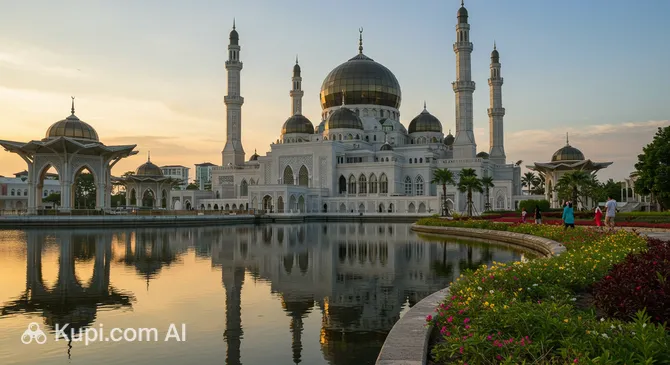
One of the most celebrated landmarks is the Islamic Civilization Park, located on Wan Man Island. This edutainment park is famous for housing the stunning Crystal Mosque, which is built with steel and glass, creating a mesmerizing reflection on the water. The park also features intricate replicas of famous Islamic monuments from around the world, such as the Taj Mahal and the Alhambra Citadel, allowing tourists to appreciate global Islamic architecture in one setting.
Islamic Civilization Park. Illustration.
Source: Kupi.com AI
Traveler photos:
For those interested in history and culture, the Terengganu State Museum is an unmissable stop. It is the largest museum complex in Southeast Asia and is designed to resemble a traditional Malay palace with its raised stilts and sloping roofs. Inside, visitors can explore extensive galleries showcasing textiles, historical artifacts, royal regalia, and Islamic arts, as well as a maritime section that highlights the state's seafaring traditions.
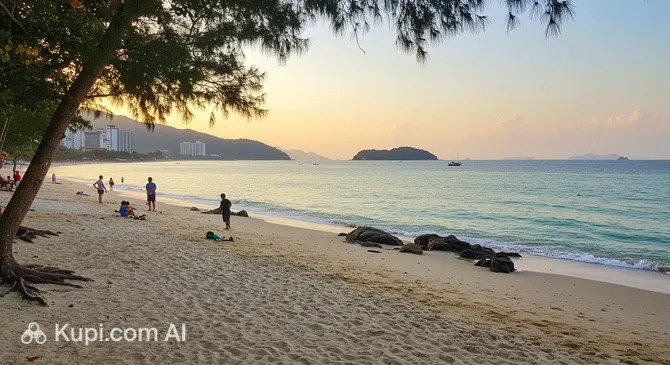
Nature lovers and families often flock to Batu Buruk Beach, a popular recreational spot close to the city center. While swimming is generally not advised due to strong currents, the beach is perfect for strolling, flying kites, and enjoying the sea breeze under the shade of casuarina trees. It is also a great place to sample local street food, including the famous fried fish sausages known as keropok lekor, from the nearby stalls.
Batu Buruk Beach. Illustration.
Source: Kupi.com AI
Traveler photos:
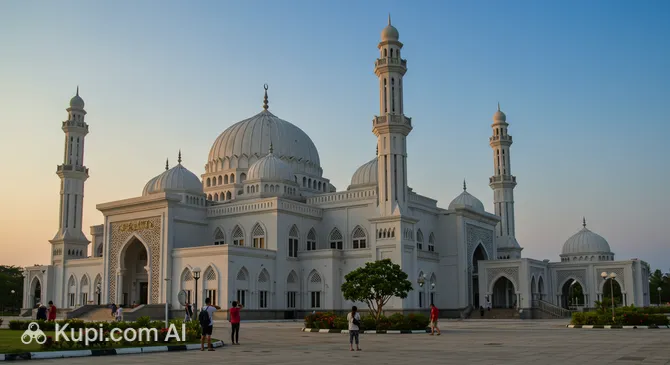
Another significant site is the Abidin Mosque, also known as the White Mosque or the Big Mosque. Built by Sultan Zainal Abidin II in the late 18th century, it stands as the state's old royal mosque. The architecture is a graceful blend of colonial and traditional Islamic styles, featuring white walls, intricate calligraphy, and a serene atmosphere that offers a glimpse into the spiritual life of the city.
Abidin Mosque. Illustration.
Source: Kupi.com AI
Traveler photos:
Local Cuisine
The culinary landscape of Kuala Terengganu is a defining feature of the city, offering a distinct taste of Malaysia's East Coast that is deeply rooted in tradition. The local food scene is famous for its generous use of fresh seafood, coconut milk, and aromatic spices, resulting in rich and creamy flavors. The undisputed king of dishes here is Nasi Dagang, a savory breakfast meal consisting of rice steamed in coconut milk and fenugreek seeds, typically served with a rich tuna curry known as gulai ikan tongkol and pickled vegetables. For an authentic experience, many visitors flock to renowned establishments like Nasi Dagang Atas Tol – Padang Negara, which is widely considered one of the best places to savor this signature meal.
Nasi Dagang Atas Tol – Padang Negara. Illustration.
Source: Kupi.com AI
Traveler photos:
Another gastronomic icon of the region is Keropok Lekor, a traditional fish sausage that can be found at stalls throughout the city. Made from minced fish and sago flour, it is boiled or fried and served with a spicy chili dipping sauce. It serves as the perfect afternoon snack for tourists exploring the coast. Visitors should also try Laksam, a dish of thick flat rice noodles rolled up and served in a creamy white gravy made from fish and coconut milk, often garnished with fresh herbs and sambal for an extra kick.
When it comes to beverages, the local culture is predominantly Muslim, so the typical drinks are non-alcoholic and refreshing, designed to combat the tropical heat. Fresh coconut water and sugarcane juice are ubiquitous, available at almost every roadside stall. Teh Tarik (pulled milk tea) is also a staple in local eateries. While alcohol is not part of the traditional food culture and is generally hard to find in local Malay restaurants, it may be available in specific non-halal Chinese restaurants or international hotels, but the true spirit of Kuala Terengganu's dining scene is best experienced through its vibrant array of fruit juices and local teas.
The atmosphere of dining in Kuala Terengganu is casual and community-oriented. Locals often gather at open-air food courts and bustling markets to enjoy their meals. A prime location to immerse yourself in this culture is Pasar Payang 2, where you can find a variety of traditional cakes, or kuih, alongside fresh produce. For a more scenic dining experience, the waterfront area offers numerous spots to enjoy fresh seafood while watching the boats drift by on the estuary.
Travel Tips
Visiting Kuala Terengganu offers a unique glimpse into the heart of Malay culture, but knowing the local customs and logistics will ensure your trip is as smooth as it is memorable. Here are some practical tips to help you navigate this charming coastal city with confidence and respect.
Clothing and Gear: Due to the tropical heat, pack lightweight, breathable fabrics like cotton or linen. However, as Terengganu is a conservative state, modesty is key. Both men and women should aim to cover their shoulders and knees, especially when away from private resort areas. If you plan to visit religious sites like the Crystal Mosque, you must dress respectfully; robes are often available for rent or loan, but it is best to arrive prepared.
Transportation: The most convenient way to get around the city is by using ride-hailing apps like Grab, which are affordable and reliable. While there is a heritage bus service known as "Bas Bandar" (often designed to look like a traditional house) that loops around city attractions, schedules can be irregular. Public taxis are available, but ensure the driver uses the meter or agree on a price beforehand. The city center is relatively compact and walkable, though the midday sun can be intense.
Finances: The currency is the Malaysian Ringgit (MYR). While credit cards are accepted in hotels, larger restaurants, and shopping malls, cash is king in places like Pasar Payang, night markets, and small eateries. ATMs are widely available throughout the city. Tipping is not mandatory, but leaving small change or rounding up the bill is appreciated in service establishments.
Health and Safety: Kuala Terengganu is generally a very safe city for tourists. Pharmacies like Watsons and Guardian are easy to find in shopping centers and shop lots, though few are open 24 hours. The main hospital is Hospital Sultanah Nur Zahirah. As in any tropical destination, stay hydrated and use insect repellent to protect against mosquitoes, especially in the evenings.
Communication: The official language is Bahasa Melayu, and the locals speak a distinct Terengganu dialect that can be fast and rhythmic. English is reasonably well understood in hotels and tourist areas, but learning a few phrases like "Terima Kasih" (Thank you) goes a long way. SIM cards can be easily purchased at the airport or convenience stores like 7-Eleven; coverage is generally excellent in the city.
Local Etiquette: Politeness is highly valued. When greeting locals, a smile and a nod are often sufficient; if shaking hands, use a gentle grip, and note that some Muslim members of the opposite sex may prefer not to touch. Always use your right hand when giving or receiving objects, money, or food, as the left hand is considered unclean. Remove your shoes before entering homes or mosques.
What to Avoid: Public displays of affection (PDA) are frowned upon and should be avoided. Additionally, be mindful of your attire at public beaches like Batu Buruk; unlike the islands, these city beaches are popular recreational spots for local families, so wearing skimpy swimwear (like bikinis) is considered inappropriate. It is better to wear shorts and a t-shirt if you plan to wade in the water.
Weekend Schedule: It is important to remember that the official weekend in Terengganu falls on Friday and Saturday, with Sunday being a working day. Government offices and banks will be closed on Fridays. Furthermore, many shops and businesses close for a couple of hours on Friday afternoons (roughly 12:30 PM to 2:30 PM) for Friday prayers, so plan your lunch and shopping accordingly.
By keeping these simple guidelines in mind, you will find it easy to connect with the friendly locals and fully enjoy the relaxed pace of life in Kuala Terengganu. Embrace the culture, respect the traditions, and enjoy your journey through this beautiful East Coast capital.
Entertainment & Nightlife
Nightlife in Kuala Terengganu is a distinct experience that differs significantly from the bustling club scenes found in Kuala Lumpur or Penang. As the capital of a state with strong Islamic traditions, the city does not have a conventional Western-style nightlife with loud nightclubs, dance floors, or a proliferation of bars. Instead, the evening entertainment here is culturally rich, family-oriented, and centered around food, community socializing, and enjoying the cool night breeze. The atmosphere is laid-back and safe, making it perfect for travelers who appreciate a slower, more authentic pace of life.
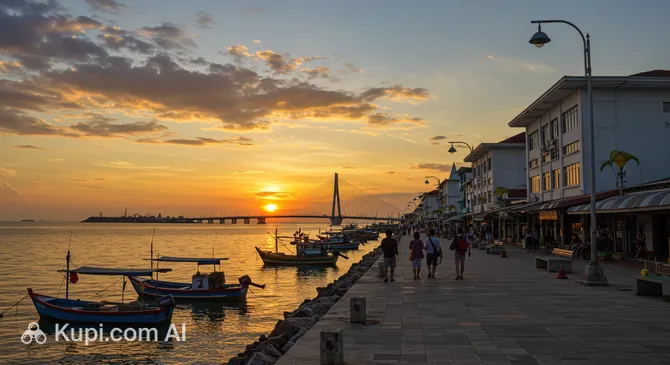
The heart of the city's evening activity beats strongest at the Kuala Terengganu Waterfront, particularly around the Pulau Warisan area. As the sun sets, this riverside promenade comes alive with colorful LED lights and families enjoying leisurely strolls. It is a fantastic spot to mingle with locals, rent a bicycle or a trishaw, and soak in the views of the illuminated bridges reflecting on the Terengganu River. The dress code here is casual but modest; comfortable trousers and t-shirts are the norm, and visitors are encouraged to dress respectfully.
Kuala Terengganu Waterfront. Illustration.
Source: Kupi.com AI
Traveler photos:
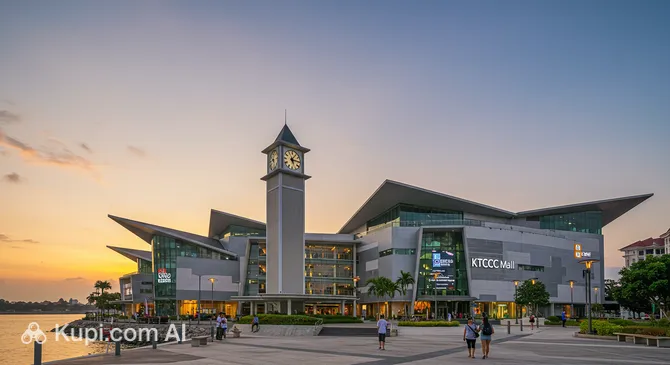
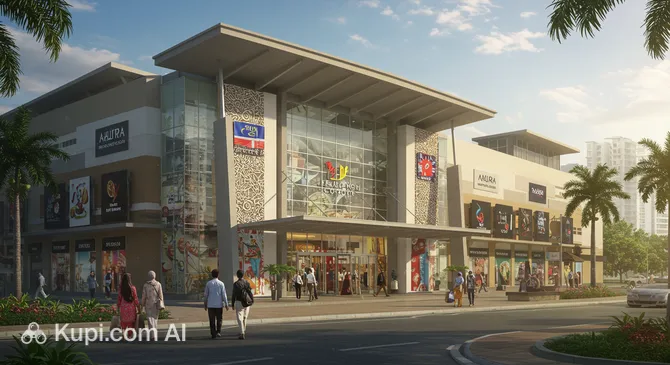
For those seeking modern entertainment, the KTCC Mall is the premier destination. Located near the drawbridge, this shopping complex remains a hub of activity well into the evening. It houses a cinema for catching the latest movies, a bowling alley for some friendly competition, and numerous cafes where young locals gather to "lepak" (hang out). It offers a comfortable, air-conditioned retreat and is one of the few places in the city where you can find a mix of international retail brands and late-night coffee spots.
KTCC Mall. Illustration.
Source: Kupi.com AI
Traveler photos:
Dining is the primary form of nightlife here, and the options are plentiful. While alcohol is generally not served in most establishments due to halal regulations, the food scene makes up for it with flavor and variety. For a hearty Western-style dinner in a comfortable setting, KBB Steak Terengganu is a popular choice among residents and visitors alike. If you are looking for something more traditional, the night markets (Pasar Malam) which rotate locations throughout the week, offer an explosion of local street food, from grilled satay to sweet pancakes.
Travelers specifically looking for non-halal beverages or a bar-like atmosphere will find options very limited. The area known as Kampung Cina (Chinatown) is the best bet for this. Here, amidst the heritage shophouses, you may find a few Chinese restaurants and quiet bistros that serve beer and offer a relaxed ambiance. However, do not expect loud music or late-night partying; the vibe remains low-key and conversational.
Regarding safety and logistics, Kuala Terengganu is safe for night walks, especially in well-lit areas like the waterfront and main city streets. Public transport winds down early, so the most reliable way to get around at night is by using e-hailing apps like Grab. Prices are reasonable, and cars are usually readily available. It is advisable to head out for dinner around 8:00 PM, as many smaller local eateries may start closing by 10:00 PM or 11:00 PM, though the waterfront area stays lively a bit longer.
Before the sun goes down, the city offers plenty of daytime entertainment to fill your itinerary. Cultural enthusiasts can explore the extensive collections at the State Museum or marvel at the architecture in the Islamic Civilization Park. For a more relaxed afternoon, the local beaches offer scenic spots for kite flying and picnicking, setting the stage for a pleasant transition into the city's calm and charming evening routine.
Parks & Museums
Kuala Terengganu is a city where cultural heritage and natural beauty are deeply intertwined, offering visitors a chance to explore history not just through artifacts, but through living traditions and scenic green spaces. Beyond its famous coastline, the city boasts well-curated museums and riverine parks that serve as windows into the soul of the Malay world, making them essential stops for anyone looking to understand the region's identity.
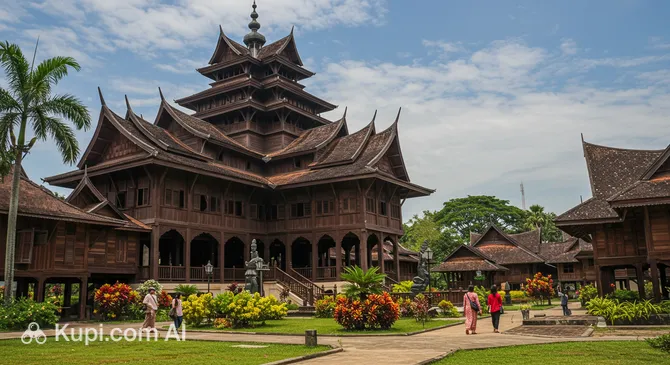
For a truly immersive experience, the Terengganu Cultural Village is a standout attraction. Designed as a "living museum," it allows visitors to step back in time and witness the daily rhythms of traditional Malay life. The village features beautifully reconstructed timber houses and offers live demonstrations of local crafts, such as weaving, batik painting, and brassware making. It is also a venue for traditional performing arts, where you might catch a glimpse of Silat (martial arts) or Gamelan music, providing a dynamic contrast to static museum exhibits.
Terengganu Cultural Village. Illustration.
Source: Kupi.com AI
Traveler photos:
When it comes to outdoor recreation, Heritage Island Kuala Terengganu (Pulau Warisan) is a favorite gathering spot for locals and tourists alike. Located along the river estuary, this man-made island has been transformed into a scenic waterfront park. It offers panoramic views of the city skyline and the river, making it an ideal location for an evening jog or a leisurely walk. The park is particularly magical at sunset, where the cool breeze and the sight of traditional boats passing by create a serene atmosphere.
Heritage Island Kuala Terengganu. Illustration.
Source: Kupi.com AI
Traveler photos:
Another key area for exploration is the vicinity of the Shahbandar Jetty. While primarily known as the gateway to Redang Island, the surrounding area features the Dataran Shahbandar, a spacious public square that often hosts events and food festivals. It serves as a green lung in the city center, connecting the urban hustle with the calming presence of the water. Visitors often use this area as a starting point for river cruises or simply to relax under the shade of trees while watching the ferries depart.
While the main galleries of the State Museum are well-known, the surrounding grounds deserve special mention as a park in their own right. The outdoor section, known as the Heritage Village, displays original ancient palaces and traditional houses from various districts of Terengganu. Walking through these landscaped gardens offers a peaceful retreat and a chance to admire the intricate woodcarving architecture known as Rumah Bujang Berpeleh without entering the main building.
Insider Tip: For a unique perspective, take a "bot penambang" (traditional water taxi) from the jetties near the central market to Seberang Takir. The short ride itself is a scenic tour, and on the other side, you can find quiet village paths that feel like a world away from the city center.
Getting Around
Public Transport:
Navigating Kuala Terengganu is a relatively straightforward affair, though the city lacks the complex rail networks found in larger metropolises. There is no metro, tram, or light rail system here. Instead, the public transport infrastructure relies primarily on road vehicles and a unique system of water taxis that reflect the city's geographical relationship with the river. For most tourists, getting around involves a mix of buses, ride-hailing services, and traditional boats.
The most distinctive form of ground transport is the Bas Bandar, often referred to as the Heritage Bus. These buses are easily recognizable by their unique design, which mimics the architecture of a traditional Malay house with a timber-look roof. They typically ply routes connecting major tourist attractions, such as the State Museum, the Islamic Civilization Park, and the central market. While charming, their schedules can sometimes be irregular, so it is wise not to rely on them for time-sensitive connections. For general commuting between districts, the myBAS service offers more standard bus routes, covering the city center and suburban areas.
A special feature of Kuala Terengganu’s transport network is the Bot Penambang, or traditional water taxi. These small wooden boats operate from the jetties near Pasar Payang and ferry passengers across the estuary to Seberang Takir and other riverine villages. This is not just a mode of transport but a cultural experience, offering a scenic and breezy shortcut across the water. Prices are very affordable, usually costing just a few Ringgit per trip, and the boats operate until the early evening.
Regarding payment, cash is king for most forms of public transport. If you are taking the bus or a water taxi, you must pay the driver or boatman directly. It is essential to carry small denominations (RM1, RM5, RM10 notes and coins), as operators often do not have change for large bills. There are no universal travel cards or "tap-on" systems for these traditional services, so keeping a supply of loose change is the best strategy for a hassle-free journey.
For those seeking convenience and comfort, ride-hailing apps, particularly Grab, are the most popular alternative to public transport. They are widely available, affordable, and overcome the language barrier since destinations are set within the app. Standard taxis are also available at designated stands, such as the bus terminal or airport, but they may not always use the meter. If you hail a regular taxi, be prepared to negotiate the fare before getting in to avoid misunderstandings.
Tourists should also note that public transport operating hours are generally limited compared to capital cities. Buses and water taxis tend to wind down by early evening, around 7:00 PM or 8:00 PM. Additionally, during Friday prayers (roughly 12:30 PM to 2:30 PM), services may be temporarily paused or reduced. For late-night travel, ride-hailing or a pre-booked private transfer are the only reliable options.
Accommodation
Accommodation in Kuala Terengganu caters to a wide variety of travelers, ranging from budget-conscious backpackers to families seeking a comfortable resort experience. Unlike the high-rise luxury hotel scene found in Kuala Lumpur, the lodging landscape here is characterized by a mix of modern city hotels, charming heritage guesthouses, and a vast number of "homestays." These homestays are particularly popular in Terengganu, offering visitors a chance to stay in furnished houses or semi-detached units, which is often the most economical choice for large families or groups.
When choosing where to stay, location plays a key role in the experience. The City Center, particularly around Kampung Cina (Chinatown) and the central market area, is ideal for those who want to be within walking distance of heritage sites, cafes, and the waterfront. Alternatively, visitors who prefer waking up to the sound of waves often look for properties near Batu Buruk Beach. While slightly further from the main commercial hub, this area offers a resort-like atmosphere with easy access to the recreational park and food stalls.
For a quieter retreat away from the city bustle, the areas across the river, such as Seberang Takir, provide a more serene, village-style environment. A notable option in this vicinity is Anjung Pantai Seberang. This resort hotel is situated near the airport and offers a relaxing stay with easy access to the beach, making it a convenient choice for travelers who appreciate tranquility without being too far from the main transport hubs.
Anjung Pantai Seberang. Illustration.
Source: Kupi.com AI
Traveler photos:
Booking Tip: It is highly recommended to book your accommodation in advance if you plan to visit during Malaysian school holidays or public holidays, as popular hotels and homestays fill up quickly. Additionally, remember that the weekend in Terengganu falls on Friday and Saturday; Friday nights can be particularly busy as domestic tourists from neighboring states often visit for the weekend.
In terms of pricing, Kuala Terengganu is generally very affordable. Budget rooms and simple guesthouses can be found for as low as MYR 60–100 per night, while mid-range hotels typically charge between MYR 150 and MYR 250. Booking is easily done through major online travel platforms like Agoda or Booking.com, which are widely used here. However, for smaller homestays, it is not uncommon to book directly via phone or social media to secure the best rates.
Nearby Cities
For those looking to explore the surroundings, Kuala Terengganu serves as an excellent base for day trips to several interesting nearby locations:
One of the most accessible destinations for a change of scenery is Kuantan, the capital of the neighboring state of Pahang. Located to the south, it offers a different urban vibe mixed with coastal charm. Visitors can explore the famous Teluk Cempedak beach, known for its rocky bays and monkeys, or visit the Sultan Ahmad Shah State Mosque. It is a vibrant city that provides a nice contrast to the more laid-back atmosphere of Terengganu.
Just a short drive south of the city lies the picturesque town of Marang. This area is celebrated for its rustic fishing villages and photogenic scenery, particularly at the Marang River estuary. It is also a hub for cottage industries where you can watch locals making traditional handicrafts like woven mats and baskets. For nature lovers, a trip inland to Kuala Berang offers access to Lake Kenyir, the largest man-made lake in Southeast Asia, perfect for exploring waterfalls and lush rainforests.
These nearby destinations offer a glimpse into the diverse culture and landscapes of the region, ranging from bustling urban centers to serene natural retreats.
Shopping & Souvenirs
Shopping in Kuala Terengganu differs from the high-street fashion focus of Malaysia's larger metropolises. Instead, it offers a delightful immersion into traditional craftsmanship and local heritage. The city is celebrated as a hub for exquisite textiles, particularly batik and songket, and is the perfect place to find authentic Malay handicrafts. Prices here are generally reasonable, and the goods sold often come directly from local artisans, adding a personal touch to every purchase.
One of the most atmospheric places to shop is Jalan Kampung Cina (Chinatown). This heritage street is lined with colorful pre-war shophouses that have been converted into charming boutiques, souvenir shops, and cafes. Visitors can wander through the narrow five-foot ways to discover unique items such as hand-painted batik shirts, traditional Kebaya dresses, and intricate jewelry. The area blends history with commerce, offering a shopping experience that feels intimate and culturally rich.
For a more modern retail experience, KTCC Mall stands as the city's premier lifestyle destination. Located near the drawbridge, this large shopping complex houses a variety of international and domestic brands, a cinema, and a supermarket. It provides a comfortable, air-conditioned environment where tourists can find everything from fashion and electronics to beauty products, making it a convenient stop for travel essentials.
However, the true heart of the city's commerce lies in its markets. The most famous of these is Pasar Payang 2, a bustling complex that serves as the temporary home for traders while the original market undergoes redevelopment. This is the ultimate one-stop center for visitors. The ground floor is typically filled with wet market produce and traditional snacks, while the upper floors are a treasure trove of textiles. Here, you can bargain for beautiful silk scarves, kaftans, and the finest Terengganu batik.
Pasar Payang 2. Illustration.
Source: Kupi.com AI
Traveler photos:
When it comes to souvenirs, there are several "must-buy" items. Batik and Songket (fabric woven with gold or silver threads) are the pride of the state and make for elegant gifts. For something edible, tourists often buy Keropok Lekor (fish sausage), which is available in vacuum-sealed packs for easy transport. Brassware and traditional wood carvings are also popular, showcasing the exceptional skills of local craftsmen.
Shops in Kuala Terengganu generally open around 10:00 AM and close by 10:00 PM, though local markets like Pasar Payang start buzzing as early as 7:00 AM. It is important to note that Friday is the weekend in Terengganu; consequently, many shops and market stalls may close briefly between 12:30 PM and 2:30 PM for Friday prayers. While shopping malls and larger stores accept credit cards and e-wallets, cash is still the preferred method of payment in markets and smaller independent shops, so it is wise to carry sufficient Ringgit.
Unlike the duty-free islands of Langkawi or Labuan, Kuala Terengganu does not offer tax-free shopping status. Standard sales taxes apply to goods and services. While a tourist tax refund scheme exists in Malaysia for eligible foreign tourists, it is primarily available at major international airports and participating high-end retailers, which are less common in this specific city compared to Kuala Lumpur.