Support

Sultan Abdul Aziz Shah Airport

About the Airport

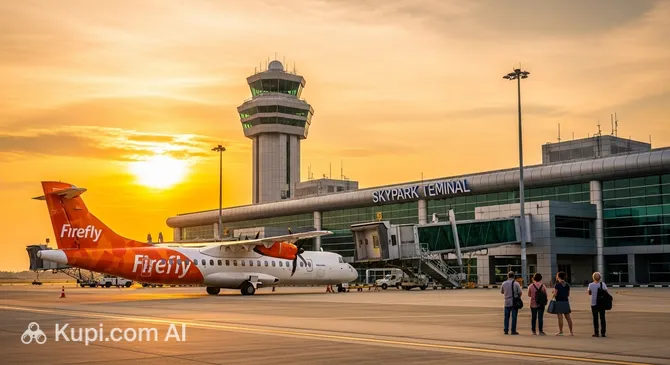
Sultan Abdul Aziz Shah Airport. Source: Kupi.com Binoculars

Sultan Abdul Aziz Shah Airport, known amongst locals and travellers as Subang, is an iconic aviation hub currently experiencing a renaissance. For a long time, it served only small propeller aircraft, but today it is once again welcoming jet liners, transforming into a fully-fledged and incredibly convenient "city airport". Located just a half-hour drive from the centre of Kuala Lumpur, Subang offers a unique blend of historical charm, modern service speed, and a homely comfort that is often missing from huge international hubs.

IATA Code SZB
ICAO Code WMSA
City Kuala Lumpur (Subang Jaya)
Distance to Centre ~25 km
Status International
Passengers per Year Over 1.5 million
Schedule Available on the official website

Features and Advantages of the Airport

Ideal Location for Tourists

Subang's main trump card is its proximity to the capital's main attractions. A taxi ride to the Petronas Towers or the lively Bukit Bintang district will take about 30 minutes, which is significantly faster than the long transfer from the main KLIA airport. This makes it the best choice for short trips or business visits.

Speed Without the Hassle

The SkyPark Terminal is designed to minimise passenger stress. The distances from the check-in counter to the boarding gate are minimal here, and passport control queues move very quickly. You can arrive at the airport a little later than usual and still have time to enjoy a coffee before your flight in a relaxed atmosphere.

The Return of Jet Flights

Since August 2024, the airport has resumed handling jet aircraft, expanding its flight geography. Now, you can fly from here not only on small turboprop planes within Malaysia but also take advantage of flights by popular low-cost carriers to neighbouring countries, such as Singapore or Indonesia, with maximum comfort.

Contact Information

If you need to contact representatives of Sultan Abdul Aziz Shah Airport (also known as Subang), please use the following contact information. Please note that the airport is managed by Malaysia Airports Holdings Berhad (MAHB), so many contacts may lead to their central services.

  • Official Website: subangairport.com
  • Information Desk Phone: +60 3-7846 7080 (Malaysia Airports general line)
  • Address: Sultan Abdul Aziz Shah Airport, 47200 Subang, Selangor, Malaysia
  • Email (Customer Support): care@malaysiaairports.com.my
  • Social Media: Official pages of the operator Malaysia Airports are available on Facebook, X (formerly Twitter) and Instagram.
  • Lost Luggage Information: If luggage is lost during a flight, you should first contact your airline's baggage tracing service. If items were lost within the terminal, please contact the airport information desk.
  • Passenger Support Contacts: For general enquiries and support, please use the main information desk phone number or email address.

How to Get to the Airport

Sultan Abdul Aziz Shah Airport, also known as Subang, is located significantly closer to the centre of Kuala Lumpur than the country's main international airport. This makes it a convenient point for many domestic and some regional flights. There are several ways to get there; the choice depends on your budget, time, and comfort preferences.

Public Transport is the most economical option. Although there is no direct rail link to the terminal, you can take the KTM Komuter commuter train to Subang Jaya station. From there, it is only a few kilometres to the airport, which can easily be covered by taxi or a local bus. Additionally, from the city centre, for example from the Pasar Seni transport hub, the RapidKL bus route No. 772 runs to the airport. The bus ride will be the cheapest option but will take more time, especially during peak hours.

The most convenient and popular way to get to the airport is by taxi or a ride-hailing service such as Grab, which is very common in Malaysia. A trip from the city centre will take approximately 30-60 minutes depending on traffic conditions. The cost of a taxi ride or via the app is usually between 25 and 50 Malaysian Ringgit. This option offers the best balance of speed and comfort.

For travellers who prefer independence in their movements, car rental is available. Offices of both international and local rental companies operate at the airport and throughout the city. If you arrive at the airport in your own or a rented car, parking is at your service, offering rates for both short-term and long-term stays.

In general, for maximum convenience and predictability, it is better to choose a taxi or Grab. Public transport is suitable for budget trips, but you should allow extra time for the journey. Please note that most long-haul international flights are handled at Kuala Lumpur International Airport (KLIA), which is located significantly further from the city.

Terminals and Map

Sultan Abdul Aziz Shah Airport (SZB), also known as Skypark Subang, is a compact and convenient aviation hub. Unlike the giant Kuala Lumpur International Airport (KLIA), everything here is much simpler and more straightforward, making it attractive for domestic and some regional flights.

In fact, for commercial passenger transport, one main terminal is used, which is often called Terminal 3 or simply Skypark Terminal. Other structures on the airport territory serve private and business aviation, as well as technical centres, so tourists do not have to worry about moving between terminals. All infrastructure for travellers is concentrated in one building.

The terminal layout is extremely simple. The check-in counters, arrivals area with baggage claim belts, and exits to the city are located on the ground level. After check-in, passengers go up to the first level, where they pass through security screening and enter the departure lounge with boarding gates. Thanks to its small size, navigation is intuitive, and all signs are clearly visible. It is practically impossible to get lost here.

One of the main advantages of the airport is the speed of formalities. Flight check-in and security screening usually take significantly less time than in major airports, often completed within 20–30 minutes. Nevertheless, it is recommended to arrive at the airport 1.5–2 hours before departure to go through all procedures without rushing, have a coffee, and walk to your gate.

Airport History

The history of Sultan Abdul Aziz Shah Airport, often simply called Subang, is a story of transformation and adaptation. Opened in 1965, it originally bore the name of Kuala Lumpur International Airport and served as Malaysia's main air gateway for more than three decades, receiving flights from all over the world. Its terminal with a distinctive curved roof was one of the symbols of the country's modernisation.

A key moment in its history was 1998, when the new, larger Kuala Lumpur International Airport (KLIA) was opened in Sepang. After this, the old airport was renamed in honour of the eighth Sultan of Selangor, Abdul Aziz Shah, and its role changed dramatically. International flights were transferred to the new airport, and Subang had to find its new niche.

Instead of falling into decline, the airport underwent significant modernisation. It was transformed into a modern city airport known as Skypark Subang. Today, it specialises in servicing turboprop aircraft, private and business aviation, and also serves as a base for airlines operating regional flights, such as Firefly and Batik Air Malaysia. This transformation allowed it to remain an important transport hub, offering convenient and fast flights around Malaysia and to neighbouring countries.

Interesting fact: before the construction of KLIA, Subang Airport consisted of three terminals. Terminal 1 served international flights, Terminal 2 served shuttle flights to Singapore, and Terminal 3 served domestic flights. Today's Skypark Terminal is essentially a reconstructed and updated Terminal 3, symbolising continuity and the successful reimagining of its historical role.

Services and Facilities

Sultan Abdul Aziz Shah Airport (SZB), also known as Subang, offers passengers a compact but functional set of services for a comfortable wait for their flight. Although it is smaller than the main international airport, everything necessary for travellers is available here.

In the terminal, you will find several cafes and restaurants where you can have a snack before departure, drink coffee, or have a full lunch. Both local Malaysian dishes and international cuisine are represented here. There are also small shops where you can buy souvenirs, press, and travel essentials.

For a more comfortable wait, the airport has premium lounges. Passengers can access the internet via free Wi-Fi, which is available throughout the terminal. For convenience, numerous power outlets and special stations for charging electronic devices are provided.

Financial services are represented by ATMs and currency exchange points, allowing you to easily solve money matters upon arrival or before departure. In case of unforeseen situations, a medical centre operates at the airport where first aid can be provided.

The airport is well-equipped for passengers with special needs. For families with small children, baby care rooms are provided. Passengers with reduced mobility can count on an accessible environment, including ramps and specially equipped toilets, as well as request staff assistance for escorting through the terminal.

Although there are no hotels directly within the airport building, several hotels of varying comfort levels are located in the immediate vicinity. For business travellers, business centre services or conference rooms in nearby hotels may be available, which is convenient for holding meetings.

Where to Eat

At Sultan Abdul Aziz Shah Airport (SZB), passengers will find a variety of dining options suitable for both a quick snack before departure and a leisurely lunch. Most establishments are located in the main, public area of the terminal, which is convenient for those meeting and seeing off passengers.

For those who want to experience local cuisine, it is worth paying attention to the food courts or small restaurants offering Malaysian dishes. Here you can try classic treats such as Nasi Lemak (rice cooked in coconut milk with various accompaniments) or aromatic Laksa soup. Don't forget to order the traditional pulled tea with milk — Teh Tarik. Also operating at the airport are well-known international coffee chains and fast-food outlets where you can order familiar sandwiches, pastries, and coffee.

Finding Halal food at the airport will be effortless, as this is the standard for most establishments in Malaysia. Vegetarian or gluten-free options may be more challenging to find, however, salads, smoothies, or rice and vegetable dishes can be found on the menus of many cafes. We recommend checking the ingredients with the staff before ordering.

The price range in SZB airport establishments varies from budget options in fast-food outlets to mid-level in cafes and restaurants. The opening hours of most eateries and cafes are oriented towards the flight schedule, starting work early in the morning and finishing late in the evening. If you are short on time, coffee and pastries at one of the coffee shops will be the ideal choice. If you have time to spare, you can have a full dinner in one of the restaurants, enjoying local or Asian cuisine.

Traveller Tips

Travelling through Sultan Abdul Aziz Shah Airport, also known as Subang, can be very comfortable if you know a few nuances. It is a more compact and less congested airport than the main international terminal of Kuala Lumpur, making it convenient for domestic and some regional flights. To avoid rushing, arrive at the airport 1.5-2 hours before a domestic flight and 2.5-3 hours before an international one. Keep in mind that traffic in the city can be unpredictable.

To save time, use online check-in, which is offered by most airlines. This will allow you to head straight to baggage drop or security screening if you are travelling light. Control procedures here are standard, but queues are generally shorter than at major airports. Keep your passport, boarding pass, and other documents handy to speed up the process.

When choosing a seat on the plane, be guided by your preferences. A window seat will give you picturesque views of the city and its surroundings during take-off and landing, while an aisle seat provides more legroom and the ability to stand up without disturbing neighbours. If you are flying with Firefly on a propeller plane, remember that boarding often takes place via stairs directly on the tarmac.

Hand luggage rules in Malaysia comply with international standards. Liquids can be carried in containers up to 100 ml, packed in a transparent bag. All sharp objects, such as scissors or penknives, must be checked in as luggage. It is important to remember that portable chargers (power banks) are permitted only in hand luggage. Always check the weight and size limits for your luggage on the airline's website.

If you have a transfer at Subang Airport, make sure you do not need to collect and re-check your luggage. If you are flying with the same airline, your luggage will likely be checked through to the final destination. Leave a sufficient time buffer between flights, especially if they are operated by different carriers. There is only one terminal here, which simplifies navigation.

Customs control upon entering or leaving the country is standard. If you have goods to declare, use the "Red Channel". Be prepared for customs officers to ask about the purpose of your trip and ask to see a return ticket. Remember the strict rules on the import and export of certain goods.

To save money, book a taxi or transfer via online apps — this is often cheaper than taking a car from the official counter. Inside the airport, there are several cafes, but prices may be higher than in the city. If you have time, you can have a snack before travelling to the airport. Take an empty water bottle with you to fill it at drinking fountains after passing security.

In case of a flight delay, first contact your airline representative for information and instructions. Watch for updates on the departure boards. The airport has rest areas, cafes, and shops where you can pass the time. If the delay is lengthy, check with the airline if you are entitled to meals or hotel accommodation in accordance with carriage regulations.

Reached the end of the page?

That means the route is fully explored