Support

Tioman Island

About

Tioman Island is a breathtaking tropical sanctuary located in the South China Sea, approximately 32 kilometers off the east coast of Peninsular Malaysia. Renowned for its crystal-clear waters and vibrant marine life, this tear-drop-shaped island offers a perfect escape for nature lovers and those seeking tranquility away from the bustling mainland. Its lush rainforests and pristine beaches have cemented its reputation as one of Southeast Asia's most idyllic destinations.

Administratively part of the state of Johor, the island is home to a small, close-knit community of around 500 residents, scattered across several traditional villages, or kampungs. This low population density preserves the island's serene atmosphere. While today it is a haven for tourists, the history of Tioman Island is steeped in folklore, most notably the legend of a dragon princess who is said to have transformed into the island to provide shelter to passing travelers.
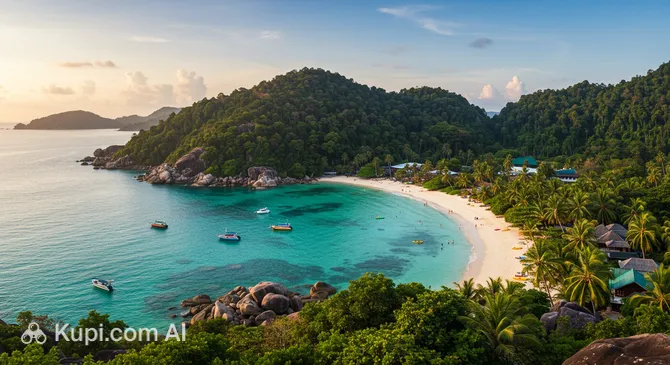
Tioman Island. Source: Kupi.Binoculars

Visitors are primarily drawn to Tioman for its exceptional diving and snorkeling opportunities. The surrounding waters are a protected marine park, teeming with colorful coral reefs and diverse aquatic species. Beyond the sea, the island's interior features dense jungles ideal for trekking, offering routes that lead to secluded waterfalls and the majestic granite formations like the distinctive twin peaks of Nenek Semukut.

Whether you are looking to explore the underwater world, hike through ancient rainforests, or simply relax on sun-drenched sands, Tioman Island promises an unforgettable experience. Its blend of natural beauty and laid-back island life makes it a must-visit destination for any traveler venturing into this region.

Weather Overview

Tioman Island enjoys a consistently warm tropical climate, making it an inviting destination throughout the year. The average temperatures are remarkably stable, generally fluctuating between 26°C and 28°C. May is typically the warmest month, with average highs reaching 29°C, while the coolest period around December and January remains pleasant with averages around 26°C.

Rainfall frequency varies significantly depending on the month, which can influence travel plans. The island experiences a higher number of wet days towards the end of the year; November is particularly rainy with up to 29 wet days. May also sees frequent showers, recording about 27 wet days. Conversely, February and March are generally the driest months, offering the best chance for uninterrupted sunshine with only about 11 to 12 wet days. For a comprehensive overview of the climate conditions, you can check the detailed guide to the weather in Tioman Island.

Interesting Facts

Beyond the pristine beaches and diving spots, Tioman Island holds several fascinating distinctions that add to its allure. From its cinematic history to its unique local inhabitants, there is much more to this destination than meets the eye.

  • Hollywood Stardom: The island gained international fame when it was chosen as the filming location for the 1958 Hollywood musical South Pacific. Tioman stood in for the fictional paradise of "Bali Hai," with its dramatic cliffs and lush jungles providing the perfect cinematic backdrop.

  • Global Acclaim: In the 1970s, Time magazine famously named Tioman one of the world's most beautiful islands. This prestigious accolade played a pivotal role in transforming the sleepy fishing outpost into a renowned global travel destination.

  • Duty-Free Status: Despite its rugged, natural atmosphere, Tioman is a designated duty-free zone. Visitors are often surprised to find that they can purchase goods like chocolates and tobacco at significantly lower prices than on the mainland of Malaysia.

  • Prehistoric Neighbors: The island is home to a large population of monitor lizards, which are frequently seen roaming freely around the villages and resorts. These harmless but impressive reptiles are a common sight, often strolling casually across paths or sunbathing near accommodations.

How to Get There

Reaching this tropical paradise requires a combination of travel methods, as the island is separated from the mainland by the South China Sea. Most visitors travel by land to the coastal towns of Mersing or Tanjung Gemok and then take a ferry across. For those planning their journey, you can find more about how to get to Tioman Island, including detailed ferry schedules and tips, on our dedicated page.

The city of Tioman Island does not have its own active commercial airport for scheduled flights, but you can fly into Senai Airport (IATA: JHB) in the city of Johor Bahru, which is approximately 139 km away. This regional hub serves as a convenient entry point for travelers coming from various parts of Malaysia. From the airport, you will need to take a taxi or bus to the ferry terminal at Mersing; the land journey takes approximately 3 hours and 50 minutes. Afterwards, a ferry ride is required to reach the island.

Another major option is Changi International Airport (IATA: SIN) in Singapore, located about 160 km from Tioman Island. As a massive international airport with high passenger traffic, it connects to destinations worldwide. Travelers landing here usually take a cross-border bus or private transfer to Mersing. The travel time by road is roughly 4 hours and 20 minutes, depending on border clearance, followed by the boat transfer to the island.

For clarity, here is a summary of the main airports:

Airport Name City Passenger Traffic Km from City
Changi International Airport Singapore Large 159.9
Senai Airport Johor Bahru Large 138.7
Hang Nadim International Airport Batam Large 184.7
Kidjang Airport Tanjung Pinang Medium 210.3
Sultan Haji Ahmad Shah Airport Kuantan Medium 152.5

The city of Tioman Island does not have a railway station, but you can arrive at the KL Sentral Station in the city of Kuala Lumpur, which is about 279 km from Tioman Island. As a major transport hub, it connects the capital to the rest of the peninsula. From Kuala Lumpur, travelers typically take a bus directly to the Mersing jetty, or a train to a nearby town followed by a taxi. The total travel time by road to the coast is approximately 7 hours and 20 minutes, excluding the ferry crossing.

Below is the information for the nearest major railway station:

Station City Passenger Traffic Km to Center
KL Sentral Station Kuala Lumpur Large 278.7

Main Attractions

Tioman Island offers a diverse range of activities that go far beyond simple beach relaxation. From underwater explorations to jungle adventures and wildlife conservation efforts, the island's attractions cater to nature enthusiasts and adventure seekers alike. Here are some of the most interesting places to visit during your stay.

Tioman Marine Park Centre is arguably the most popular stop for visitors, serving as the gateway to the island's underwater treasures. Located on the edge of the sea between Tekek and Air Batang, this protected area is famous for its abundance of coral reefs and friendly fish that swim right up to the shore. It is an excellent spot for snorkeling, even for beginners, as the waters are calm and clear. The centre also plays a vital role in educating tourists about marine preservation, ensuring that the delicate ecosystem remains vibrant for future generations.

For those willing to trek into the lush interior, Asah Waterfall offers a refreshing reward. Situated near the village of Mukut on the southern tip of the island, this cascading waterfall is nestled deep within the rainforest. Reaching it requires a hike through the jungle, where you can observe native flora and fauna. The waterfall is not only a scenic spot for a cool dip but also holds a place in cinematic history, having been featured in the classic movie South Pacific.

Nature lovers should not miss the Juara Turtle Project, a conservation initiative located in the quiet village of Juara on the island's east coast. This volunteer-run center is dedicated to the protection and rehabilitation of sea turtles, particularly the Green and Hawksbill species that nest on the local beaches. Visitors can learn about the life cycle of these majestic creatures, view the hatchery, and, if lucky, witness the release of hatchlings into the sea. It provides a meaningful insight into the environmental efforts on the island.

Just off the coast of the Berjaya Tioman Resort lies Renggis Island, a tiny rocky islet that is a magnet for snorkelers and divers. Despite its small size, the waters surrounding Renggis are teeming with marine life, including blacktip reef sharks, barracudas, and colorful clownfish. The coral formations here are spectacular and easily accessible, making it one of the best spots for an impromptu snorkeling session without needing to travel far from the main accommodation areas.

Local Cuisine

The culinary landscape of Tioman Island is a delightful reflection of its coastal location, heavily centered around the freshest catch from the surrounding South China Sea. Seafood is undoubtedly the star here, with BBQ seafood being the most popular dining experience for tourists. As the sun sets, many beachside restaurants fire up their grills, offering an array of fish, squid, prawns, and crabs, often marinated in local spices and served with a side of spicy sambal sauce and lime. It is a simple yet unforgettable gastronomic experience to enjoy a smoky, grilled feast with the sound of waves in the background.

Beyond seafood, visitors can indulge in traditional Malay staples that offer a burst of local flavor. Nasi Lemak, fragrant rice cooked in coconut milk and pandan leaf, is a favorite breakfast choice, while Nasi Goreng Kampung (village-style fried rice) with anchovies and water spinach makes for a satisfying lunch. For a lighter bite, you might find Roti Canai, a flaky flatbread dipped in dhal or curry, served at small, family-run eateries known as warungs. These dishes provide an authentic taste of the local culture at very affordable prices.

When it comes to beverages, the island offers a refreshing variety to beat the tropical heat. Fresh coconut water and blended fruit juices, such as watermelon or mango, are widely available and perfect for hydration. A unique feature of Tioman Island is its duty-free status, which extends to alcohol. Unlike many other parts of Malaysia where alcohol can be expensive, beer, wine, and spirits are readily available and reasonably priced here. This makes enjoying a cold beer or a sunset cocktail at a beach bar a common and budget-friendly pastime for international visitors.

The food culture on Tioman is remarkably laid-back and unpretentious. You won't find many high-end fine dining establishments; instead, the charm lies in casual, open-air dining. Most meals are enjoyed in the main villages like Tekek, Salang, and Juara, where restaurants often spill out onto the sand. From rustic wooden tables at a local warung to breezy terraces at beach resorts, the atmosphere is always relaxed, encouraging diners to take their time and savor the island pace.

Travel Tips

Visiting Tioman Island is an adventure into a tropical paradise, but its remote nature and island charm require a bit of preparation to ensure a hassle-free experience. To help you make the most of your trip to this stunning gem, here are some practical tips to keep in mind before you set sail.

  1. Clothing and Culture: Since the climate is hot and humid year-round, pack lightweight, breathable fabrics like cotton or linen. While swimwear is perfect for the beach, remember that Malaysia is a conservative country; always cover your shoulders and knees when walking through the local villages or kampungs. Don't forget to bring water shoes to protect your feet from sharp coral and rocks, and a universal travel adapter (Type G) for your electronics.
  2. Transportation: Unlike mainland cities, Tioman does not have a comprehensive road network connecting all areas. The primary mode of transport between villages (e.g., from Salang to Tekek) is the water taxi. On land, specifically between Tekek and Juara, you can use local 4WD taxis, but they can be pricey. There are no ride-hailing apps like Grab here, and car rental is neither available nor necessary for tourists.
  3. Finances: The local currency is the Malaysian Ringgit (MYR). It is crucial to bring sufficient cash with you, as the only ATM on the island is located in the main village of Tekek. While larger resorts and dive centers may accept credit cards, smaller guesthouses, local eateries (warungs), and water taxi operators often deal exclusively in cash.
  4. Health and Safety: One specific nuisance on Tioman is the sandfly, locally known as agas. Their bites can be very itchy, so bringing a strong insect repellent or coconut oil is highly recommended. There is a small health clinic in Tekek for minor emergencies, but serious medical issues require transfer to the mainland. Tap water is not safe to drink; always stick to bottled or filtered water.
  5. Communication: English is widely spoken, especially by those working in tourism, so you will have no trouble communicating. However, mobile signal can be spotty in remote bays. It is best to purchase a local SIM card (Celcom or Maxis usually have the best island coverage) at the airport or in Mersing before boarding the ferry. Wi-Fi is available at most resorts but can be slow.
  6. Local Etiquette: The locals are warm and friendly, but it is polite to observe customary manners. Always remove your shoes before entering a chalet, a local home, or a place of worship. When handing money or objects to someone, use your right hand, as the left is traditionally considered unclean. A smile and a nod are universal greetings here.
  7. What to Avoid: Do not touch, stand on, or break the coral reefs while snorkeling or diving. The marine park is a protected area, and damaging the ecosystem is a serious offense. Additionally, avoid feeding the monkeys; they can become aggressive and associate humans with food, which leads to problems for both tourists and the animals.
  8. Duty-Free Perks: Take advantage of Tioman's duty-free status. You can buy chocolates and alcohol at prices significantly lower than on the mainland. However, be mindful of the customs limits if you are bringing these items back to the mainland or Singapore, as strict quotas apply.

By keeping these practical tips in mind, you can focus on relaxing and enjoying the breathtaking natural beauty of Tioman Island. With a little preparation, your island getaway will be as smooth as the calm waters of the South China Sea.

Entertainment & Nightlife

Entertainment on Tioman Island is refreshingly different from the high-energy clubbing scenes found in other Southeast Asian destinations. Instead of neon-lit nightclubs and thumping bass, the nightlife here is defined by a laid-back, rustic charm that perfectly complements the island's natural beauty. The atmosphere is centered around open-air beach bars, casual gatherings, and the simple pleasure of enjoying duty-free beverages under a canopy of stars.

The "party" scene, such as it is, is largely concentrated in specific villages. Salang Bay, located on the northern part of the island, is widely considered the hub for backpackers and those seeking a livelier evening. Here, the vibe is social and energetic, with beach bonfires and music often playing late into the night. Conversely, Air Batang (often called ABC) offers a more chilled-out experience, famous for its "sunset bars" where travelers gather to watch the sun dip below the horizon with a cold drink in hand. Tekek, the capital village, provides a mix of convenience and relaxation, featuring several bistros and duty-free shops where visitors can stock up on affordable refreshments.

For those looking for specific spots to unwind, the island has a few standout venues. Tioman Cabana Bistro in Tekek is a popular gathering place known for its friendly atmosphere, occasional live music, and diverse menu that caters to international tastes. Over in Air Batang, the Sunset Bar is an institution in itself; situated right on the water's edge, it offers the quintessential island experience of sipping cocktails while listening to the waves. In Salang, venues like the Salang Sayang Restaurant often transform into social hubs after dark, serving as meeting points for divers and travelers to swap stories.

Practicality is key when planning a night out on Tioman. The dress code is universally casual—flip-flops, shorts, and t-shirts are the standard attire everywhere. Prices for alcohol are significantly lower than on the Malaysian mainland due to the island's duty-free status, making it an affordable place to enjoy a beer or wine. However, most venues accept only cash, so ensure you have enough ringgit on hand, especially if you are outside of Tekek where the only ATM is located.

Navigating the island at night requires some planning. Water taxis, the primary mode of transport between villages, become scarce and significantly more expensive after sunset. It is highly advisable to choose accommodation in the village where you plan to spend your evenings to avoid being stranded or paying a premium for transport. If you do need to walk between nearby areas, such as along the path in ABC, always carry a flashlight or headlamp. The paths are generally safe from crime, but they are often unlit, and you will want to avoid tripping on roots or stepping on nocturnal wildlife.

While the nightlife is all about relaxation, daytime entertainment on Tioman is almost exclusively nature-oriented. You will not find movie theaters, large amusement parks, or shopping malls here. The closest equivalent to a cultural attraction is the Marine Park Information Centre, which functions as a small museum offering educational exhibits about the local coral reefs and marine conservation. For most visitors, the "entertainment" is the island itself—snorkeling, jungle trekking, and exploring the untouched wilderness.

Parks & Museums

Unlike bustling metropolises filled with manicured gardens and grand historical buildings, Tioman Island defines its public spaces through untouched wilderness and conservation efforts. The "parks" here are ancient rainforests and protected seascapes, while the "museums" are intimate educational centers dedicated to preserving the island's unique biodiversity. Visitors come here not to view artifacts behind glass, but to immerse themselves in a living, breathing natural heritage.

Tioman Marine Park is essentially the island's vast, aquatic front yard and its most significant natural area. Designated as a marine park in 1994, this protected zone extends two nautical miles from the shore, safeguarding the coral reefs and marine life that make the island famous. For tourists, the specific area off the coast of Tekek and Air Batang serves as a designated "park" for snorkeling, where motorized sports are restricted to ensure safety and tranquility. It is a place where you can swim among schools of parrotfish and fusiliers in water so clear it feels like a swimming pool, offering a direct connection to the ocean's ecosystem.

Moving inland, the Pulau Tioman Wildlife Reserve encompasses the majority of the island's interior. This protected rainforest is one of the few untouched jungles left in Southeast Asia, serving as a massive natural park for trekking and wildlife observation. The reserve is home to protected species such as the binturong, long-tailed macaque, and the slow loris. Unlike an urban park with paved paths, this area offers rugged trails that lead adventurous visitors through dense canopy, past giant dipterocarp trees, and towards refreshing natural springs, providing a raw and authentic encounter with nature.

In terms of cultural and educational venues, the Marine Park Information Centre in Tekek stands out as the island's primary "museum." Situated near the jetty, this facility serves as an educational hub for visitors wanting to understand the underwater world they are exploring. The centre features exhibits on coral reef ecosystems, displays of marine species found in local waters, and information on conservation rules. It is particularly interesting for families and divers, offering a deeper context to the sights seen while snorkeling, including displays of coral skeletons and preserved marine specimens.

Another key educational venue is the visitor centre at the Juara Turtle Project. While primarily a conservation initiative, its public gallery functions as a specialized museum dedicated to sea turtles. Located in Juara Village, the centre provides insightful displays about the life cycle of Green and Hawksbill turtles, the threats they face, and the history of conservation on the island. Visitors can view educational boards, see turtle skeletons, and often interact with biologists who are happy to explain the intricate details of their hatchery and rehabilitation efforts.

For a truly authentic experience, take a walk through the older sections of Tekek Village. While not a formal museum, the village itself acts as a living gallery of traditional island life. Here, you can spot old wooden stilt houses and observe the daily rhythms of the local community that have remained largely unchanged despite the influx of tourism. It offers a quiet, cultural perspective that contrasts with the resort-heavy atmosphere of other parts of the island.

Getting Around

The public transport system on Tioman Island is unique and distinct from what you might expect in a typical city. There are no metros, trams, trains, or scheduled city buses here. Instead, the island relies on a combination of sea-based travel and limited land services to connect its various villages and attractions. For most visitors, the "bus stop" is the jetty, and the primary vehicle is a boat.

Water taxis serve as the main backbone of transportation around the island. Since many villages, such as Salang and Monkey Bay, are not connected by road, these small speedboats are the only way to hop from one beach to another. They operate somewhat like a bus service but without a strict minute-by-minute timetable. You can find them at the jetties of major villages like Tekek, Air Batang (ABC), Genting, and Paya. They are fast, scenic, and an essential part of the Tioman experience.

On land, the transport options are concentrated primarily around Tekek Village and the road leading to Juara. Here, 4WD taxis are the standard mode of travel. These rugged vehicles are necessary to navigate the steep, winding concrete road that cuts through the jungle to the island's east coast. These operate more like private shuttles than conventional taxis; they can be hailed at the jetty or arranged through your accommodation. In some flat areas like Tekek, you may also see "sidecar taxis" (motorbikes with a side carriage) used for short trips carrying passengers or luggage.

Regarding payment, the system is entirely traditional. There are no travel passes, smart cards, or mobile transport apps available on the island. All transactions for water taxis and land vehicles are conducted in cash (Malaysian Ringgit). Prices for water taxis are generally fixed based on the destination (e.g., Tekek to Salang has a set per-person rate), while 4WD trips often have a vehicle rate that can be split among passengers. It is crucial to carry sufficient small notes, as drivers and boatmen may not always have change for large denominations.

For tourists, the most practical advice is to confirm the price before boarding any boat or vehicle. While rates are relatively standard, clarifying the cost upfront prevents misunderstandings. Operating hours are also a key consideration; water taxis and land taxis typically run from morning until late afternoon (around 7:00 PM). Traveling after dark is possible but attracts a significant surcharge, often double the daytime rate. Therefore, it is wise to plan your inter-village travel during daylight hours.

Alternatives for getting around are popular among visitors who prefer independence. Scooter rentals are widely available in Tekek and Juara, allowing you to explore the limited road network at your own pace. For shorter distances, particularly along the seaside path in Air Batang, bicycles are a common and eco-friendly choice. However, in many areas, simply walking is the best option, as concrete paths connect several guesthouses and restaurants within the individual villages.

Accommodation

Finding the perfect place to stay on Tioman Island is less about choosing a hotel brand and more about selecting the village that matches your vibe. The island generally shuns high-rise concrete developments in favor of low-impact accommodation that blends with the environment. Options range from simple A-frame huts on the beach to comfortable resorts with full amenities, catering to backpackers, divers, couples, and families alike.

The location you choose will define your holiday experience, as each village has a distinct character:

  • Tekek Village: As the island's main hub, Tekek offers the most convenience. It is home to the airport, the marina, and the only ATM on the island. This area hosts the larger, more developed resorts, making it a top choice for families or travelers who prefer modern comforts like air-conditioning, swimming pools, and easy access to duty-free shopping.
  • Salang Bay: Famous among the diving community, Salang is the backpacker capital of the island. The accommodation here is predominantly budget-friendly wooden chalets. The atmosphere is social and lively, ideal for those who want to spend their days underwater and their evenings swapping stories at beachside cafes.
  • Air Batang (ABC): Located just north of Tekek, ABC is known for its laid-back, rustic charm. It consists of a long path lined with traditional chalets and small guesthouses. It is perfect for travelers seeking a quiet, "kampung" (village) style experience with plenty of spots to watch the sunset.
  • Juara Village: Tucked away on the east coast, Juara is isolated from the rest of the island by a jungle ridge. It offers a serene escape with wide beaches and sweeping ocean views. The lodging here ranges from boutique beachfront villas to simple family-run rooms, suitable for those looking for total relaxation.

When booking accommodation, it is important to understand the local standards. In the budget category, rooms are often described as "fan rooms", meaning they have no air-conditioning and may only offer cold showers. This is standard for simple beach huts. If you require hot water and climate control, look for mid-range or "deluxe" chalets. Additionally, while most places advertise Wi-Fi, the connection speed on the island can be slow and intermittent, so it is best to treat a trip here as a digital detox.

Booking in advance is highly recommended, especially if you are visiting during weekends, school holidays, or public holidays in Malaysia and Singapore. During these peak times, the popular beachfront chalets sell out weeks ahead. Conversely, during the monsoon season (roughly November to February), many smaller operators may close down, so it is vital to check availability before you travel.

Nearby Cities

While Tioman Island serves as an idyllic retreat, travelers wishing to extend their Malaysian adventure will find several key destinations on the mainland that offer diverse experiences. Whether you are heading back to the bustling capital or exploring the coastal charm of the peninsula, these regional connections make for excellent next stops on your itinerary.

Located at the southern tip of the peninsula, Johor Bahru is a strategic transit hub and a vibrant city in its own right. As the capital of Johor state, it features historical landmarks like the Grand Palace and offers a gateway to neighboring Singapore. It is an ideal stop for those looking to blend shopping, heritage, and cross-border travel after their island stay.

Traveling north along the east coast leads to Kuantan, the state capital of Pahang. Known for its relaxed atmosphere and the beautiful Teluk Cempedak beach, it provides a seamless transition from island life to a coastal urban setting. Visitors can explore the Sultan Ahmad Shah State Mosque or use the city as a base to visit nearby waterfalls and traditional craft centers.

For a complete change of pace, the national capital, Kuala Lumpur, awaits further inland. This dynamic metropolis is the primary transport hub for the country, defined by the iconic Petronas Twin Towers and a rich mix of cultures. It serves as the perfect final destination or a central point for connecting to international flights, offering world-class dining and entertainment.

City Population Distance (km)
Kuala Lumpur 8,911,000 279
Petaling Jaya 638,516 289
Kuantan 607,778 147
Shah Alam 584,340 296
Johor Bahru 497,097 152

These destinations highlight the variety of landscapes and urban environments available in the region, offering travelers plenty of options for continuing their journey through Malaysia.

Shopping & Souvenirs

Shopping on Tioman Island is a unique experience driven primarily by its status as a duty-free zone. Unlike the bustling retail hubs of the mainland, the island does not offer high-end fashion boutiques or sprawling commercial centers. Instead, the shopping scene is focused on unbeatable bargains for imported goods, particularly chocolates, alcohol, and tobacco. For tourists, this presents a fantastic opportunity to stock up on premium items at prices significantly lower than in the rest of Malaysia.

The main commercial hub of the island is Tekek Village. As the administrative capital and the location of the airport and main marina, Tekek hosts the largest concentration of retail outlets. Here, you will find a row of shops along the main road near the jetty that cater specifically to visitors looking for duty-free products. While other villages like Salang and Air Batang have small convenience stores, Tekek is the only place with a variety of larger stores offering a comprehensive selection of goods.

Travelers expecting traditional shopping malls will find a very different landscape here. There are no multi-story complexes or international department stores. The closest equivalents are the larger duty-free outlets in Tekek, often referred to as "shoppes" or trading centers. These air-conditioned establishments are well-stocked with global confectionary brands, perfumes, and liquor, providing a comfortable respite from the tropical heat while you browse.

Markets on the island are modest and generally geared towards daily necessities or simple tourism needs rather than large-scale trading. You won't find bustling night markets or extensive flea markets like in Kuala Lumpur. However, in the smaller villages, you may come across casual roadside stalls selling beach essentials, local snacks, and fresh fruits like coconuts and mangoes, offering a more authentic slice of island life.

When it comes to souvenirs, the most popular items are duty-free chocolates and candies, which many visitors buy in bulk to take home. For mementos that are more representative of the island itself, look for shops selling "I Love Tioman" t-shirts, batik sarongs, and beachwear. You can also find simple handicrafts made from coconut shells or seashells, as well as fridge magnets and keychains that serve as small, affordable reminders of your tropical getaway.

Opening hours for most shops in Tekek are generally from around 10:00 AM to 10:00 PM, though smaller village stores may close earlier or operate on a more flexible schedule. Cash is the preferred method of payment across the island. While the larger duty-free shops in Tekek accept credit cards, smaller vendors and shops in remote villages usually deal strictly in Malaysian Ringgit. It is crucial to withdraw enough cash at the ATM in Tekek before heading to other parts of the island.

As a designated duty-free island, Tioman offers tax exemptions on designated goods. However, tourists should be aware of the strict customs regulations. To bring duty-free alcohol or tobacco back to the mainland without paying taxes, you are typically required to stay on the island for a minimum of 48 hours. Customs officers at the ferry terminal check receipts and passports diligently, so it is advisable to keep your purchase records handy.

Reached the end of the page?

That means the route is fully explored