Support

Kidjang Airport

About the Airport

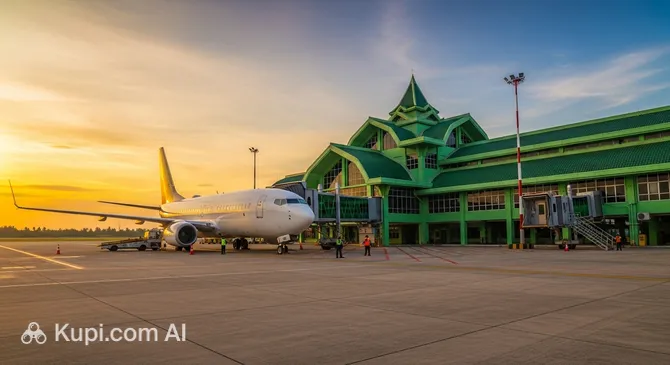
Kidjang Airport. Source: Kupi.com Binoculars

Raja Haji Fisabilillah International Airport, formerly known as Kidjang, serves as the main aerial gateway to the picturesque island of Bintan. It is not merely a transport hub, but a modern and welcoming complex that immerses travellers in the relaxed atmosphere of an Indonesian resort from the very first minute. Thanks to recent modernization and a strategic location, the airport ensures a comfortable start to exploring the culture and nature of the Riau Archipelago.

IATA Code TNJ
ICAO Code WIDN
City Tanjung Pinang
Distance to Centre ~12 km
Status International
Annual Passengers About 350,000

Airport Features and Advantages

Unique Architecture and Design. The airport terminal stands out with its exterior, combining modern technology with traditional Malay motifs. High ceilings and panoramic glazing fill the space with natural light, while decorative elements remind visitors of the region's rich cultural heritage, creating a pleasant aesthetic impression immediately upon arrival.

Compactness and Speed of Service. One of the main advantages of Kidjang Airport is its small size, which guarantees the absence of tiring queues and long walks. Passengers note that passport control, baggage claim, and check-in take minimal time here, which is particularly valuable after a flight.

Enhanced Level of Comfort. Following the opening of the new terminal in 2013, the level of service has increased significantly. Travellers have access to a modern Executive Lounge for a peaceful wait before their flight, as well as clean and spacious rest areas. The airport is equipped with everything necessary for passengers with reduced mobility, making it convenient for all categories of tourists.

Convenient Logistics. The airport is strategically located: the journey to the city centre of Tanjung Pinang takes only about 20–30 minutes, and the popular beach resorts of Bintan Island can be reached in less than an hour. This makes it an excellent alternative to ferry services for those who prefer air travel.

Contact Information

If you need to contact representatives of Kidjang Airport (TNJ), please use the following contact information. The official name of the airport is Raja Haji Fisabilillah International Airport, and it is managed by Angkasa Pura II.

  • Official Website: The most up-to-date information on flights, services, and regulations can be found on the official airport page on the Angkasa Pura II operator's website.
  • Information Desk Phone: For general inquiries, you can call: +62 771 442142.
  • Airport Address: Jl. Adi Sucipto KM. 12, Pinang Kencana, Tanjungpinang Timur, Kota Tanjung Pinang, Kepulauan Riau, Indonesia.
  • Email: For written enquiries, you can use the operator's contact email: contact.center@angkasapura2.co.id.
  • Social Media: News and updates are published on the official Angkasa Pura II pages on Instagram and X (formerly Twitter).
  • Lost Luggage Information: Important! For issues related to lost or damaged luggage, please contact your airline's representative directly at the airport.
  • Passenger Support Contacts: For passenger support, use the main information desk phone number or email address listed above.

How to Get to the Airport

Getting to Kidjang Airport (Raja Haji Fisabilillah Airport, TNJ) from the city centre of Tanjung Pinang is easy, as it is located just 10-15 kilometres away. Depending on your budget and preferences, you can choose from several methods. The trip from the city centre usually takes 20 to 30 minutes, but it is worth allowing extra time in case of traffic.

Taxis and Ride-Hailing Apps. This is the most convenient and popular way to get to the airport. You can use official taxis, found at designated ranks in the city, or book a car via mobile apps such as Gojek or Grab, which are widely used in Indonesia. A taxi ride is affordable, but it is recommended to agree on the price with the driver in advance or ensure they use the meter. Booking via an app is often more cost-effective and transparent regarding the fare.

Public Transport. For a more budget-friendly journey, you can use local minivans known as "angkot". These are small minibuses that ply specific routes. This is the cheapest option, but it can be inconvenient if you have a lot of luggage, and routes are not always obvious to tourists. There is no metro or rail connection to the airport in the city.

Car Rental and Parking. If you plan to travel extensively around Bintan Island, renting a car can be an excellent solution. Several rental agencies operate in the city. Kidjang Airport has a parking area where you can leave your vehicle for the duration of your trip. This is a convenient option for those travelling with their own or rented transport.

It is also worth noting that many travellers arrive in the region via larger transport hubs. For example, you can fly into Hang Nadim International Airport on the neighbouring island of Batam or the famous Changi International Airport in Singapore, and from there reach Tanjung Pinang by ferry. Other relatively nearby airports include Seletar in Singapore and Senai in Malaysia.

Terminals and Map

Kidjang Airport (TNJ), officially known as Raja Haji Fisabilillah International Airport, is a modern and compact aviation hub. All passenger infrastructure is concentrated in one main terminal, which serves both domestic flights within Indonesia and a limited number of international routes. This makes navigating the airport very easy, even if you are visiting for the first time.

The terminal structure is intuitive. Generally, the ground floor houses the arrivals area with baggage reclaim belts, customs control, and check-in counters for departing flights. After check-in, passengers proceed to the first floor, where the security screening area and the main departure lounge with boarding gates are located. Since there is only one terminal, there is no need for transfers or shuttles — everything is within walking distance.

Completing all pre-flight formalities at Tanjung Pinang airport usually takes significantly less time than in major metropolitan hubs. Thanks to the low passenger volume, queues for check-in and security are rarely long. On average, all procedures take from 30 to 45 minutes. Nevertheless, it is recommended to arrive at the airport as standard — 1.5–2 hours before a domestic flight and 2–3 hours before an international one, to avoid any unforeseen delays.

Navigating the terminal causes no difficulties. Signs are in Indonesian and English, clearly leading to all key zones: check-in counters, security, boarding gates, and the arrivals area. Despite its modest size, the terminal offers basic amenities for passengers, including several cafes, small shops, and comfortable waiting areas. It is a small and compact airport where everything you need is close at hand.

Airport History

The history of the airport serving Tanjung Pinang begins long before it became a modern international hub. Originally known as Kidjang Airport, it was built as a military airfield. Over time, with the growing importance of the region as a tourism and economic centre, the need for civil aviation development arose. A key moment in the airport's history was 2008, when it was officially renamed Raja Haji Fisabilillah International Airport in honour of an Indonesian national hero, highlighting its cultural and historical significance for the Riau Archipelago.

The main stages of the airport's modernization took place in the 2000s and 2010s. As part of a large-scale reconstruction, the runway was significantly lengthened and strengthened, allowing it to accommodate larger aircraft such as the Boeing 737. The most significant event was the opening of a new, modern passenger terminal in 2013. This allowed not only an increase in capacity but also a radical improvement in the level of comfort for passengers, transforming the regional airfield into a fully-fledged international-class gateway.

An interesting fact: despite its relatively modest size compared to giants like Jakarta's airport, Raja Haji Fisabilillah Airport plays a strategic role. It is the main arrival point for tourists heading to the popular resorts of Bintan Island. Its transformation from a simple airfield into a modern complex reflects the dynamic development of the entire region, which is oriented towards tourism and international cooperation. Today, the airport continues to improve to meet the growing flow of travellers from around the world.

Services and Facilities

Kidjang Airport (TNJ) is a compact and modern terminal serving the city of Tanjung Pinang and acting as a vital aerial gateway for Bintan Island in Indonesia. Despite its modest size, it offers all the necessary amenities for a comfortable wait before your flight. In the public area and departure lounge, you will find several small cafes and eateries where you can taste local cuisine, have a coffee, or buy soft drinks. There are also souvenir stalls and shops selling essentials.

For those who need to stay connected, Wi-Fi access is provided within the terminal. The waiting lounges have power outlets for charging electronic devices. Financial matters can be handled using ATMs located in the airport building. A currency exchange counter is also usually available, but it is best to check its opening hours in advance, especially if you arrive late in the evening.

The airport features standard and sufficiently comfortable waiting areas. For passengers preferring privacy, an Executive Lounge operates where you can wait for your flight in a quiet atmosphere, enjoying drinks and light snacks. The airport is equipped for passengers with disabilities, featuring ramps and accessible toilets. For travellers with small children, there is a mother and child room. In case of necessity, you can visit the medical point for first aid.

There are no specialized conference rooms or business centres within the airport building. For business meetings, it is better to use the facilities of hotels in the city. There are also no hotels directly on the airport grounds; however, many accommodation options — from budget guesthouses to comfortable hotels — can be found in Tanjung Pinang itself, which is just a 15-20 minute taxi ride away.

Dining

Kidjang Airport (TNJ) offers passengers a basic but authentic selection of dining venues for a snack or a full meal. Although you won't find global restaurant chains here, it is an excellent opportunity to experience real Indonesian cuisine at affordable prices before departure.

Most cafes and small eateries, known as warungs, are located in the public area (landside) before security control. Here you can order filling and popular dishes such as Nasi Goreng (fried rice) or Mie Goreng (fried noodles). This is the ideal place for a full lunch. In the sterile area (airside) after screening, the selection is usually more modest and limited to small kiosks selling drinks, sandwiches, and local snacks.

For those seeking vegetarian dishes, you can ask local cafes to prepare fried rice or noodles with vegetables (sayur). As Indonesia is a country with a predominantly Muslim population, almost all food served here is Halal. Finding specific vegan or gluten-free options may be difficult, so it is advisable to carry suitable snacks with you.

The price range at Kidjang Airport is very moderate. A full meal will cost significantly less than at major international airports. Establishments usually operate according to the flight schedule — opening a couple of hours before the first departure and closing after the last aircraft leaves. for a quick snack, we recommend grabbing a coffee and local pastries, and for a more substantial meal, visit one of the cafes in the main hall to try traditional Indonesian dishes.

Travel Tips

Planning a trip through Kidjang Airport (Raja Haji Fisabilillah Airport) in the city of Tanjung Pinang will be easier with our tips. Here are some recommendations to help you save time, money, and stress during your journey through Indonesia.

Arrival Time at the Airport
For domestic flights, it is recommended to arrive at the airport 1.5–2 hours before departure. If you have an international flight (which is rare for this airport), allow at least 3 hours. Although Kidjang is a relatively small airport and procedures here may be faster than in major hubs, an extra buffer of time is never amiss.

Check-in and Security Control
To avoid queues, use online check-in if your airline provides this service. This will allow you to proceed straight to the baggage drop counter or, if you are travelling light, head directly to the security screening area. The security procedure is standard: be prepared to remove laptops and other large gadgets from your hand luggage, as well as liquids in containers up to 100 ml, packed in a transparent bag.

Choosing a Seat on the Plane
Seat selection depends on your preferences. A window seat will offer you unforgettable views of the Riau Archipelago islands during take-off and landing. An aisle seat is ideal if you want the freedom to stand up and stretch your legs during the flight. For those in a hurry to exit upon arrival, seats in the front of the cabin are the best choice.

Hand Luggage: Do's and Don'ts
It is prohibited to carry liquids in containers larger than 100 ml, any sharp objects, weapons, and flammable substances in hand luggage. Always keep all valuables with you in the aircraft cabin: documents, money, bank cards, electronics (including power banks), and necessary medication.

Transfer Passengers
Kidjang Airport mainly serves domestic flights. If you have a connection, especially involving a transfer to a different airline, check in advance whether you need to collect your luggage and check in again. Keep in mind that this may require additional time.

Customs Control
When arriving in Indonesia from another country, you will have to pass through customs control. Be prepared to fill out a customs declaration, declaring imported goods and cash if the amount exceeds the established limit. To avoid issues, we recommend familiarizing yourself with the country's current customs regulations in advance.

How to Save Time and Money

  • Book flight tickets in advance to find the most favourable fares.
  • Travel light to avoid paying for excess baggage.
  • Bring an empty reusable bottle to fill with water after passing security control and avoid spending money on drinks.
  • Research airport transfer options: local buses or online taxi services may be cheaper than the official airport taxi.

If Your Flight is Delayed
In the event of a flight delay or cancellation, first contact your airline representative for information. Clarify your rights regarding meals, drinks, or hotel accommodation in case of a long delay. Keep all receipts for expenses incurred due to the delay — they may be needed to claim compensation from the airline or via your travel insurance.

Reached the end of the page?

That means the route is fully explored