Support

Korea, Republic Of

About the Country

South Korea is a country of amazing contrasts, located in East Asia on the southern part of the Korean Peninsula. It is a place where ancient traditions harmoniously coexist with ultra-modern technologies, creating a unique atmosphere that attracts travellers from all over the world, including many from the UAE. The country's dynamic capital, Seoul, is a prime example of this symbiosis, where ancient palaces and temples stand alongside futuristic skyscrapers and bustling shopping districts.
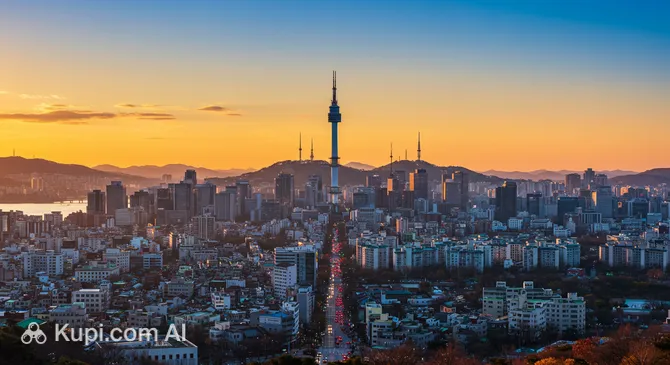
Seoul. Source: Kupi.com Binoculars

South Korea's cultural heritage is rich and multifaceted, from its thousand-year history reflected in numerous UNESCO World Heritage sites to the world-famous Korean Wave (Hallyu), which includes K-pop music and K-dramas. The country is also famous for its unique cuisine, with a growing number of halal and Muslim-friendly options available, especially in major cities. It boasts picturesque mountain landscapes, such as those in Seoraksan and Jirisan national parks, and beautiful coastal areas. Travellers can discover diverse natural beauty, from green tea plantations to the volcanic landscapes of Jeju-si island.

South Korea offers guests a unique combination of vibrant city life and tranquil nature. For Muslim travellers, prayer facilities are increasingly available in major tourist spots, shopping centres like COEX Mall and Lotte World, and at Incheon International Airport. You can explore historic cities such as Gyeongju, the former capital of the ancient Silla Kingdom, enjoy the hospitality of the locals, and discover a country that is constantly evolving while carefully preserving its past. When visiting temples, it is advisable to dress modestly, covering shoulders and knees. The country has a temperate climate with four distinct seasons, each lending a special charm to any journey.
Currency

The national currency of South Korea is the South Korean won (international code: KRW). Banknotes in circulation feature prominent Korean historical figures, such as the scholar Yi Hwang on the 1,000 won note and King Sejong the Great on the 10,000 won note, alongside various coins. It is advisable to exchange currency at banks or official, certified exchange bureaus, which can be found at airports, in cities, and in tourist areas. Major currencies, including the UAE Dirham (AED), can be exchanged at banks and exchange counters at Incheon International Airport. Try to avoid exchanging large amounts of money at hotels or with uncertified street money changers due to less favourable exchange rates and potential risks.

Credit cards, particularly Visa and Mastercard, are widely accepted in most shops, restaurants, and hotels throughout the country, especially in major cities like Seoul. However, it is always useful to carry a small amount of cash for minor purchases, public transport fares, or for visiting traditional markets where card payments may not always be available.

Visa Requirements

When planning a trip to South Korea, it is essential to familiarise yourself with the country's visa regulations in advance. For travellers from the UAE, the rules differ depending on your citizenship status.

Citizens of the United Arab Emirates holding a UAE passport can enter South Korea without a visa for tourism purposes. Furthermore, the previously required Korea Electronic Travel Authorisation (K-ETA) is temporarily waived for UAE nationals until 31 December 2025. This allows for a streamlined entry process.

For UAE residents who are not UAE citizens, visa requirements are determined by their country of nationality. Many expatriates will need to apply for a C-3 Short-Term Tourist Visa. This application is typically submitted in person at the Embassy of the Republic of Korea in Abu Dhabi or the Consulate General in Dubai, depending on the jurisdiction of your UAE residence visa. Required documents often include a valid passport with at least six months' validity, a valid UAE residence visa, a No-Objection Certificate (NOC) from your employer, recent bank statements, and confirmed flight and hotel bookings. As visa policies and entry conditions can change, it is strongly recommended to verify the latest information on the official websites of the South Korean embassy or consulate in the UAE before planning your journey.

We'll tell you if you need a visa

Specify where you are going, or
Your citizenship
Destination

Time Zones

When planning a trip to South Korea, you will not have to worry about changing time zones within the country. The whole of South Korea observes a single time zone – Korea Standard Time (KST), which is UTC+9. This means the time in Seoul, Busan, or on Jeju Island will always be the same.

For travellers from the UAE, it is useful to know that South Korea is five hours ahead of Gulf Standard Time (UTC+4). This uniformity makes it much easier to plan travel and activities across the country, saving you the trouble of adjusting your watch and accounting for time differences between various regions. Neither the UAE nor South Korea observes daylight saving time.

How to Get There

The primary way to reach South Korea is undoubtedly by air. The country has several international airports, with the main gateway being Incheon International Airport, which serves the capital, Seoul, and is one of the largest and busiest hubs in Asia. From the UAE, direct flights are operated by major carriers such as Emirates, Etihad Airways, and Korean Air, connecting Dubai and Abu Dhabi with Seoul. Additionally, there are numerous flight options with convenient connections through other major aviation hubs.

In addition to air travel, it is also possible to reach South Korea by sea. Regular ferry services connect the country with Japan and China, offering an alternative and often scenic mode of travel. Cruise liners also frequently include South Korean ports in their East Asian itineraries. Overland travel for tourists is currently restricted due to the geopolitical situation on the Korean Peninsula. Regardless of your chosen method of travel, it is advisable to book your tickets in advance, particularly if your trip coincides with the peak tourist season or national holidays, to secure the best prices and availability.

For your reference, here is a summary of the main airports in South Korea:

Airport Name City Passenger Traffic Volume
Incheon International AirportSeoulLargest
Jeju International AirportJeju CityVery Large
Gimhae International AirportBusanLarge
Cheongju AirportCheongjuMedium
Daegu International AirportDaeguMedium

South Korea offers travellers an amazing variety of destinations. Here you will find ultra-modern, energetic metropolises, cosy resort towns for enjoying nature and tranquillity, and ancient capitals that hold the secrets of centuries. Whether you are interested in its rich culture, relaxing on picturesque coastlines, or delving into history, there is something for everyone.

The heart of the country is undoubtedly its capital, Seoul, a city of contrasts where skyscrapers stand next to ancient palaces and trendy districts border traditional markets. It is a place where modernity meets centuries-old traditions, offering tourists endless opportunities for discovery. For Muslim travellers, Seoul is increasingly accommodating, with a growing number of halal-certified and Muslim-friendly restaurants, especially in areas like Itaewon and Myeongdong. The city is also home to the Seoul Central Mosque and several prayer facilities in major tourist spots and shopping centres.

Seoul. Source: Kupi.com Binoculars

For those who love beaches and natural beauty, Jeju-si island is the perfect choice, known for its volcanic landscapes, scenic beaches, and unique ecosystem. Muslim-friendly restaurants, often focusing on seafood, and some hotels cater to Muslim visitors. If history is what you seek, head to Gyeongju, the former capital of the ancient Silla Kingdom, which is filled with historical monuments and artefacts. Finally, the coastal city of Gangneung will delight sea lovers with its beaches and fresh air, as well as its cultural events. A number of Muslim-friendly restaurants can also be found here, offering local specialities. These cities and many others await, promising an unforgettable journey through South Korea.

Top Attractions

South Korea offers travellers an amazing variety of attractions, from ultra-modern skyscrapers to unique natural wonders. There is something here for everyone to enjoy while planning their unforgettable adventure.

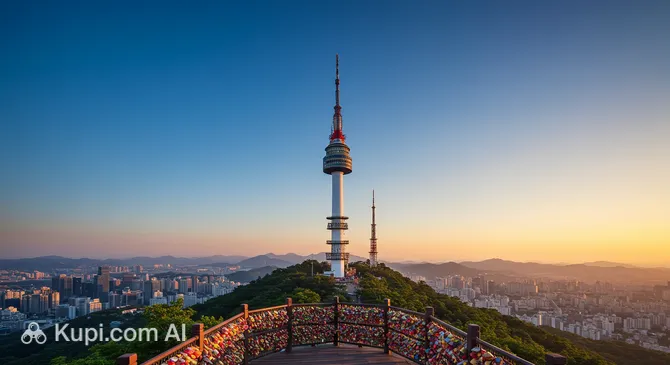
One of the capital's most recognisable symbols is the N Seoul Tower, located on Namsan Mountain. Its observation decks offer breathtaking panoramic views over Seoul, which are especially impressive at sunset. The tower is also famous for its "locks of love"—thousands of padlocks left by couples to symbolise their everlasting love. While the tower itself does not have dedicated prayer facilities, the Seoul Central Masjid is accessible nearby, and several halal-certified and Muslim-friendly restaurants can be found in the surrounding Myeongdong and Itaewon areas.

N Seoul Tower. Source: Kupi.com Binoculars

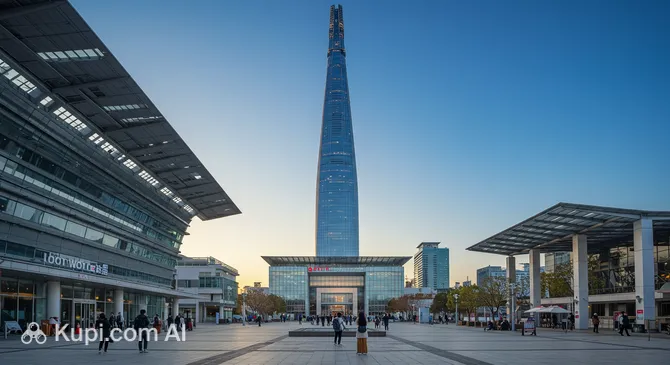
No less impressive is the modern structure of the Lotte World Tower. It is one of the tallest skyscrapers in the world and features the Seoul Sky observation deck with a glass floor, offering a bird's-eye view of the city. The complex is a fantastic family-friendly destination, also including a huge shopping mall, an amusement park, and an aquarium. For the convenience of Muslim visitors, a dedicated prayer room, complete with separate sections for men and women and ablution facilities, is available on the 6th floor of the Avenuel building.

Lotte World Tower. Source: Kupi.com Binoculars

For connoisseurs of natural beauty, a visit to the Manjanggul Lava Tube is an essential part of any itinerary. It is one of the largest and best-preserved lava tunnels in the world and a UNESCO World Heritage site. A walk through its mysterious tunnels, formed by ancient lava flows, will leave a lasting impression. Please note that the cave may be closed for maintenance; it is advisable to check its operational status before planning your visit.

Manjanggul Lava Tube. Source: Kupi.com Binoculars

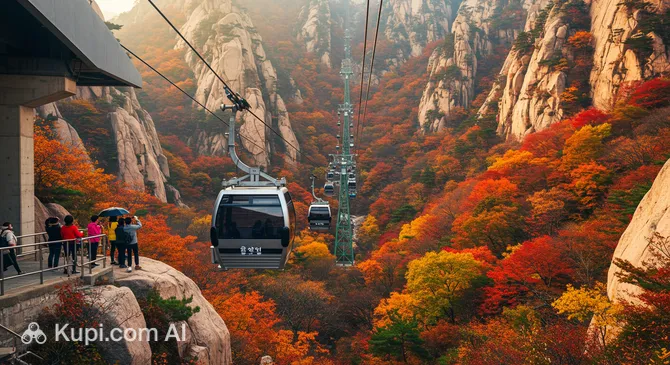
Lovers of mountain scenery should head to Seoraksan National Park to ride the Seoraksan Cable Car. The ascent to the peaks reveals magnificent views of picturesque cliffs, dense forests, and valleys. The park is especially beautiful in autumn when the leaves turn vibrant colours. While facilities are basic, the park offers a memorable escape into nature.

Seoraksan Cable Car. Source: Kupi.com Binoculars

Best Time to Visit

South Korea is beautiful at any time of year, but the best time to visit is traditionally considered to be spring (April–May) and autumn (September–October). Offering a pleasant escape from the UAE heat, these seasons bring comfortable, warm, and sunny weather with little rainfall. In spring, the country is covered in cherry blossoms and other flowering trees, creating incredibly picturesque landscapes, especially in cities like Gyeongju or in the parks of Seoul. Autumn, meanwhile, paints Korea in golden and crimson tones thanks to the vibrant foliage, making it the perfect time for walking in national parks such as Seoraksan near Sokcho. This is the high season, so be prepared for more tourists and higher prices for flights and accommodation.

Summer (June–August) in South Korea is hot and humid, especially in July when the 'changma' rainy season begins. While warm, the climate may feel familiar to those accustomed to UAE summers. These months are popular for visiting beach resorts like Jeju-si island or the coast of Gangneung. Winter (December–February) offers a true winter experience, as it is quite cold and snowy, especially in the northern and mountainous regions. This creates excellent conditions for ski holidays, and cities like Chuncheon can also be charming under a blanket of snow. These periods can be considered the shoulder or low season for sightseeing, which means fewer tourists at popular sites and potentially lower prices. However, be ready for the weather: summer downpours can disrupt plans, while the winter cold will require warm clothing.

When planning your trip, it is worth considering major national holidays such as Seollal (Lunar New Year) in winter and Chuseok (Harvest Festival) in autumn. During these times, many Koreans travel across the country to visit relatives, leading to heavy traffic and the closure of some shops and restaurants. For Muslim travellers, South Korea is becoming increasingly accommodating. Halal-certified and Muslim-friendly restaurants are now easier to find in major cities like Seoul, particularly in areas like Itaewon. Prayer facilities are also available at major airports, such as Incheon International Airport, and in large shopping centres and key tourist attractions. Although the climate is generally temperate, it can vary by region—for example, winter is milder on the southern island of Jeju-si. It is always a good idea to check the weather forecast for your specific destinations before you travel.

Traditions

South Korea is a country with a rich and ancient culture, where respect for tradition plays an important role in daily life. When greeting someone, especially elders or those in a higher position, Koreans typically give a slight bow. The depth of the bow depends on the status of the person you are addressing. Direct eye contact with strangers or elders can be considered impolite. Hospitality is highly valued; if you are invited to a home, a small gift for the hosts is appropriate – this could be fruit, sweets, or a souvenir from your country. When visiting temples or certain traditional establishments, it is wise to choose modest clothing that covers the shoulders and knees, similar to the etiquette for visiting mosques. In general, Koreans place a high value on a neat and tidy appearance.

At the dining table in South Korea, there are also specific rules to follow. For instance, it is customary not to start eating before the elders. Chopsticks should never be stuck vertically into a bowl of rice, as this is associated with funeral rites. It is also impolite to point at people or objects with your chopsticks. It is important to remember that tipping is not customary in most establishments and may even be taken as an insult. For travellers from the UAE, finding halal food is becoming easier, with many Muslim-friendly and certified halal restaurants available, particularly in areas like Itaewon in Seoul and in other major cities. Prayer rooms are also available at major airports, tourist attractions, and in some shopping centres and hospitals. The main national holidays are Seollal (Lunar New Year) and Chuseok (harvest festival), when families gather to honour ancestors and enjoy traditional meals. During these holidays, many businesses may be closed and public transport can be very crowded, which is worth considering when planning your trip.

To show respect for the local culture, try to avoid speaking loudly in public places, especially on public transport. It is customary to give and receive items with two hands, or with your right hand supported by your left at the wrist, particularly when it involves money, gifts, or business cards. Learning a few basic Korean phrases, such as "annyeonghaseyo" (hello) and "kamsahamnida" (thank you), will be greatly appreciated by locals and will help make your journey even more pleasant.

Entertainment

South Korea offers tourists an incredible variety of entertainment to suit every taste. Fans of active recreation will find picturesque mountain trails for hiking, which are especially popular in spring and autumn, as well as opportunities for water sports on the coast. The country is rich in cultural events: from visiting numerous museums and art galleries, where you can get acquainted with a thousand years of history and contemporary art, to watching traditional Korean performances and ultra-modern K-pop concerts. In major cities like Seoul, cultural life is vibrant all year round.

As darkness falls, South Korea's nightlife is revealed in all its glory, especially in areas such as Itaewon or Hongdae in Seoul. Here, numerous bars, clubs, and karaoke (noraebang) restaurants are open until the morning, offering an immersion into an atmosphere of fun and energy. For Muslim travellers, the Itaewon district is particularly welcoming, hosting Seoul Central Masjid and a wide array of certified halal restaurants serving authentic Korean and international cuisine. Shopping is another integral part of Korean leisure. From huge shopping centres and department stores with the latest in fashion and electronics to traditional markets where you can buy unique souvenirs, cosmetics, ginseng, and handmade crafts – everyone will find something to their liking. Popular shopping areas include the Myeongdong and Dongdaemun districts in the capital, with some major malls like COEX and Lotte Department Store providing dedicated prayer rooms for shoppers.

For a family holiday, South Korea also offers a wealth of options. There are modern, world-class theme parks with exciting rides, water parks for summer fun, and numerous interactive museums and educational entertainment centres that will be of interest to both children and adults. Many parks and public spaces are well-equipped for relaxing with children, offering playgrounds and picnic areas. Key attractions like Lotte World and Everland provide prayer facilities for the convenience of Muslim visitors.

Currency rates

Planning a trip? Wonderful! To ensure the financial aspects of your journey don’t come as a surprise, it is important to remember that currency exchange rates are constantly changing. Therefore, we strongly advise monitoring current rates both before your departure and throughout your trip. For this, you can use the data provided below—we monitor currency exchange rates 24/7 and strive to provide the most up-to-date information.

KRW currency exchange rate as of 02.01.2026

1 AED
~ 391.28 KRW
1 AMD
~ 3.77 KRW
1 AUD
~ 958.60 KRW
1 AZN
~ 845.39 KRW
1 BYN
~ 488.72 KRW
1 CAD
~ 1047.39 KRW
1 EUR
~ 1689.35 KRW
1 GBP
~ 1935.85 KRW
1 HUF
~ 4.39 KRW
1 INR
~ 15.97 KRW
1 KGS
~ 16.43 KRW
1 KZT
~ 2.83 KRW
1 PLN
~ 400.25 KRW
1 RUB
~ 18.22 KRW
1 SAR
~ 383.14 KRW
1 SGD
~ 1118.01 KRW
1 TRY
~ 33.46 KRW
1 UAH
~ 33.98 KRW
1 USD
~ 1437.90 KRW
8.36 UZS
~ 1 KRW

Reached the end of the page?

That means the route is fully explored