Support

Gimhae International Airport

About the Airport

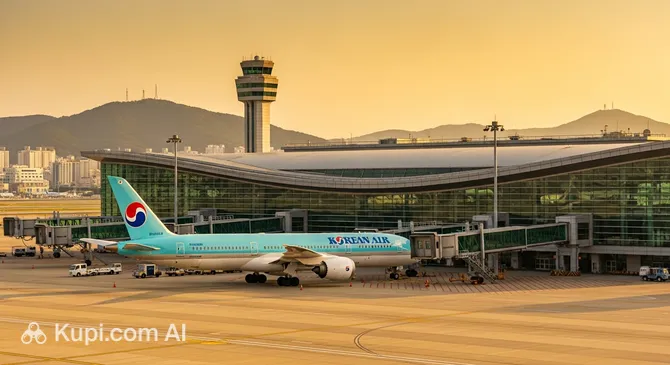
Gimhae International Airport. Source: Kupi.com Binoculars

Gimhae International Airport is not merely a transport hub, but the true aerial gateway to the southern coast of South Korea. Unlike the futuristic giant Incheon, this airport welcomes travellers with a more intimate and cosy atmosphere, immediately setting the pace for a port city. It is here that your introduction to dynamic Busan, its famous beaches, and the cultural heritage of the ancient Gaya kingdom begins. Thanks to the compact nature of the terminals, the journey from the aircraft steps to the city exit takes minimal time, allowing you to dive into your adventures faster.

IATA Code PUS
ICAO Code RKPK
City Busan
Distance to Centre ~22 km
Status International
Annual Passengers approx. 15.8 million (2024)

Airport Features and Amenities

The main advantage of Gimhae is its clear navigation and convenient location. The airport is connected to the city by the Busan-Gimhae Light Rail, which allows you to reach the metro and central districts quickly and without traffic jams. Despite its relatively small size, everything necessary is available here: from Lotte Duty Free shops with a fine selection of cosmetics to restaurants serving traditional Korean cuisine where you can have a meal before your flight.

It is important for travellers to remember a unique feature of Gimhae: due to its proximity to residential areas, a curfew is in effect. The airport is closed for flight operations from 23:00 to 06:00, so night flights do not land or depart here, and waiting areas are closed for the night.

Contact Information

Below is the essential contact information for passengers departing from or arriving at Gimhae International Airport.

  • Official Website: www.airport.co.kr/gimhae (available in Korean, English, Chinese, and Japanese).
  • Help Desk Phone: +82-1661-2626 (Korea Airports Corporation unified information centre).
  • Airport Address: 108 Gonghangjinip-ro, Gangseo-gu, Busan, Republic of Korea.
  • Email: The airport does not provide a public email address for general enquiries. It is recommended to use the special form on the official website for communication.
  • Social Media: News and updates about the airport are published on the official pages of the managing company, Korea Airports Corporation (KAC).
  • Lost Luggage Information: If your luggage has been lost, please contact your airline's representative first. For items left behind in the terminal, you should call the Lost and Found bureau at: +82-51-974-3776.
  • Passenger Support Service: Support can be obtained by calling the main helpline, as well as at the information desks located in the arrival and departure halls.

Getting to the Airport

Gimhae International Airport (PUS) has excellent transport links with Busan and neighbouring regions of South Korea. Travellers can choose the most convenient way to reach the city: from high-speed metro and comfortable buses to taxis and rental cars. The choice depends on your budget, amount of luggage, and destination within the city.

One of the most convenient and economical ways is the Light Rail Transit (LRT). The purple Busan-Gimhae Light Rail Transit line directly connects the airport terminals with the city metro system. You will need to make just one transfer at Sasang station to switch to the Green Line (Line 2) or Daejeo station to switch to the Brown Line (Line 3). The journey to central districts, such as Seomyeon, will take about 40-50 minutes. This is the ideal option for those travelling light who wish to avoid traffic.

For those who value comfort, especially when travelling with bulky luggage, Limousine Buses are an excellent choice. They operate on several routes, connecting the airport with key points in the city, including major hotels, Busan Station, and the popular tourist districts of Haeundae and Gwangalli. The fare is higher than standard public transport, but they offer more space and make fewer stops. Regular city buses are also available — this is the most budget-friendly option, though the journey may take longer.

Taxi is the fastest and most convenient "door-to-door" method. Taxi stands are located right outside the arrival terminal exits. A trip to the city centre will take from 30 to 45 minutes depending on traffic conditions. The cost depends on the distance and the type of taxi (standard or deluxe). This is particularly cost-effective for small groups or families. For added convenience, a private transfer can be booked in advance.

If you plan to actively travel around the outskirts of Busan, it is worth considering car rental. Offices of both international and local rental companies are present at Gimhae Airport. This gives complete freedom of movement and the opportunity to explore the scenic coastline and neighbouring cities at your own pace. For those arriving at the airport in their own vehicle, zones for short-term and long-term parking are provided.

Gimhae Airport also serves as an important transport hub for travel throughout the south-eastern region. Intercity buses depart from here to cities such as Ulsan, Daegu, Jinju, and Pohang. Proximity to the port also opens up opportunities for sea travel, for example, to the Japanese island of Tsushima.

Terminals and Map

Gimhae International Airport (PUS) in Busan features a simple and logical structure that helps passengers navigate easily. The airport consists of two separate passenger terminals: the International Terminal and the Domestic Terminal, located in different buildings.

Gimhae International Airport. Source: Kupi.com Binoculars

The International Terminal handles all flights outside of South Korea. It is a larger and more modern building where check-in counters for most airlines, passport control, and customs zones are concentrated. The majority of Duty-Free shops, restaurants, and business lounges are also located here. The Domestic Terminal, as the name suggests, is designed for flights within the country, such as trips to Seoul or Jeju Island. It is smaller in size and more functional, allowing for quick pre-flight formalities.

Since the terminals are located at some distance from each other, walking between them is not typically intended. A free shuttle bus operates to transport passengers, departing every 10–15 minutes. The ride takes just a few minutes. Both terminals are also connected by the Busan-Gimhae Light Rail Transit line, which is convenient for those arriving at or leaving the airport by public transport.

When planning your time, consider the type of flight. For international departures, it is recommended to arrive at the airport 2.5–3 hours before departure. During peak hours or holiday seasons, passing through check-in, passport control, and security screening can take up to an hour and a half. For domestic flights, arriving 1–1.5 hours in advance is usually sufficient. Procedures here are significantly faster.

For convenient navigation, pay attention to the numerous signs in Korean and English. The airport layout is clear: Departure zones are located on the upper floors, while Arrival zones are on the lower floors. If you are unsure where to go, feel free to approach the information desks — the staff are always ready to help. Check in advance which terminal your flight departs from to avoid unnecessary rushing.

Airport History

The history of Gimhae International Airport reflects the rapid development of the city of Busan and the entire south-eastern region of South Korea. The airport did not begin operations at its current location, but in another district of the city. It was opened in August 1958 as Busan-Suyeong Airport and originally had a dual purpose, serving both civil and military needs.

With the growth of Busan as a major port and industrial centre, the old airport could no longer cope with the load. In 1976, a decision was made to move it to its current location in the Gangseo-gu district. It was then that it received its modern name — Gimhae International Airport. This relocation was a key stage that allowed for the significant expansion of runways and terminals to accommodate a greater number of international flights.

A real breakthrough in development occurred in the 21st century. To cope with the constantly growing passenger flow, a new, modern international terminal was opened in 2007. This massive expansion allowed for the separation of domestic and international flights, substantially increasing passenger comfort and airport capacity. The old terminal was retrofitted to serve domestic airlines.

One of the most interesting facts about Gimhae Airport is that it still retains its dual function. The runways are shared with the Republic of Korea Air Force base. For passengers, this means that occasionally, from the aircraft window, one can see not only civil airliners but also military aircraft. Today, Gimhae is one of the busiest airports in the country and an important hub for many Asian airlines, including low-cost carriers.

Services and Amenities

Beyond various restaurants and shops, Gimhae Airport offers a multitude of services aimed at passenger comfort and convenience. To ensure you stay connected, free Wi-Fi is available throughout the terminals. Numerous charging stations are provided for electronic devices, so you will easily find a place for your laptop or smartphone.

For those who prefer to wait for their flight in a quieter and more secluded setting, VIP halls and premium lounges are available. Here, guests are offered light refreshments, beverages, fresh newspapers, and comfortable places to rest away from the bustle of the main halls. Business travellers can utilise the services of business centres, which have everything necessary for work and holding meetings.

Gimhae Airport is well-equipped to welcome all categories of passengers. For travellers with children, play zones and nursing rooms are provided. Passengers with reduced mobility are offered assistance in moving through the terminal (upon prior request), and the infrastructure itself includes ramps, lifts, and specially equipped restrooms. In case of necessity, one can visit the medical centre or purchase medicines at the pharmacy.

If you have a long layover or an early flight, several hotels offering comfortable rooms and convenient transfers are located in the immediate vicinity of the airport. Financial services, such as currency exchange, are available at bank branches and specialised counters located in the arrival and departure halls.

Dining

At Gimhae International Airport, travellers will find a decent selection of establishments to suit every taste and budget. Here you can grab a quick snack before a flight or enjoy a leisurely lunch or dinner in a full-service restaurant. Most cafes and restaurants are concentrated in the International and Domestic terminals, both in the public area (landside) and in the secure area after passport control (airside).

Finding yourself at the airport of Busan, do not miss the opportunity to enjoy local cuisine. This is a great chance to taste the authentic flavours of South Korea before departure. In food courts and restaurants, you will be offered popular dishes such as Bibimbap (rice with vegetables, meat, and egg), Bulgogi (marinated grilled beef), and various hearty soups, for example, Kimchi-jjigae. This is a wonderful opportunity to acquaint yourself with the region's gastronomic culture.

For those short on time, numerous coffee shops and bakeries are ideal, where you can pick up fresh pastries, sandwiches, and quality coffee. For a more substantial meal, head to the food court, which is usually located in the public departure zone. Here, corners featuring Korean, Japanese, and Western cuisine are gathered under one roof, which is convenient for groups travelling together. After passing security control, choices are also available, though the selection may be slightly smaller.

Passengers with specific dietary preferences can find suitable options. Many Korean dishes, such as Bibimbap, are easily adapted for vegetarians — simply ask for it to be prepared without meat. However, finding certified Halal or strictly gluten-free establishments may be more challenging; seafood options are often a safe and delicious alternative available in many Korean eateries. Prices at Gimhae Airport are on average higher than in the city but remain at an acceptable level. Opening hours for most establishments are tied to the flight schedule — they open early in the morning and close after the last planes depart.

Travel Tips

To ensure your journey through Gimhae International Airport goes smoothly and without unnecessary worry, make use of these proven tips. The airport in Busan is modern and well-organised, but proper preparation is always helpful.

Arrival Time: For international flights, it is recommended to arrive at the airport 2.5–3 hours before departure, and for domestic flights — 1.5–2 hours. This time is sufficient to calmly go through all procedures, even during periods of high traffic, such as national holidays in South Korea.

Check-in and Security: Most airlines offer online check-in, which helps save time. Check-in counters and security checkpoints operate efficiently, but it is better to have all documents (passport, ticket, visa) ready in advance. At security, be prepared to remove all electronics and liquids from your hand luggage.

Hand Luggage: Standard rules apply here: liquids in containers no larger than 100 ml, packed in a transparent bag. Pay special attention to power banks — they can only be carried in hand luggage, and they must have a clear capacity marking.

Transfer Passengers: Gimhae Airport has convenient navigation in Korean and English. If you have a connecting flight, follow the "Transfer" signs. Ensure that you do not need to collect and re-check your luggage — it is best to verify this information with your airline in advance.

Customs Control: Upon entering the country, it is necessary to complete a customs declaration. Do this honestly, listing all goods subject to declaration. This will help avoid fines and delays. Customs officers may ask a few standard questions about the purpose of your visit.

Saving Time and Money: To avoid unnecessary spending, bring an empty reusable water bottle with you — after security, you can fill it at drinking fountains. Exchanging currency at the airport should only be done in small amounts, as the exchange rate in the city is usually more favourable. Pre-booking a transfer to the city can also save you money.

Flight Delays: If your flight is delayed, first contact your airline's counter for the latest information. Depending on the length of the delay, you may be provided with vouchers for food or drinks. While waiting for departure, you can visit Duty-Free shops, relax in one of the numerous cafes, or use paid lounge zones for a more comfortable wait.

Reached the end of the page?

That means the route is fully explored