Support

Cheongju Airport

About the Airport

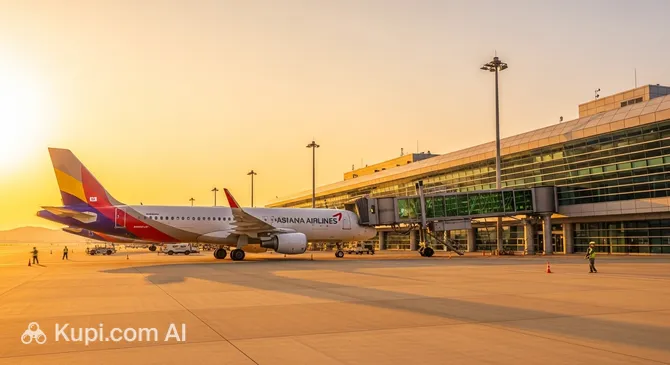
Cheongju Airport. Source: Kupi.com Binoculars

Cheongju International Airport (CJJ) is not merely the air gateway to the city of the same name, but a strategically important transport hub for the entire central region of the Republic of Korea. Originally established as a military airbase, today it successfully combines civil and military functions, also serving the major cities of Daejeon and the new administrative capital, Sejong. Thanks to its 24-hour operation and location away from densely populated areas, the airport has become a key base for many airlines and a convenient alternative to the capital's airports.

IATA Code CJJ
ICAO Code RKTU
City Cheongju
Distance to centre approx. 11 km
Status International, joint civil-military use
Annual Passengers approx. 3.7 million (2023)
Popular Airlines Aero K, Korean Air, Jeju Air
Schedule "Cheongju Airport" online board

One of the main features of Cheongju Airport is its role as an important hub for low-cost carriers; in particular, it serves as the main base for the airline Aero K. This ensures passengers have access to a wide network of budget routes both domestically and abroad, including Japan, Taiwan, and Vietnam. The airport is constantly developing: passenger traffic has grown significantly in recent years, leading to the expansion of commercial zones and infrastructure improvements for traveller comfort. Convenient transport links, including bus routes and proximity to a railway station, make it an attractive starting point for a journey through the central part of Korea.

Contact Information

For your convenience, we have compiled the main contact information for Cheongju Airport. We recommend always checking the official resources for the most up-to-date data before your trip.

  • Official Airport Website: www.airport.co.kr/cheongju/main.do (available in Korean and English). Here you will find the latest information on flights, services, and regulations.
  • Information Desk Phone: +82-1661-2626 (international number). You can call this number to clarify information about schedules, service operations, and other general queries.
  • Airport Address: 980 Jibong-ro, Ochang-eup, Cheongwon-gu, Cheongju-si, Chungcheongbuk-do, Republic of Korea.
  • Email: For email communication, a feedback form on the airport's official website is typically used.
  • Lost & Found: In case of lost or damaged luggage, you should first contact your airline's representative at the airport. Contact details for the airport's own lost property service can also be found on the official website.
  • Social Media: Please check the airport website for the availability and addresses of official social media pages.
  • Passenger Support Service: For general support and assistance within the airport, you can approach the information desks or call the main helpline.

Getting to the Airport

Reaching Cheongju Airport, located in the central part of South Korea, is possible via several convenient methods. The choice depends on your budget, departure point, and comfort preferences. The airport serves not only the city of Cheongju but is also an important transport hub for the entire region.

Public Transport is the most economical way to get to the airport. City buses (e.g., routes 407, 747, 751) run from the city centre and key locations. A trip by city bus will take approximately 40-50 minutes. Additionally, the airport is connected by limousine buses to major neighbouring cities such as Daejeon, Sejong, Cheonan, and even some districts of Seoul. Although there is no direct rail link to the terminal, the KTX Osong high-speed train station is located nearby, from where you can quickly reach the airport by bus or taxi.

Taxi and Private Transfer offer maximum comfort and speed. A taxi ride from the centre of Cheongju to the airport will take about 25-35 minutes depending on traffic conditions. This is an excellent option if you are travelling with a lot of luggage or in a small group. For added convenience and a fixed price, you can pre-book a private transfer, which will meet you at a designated location and take you directly to the terminal.

For those who prefer complete freedom of movement, car rental is a good solution. Several rental company offices are present at Cheongju Airport. By renting a car, you can not only reach the airport in comfort but also explore the picturesque surroundings of the region. For travellers arriving in their own vehicles, the airport grounds feature spacious car parks for both short-term and long-term parking.

Terminals and Map

Cheongju Airport (CJJ) is distinguished by its compactness and passenger-friendly structure. It consists of one passenger terminal, which serves both domestic and international flights. Such an organization significantly simplifies navigation, as you do not have to move between different buildings. All key zones — from check-in to baggage claim — are under one roof.

The terminal layout is intuitive. Generally, the building is divided into several levels by function. The Departure Zone is located on the second floor. Here you will find airline check-in counters, pre-flight security checkpoints, and passport control for international flights. After completing formalities, passengers enter the secure area with waiting lounges and boarding gates. The Arrival Zone is on the first floor, where baggage claim belts, customs control, and the exit to the city are located.

Since there is only one terminal, the issue of transfers between buildings is irrelevant, which is a big plus for travellers, especially those flying from the Republic of Korea for the first time. Navigation inside the building is made easy thanks to clear signs in Korean and English. You can always find up-to-date information about your flight on the information screens. Inside the terminal, there is a basic set of services: cafes, shops, including Duty Free for those flying abroad, and information desks.

The time required to complete procedures depends on the flight destination. For domestic flights, it is recommended to arrive at the airport 1.5-2 hours before departure. For international destinations, it is worth allowing more time — at least 2.5-3 hours, especially during peak periods. This buffer is enough to calmly check in, drop off luggage, and pass through immigration and customs control without rushing.

The main tip for navigating Cheongju Airport is simply to follow the signs. Due to its small size, it is practically impossible to get lost here. Carefully watch your boarding gate number on the electronic boards and your boarding pass, as it may change. If you have any questions, feel free to ask airport staff or approach the information desk.

Airport History

The history of Cheongju Airport (CJJ) is unique because it was created from the very beginning as a dual-purpose facility. Built primarily as a military airbase for the Air Force of the Republic of Korea, it was supplemented with a civil terminal to stimulate the economic development of the country's central region. This symbiosis of military power and civil aviation remains its distinctive feature today.

The official opening of the civil part of the airport took place on April 28, 1997. Initially, it served exclusively domestic flights, connecting Cheongju with key Korean cities such as Jeju. This step was part of the government's programme for decentralization and regional infrastructure development to reduce the load on airports in Seoul.

A significant stage in development was receiving international airport status in 2000, which opened doors for flights to China, Japan, and other Asian countries. A real breakthrough occurred with the active entry of Low-Cost Carriers (LCC) into the market in the 2010s. It was they who turned Cheongju Airport into one of the fastest-growing in the country, making it their important hub. Record passenger traffic figures have repeatedly prompted terminal expansion and modernization to ensure comfort for the ever-increasing number of travellers.

One of the most interesting facts in the airport's history is its role as a main base for the modern F-35A fighters of the South Korean Air Force. Thus, passengers waiting for their flight may witness the takeoff or landing not only of civil airliners but also of advanced military aircraft. This unusual proximity makes Cheongju Airport not just a transport hub, but a facility with a rich and multifaceted history.

Services and Amenities

Cheongju Airport (CJJ) offers passengers all necessary amenities for a comfortable wait for their flight. If you are hungry, there are several cafes and restaurants where you can grab a quick sandwich or have a full meal, choosing from both Korean and international cuisine. The terminal also features shops, including Duty Free, where you can purchase cosmetics, liquor, and souvenirs to remember your trip to the Republic of Korea.

For those for whom staying connected is important, free Wi-Fi is available throughout the airport. You will easily find power outlets and special stands for charging your electronic devices. Passengers travelling for business may have access to business lounges offering a quieter environment for work and waiting.

Comfortable waiting areas are provided for passengers. Travellers preferring enhanced comfort can use the services of VIP lounges, where snacks, beverages, and other privileges are offered. Families with small children will appreciate the availability of nursing rooms, equipped with everything necessary for baby care. The airport is also fully adapted for passengers with reduced mobility: there are ramps, elevators, and specially equipped restrooms, and staff are ready to provide necessary assistance upon prior request through the airline.

ATMs and currency exchange points are located in the terminal, which is particularly convenient for international tourists. In case of unforeseen health situations, a medical centre operates at the airport, ready to provide first aid. Although there are no hotels directly on the airport complex grounds, there are many accommodation options a few minutes' drive away, often accessible by a special shuttle or taxi. This is an excellent option for those with an early departure from the city of Cheongju or a late arrival.

Dining

When planning a departure from Cheongju Airport, you will find several convenient options for a snack or a full meal. Although the selection here is not as vast as in the capital's airports of the Republic of Korea, you certainly won't go hungry. Most dining establishments are concentrated in the general departure hall on the third floor, before security control, allowing those seeing passengers off to dine calmly.

The basis of the airport menu is Korean cuisine. Several restaurants and a food court operate here, where you can try classic dishes. This is a great opportunity to enjoy the taste of Korea before departure. Look out for items such as bibimbap (rice with vegetables and meat), hearty yukgaejang soup, or various types of Korean ramen. For those in a hurry, kimbap — Korean rolls that are convenient to take with you — is an ideal choice.

If you need a quick snack or just a cup of coffee, the airport has several chain coffee shops and convenience stores. In them, you can buy sandwiches, pastries, salads, beverages, and various snacks. Prices in airport establishments are generally slightly higher than in the city but remain reasonable for a transport hub. The opening hours of most cafes and restaurants are tied to the flight schedule and usually cover the period from early morning until the last evening departure.

Passengers with special dietary requirements should be prepared for a limited selection. There are no specialized vegetarian or gluten-free cafes here, however, in Korean restaurants, you can often ask for a dish to be prepared without meat, for example, vegetable bibimbap. In convenience stores, you can find salads, fruits, or nuts. It is recommended to clarify the ingredients with staff in advance to avoid misunderstandings.

Travel Tips

To ensure your journey through Cheongju Airport leaves only pleasant impressions, please review our tips. A little preparation will help you easily navigate the terminal, which serves both domestic and international flights, and save time for more pleasant activities than rushing and fussing.

Tax Refund (Tax Free): If you have made purchases in the Republic of Korea, do not forget about the possibility of a tax refund. Before checking in for your flight, find the counters marked Tax Free or Global Blue in the airport. You will need your passport, receipts, and possibly the goods themselves for presentation. The procedure usually does not take much time, but it is better to allocate at least 20-30 minutes extra to do everything without haste.

Security Checks and Hand Luggage: Be prepared for the standard screening procedure: large electronics and your bag of liquids (containers up to 100 ml) must be taken out of your bag separately. An important point: power banks can be carried only in hand luggage. Ensure your hand luggage complies with the weight and size standards set by your airline — this will help avoid unpleasant surprises and surcharges at the boarding gate.

Customs and Transfers: Those arriving on international flights must fill out an arrival card and a customs declaration. If Cheongju is your transit point, follow the "Transfer/Transit" signs. Be sure to check with your airline whether you need to collect and re-check your luggage. This is especially important if you are flying with different airlines.

In Case of Flight Delay: If the schedule changes, first contact your airline representative for information and instructions. Depending on the length of the delay, you may be entitled to beverages, meals, or a hotel. The airport has a pharmacy and a medical centre in case you need assistance. Free time can be spent in cafes or shops to make the wait more comfortable.

Reached the end of the page?

That means the route is fully explored