Support

Iron Flagpole at Yongdusa Temple Site, Cheongju

About

Imagine a monumental structure that has pierced the sky for over a thousand years. The Iron Flagpole at the site of Yongdusa Temple is a unique monument of medieval engineering located in the heart of Cheongju. In a country where most ancient structures were built of wood or stone, this metal giant in South Korea is a true rarity and is officially recognized as National Treasure No. 41.
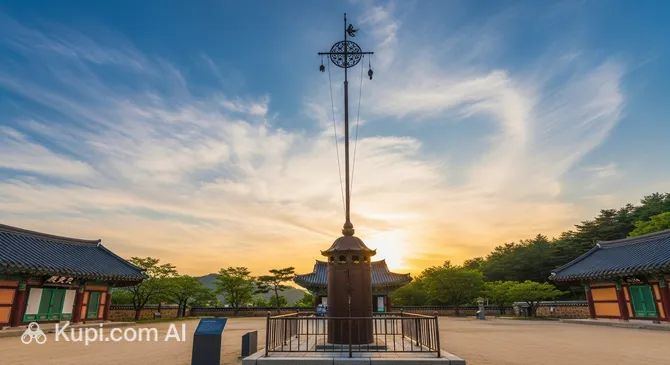
Iron Flagpole at Yongdusa Temple Site
Iron Flagpole at Yongdusa Temple Site. Иллюстрация. Источник: Kupi.com AI

Standing approximately 13 meters tall, the structure consists of 20 cylindrical iron sections masterfully joined together and anchored to a powerful stone base. Erected in 962 during the Goryeo Dynasty, this flagpole once served to raise sacred Buddhist banners, announcing the beginning of temple ceremonies. Today, it is the only surviving element of the once-prosperous Yongdusa monastery.

The monument's value is further enhanced by an inscription preserved on the third section, which describes in detail the process and reasons for its creation. It is not just a historical object, but a testament to the high level of metalworking mastery in ancient Korea that has reached us through the centuries almost in its original form.

Contacts

For more information regarding the site's condition or to organize tours, it is recommended to contact the Cultural Heritage Administration of Korea or explore resources on the National Cultural Heritage Portal. A copy of the historical inscription from the flagpole is also on display at the Seok Ju-seon Memorial Museum at Dankook University.

How to contactContact
Address48-19 Nammunno 2(i)-ga, Sangdang-gu, Cheongju, Chungcheongbuk-do, Южная Корея

What to Do

When visiting this site, it is worth paying close attention to the technical perfection achieved by ancient blacksmiths. Observe exactly how the iron cylinders are connected and how they are fastened to the stone supports. On the outer surface of the pillars, you can notice characteristic textures and casting marks that tell the story of technologies used over ten centuries ago.

Be sure to find the third section of the flagpole, where the historical inscription is carved. These lines record the names of the creators and the circumstances of the monument's construction. For fans of folklore, a local legend might be of interest: it is believed that the flagpole protected the city from floods. According to legend, Cheongju was shaped like a ship, and the tall pillar with a fluttering banner served as its mast and sail, helping the city "sail" through hardships.

This location is ideal for those seeking a peaceful atmosphere to reflect on history. The flagpole stands in an open space, allowing for impressive photographs against the backdrop of the modern cityscape, highlighting the contrast between ancient tradition and the current pace of life.

Getting There

Finding this unique monument is quite easy, as it is located in the very heart of the city. The exact address is 48-19 Nammunno 2(i)-ga, Sangdang-gu, Cheongju. The flagpole stands in an open area that was part of a vast temple complex in ancient times, but today it is surrounded by modern city blocks.

The most convenient way to get there is by public transport or taxi. If you choose to take a taxi, simply show the driver the address or the name in Korean. For those preferring buses, look for routes passing through the central Sangdang-gu districts. The trip from the city center will take only a few minutes.

Ближайший город: Cheongju

History & Facts

The history of this structure is rooted in the Goryeo Dynasty. The iron flagpole was erected in 962 during the reign of King Gwangjong. Its creation was the result of a joint effort by several influential city clans, including the Kim, Son, and Han families. The work was supervised by a master named Kim Won, and the calligraphic inscription on the metal was executed by Son Seok.

Originally, the structure was even more impressive, consisting of 30 iron sections; however, only 20 have survived to this day. Yongdusa Temple itself, where the flagpole was installed, disappeared over time, leaving this metal pillar as the sole witness to the monastery's former greatness. Interestingly, in ancient records, the object is sometimes referred to as a "copper mast," even though it is actually cast from iron.

During the Japanese colonial period (1910–1945), the monument underwent restoration, during which the hollow interior of the cylinders was filled with concrete to strengthen the structure. Today, this site is an exceptional rarity: only three such iron flagpoles remain in the entire country (in Cheongju, Gongju, and Anseong), making it a priceless example of medieval Korean metal casting.

Time Needed

Usually, 30–45 minutes is sufficient for a detailed look at the monument. This is plenty of time to leisurely walk around the structure, appreciate its scale, and examine the ancient inscriptions on the lower sections.

Since the flagpole is located in an accessible urban area, your visit can easily be combined with a walk along the central streets or a visit to nearby cultural sites without needing to set aside a dedicated day.

Working Hours

The monument is located in an open city area, making it accessible for viewing at any time that is convenient for you. You can visit the site 24 hours a day, daily (Monday through Sunday).

While access to the flagpole itself is not limited by time frames, it is recommended to check the official cultural heritage website for more detailed information or if you plan to visit related museum exhibitions in the city.

Круглосуточно

Nearby

A stroll through the city center allows you not only to touch the ancient past but also to find modern entertainment. Exploring the surroundings of the flagpole can significantly enrich your trip, adding relaxation and family leisure to the historical context.

NameDistance
Yukgeori Famous Dumplings0.5 km
Animal Village1.4 km
Suamgol1.6 km
Cheongju Early Printing Museum2 km
National Museum of Modern and Contemporary Art, Cheongju2.5 km
Cheongju National Museum2.7 km
Cheongju Land3 km

Reached the end of the page?

That means the route is fully explored