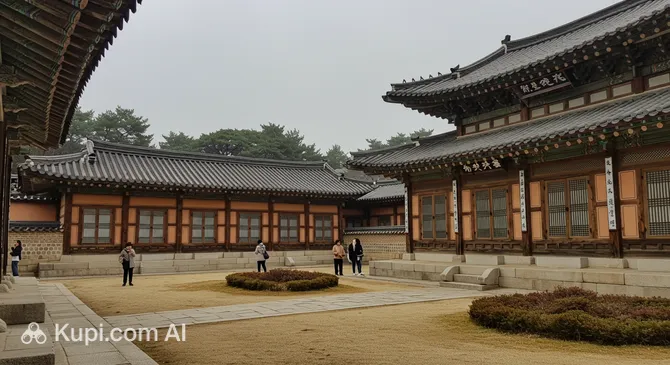
Imagine a place where the history of one of humanity's greatest technological breakthroughs comes to life. In the city of Cheongju, you'll find the unique Early Printing Museum (or Museum of Ancient Printing), dedicated to the art of bookmaking long before the era of Gutenberg. South Korea is rightfully considered the birthplace of the world's first book printed with movable metal type, and this museum is the primary guardian of that legacy.
Cheongju Early Printing Museum. Illustration.
Source: Kupi.com AI
Traveler photos:
The centerpiece of the exhibition is the story of the book "Jikji" — an anthology of Buddhist teachings published in 1377. This artifact is recognized as the oldest example of metal type printing in the world. The museum doesn't just display ancient tomes; it tells the story of the genius of Korean masters who outpaced European technology by nearly eight decades.
The museum's location is deeply symbolic: it was built on the site of the ancient Heungdeoksa Temple, where that very legendary book was printed. Today, it is a modern cultural institution that offers a glimpse into the past and an understanding of Korea's significance in the development of global writing and printing.
Contacts
To confirm current information about special exhibitions or group tours, you can use the official contact details. The museum is located in the city's historical district and is easily accessible for tourists traveling through North Chungcheong Province.
Below is the primary information for contacting the museum and determining its exact location:
In the museum's halls, you can explore the process of creating movable metal type in detail. Every stage is clearly demonstrated, from carving wooden models to casting and typesetting. Interactive displays and detailed dioramas allow you to literally see how printers worked hundreds of years ago, creating masterpieces of calligraphy and engineering.
Special attention should be paid to the section dedicated to the book "Jikji." Visitors can see replicas of the famous edition and learn the fascinating story of its discovery. Additionally, the museum presents other rare artifacts illustrating the evolution of printing from woodblock printing to complex typographic presses.
After immersing yourself in the history of printing, be sure to step out onto the grounds of Heungdeoksa Temple. A stroll among the restored pagodas and authentic buildings allows you to enjoy the peace and quiet. The tree-shaded paths are perfect for reflecting on what you've seen, surrounded by the same landscapes where the monk Baegun Gyeonghan worked on his immortal masterpiece.
Getting There
The museum is located at 713 Jikji-daero in the Heungdeok-gu district. The easiest way to get there from the city center is by taxi; the trip will take very little time and is relatively inexpensive.
If you prefer public transportation, use the city buses that run along the main Jikji-daero thoroughfare. The nearest stop is within walking distance of the main gates of the museum complex.
For travelers arriving from other Korean cities via Cheongju Station or the bus terminal, it is recommended to plan your route in a navigation app in advance, as the route network allows you to reach the site with minimal transfers.
Nearest city: Cheongju
History & Facts
The history of this site is inextricably linked to the book 'Jikji', whose full name is "Jikji Simche Yojeol." For a long time, the invention of movable metal type was attributed to Johannes Gutenberg; however, the discovery by Dr. Park Byeong-seon in 1972 overturned the global understanding of printing history. While working at the National Library of France in Paris, she found a copy of "Jikji" printed 78 years before the European press.
1985 was a fateful year for the museum itself. During construction work in the Uncheon-dong area, remains of an ancient foundation and artifacts were discovered, confirming that Heungdeoksa Temple once stood here. This discovery became the final proof that "Jikji" was indeed printed in Cheongju in 1377.
Today, the Early Printing Museum is a symbol of national pride for Korea. It clearly demonstrates how technological progress and the desire to preserve knowledge developed in the East, making an invaluable contribution to the world's cultural treasury and earning UNESCO recognition for Korean achievements.
Time Needed
To leisurely explore all the halls and delve into the nuances of printing technology, most visitors need about 1.5–2 hours. This is quite enough time to study the main exhibition and view the multimedia materials.
If you also plan to walk through the grounds of the adjacent Heungdeoksa Temple historical site and visit the gift shop, it's better to set aside half a day for your visit. The quiet atmosphere of the temple area invites a relaxed break after the informative portion of the museum visit.
Working Hours
The museum welcomes visitors every day except Monday. Please note that the complex is closed to the public on Mondays. On other days of the week, the doors are open from morning to evening, making it easy to plan your visit.
The operating schedule is as follows: Tuesday — Sunday from 9:00 to 18:00. It is recommended to arrive no later than one hour before closing to have time to see the main exhibition.
Day
Working hours
Monday
Closed
Tuesday
9:00 – 18:00
Wednesday
9:00 – 18:00
Thursday
9:00 – 18:00
Friday
9:00 – 18:00
Saturday
9:00 – 18:00
Sunday
9:00 – 18:00
Nearby
A visit to the museum can be complemented by walks to other interesting spots in the city located within a radius of several kilometers. This will allow you to better feel the atmosphere of the region and see modern entertainment centers.
In the vicinity, there are many themed areas and specialized aquariums that will be especially interesting for families with children. The table below lists the closest sites you can visit on the same day.