Support

Hwangnyongsa History & Culture Hall

About

Imagine a place where the grandeur of the ancient Silla Kingdom comes to life. The Hwangnyongsa History and Culture Hall is a modern museum complex located in Gyeongju, South Korea. Opened in 2016, it serves as a bridge between the past and the present, telling the story of one of Asia's most magnificent Buddhist temples, of which only foundations remain today.
\n\n
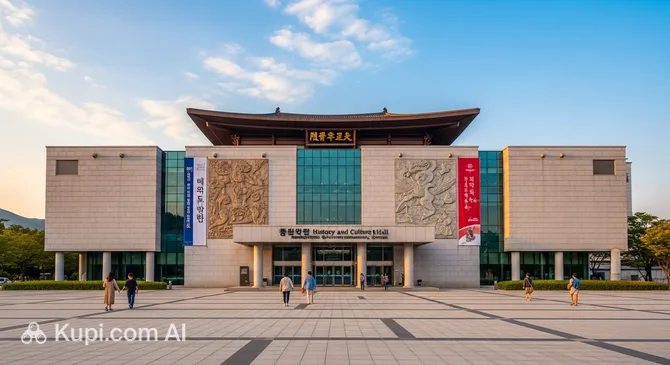
Hwangnyongsa History and Culture Hall
Hwangnyongsa History and Culture Hall. Иллюстрация. Источник: Kupi.com AI
\n\n

The museum building itself is a work of art, with architecture inspired by the traditional Korean hanok style. The first floor resembles the powerful foundations of ancient palaces, while the second is adorned with a graceful roof featuring copper tiles, allowing the complex to blend harmoniously into the protected landscape of the historic UNESCO-listed district.

\n\n

Inside, visitors will find unique exhibits, including high-precision replicas of artifacts discovered during excavations. The main goal of this center is to visualize the former power of Hwangnyongsa Temple using modern technology and the meticulous work of historians, so that every guest can feel the spirit of the Golden Age of Korean culture.

Contacts

To check for up-to-date information before your visit, you can use the following contact details:

\n
How to contactContact
Address789-1 Guhwang-dong, Gyeongju, Gyeongsangbuk-do, Южная Корея
Phone+82 54-777-6862

What to Do

The main magnet for visitors inside the hall is the impressive large-scale model of the 9-story wooden pagoda. Built at a 1:10 scale, this structure reaches eight meters in height and is stunning in its detail. In the evening, the model is beautifully illuminated, allowing you to see the intricate elements of ancient craftsmanship that once adorned the original.

\n\n

Be sure to stop by the 3D video hall. It features a captivating film that reconstructs the 686-year history of the temple. You will see its construction during the reign of King Jinheung and its tragic destruction, providing a much deeper understanding of the site's significance than just viewing the ruins. In the relic halls, you can see replicas of unique finds, including the head of a giant bronze Buddha and records by Baekje master craftsmen.

\n\n

A great way to finish your tour is at the panoramic observation deck. From here, you have a majestic view of the now-empty foundations of the Hwangnyongsa Temple Site. Looking down at the vast territory of the ancient complex, it is much easier to imagine the scale of the three main halls and the pagoda that once towered over this sacred land.

Getting There

Getting to this cultural center in Gyeongju is quite simple. The most convenient way for tourists is to use the city buses. Routes No. 10, 11, or 700 will take you almost directly to the entrance (get off at the Hwangnyongsa Temple Site stop). The journey from the main bus terminal or the city's railway station takes about 20–30 minutes.

\n\n

If you prefer comfort and want to save time, you can use a taxi. The ride from the city center will take no more than 15 minutes and cost approximately 10,000–15,000 won. For those who enjoy active travel, renting a bicycle is a great option, as the terrain around the historical district is relatively flat and very scenic.

\n\n

The Hwangnyongsa History and Culture Hall is located in close proximity to other iconic sites, such as Bunhwangsa Temple. This makes it easy to include a visit to the hall in a walking tour of the ancient Guhwang-dong area, which is part of the UNESCO World Heritage site.

Ближайший город: Gyeongju

History & Facts

The history of this site dates back to 553, when King Jinheung planned to build a new palace. According to legend, a yellow dragon (hwangnyong) suddenly appeared at the construction site. Seeing this as a sacred omen, the ruler ordered a Buddhist temple to be built there instead, which became the primary sanctuary of the Silla Kingdom.

\n\n

The architectural sensation of that era was the famous 9-story wooden pagoda, erected in 645 during the reign of Queen Seondeok. Master Abiji from the neighboring kingdom of Baekje supervised the construction, which involved more than 42,000 wooden elements. It was believed that each floor of the pagoda symbolized victory over one of the neighboring nations that threatened Silla, making the temple a powerful symbol of national protection.

\n\n

Hwangnyongsa Temple flourished for nearly seven centuries, housing a colossal bronze Buddha statue and priceless relics. However, in 1238, during the Mongol invasions, the entire complex was completely destroyed by fire. Today, the History and Culture Hall allows visitors to see what has been hidden by time, based on years of archaeological excavations and ancient chronicles.

Time Needed

To fully explore the exhibition hall and its surrounding area, you will need about 1 to 2 hours. This is enough time to watch the multimedia show in the 3D hall without rushing, study the detailed pagoda model, and examine the archaeological finds in the exhibition gallery.

\n\n

If you also plan to walk through the actual ruins of Hwangnyongsa Temple, which are located outdoors next to the museum, it is better to set aside half a day for your visit. This will allow you to soak in the atmosphere of the ancient city and take impressive panoramic photos from the observation deck at different times of the day.

Working Hours

The Hwangnyongsa History and Culture Hall is open to guests daily from 09:00 to 18:00. Please note that admission stops 30 minutes before closing, so it is best to arrive no later than five o'clock in the evening.

\n\n

The museum is closed on major national holidays: January 1st, Lunar New Year (Seollal), and the harvest festival (Chuseok). During the summer season (from April to October), operating hours are sometimes extended on weekends, so it is recommended to check the official Gyeongju tourism portal before your trip.

09:00–18:00

Nearby

Gyeongju is often called an "outdoor museum," and the area surrounding the Hwangnyongsa History and Culture Hall certainly lives up to that title. After immersing yourself in the ancient history of Silla, you can explore modern entertainment or nature parks located just a few kilometers away.

\n\n

Exploring nearby locations will allow you to see different sides of Gyeongju: from high-tech water parks to educational sites dedicated to the region's flora and fauna. Below is a list of interesting places to visit nearby.

\n\n
NameDistance
Hwangnyongsa Temple Site0.2 km
Donggung Palace and Wolji Pond0.6 km
Gyeongju National Museum1 km
Cheomseongdae Observatory1.2 km
Hwangnam House1.5 km
Woljeong Bridge1.5 km
Ryoko1.7 km

Reached the end of the page?

That means the route is fully explored