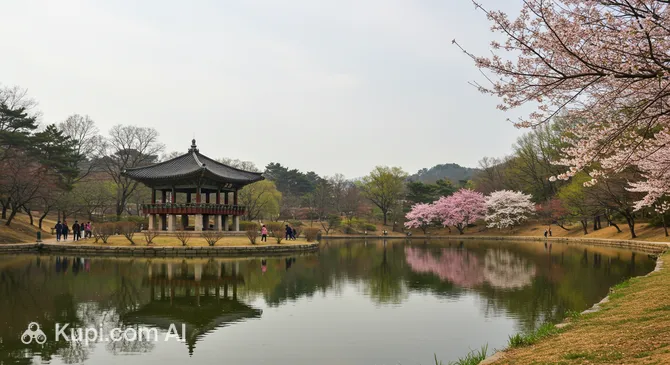
In the heart of the bustling city of Gwangju lies a picturesque oasis known as Pungam Lake Park. This well-maintained natural site is a beautiful reservoir that over the years has evolved into a favorite spot for walking and relaxation. In a country like South Korea, such urban parks are valued for the opportunity to instantly trade the cityscape for a calm water surface.
Pungam Lake Park. Illustration.
Source: Kupi.com AI
Traveler photos:
This place is deservingly ranked among the city's top natural attractions, holding leading positions in lists of best parks. Despite its compact size, the territory is planned in such a way that every guest can find solitude or, conversely, space for active leisure. The park takes on a special charm in spring, when the banks of the reservoir are adorned with the delicate blossoms of cherry trees.
The central focal point of the park is the Pungam Reservoir itself, around which all infrastructure is built. It is not just a technical body of water, but a full-fledged cultural space where landscape design and the natural beauty of Korean nature combine harmoniously.
Contacts
If you are planning a visit and would like to clarify any details, you can use the official contact information of the administration. The site is located in the Seo-gu district and is open to anyone wishing to enjoy nature within the city limits.
This space is literally created for active recreation and outdoor relaxation. The main magnet for visitors is the excellent walking path that encircles the mirror-like surface of the water. It is ideal for morning jogs, Nordic walking, or simply a leisurely promenade in the rays of the setting sun.
Aesthetics lovers should visit the local Rose Garden. During the blooming season, it is filled with bright colors and subtle fragrances, becoming an excellent backdrop for photographs. Comfortable benches are installed along the paths where you can take a break, watching the play of light on the water or reading a book in the shade of the trees.
For those who care about their physical fitness, the park provides areas with exercise equipment. Many local residents come here for daily workouts, creating an atmosphere of health and vigor. And if you find yourself here during the cherry blossom season, your walk will turn into a true aesthetic journey through clouds of pink petals.
Getting There
Getting to this picturesque corner in the Seo-gu district is quite simple. The most comfortable way is to take a taxi from the city center or the nearest metro station. It is enough to show the driver the address in Korean (풍암동 460) to quickly reach the entrance of the park area.
For those who prefer public transport, city buses run nearby, connecting various districts of Gwangju. If you are planning a trip in a rental car, the availability of a well-maintained parking lot is a pleasant bonus, making the visit convenient for family trips.
Nearest city: Gwangju
History & Facts
The transformation of a utility site into a popular public space was a major milestone for local residents. Since August 2019, the reservoir has officially functioned as a landscaped park, offering citizens a high-quality recreational zone. Likely originally created for water supply needs, today it serves exclusively for leisure and environmental conservation.
This place is an integral part of the green belt, which includes significant Gwangju sites such as Mudeungsan National Park and Gwangjuho Eco Park. Such zones play a critical role in maintaining ecological balance and creating "lungs" for the city amidst dense urban development.
Interestingly, the park consistently holds high positions in the rankings of the city's natural attractions, occupying an honorable fourth place. This emphasizes its importance not only as a historically established reservoir but also as a modern center of attraction for tourists seeking tranquility in South Korea.
Time Needed
To walk around the reservoir at a leisurely pace and enjoy the views, it usually takes 1 to 2 hours. This time is quite sufficient for a full stroll along the circular route, a short rest on a bench, and a few memorable photos.
If your goal is to have a full-scale picnic, engage in sports, or examine the collection of flowers in the Rose Garden in detail during their blooming season, it is worth setting aside about half a day for the visit. The park encourages a relaxed pastime, so there is no need to rush.
Working Hours
One of the main features of this place is its accessibility. The park is open to the public 24/7, seven days a week. This allows you to plan your visit at any time convenient for you — from early dawn to late evening.
Many travelers note that the park is especially romantic after sunset. Thanks to well-thought-out lighting, night walks here are not only safe but also offer completely different impressions from contemplating the illuminated water surface and the silhouettes of trees.
Open 24 hours
Nearby
Exploring the surroundings after a walk by the water can significantly enrich your travel experience. The area around the reservoir offers several interesting locations that will be especially curious for aquarium enthusiasts and families.
There is a concentration of specialized exhibitions and shops with exotic fish, as well as modern entertainment centers for children and teenagers. Below is a list of nearby sites that can be visited on the same day.