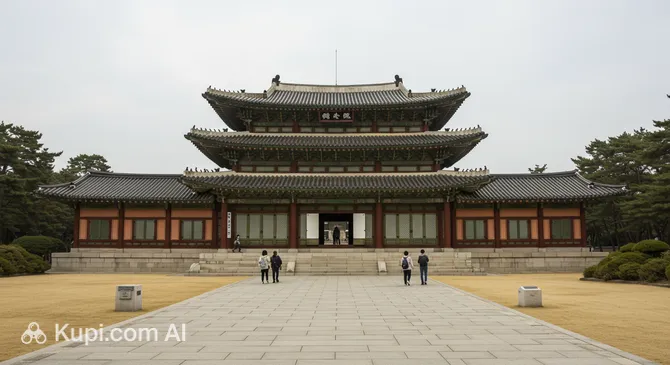
Immersion in the rich history of the Jeollanam-do region begins at one of the most significant cultural centers in Gwangju. The Gwangju National Museum, founded in 1978, is a majestic two-story building whose architecture harmoniously combines modern solutions with classical Korean traditions.
Gwangju National Museum. Illustration.
Source: Kupi.com AI
Traveler photos:
This museum in South Korea is rightfully considered a true treasure trove of Asian ceramics. Its collections cover a vast span of time, telling the story of the development of craft and art over the centuries. The main pride of the collection is the unique artifacts recovered from the seabed from a Chinese ship that was wrecked in the early 14th century.
Exhibits spread across seven thematic halls allow visitors to trace the path of the region's cultural development and see thousands of priceless relics with their own eyes. This is a place where history becomes tangible, and the aesthetics of ancient masters continue to inspire modern travelers.
Contacts
To check current information before your visit or when planning group tours, you can use the official communication channels. The museum maintains an active online presence and provides detailed information about its resources.
Inside the museum, a fascinating journey through the Asian Ceramic Culture Hall awaits you. Visitors can observe the evolution of Korean earthenware and porcelain in detail, from simple everyday items to exquisite works of art created for royal courts. The exhibits from Sinan-gun—underwater finds that spent centuries on the seabed—are particularly awe-inspiring.
Be sure to find the famous celadon vase, which marked the beginning of large-scale archaeological excavations. In addition to contemplating the permanent collections, guests can follow the preparation of new spaces: an innovative center with high-tech video halls is set to open by 2026, promising to turn historical study into an interactive adventure.
A walk through the museum grounds will also delight those who appreciate aesthetics: the building itself and the surrounding landscape provide a beautiful backdrop for photos and quiet reflection. It is an ideal place for those seeking intellectual relaxation and wanting to experience the authentic heritage of the East.
Getting There
Located in the northern part of the city, in the Buk-gu district, the Gwangju National Museum is easily accessible for tourists. The most convenient and fastest way to get here from the city center is by taxi, which takes about 15–20 minutes depending on traffic.
For those who prefer public transport, city buses run from the city's main transport hubs. The nearest stops are just a few minutes' walk from the main entrance. If you are planning to travel by metro, keep in mind that you will still need a short bus or taxi ride from the nearest stations, as the museum is located in a quiet park area.
Nearest city: Gwangju
History & Facts
The history of the museum is inextricably linked to the desire to preserve the unique cultural heritage of the Jeollanam-do region. The institution's official opening took place in 1978, marking an important step in South Korea's national program for cultural and educational development.
The most exciting episode in the museum's history was a discovery in 1975. An ordinary fisherman near the Sinan-gun islands pulled an ancient celadon vase out with his net. This chance event led to large-scale underwater research, during which a Chinese merchant ship that sank in 1323 was discovered. About 24,000 artifacts were recovered from the depths of the sea, which now form the pride of the museum's collection.
Currently, the Gwangju National Museum is undergoing a new stage of development. The construction of the ambitious "Ceramic Culture Center" is scheduled for completion by 2026. This expansion will not only increase exhibition space but also create a modern platform for international exchange and the study of Asian ceramic traditions.
Time Needed
To leisurely explore all seven thematic halls and pay attention to the most valuable exhibits, visitors usually need about 2–3 hours. If you are an art lover and plan to study the ceramic collections in detail, this time may increase.
We recommend setting aside half a day for the museum visit so you can also walk around the surrounding grounds and enjoy the building's architecture, which is designed in a traditional Korean style. This will allow you to get a more complete impression of the atmosphere of this cultural center without feeling rushed.
Working Hours
The museum's doors are open to guests daily, making it easy to include in any travel itinerary. The main operating hours are from 10:00 to 18:00.
If you are planning a visit on the weekend, take note of Saturday—on this day, the Gwangju National Museum extends its opening hours until 20:00, providing an opportunity to enjoy the exhibits in a more peaceful evening atmosphere.
Day
Working hours
Monday
10:00 – 18:00
Tuesday
10:00 – 18:00
Wednesday
10:00 – 18:00
Thursday
10:00 – 18:00
Friday
10:00 – 18:00
Saturday
10:00 – 20:00
Sunday
10:00 – 18:00
Nearby
After immersing yourself in the world of ancient ceramics and regional history, it's worth checking out other interesting locations nearby. Exploring the surroundings will help make your day in Gwangju more fulfilling and diverse, especially if you are traveling with family.