Support

광주역사민속박물관

About

An immersion into the rich palette of Korean traditions should begin with a visit to a place like the Gwangju Folk Museum. This unique space, located in the city of Gwangju, invites guests on a journey through time, revealing the secrets of daily life in the Jeollanam-do province. Here, in South Korea, the atmosphere of past centuries has been carefully recreated, where history intertwines with folk folklore.
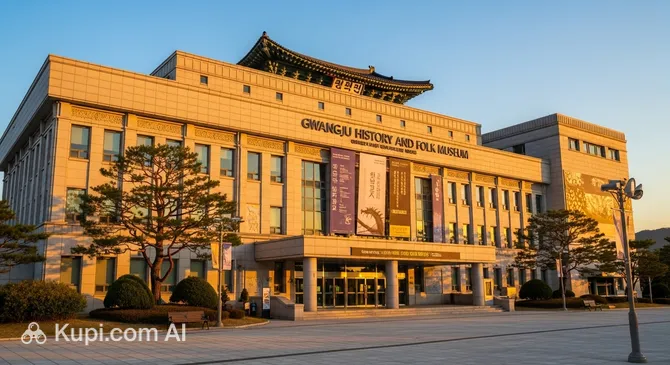
Gwangju History and Folk Museum
Gwangju History and Folk Museum. Иллюстрация. Источник: Kupi.com AI

The architecture of the museum building itself deserves special attention: it harmoniously combines features of traditional Korean hanoks and Western-style elements. Spanning about 7,000 square meters, it houses thousands of exhibits, including rare crafts, clothing, and models of ancient dwellings. The museum is famous for its innovative dioramas and full-size models, which make immersion into the culture as visual and engaging as possible for visitors of all ages.

One of the main features of the complex is its division into indoor halls and an extensive outdoor park area. In the outdoor territory, you can see authentic watermills, stone idols, and even reconstructed traditional buildings. Since 2015, the museum has become even more accessible to tourists by eliminating admission fees, making it a must-visit point on any traveler's itinerary.

Contacts

To clarify current information about temporary exhibitions or visiting rules, you can use the following contact details. Below is the official reference information for contacting the institution's administration.

How to contactContact
Address48-25 Seoha-ro, Buk-gu, Kwangju, Южная Корея
Phone+82 62-613-5378

What to Do

Inside the museum halls, guests can expect a fascinating introduction to the traditional way of life. On the first floor, you will see detailed reconstructions of houses with the ondol system (traditional underfloor heating) and can study the intricacies of Korean cuisine, clothing, and crafts. The second floor takes you into the city's past: here, impressive models of the ancient Gwangju fortress and the historical Chungjang-ro shopping street are presented, recreated with striking accuracy.

Be sure to set aside time for a walk through the outdoor exhibition. More than a hundred folk objects are concentrated here, including sacred groves, mysterious jangseung totems, and ancient watermills. This place is perfect for photos against the backdrop of authentic monuments of Korean architecture and sculpture.

For those who want to do more than just look, the museum offers various educational programs. Lectures on traditional culture and a "Museum University" for adults are held regularly, and on weekends, family classes are organized where children and parents can experience folk art together. This makes a visit to the museum an excellent option for a rich family holiday.

Getting There

Getting to the museum is quite simple, as it is located in the lively Buk-gu district. If you are in the city center, it is most convenient to take a taxi or public transport; the trip from the Gwangju main station will take about 10–20 minutes. Bus service is well-developed in this area, and routes leading to stops in the Yongbong-dong neighborhood are suitable.

For those who prefer to travel by their own or a rented car, the Seoha-ro road passes near the museum. Parking is provided on the complex grounds, making the visit convenient for family trips. You can also walk from nearby park areas or the Biennale district, which will take about 15–20 minutes at a leisurely pace.

Ближайший город: Gwangju

History & Facts

The history of this cultural institution began back in 1963, when the first provincial museum opened in the city park. Initially, it served as a repository for a vast number of archaeological finds; however, over time, the collection was transferred to the National Museum, and the building itself took on a new life as a center for the study of folk traditions. Notably, the large-scale construction of the new complex in the 1980s was funded entirely by the municipal budget of the city of Gwangju.

In 1987, the museum opened its doors to its first visitors, presenting exhibitions dedicated to the daily life and crafts of the region. Over decades of operation, it has significantly expanded its influence, taking several important historical monuments outside the main building under its protection. In the 1990s, the Museum Academy was founded here, becoming a popular educational platform for local residents.

The modern era of the museum began in 2020 after a large-scale three-year renovation. The updated space received not only modern technical equipment but also new halls dedicated to the history of the city fortress and the development of modern streets. Today, it is the largest municipal museum in the city, carefully preserving the memory of the past for future generations.

Time Needed

To leisurely explore all the exhibitions, visitors are recommended to set aside about 2–3 hours. This time is sufficient to get acquainted with the indoor halls, which showcase household items and crafts, as well as to stroll through the extensive outdoor territory, viewing traditional buildings and stone statues.

If you plan to participate in one of the educational workshops or visit a temporary special exhibition, it is better to budget half a day for the visit. The museum encourages thoughtful study, and the picturesque park area around it is perfect for a peaceful conclusion to your cultural program.

Working Hours

The museum is open to visitors daily from 09:00 to 18:00. Please note that Monday is a day off. Additionally, the institution's doors are closed on January 1st and on the days immediately following official national holidays.

A pleasant bonus for travelers is the fact that museum entry is free. Nevertheless, it is recommended to check the current schedule on the official website or city information boards before your visit, as there may be changes in the schedule for special exhibitions.

DayWorking hours
понедельникЗакрыто
вторник09:00–18:00
среда09:00–18:00
четверг09:00–18:00
пятница09:00–18:00
суббота09:00–18:00
воскресенье09:00–18:00

Nearby

After exploring the ethnographic treasures of the museum, it is worth spending time at other interesting sites in the area. Exploring the surroundings will help you better feel the atmosphere of the city and find entertainment for every taste, from observing marine life to active recreation.

NameDistance
Gwangju Museum of Art0.2 km
Jungwoe Park0.6 km
Gwangju National Museum0.7 km
Wave Chungjang Branch4.5 km
Mugaksa Temple4.5 km
Gwangju Park4.5 km
Jeonil Building 2454.8 km

Reached the end of the page?

That means the route is fully explored