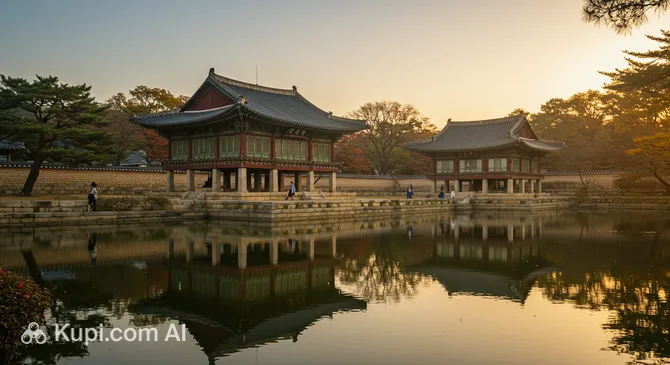
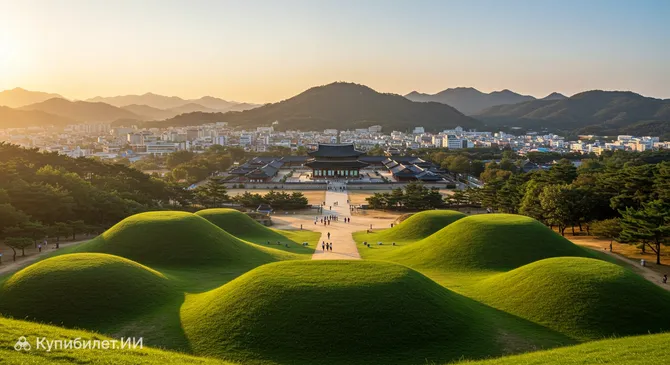
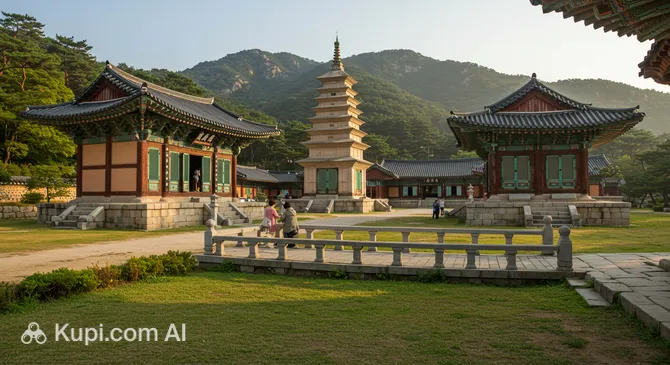
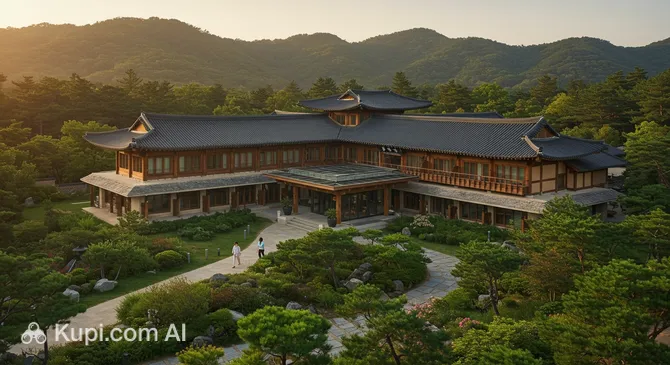
Gyeongju is not just a city, but a true treasure trove of South Korean history and culture. As the country's ancient capital, it is often called a "museum without walls." Located in the southeastern part of the country, Gyeongju attracts travelers with its unique atmosphere, where every stone breathes with centuries of history and picturesque landscapes blend harmoniously with ancient monuments.
Gyeongju. Illustration.
Source: Kupi.com AI
The city served as the center of the powerful Silla Kingdom for nearly a thousand years, and this heritage is carefully preserved to this day. Among the main gems of Gyeongju are the magnificent Bulguksa Temple complex, a UNESCO World Heritage site, and the nearby Seokguram Grotto with its majestic Buddha statue. It is also impossible to imagine Gyeongju without its famous royal tombs in the Daereungwon (Tumuli) Park, which resemble green hills under which the rulers of ancient Silla rest.
A visit to Gyeongju is an amazing opportunity to touch the origins of Korean civilization, walk through places where history was made, and enjoy the tranquility and beauty of this unique city. If you are interested in history and culture and are looking for inspiration, Gyeongju will undoubtedly leave an unforgettable impression in your heart.
The climate in Gyeongju is characterized by four distinct seasons, offering a variety of weather conditions throughout the year. In general, travelers can expect warm and quite humid summers with frequent rain, especially in July and August, and cool, relatively dry winters.
Summer in Gyeongju, especially in July and August, is the warmest time of the year. The average temperature during these months stays around 25-26°C, with maximums reaching 28-29°C. Summer is also characterized by the highest rainfall: about 7 mm falls each month, bringing an average of 16 rainy days. Winter, by contrast, is quite cool and dry. In January and December, the average temperature is about 0.6-1.5°C, with night temperatures dropping to -3.5°C. There is little precipitation in winter, about 1 mm per month, and the number of rainy days is small, usually 3-4 days. Spring and autumn months offer milder and more comfortable conditions for travel. For more detailed information for each month, please check the Gyeongju Climate page.
Average monthly temperature
Average monthly precipitation
Interesting Facts
In addition to its world-famous attractions, the ancient capital of Gyeongju holds many curious details and stories that make it even more alluring to explorers. Here are just a few interesting facts about this amazing city:
Cheomseongdae Observatory. Illustration.
Source: Kupi.com AI
Traveler photos:
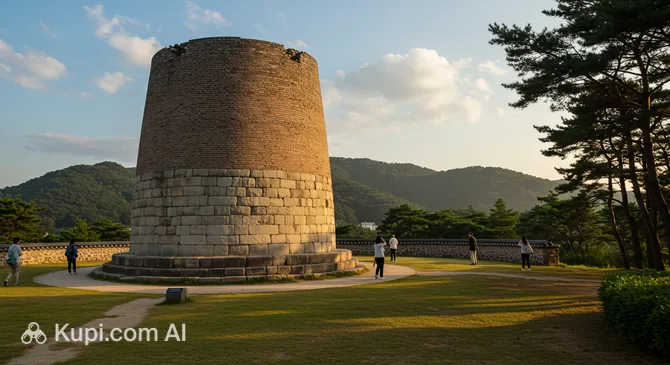
The famous Cheomseongdae Observatory, built in the 7th century, is considered one of the oldest surviving astronomical observatories in East Asia. Its unique bottle-like shape and 27 levels of stones are believed to symbolize the 27th ruler of Silla, Queen Seondeok, under whose reign it was constructed.
Gyeongju is famous for its special delicacy – Hwangnam-ppang (Hwangnam bread). These small round pastries filled with sweet red bean paste have been produced here since 1939 and have become a true culinary symbol of the city, which tourists love to take home as a souvenir.
The picturesque Wolji Pond (formerly known as Anapji), which was part of the luxurious Donggung Palace, was drained for excavation in 1975. Around 33,000 artifacts were recovered from the bottom of the pond, including household items, jewelry, and even dice, allowing scientists to gain a deeper understanding of Silla royal court life.
In many of Gyeongju's historical districts, there are strict height restrictions on buildings. This is done to ensure that modern structures do not block the views of the ancient burial mounds and other cultural monuments, preserving the city's unique historical landscape, which is often called a "museum without walls."
How to Get There
Gyeongju is one of the most popular tourist destinations in the country, so transport links here are excellent. Although the city doesn't have its own airport, getting here is easy thanks to the proximity of major transport hubs in neighboring metropolises. You can find details and plan your route on the how to get to Gyeongju page, and below we look at the main options.
Since there is no airport within Gyeongju city limits, most travelers fly into Gimhae International Airport (IATA: PUS), located in the city of Busan. It is about 78 km from Gyeongju and handles many international flights. Comfortable limousine buses run regularly from Gimhae Airport to Gyeongju Bus Terminal; the journey takes about 1 hour and 10 minutes.
Another convenient option is Daegu International Airport (IATA: TAE), located in the city of Daegu, approximately 50 km away. This is also an excellent entry point, especially if you are flying from other Asian countries. The closest to the city is Ulsan Airport (IATA: USN) in Ulsan (only 31 km), however, it mainly serves domestic flights, which can be convenient if flying from Seoul.
For your convenience, here is a summary of the main airports in the region:
Railway connection is another popular way to reach the region. The most important transport hub nearby is Dongdaegu Station (IATA: XDK), located in Daegu, about 52 km from Gyeongju. This is one of the busiest stations in Korea with a huge passenger flow, where KTX high-speed trains stop. From here, you can easily transfer to a bus or a local train going directly to Gyeongju.
It is also worth mentioning Daejeon Station in the city of Daejeon (about 173 km from Gyeongju). Despite the distance, it is a key hub of the national railway network, through which the main routes connecting the north and south of the country pass.
Below is information about the nearest major railway stations:
Gyeongju, the ancient capital of South Korea, literally breathes history, and every street here can tell its own legend. Among the many treasures of this "open-air museum," several key attractions stand out that simply cannot be missed.
One of the main jewels of Gyeongju is undoubtedly the Bulguksa Temple. This magnificent temple complex, recognized as a UNESCO World Heritage site, represents the pinnacle of architectural and religious art from the Silla era. Visitors are charmed by its graceful Dabotap and Seokgatap pagodas, pavilions harmoniously integrated into the mountain landscape, and a peaceful atmosphere conducive to contemplation.
Bulguksa Temple. Illustration.
Source: Kupi.com AI
Traveler photos:
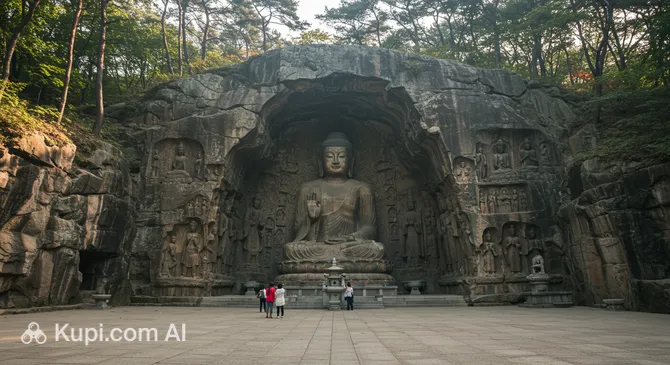
Not far from Bulguksa Temple, on the slopes of Mount Tohamsan, lies another wonder of Korean culture – the Seokguram Grotto. This artificial granite grotto, also on the UNESCO World Heritage list, houses a majestic statue of Shakyamuni Buddha, surrounded by bas-reliefs of bodhisattvas and deities. Seokguram impresses not only with its artistic value but also with the engineering genius of the ancient craftsmen who created this sacred place.
Seokguram Grotto. Illustration.
Source: Kupi.com AI
Traveler photos:
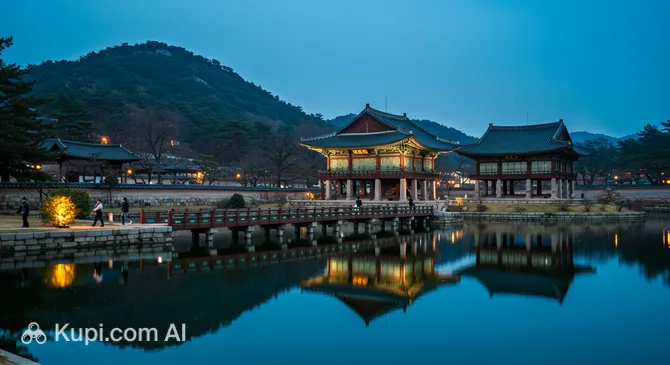
To experience the atmosphere of royal life in ancient Silla, head to the Donggung Palace and Wolji Pond (formerly known as Anapji). This picturesque complex, with elegant pavilions reflecting in the mirror-like surface of an artificial pond, served as a place for banquets and relaxation for the rulers. The pond is especially beautiful in the evening when the illumination is turned on, creating a fairytale scene. Thousands of artifacts were found here, shedding light on the daily life and culture of that era.
Donggung Palace and Wolji Pond. Illustration.
Source: Kupi.com AI
Traveler photos:
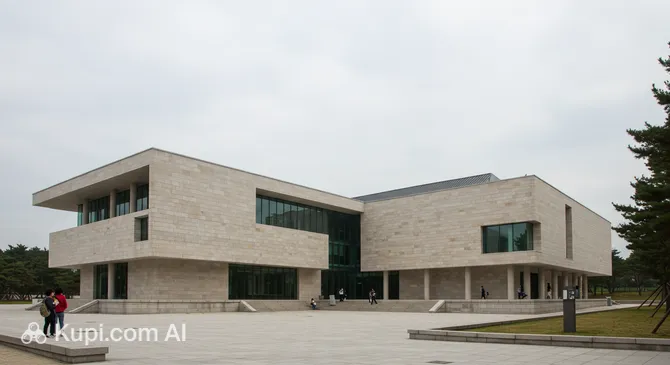
To dive deeper into the rich history of the Silla Kingdom, visit the Gyeongju National Museum. Its halls house an extensive collection of priceless artifacts found within the city and its surroundings. Here you can see the famous golden crowns of Silla rulers, exquisite Buddhist sculptures, ceramics, weapons, and household items that tell the thousand-year history of the ancient capital.
Gyeongju National Museum. Illustration.
Source: Kupi.com AI
Traveler photos:
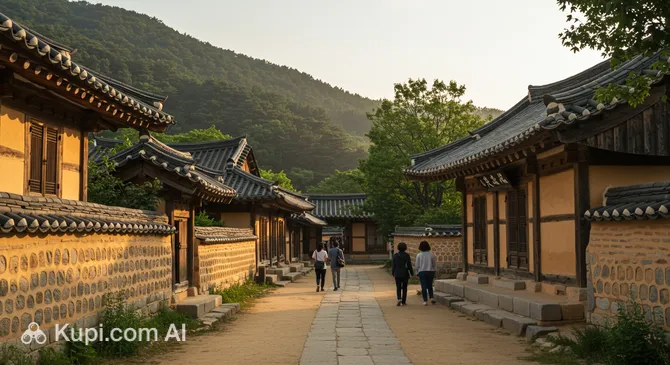
For a look at a later period of Korean history and the traditional way of life, it is worth visiting the Yangdong Folk Village. This is one of Korea's largest and best-preserved historic villages, also inscribed on the UNESCO World Heritage list. Walking through its streets, you can see traditional houses of the aristocracy (yangban) and commoners from the Joseon era, feel the spirit of antiquity, and enjoy the picturesque scenery.
Yangdong Folk Village. Illustration.
Source: Kupi.com AI
Traveler photos:
Local Cuisine
The culinary scene in Gyeongju is a fascinating journey into the gastronomic traditions of South Korea, where every dish reflects the rich history and culture of the ancient capital. Here, you can enjoy authentic flavors passed down through generations and discover unique local delicacies.
One of the iconic dishes that you should definitely try in Gyeongju is ssambap (쌈밥). This hearty and healthy meal consists of rice and various fillings (often meat like bulgogi), which are wrapped in fresh leaves of lettuce, cabbage, or other vegetables and served with many traditional "banchan" side dishes. You also shouldn't miss the famous Hwangnam-ppang (황남빵) – small pastries made of thin dough with a delicate sweet red bean filling, which have become a true culinary symbol of the city and a popular souvenir.
For those who want a complete overview of a Korean meal, hanjeongsik (한정식) – a traditional Korean full-course lunch or dinner – is the perfect choice. In Gyeongju, many restaurants offer hanjeongsik consisting of numerous dishes, including soups, meat and fish delicacies, vegetables, kimchi, and, of course, rice. This is a wonderful opportunity to try several aspects of the local cuisine at once.
As for drinks, in Gyeongju, as in all of South Korea, various traditional teas are popular – from green tea to herbal blends. Among alcoholic beverages, pay attention to the local rice wine. Gyeongju Beopju (경주법주), an exquisite refined rice wine with a centuries-old history, is particularly highly valued, as is the more common and popular makgeolli – a slightly sweet and cloudy fermented rice drink.
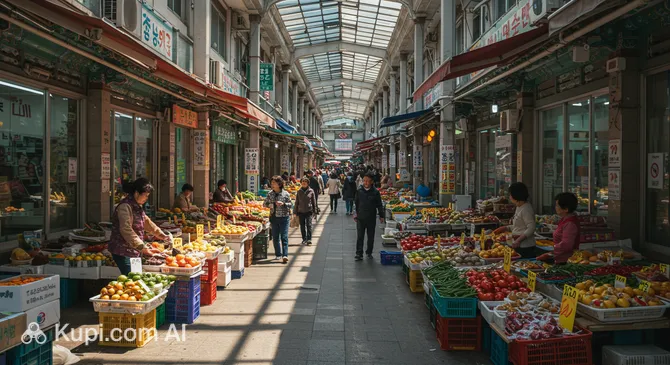
The food culture in Gyeongju is diverse. Tourists and locals can enjoy meals in numerous restaurants specializing in traditional Korean cuisine. Many of them are located in historical districts, which adds a special charm. To dive deeper into the local atmosphere and try street food, you should visit the Gyeongju Jungang Market. Here you can find fresh produce, local delicacies, and feel the real spirit of the city.
Jungang Market. Illustration.
Source: Kupi.com AI
Traveler photos:
Overall, the gastronomic scene in Gyeongju is characterized by its authenticity and commitment to tradition. It is not a place for ultra-modern culinary experiments, but rather a corner where you can enjoy real, time-tested flavors of Korean cuisine, closely intertwined with the city's rich historical heritage.
Travel Tips
Welcome to Gyeongju, Korea's ancient capital and a true open-air museum! To make your journey through this amazing city as comfortable and rewarding as possible, we've prepared a few practical tips.
Clothing and Essentials: Gyeongju's climate, like all of South Korea, has four distinct seasons. Summer (June-August) is hot and humid – choose light, breathable clothing. Spring (April-May) and autumn (September-October) are ideal times to visit with moderate temperatures; layered outfits work well. Winter (November-March) can be cold, so bring warm clothes, a hat, and gloves. Comfortable shoes are extremely important, as Gyeongju's historical sites are best explored on foot. Don't forget a universal adapter (South Korea uses Type F sockets). When visiting temples like Bulguksa, observe the dress code: shoulders and knees should be covered.
Transport: Gyeongju is a relatively small city. The main form of public transport is the bus, which covers most tourist routes and runs frequently. Routes may be in Korean, but announcements at major stops are often duplicated in English. Taxis are available and relatively inexpensive for short trips. A popular app for calling taxis is Kakao T. Car rental can be useful for exploring the surrounding area, but note that an international driving permit is required, and parking at popular attractions can be difficult. Many also prefer to rent bicycles for rides around Bomun Lake or the royal tombs.
Finances: The local currency is the South Korean Won (KRW). You can exchange money at banks or official exchange offices in Gyeongju, as well as upon arrival at major airports. Credit cards (Visa, Mastercard) are widely accepted in most hotels, restaurants, and large shops. However, it's always useful to carry some cash for small establishments, local markets, or bus fares. ATMs that serve international cards usually have a "Global" sign or international payment system logos. Tipping in South Korea is not expected. An estimated daily budget per person can range from 70,000 to 150,000 won, depending on your preferences.
Health and Safety: Pharmacies (약국 - yakguk) are common; some staff may speak basic English. Gyeongju is a very safe city, even after dark. Follow standard precautions: watch your belongings, especially in crowded places. Tap water in South Korea is considered safe to drink, but many prefer bottled water. It is recommended to have travel insurance.
Communication: The official language is Korean. In tourist spots, hotels, and some restaurants, staff may speak English, especially the younger generation. Learn a few basic Korean phrases: "Annyeonghaseyo" (안녕하세요) – Hello; "Kamsahamnida" (감са합니다) – Thank you. For convenience, you can buy a local SIM card or rent a portable Wi-Fi router (egg). Free Wi-Fi is available in many cafes, hotels, and public places. Useful apps: Naver Maps or KakaoMap (more accurate than Google Maps in Korea), Papago (translator).
Local Etiquette: A slight bow is a common greeting, especially when meeting elders. When passing or receiving items (e.g., money), use both hands or your right hand supported by your left. It is customary to speak quietly in public places and on transport. You must remove your shoes when entering a Korean home, some traditional restaurants, and temples.
What to Avoid: Try not to write people's names in red ink – in Korean culture, this is associated with death. You should also not stick chopsticks vertically into a bowl of rice, as this resembles ritual incense.
Special Tip for Gyeongju: Consider renting a hanbok (traditional Korean clothing) when visiting historical sites like Donggung Palace and Wolji Pond or the royal tomb park. It's not only a fun experience but often grants free or discounted entry. Additionally, many Gyeongju attractions, such as Anapji Pond (Donggung Palace and Wolji Pond), are stunningly illuminated in the evening – plan an evening visit for a completely different experience.
We hope these tips help you plan an unforgettable trip to Gyeongju and fully enjoy its rich history and culture. Have a great trip!
Entertainment & Nightlife
While Gyeongju is primarily known for its rich history and ancient sights, the city also offers pleasant options for evening and nighttime leisure. The nightlife here differs from the major metropolises of South Korea – it is more relaxed and atmospheric, with an emphasis on cozy venues and beautiful evening walks.
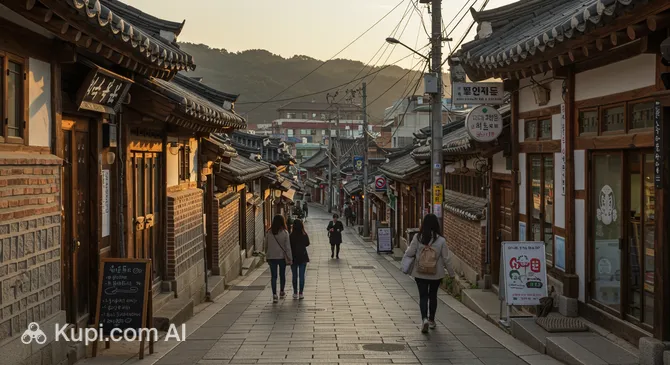
The main centers of evening activity in Gyeongju are concentrated in several areas. Hwangnidan-gil street is perhaps the trendiest spot, packed with stylish cafes, restaurants with diverse cuisines, small craft beer bars, and unique shops. It is particularly lively in the evening, popular with both youth and tourists. The resort complex at Bomun Lake offers more upscale relaxation: here you can find fine dining restaurants, hotel bars, and enjoy walks along the beautifully lit lakeside. Also in the city center, especially around Gyeongju Station, you can find many local eateries, pubs, and the karaoke bars (noraebang) so popular in Korea.
Hwangnidan-gil. Illustration.
Source: Kupi.com AI
Traveler photos:
The atmosphere of Gyeongju's nightspots is mostly laid-back and friendly. Most bars and pubs stay open until midnight or 1:00 AM, especially on weekdays. The dress code is usually casual, except for some high-end restaurants or hotel bars. For those seeking an authentic experience, it is worth visiting the Gyeongju Jungang Market, where a night market with street food and local flavor comes to life on Friday and Saturday evenings. It is a great place to try various Korean snacks and soak up the city's daily life.
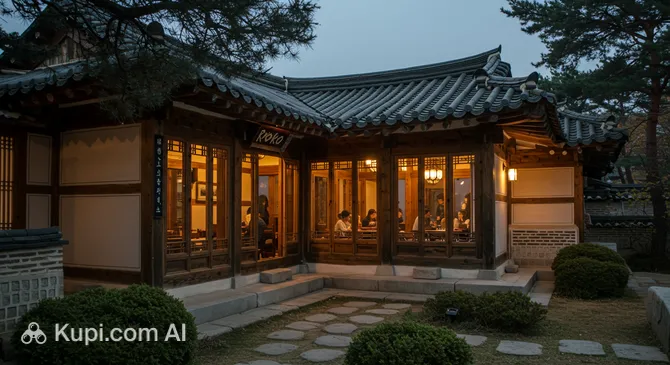
If you are looking for a nice dinner spot, consider restaurants like Ryoko or Ryomi, which offer delicious food in a cozy setting. Besides traditional bars and restaurants, a unique "nighttime entertainment" in Gyeongju is visiting its historical sites, which are magnificently illuminated after dark. A walk through the grounds of Donggung Palace and Wolji Pond (Anapji) or across the Woljeonggyo Bridge will leave an unforgettable impression.
Ryoko. Illustration.
Source: Kupi.com AI
Traveler photos:
Practical Tips: The best time for evening strolls and visiting venues is after 7:00 PM. For getting around the city at night, taxis are the most convenient option; the Kakao T app will help you call a car quickly. Gyeongju is considered a very safe city, making evening walks in tourist areas comfortable. Prices vary: from affordable at local eateries to higher at trendy bars on Hwangnidan-gil and restaurants near Bomun Lake.
During the day, Gyeongju offers entirely different activities. This is the time to immerse yourself in history and culture: visit the magnificent Gyeongju National Museum to see priceless artifacts of ancient Silla, or stop by the unusual K-Pop Museum. For family holidays and active fun, the Gyeongju World amusement park or the scenic Gyeongju Bird Park are excellent choices.
Parks & Museums
Gyeongju, the ancient capital of Korea, captivates not only with its countless historical relics but also with a wonderful blend of cultural heritage and picturesque parks and gardens. This city is a true open-air museum where every corner breathes history, and green oases invite you to leisurely walks and contemplation.
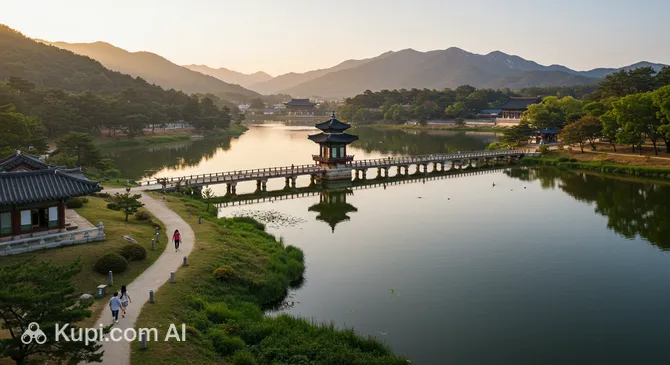
Among the city's green gems, Bomun Lake stands out – a vast resort complex spread around a scenic man-made lake. It is the perfect place for outdoor recreation: here you can rent a bike, take a boat trip, or simply enjoy the views, especially in spring when the shores are covered in cherry blossoms. The lake is surrounded by hotels, restaurants, and even the Gyeongju World amusement park, making it a popular spot for family holidays.
Bomun Lake. Illustration.
Source: Kupi.com AI
Traveler photos:
The historical heart of the city, the Daereungwon Tomb Complex, is a unique combination of a park area and an ancient necropolis. Here, among manicured lawns, rise grass-covered tumuli – the burial mounds of the rulers and nobility of the Silla Kingdom. The most famous of them, the Cheonmachong Tomb, is open to the public, allowing you to look inside and see replicas of the treasures found there. A walk through this park gives a sense of peace and a connection to eternity.
Another iconic spot where nature and history merge is Donggung Palace and Wolji Pond (historically known as Anapji). This was once part of the magnificent Silla palace complex, used for banquets and relaxation by the royal family. Today, the restored pavilions and skillfully created pond, surrounded by the Gyeongju East Palace Garden, are especially beautiful in the evening when the illumination is turned on, creating a truly magical atmosphere.
Donggung Palace and Wolji Pond. Illustration.
Source: Kupi.com AI
Traveler photos:
For a deep dive into the history and culture of the Silla region, a visit to the Gyeongju National Museum is a must. This is one of the most important museums in South Korea, housing a priceless collection of artifacts: from the famous Silla golden crowns to exquisite Buddhist sculptures and everyday objects. The museum's exhibition helps to better understand the greatness of the ancient state and appreciate the skill of its craftsmen.
Gyeongju National Museum. Illustration.
Source: Kupi.com AI
Traveler photos:
In interesting contrast to the city's ancient history stands the K-Pop Museum. This modern space is dedicated to the phenomenon of Korean pop music, which has gained popularity worldwide. Here you can learn about the history of K-Pop, see exhibits related to famous performers, and even participate in interactive entertainment. The museum will be especially interesting for fans of contemporary Korean culture.
For a family vacation with children or simply for nature lovers, a visit to the Gyeongju Bird Park, located near Bomun Lake, can be a pleasant addition to your cultural program. Here you can get acquainted with various species of birds in a well-kept and green environment.
It is important to note that many of Gyeongju's key attractions, such as the majestic Bulguksa Temple and the secluded Seokguram Grotto, which are UNESCO World Heritage sites, are located within the extensive Gyeongju National Park. This emphasizes the inseparable link between the city's history and its natural surroundings.
For those looking for less touristy routes and authentic experiences, consider a hike along the trails of Mount Namsan, often called a "museum without walls" due to the many Buddhist relics, petroglyphs, and remains of ancient temples scattered across its slopes. You can also find peace and immersion in the atmosphere of Confucian scholarship at the Oksan Seowon Confucian Academy, another UNESCO site located in a picturesque area.
Getting Around
Getting around Gyeongju is quite simple, especially if you plan to visit the main tourist attractions. The city is not very large, and its transport system is well-adapted to the needs of both locals and guests.
The main form of public transport in Gyeongju is city buses. They cover almost the entire city and its surroundings, including important tourist sites like Bulguksa Temple, Seokguram Grotto, and Bomun Lake. Buses run quite frequently, especially on popular routes. Route numbers and major stops are often duplicated in English on information boards at stops and inside buses, but it's useful to have a route map or use navigation apps like Naver Map or KakaoMap, which provide up-to-date transport information in South Korea.
The fare payment system on Gyeongju buses is standard for Korea. The most convenient way is to use a T-money transport card (or similar ones like Cashbee). This card can be purchased and topped up at most 24-hour convenience stores (konbini) and at metro stations in major cities. When entering the bus, you need to tap the card against the validator, and when exiting, tap it again if the route involves differentiated payment or if you plan a transfer with a discount. You can also pay the fare in cash directly to the driver upon entry, but in this case, change may not be given or may be difficult to get, and the fare might be slightly higher. The approximate cost of a single bus trip is about 1,300-1,700 won. Buses usually run from early morning (around 6:00 AM) to late evening (around 10:00-11:00 PM), but schedules can vary by route.
For tourists wanting to cover as many attractions as possible in a short time, the Gyeongju City Tour Bus is an excellent option. These are special tourist buses running several routes that cover the city's main historical and cultural sites. Tickets can be purchased for a day, allowing you to get off at interesting stops and continue your trip on the next bus.
Besides buses, other ways of getting around are popular in Gyeongju. Taxis are easy to find, especially in tourist areas and near large hotels. This is a relatively inexpensive and comfortable way to get to your destination, especially if you are traveling in a group or with luggage. You can use the popular Kakao T app to call a car. For leisurely strolls through the historical center, around Bomun Lake, or the Daereungwon Tomb Park, many tourists prefer to rent bicycles. Bicycle rental points are numerous, and it is a wonderful way to enjoy the beauty of the ancient capital. Car rental is also possible but may involve parking difficulties at popular sites and the requirement of an international driving permit.
Accommodation
In Gyeongju, there is a wide range of accommodation options to suit the needs and budget of any traveler. Visitors can choose between traditional Korean houses (hanok), cozy guesthouses and hostels, comfortable mid-range hotels, as well as more luxurious resorts and rental apartments. Such a diverse choice allows everyone to find the perfect place to stay while exploring the ancient capital.
When choosing a place to stay in Gyeongju, you should pay attention to several key areas. The central part of the city, especially near the railway and bus stations, offers many budget and mid-price options, as well as convenient access to public transport. The area around Bomun Lake Resort is known for its high-end hotels and resorts, ideal for those seeking a relaxing holiday with beautiful views and various entertainment options. Hwangnidan-gil street and the surrounding blocks are popular for their authentic hanoks converted into stylish guesthouses and their proximity to many historical attractions.
Kangdong Resort. Illustration.
Source: Kupi.com AI
Traveler photos:
Among the many options, you can find both famous hotel chains and unique local establishments. For example, if you are looking for a resort holiday with a full range of amenities, options like Gangdong Resort can offer comfortable accommodation and various guest services. Many tourists also prefer staying in traditional hanoks to dive deeper into Korean culture – these options often offer a unique experience and homey comfort.
Regarding prices, Gyeongju offers accommodation for any wallet: from budget hostels and guesthouses to luxury hotels. There are many high-quality options in the mid-price segment. It is recommended to book accommodation in advance, especially if your trip falls during the peak tourist season (spring with cherry blossoms and autumn with vibrant foliage), as well as on weekends and South Korean national holidays. For booking, it is convenient to use popular international online platforms like Booking.com or Agoda, as well as local Korean services, or you can contact hotels and guesthouses directly.
Nearby Cities
For those who want to explore the surrounding area, Gyeongju serves as an excellent starting point for day trips to several interesting nearby places:
These nearby destinations offer insight into the diverse culture and landscapes of the region. For example, Busan, the second-largest city in South Korea, attracts visitors with its beaches, lively markets, and modern art. Daegu is known for its textile industry, rich history, and numerous festivals. Industrial Ulsan offers interesting industrial tours and beautiful coastal parks. Each of these trips can be a fascinating addition to your Gyeongju journey.
Shopping & Souvenirs
Shopping in Gyeongju is more about immersing yourself in the local culture and searching for unique souvenirs than hunting for global brands. The city is famous for its traditional crafts, handmade products, and delicious local delicacies. Here you will find many small shops and markets where you can buy something to remember the ancient capital of Silla.
One of the main spots for shopping and strolling is Hwangnidan-gil. This lively and trendy street is filled with stylish boutiques, craft stalls, cozy cafes, and shops selling designer goods and unique souvenirs. Here you can find modern interpretations of traditional Korean items, original clothing, and accessories. It's also worth paying attention to the city's central streets, especially near the railway station and bus terminal, where shops with everyday goods, cosmetics, and clothing are located.
Hwangnidan-gil. Illustration.
Source: Kupi.com AI
Traveler photos:
There are not many large modern shopping malls typical of South Korea's metropolises in Gyeongju. Shopping here is more focused on small shops and traditional markets. However, in the city center, you can find several local department stores and shopping arcades with an assortment of clothing, shoes, and household goods.
A must-visit for lovers of authentic shopping is the Gyeongju Jungang Market. This is a traditional Korean market where you can buy fresh produce, local delicacies, clothing, household items, and, of course, souvenirs. In the evenings on certain days (usually Friday and Saturday), a night market with street food opens here, adding to its special charm. Souvenir shops can also be found near major tourist attractions, such as Bulguksa Temple.
Jungang Market. Illustration.
Source: Kupi.com AI
Traveler photos:
From Gyeongju, it is worth bringing back unique souvenirs reflecting its rich history and culture. Look out for:
Silla-style ceramics: elegant vases, bowls, and other items inspired by ancient traditions.
Hwangnam-ppang (Hwangnam bread): famous pastries made of thin dough with a sweet red bean filling, a symbol of Gyeongju. Another popular local bread is chalbori-ppang, made from barley flour.
Traditional Korean crafts: hanji paper products, fans, and small lacquered boxes with mother-of-pearl inlay (najeonchilgi).
Buddhist souvenirs: incense, prayer beads, and small figurines that can be purchased in temple shops.
Themed souvenirs: magnets, postcards, and keychains featuring Gyeongju's landmarks.
Most shops in Gyeongju are usually open from 10:00-11:00 AM to 8:00-9:00 PM. Markets start working earlier, and some shops on popular tourist streets like Hwangnidan-gil may stay open longer, especially on weekends. Credit cards (Visa, Mastercard) are widely accepted in most shops and restaurants. However, at markets and in small stalls, it is preferable to have cash (South Korean won) with you.
A Tax Free system is available for tourists in South Korea. If you make purchases in shops with the corresponding logo (usually "Tax Free" or "Global Blue") for over 30,000 won (the amount may change, check locally), you can apply for a VAT refund. To do this, you need to ask the seller for a special receipt (refund slip) and present it along with your passport and unused purchases at the airport before departure.