Support

Tongyeong

About

Tongyeong is a charming seaside city located on the southern coast of South Korea, in the picturesque province of Gyeongsangnam-do. Nestled along the Korea Strait, it is famous for its rugged coastline, cozy bays, and numerous surrounding islands, creating a unique atmosphere of harmony with the sea.

With a population of about 137,000, Tongyeong maintains an intimate and friendly feel, which sets it apart from bustling metropolises. The city is often called the "Venice of Korea" due to its abundance of waterways and bridges, as well as its close connection to the maritime element. A slow pace of life prevails here, allowing guests to enjoy tranquility and beauty.
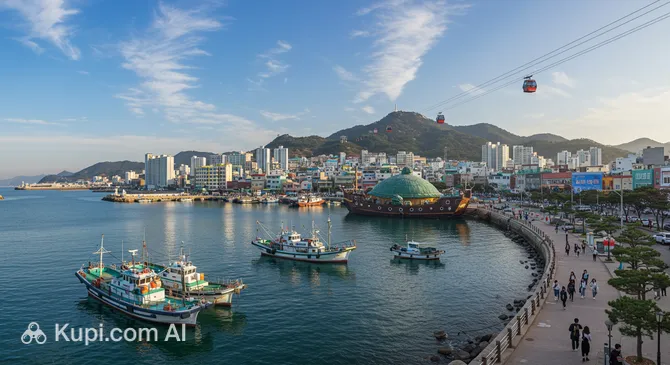
Tongyeong. Illustration.
Source: Kupi.com AI

Tongyeong attracts travelers with its authenticity and rich cultural heritage. Among its unique features are vibrant local markets where you can taste the freshest seafood for which the region is so famous. The city is also known as the birthplace of many Korean artists and musicians, giving it a special creative aura. Outdoor enthusiasts will appreciate the opportunities for island boat trips and hiking trails through scenic hills with panoramic views.

If you are looking for a place for peaceful relaxation, inspiration, and an encounter with the real coastal Korea, Tongyeong will be a true discovery for you. This city will provide unforgettable impressions for nature lovers, art enthusiasts, and everyone who wants to refresh their soul by the sea.

You can find more interesting facts on the Tongyeong city history page.
Weather Overview

The weather in Tongyeong is characterized by distinct seasons. Summer here is warm and humid, especially in July and August, when average temperatures stay around 25-27°C, and the number of rainy days reaches its peak (15-16 days). Winters, by contrast, are cool and drier, with average temperatures around 3-5°C between December and February and minimal precipitation (about 1-2 mm per month).

In general, expect warm summers with occasional rain and cold, dry winters in Tongyeong. The spring and autumn months offer comfortable transitional weather with moderate precipitation. For a more detailed study of climate conditions, including monthly information, visit the Tongyeong Climate page.

Average monthly temperature

Average monthly precipitation

Interesting Facts

In addition to its picturesque landscapes and rich history, Tongyeong hides many surprising details and little-known stories. This city, known for its maritime heritage and cultural contribution, can surprise even the most experienced traveler.

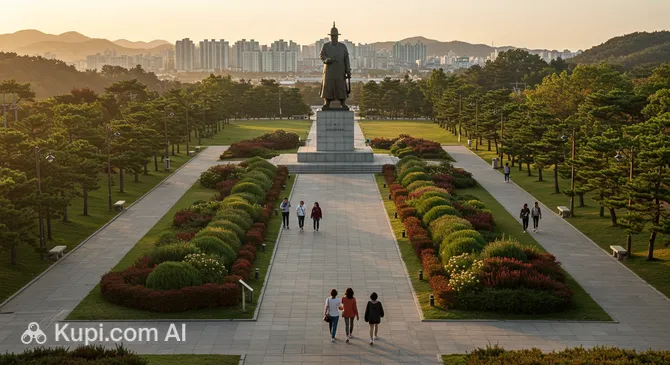
Yi Sun-sin Park. Illustration.
Source: Kupi.com AI

Traveler photos:

  • Tongyeong is rightfully called the city of arts. It has given South Korea many outstanding creative personalities – artists, musicians, and writers. Among them is the famous writer Park Kyong-ni, whose legacy is celebrated at the Park Kyong-ni Memorial Hall.

  • In the early 20th century, Tongyeong was considered one of the most progressive and educated cities in Korea. Thanks to prosperous fishing and the resulting wealth of local residents, many families could afford to send their children to the country's best educational institutions. As a result, almost half of all Koreans with higher education during that period were originally from Tongyeong.

  • The city is the absolute record holder for oyster farming in South Korea: it is claimed that nearly 100% of all Korean oysters are cultivated right here. The unique microclimate and rugged coastline with numerous islands create ideal conditions for marine farms and the development of aquaculture.

  • Tongyeong is inextricably linked with Korean naval history. It was home to an important naval base and, according to legend, the famous "turtle ships" (Geobukseon) were built here, playing a key role in repelling Japanese invasions. Glorious naval victories are commemorated in places like Hansando Battle Square and Yi Sun-sin Park, dedicated to the legendary admiral.

How to Get There

When planning a trip to picturesque Tongyeong, it's important to think about your route in advance. The city does not have its own major airport or railway station, but it is easily accessible through the transport hubs of neighboring South Korean cities.

For many tourists, the primary way to reach Tongyeong is by flying into one of the nearby airports. The largest and most convenient international hub is Gimhae International Airport (PUS), located in Busan, approximately 59 km from Tongyeong. This is a major airport with many international and domestic flights. A trip from Gimhae Airport to Tongyeong by taxi or bus will take roughly 1 hour 45 minutes to 2 hours.

The closest airport to Tongyeong is Sacheon Airport (HIN), located in Jinju, about 42 km away. This is a small regional airport that can be convenient for domestic flights. The journey from Sacheon Airport to Tongyeong usually takes about 1 hour 20 minutes. Another option is flying into Daegu International Airport (TAE) in Daegu, which is about 117 km from Tongyeong. Despite the greater distance, it is a significant international airport. The journey to Tongyeong from here takes about 3 hours.

For convenience, here is summary information on the main airports used to reach Tongyeong:

AirportPassenger trafficDistance
Sacheon Airport219 28942 km
Gimhae International Airport15.8 mln59 km
Yeosu Airport1 mln74 km
Tsushima Airport233 326104 km
Daegu International Airport3.3 mln117 km

Traveling by rail is also an option, although there are no direct trains to Tongyeong. The nearest railway stations are located in neighboring cities. One of the most convenient options is Jinju Station in Jinju, located about 44 km from Tongyeong. From there, you can reach the center of Tongyeong by bus or taxi in about 1 hour 25 minutes.

You can also consider Yeosu Expo Station, located in Yeosu, about 63 km from Tongyeong. A trip from this station to Tongyeong takes approximately 1 hour 55 minutes. Buses run regularly from these cities to Tongyeong, and taxis are also available.

Below is summary information on some railway stations that can be used for a trip to Tongyeong:

StationPassenger trafficDistance
Jinju Station44 km
Yeosu Expo Station63 km
Dongdaegu Station20 mln115 km
Gwangju Songjeong Station3.4 mln153 km
Mokpo Station1.8 mln187 km

Upon arrival at one of these airports or railway stations, you can continue your journey to Tongyeong on intercity buses, which are a popular and well-developed mode of transport in South Korea, or by using taxi services.

Main Attractions

Tongyeong, a charming port city in South Korea, is famous for its scenic landscapes and rich history. Here, everyone will find something for themselves, from artistic quarters to thrilling attractions and historical monuments. Here are some of the main attractions worth visiting in this amazing city:

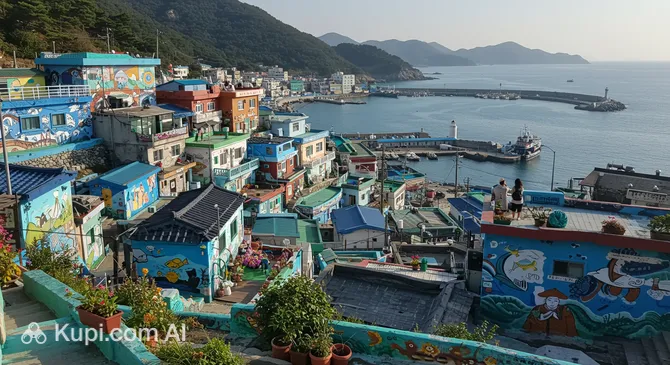
One of the brightest and most photogenic sights is Dongpirang Mural Village. This charming hillside neighborhood has been transformed by colorful murals, sculptures, and installations created by local residents and artists. A walk through the narrow, winding streets of Dongpirang offers not only aesthetic pleasure and plenty of unique photo opportunities but also magnificent panoramic views of Tongyeong port and the surrounding islands.

Dongpirang Mural Village. Illustration.
Source: Kupi.com AI

Traveler photos:

For those interested in Korea's rich maritime history, Yi Sun-sin Park is a must-visit. This vast and well-maintained park is dedicated to the legendary Admiral Yi Sun-sin, a Korean national hero famous for his victories in the 16th century. The park features impressive statues of the admiral and his warriors, as well as memorial structures. In addition to its historical significance, the park allows visitors to enjoy a peaceful atmosphere, stroll along scenic coastal paths, and admire beautiful sea views.

Yi Sun-sin Park. Illustration.
Source: Kupi.com AI

Traveler photos:

If you are looking for active recreation and a dose of adrenaline, check out Skyline Luge Tongyeong. This popular attraction offers an exciting descent on special luge carts along a winding track built into the mountainside. After reaching the top by chairlift, you can enjoy panoramic views and then have a fun ride down, controlling the speed of your luge. This activity is suitable for visitors of all ages and guarantees plenty of positive emotions.

Skyline Luge Tongyeong. Illustration.
Source: Kupi.com AI

Traveler photos:

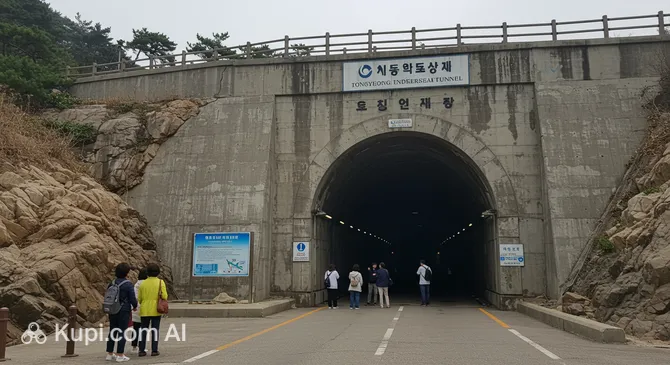
Another unique and historically significant landmark in Tongyeong is the Tongyeong Undersea Tunnel. Built between 1927 and 1932, it was the first undersea tunnel in Asia and connects the mainland part of the city with Mireukdo Island. The tunnel is about 483 meters long. Today, it is a popular spot for walking and cycling, allowing visitors to literally walk along the seabed and experience an important piece of engineering heritage.

Tongyeong Undersea Tunnel. Illustration.
Source: Kupi.com AI

Traveler photos:

Local Cuisine

Tongyeong is a true gastronomic paradise, especially for seafood lovers. The city is famous for its freshest seafood, and the main culinary pride is undoubtedly the local oysters. Tongyeong often hosts gastronomic festivals, especially during the oyster harvest season, when the city is filled with the aromas of fresh dishes. They are served here in many ways: raw with a squeeze of lemon juice, grilled, added to rich soups, or even in traditional Korean pancakes.

In addition to oysters, you should definitely try hoe – the Korean version of sashimi, made from freshly caught fish that melts in your mouth. No less popular is seafood bibimbap, where rice, vegetables, and seafood are mixed into a fragrant and satisfying dish. At street stalls and markets, you can find grilled squid, seaweed tempura, and other interesting snacks, while those with a sweet tooth should look out for local rice cakes, sometimes featuring unusual maritime additions.

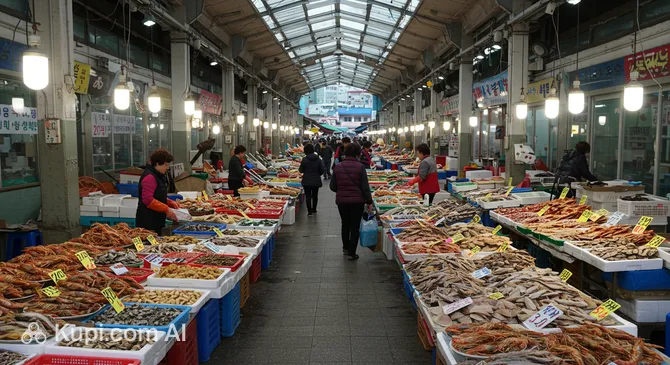
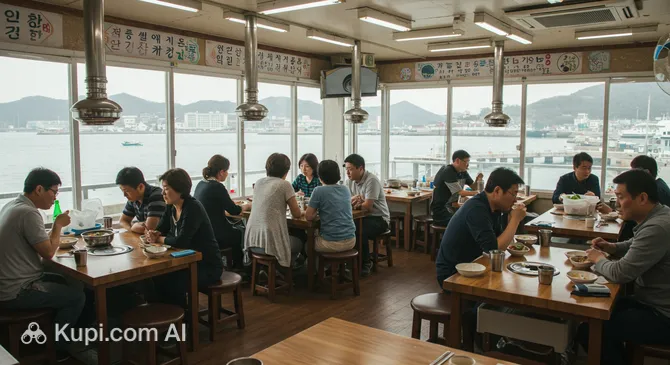
The food culture in Tongyeong is closely linked to the sea. Locals and tourists enjoy fresh catches at both the numerous seafood restaurants and lively markets. One such iconic place is the Tongyeong Jungang Market, where you can not only buy the freshest seafood but also try it on the spot in small eateries. Street food also plays an important role, offering quick and delicious ways to get to know local flavors.

Tongyeong Jungang Market. Illustration.
Source: Kupi.com AI

Traveler photos:

Regarding drinks, traditional Korean rice wine, such as makgeolli or cheongju, pairs perfectly with seafood dishes. For those who prefer non-alcoholic options, there are always refreshing teas like barley tea (boricha), or various fruit drinks and lemonades.

Tongyeong's culinary scene is a vibrant blend of centuries-old traditions and the freshness of coastal waters. A trip here will provide unforgettable taste experiences and allow you to discover unique dishes that can only be tried in this corner of South Korea.

Travel Tips

Welcome to the charming coastal city of Tongyeong! To make your journey through this picturesque corner of South Korea as comfortable and memorable as possible, we have prepared some practical tips.

  1. Clothing and Essentials:

    Tongyeong has a maritime climate with four distinct seasons. In summer (June-August), bring light, breathable clothing, a hat, and sunscreen. In spring (April-May) and autumn (September-October), layered clothing and a light jacket are useful. In winter (December-February), you will need warm clothes, including a coat and a hat. Comfortable shoes are essential, as the city has many hilly streets and waterfronts for walking. Don't forget an adapter for electrical appliances: South Korea uses Type F (Schuko) sockets with a 220V voltage. When visiting temples, if they are on your itinerary, choose modest clothing.

  2. Getting Around the City:

    The main form of public transport in Tongyeong is city buses. For convenient fare payment, it is recommended to purchase a T-money card, which can be bought and topped up at most convenience stores (e.g., CU, GS25, 7-Eleven). Taxis are also available; they can be hailed on the street or ordered via the popular Kakao T app (a local SIM card or roaming may be required for full functionality). Renting a car could be an option for exploring the surroundings, but note that parking in the center can be difficult.

  3. Finances: Currency, Cards, and Tipping:

    The local currency is the South Korean Won (KRW, symbol ₩). You can exchange currency at banks or official exchange offices; airport rates are usually less favorable. Bank cards (Visa, Mastercard) are widely accepted in most establishments. Nevertheless, it's always useful to have some cash for small purchases at markets or in small cafes. ATMs supporting international cards are easy to find (look for the "Global ATM" sign). It is important to know that tipping in South Korea is not expected and may be met with surprise.

  4. Health and Safety:

    Pharmacies in Tongyeong are marked with the "약" (yak) sign and are easily accessible, though not all operate 24/7. Medical care in South Korea is of a high standard; taking out travel insurance before your trip is highly recommended. In case of emergency, dial 119 (ambulance, fire service). Tongyeong, like South Korea in general, is considered a very safe place. However, standard precautions, such as watching your belongings in crowded places, are always a good idea.

  5. Communication and Internet:

    The official language is Korean. English is common in tourist zones but not everywhere. It will be helpful to learn a few basic phrases: "Annyeong-haseyo" (Hello), "Kamsahamnida" (Thank you). For convenience, you can purchase a local SIM card (at the airport or mobile shops) or use a portable Wi-Fi router. Free Wi-Fi is often available in cafes, malls, and public spaces. For city navigation, it's better to use the Naver Maps app, as Google Maps has limited functionality in South Korea. The Papago app is useful for translation.

  6. Local Etiquette and Customs:

    When greeting, especially with elders, a slight bow is appropriate. In public places, especially on transport, try to keep quiet. It is customary to give up seats for elderly people. When giving or receiving items (e.g., money, business cards), use both hands or your right hand while supporting it with your left – this is a sign of respect. Following these simple rules will help you build rapport with local residents.

  7. Things to Avoid:

    Do not stick your chopsticks vertically into a bowl of rice, as this resembles incense used at funerals. Also, avoid writing people's names in red ink – this is traditionally associated with the deceased. Try not to point at people or objects with your index finger; use an open palm instead.

  8. Special Tip for Tongyeong:

    Be sure to set aside time to visit the famous Dongpirang Mural Village. Stroll through its narrow, winding streets, enjoying the vibrant murals and stunning views of the port. Afterward, head to the local Jungang Market to try the freshest seafood that Tongyeong is so famous for – it's an unforgettable gastronomic experience!

We hope these tips help you better prepare for your trip and get the most out of your stay in wonderful Tongyeong. This city, with its rich history, maritime landscapes, art, and delicious food, is waiting for you!

Entertainment & Nightlife

Tongyeong, a charming port city in South Korea, offers its guests not only picturesque daytime landscapes but also a cozy atmosphere for evening relaxation. While Tongyeong is not famous for boisterous nightclubs like the big metropolises, you can have a great time here enjoying local cuisine, drinks, and socializing in a relaxed setting.

The city's main evening life is concentrated around the Gangguan Port area and near the Tongyeong Jungang Market. Here you will find many restaurants offering the freshest seafood, traditional Korean dishes, and, of course, local alcoholic beverages such as soju and makgeolli. The atmosphere in such places is usually lively yet friendly, attracting both locals and tourists. Many restaurants stay open until late evening, allowing for a leisurely dinner.

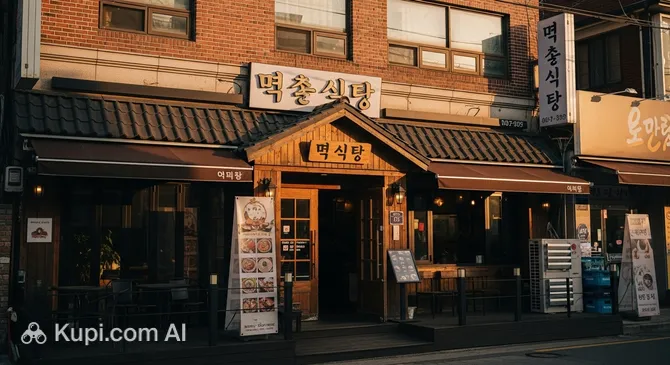
Among the places where you can spend a pleasant evening are restaurants specializing in local cuisine. For example, Kim Jong-heon, Kang Seung-cheol and Park Sun-ho Restaurant or Myeongjeong Sikdang, where you can try authentic regional dishes. Although these are primarily restaurants, Korean culture often involves meals accompanied by drinks and long conversations, making them excellent places for evening pastimes.

Kim Jeongheon, Kang Seungcheol & Park Soonho Restaurant. Illustration.
Source: Kupi.com AI

Traveler photos:

In addition to traditional restaurants, there are bars and pubs (often called "hof") in the city where you can order beer and snacks. These usually have a more casual setting. The dress code in most places is casual. The best time to head out is after 19:00-20:00, when the streets come alive and establishments fill with patrons. Prices are moderate, especially compared to the capital.

As for safety, Tongyeong is considered a fairly safe city. However, as elsewhere, it is worth taking standard precautions at night, especially if walking alone. For traveling at night, it is most convenient to use taxis; they can be called via an app or hailed on the street in busy areas.

Myeongchon Sikdang. Illustration.
Source: Kupi.com AI

Traveler photos:

While Tongyeong's nightlife is quieter, the city offers many interesting activities during the day. You can visit historical sites such as Sebyeonggwan or Hansando Battle Square. Art and literature lovers will find the Park Kyong-ni Memorial Hall interesting. For walking and enjoying nature, Yi Sun-sin Park or the colorful Dongpirang Mural Village, which is especially beautiful in daylight, are perfect.

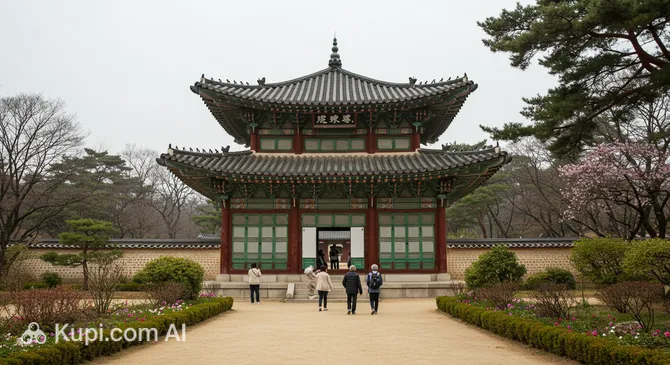
Sebyeonggwan Hall. Illustration.
Source: Kupi.com AI

Traveler photos:

It's also worth checking out Skyline Luge Tongyeong for active recreation or taking a stroll through Dpirang (Nammansan Sculpture Park), which turns into a light show in the evening.

Parks & Museums

Tongyeong is a city where natural beauty harmoniously blends with rich cultural heritage. Here you will find peaceful parks with magnificent views and museums that tell the story of the history and art of this coastal region of South Korea.

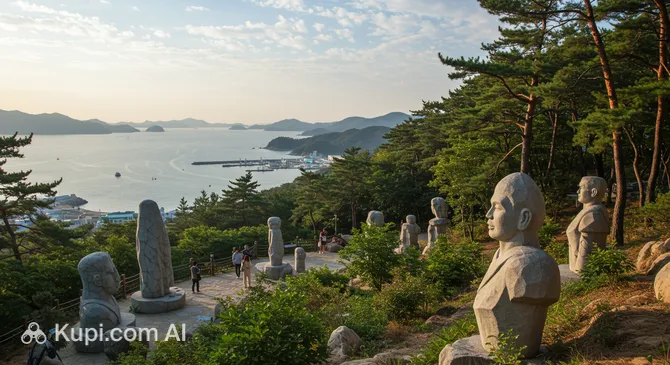
Among the city's green oases, Yi Sun-sin Park particularly stands out. It is not just a picturesque place for walking with sea views, but also a tribute to the great Admiral Yi Sun-sin, whose statue stands tall here. The park is perfect for a leisurely break and learning about Tongyeong's heroic past. Another notable spot is Dpirang (Nammansan Sculpture Park). This unique park offers visitors a chance to enjoy modern outdoor art while admiring panoramic views of the city and surrounding islands. For a more secluded retreat, Najukdo Park is a small and cozy place, perfect for nature contemplation and quiet walks by the water.

Yi Sun-sin Park. Illustration.
Source: Kupi.com AI

Traveler photos:

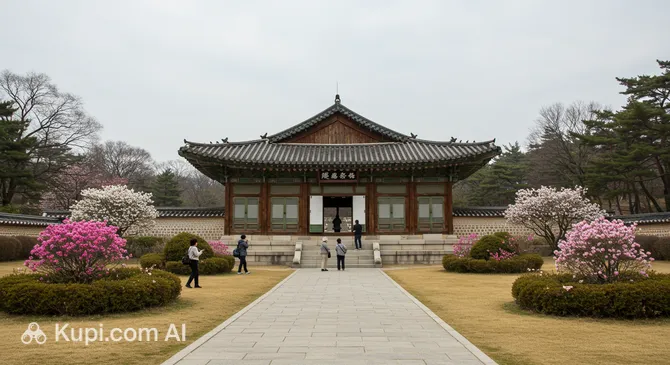
Tongyeong's cultural life is equally rich. Be sure to visit the Park Kyong-ni Memorial Hall, dedicated to one of the most famous Korean writers. Here you can learn about her life and work, as well as the influence she had on Korean literature. History buffs will be interested in Sebyeonggwan – an impressive historical building that once served as a naval command post during the Joseon Dynasty. Its architecture and exhibits tell the story of Tongyeong's naval glory.

Dpirang (Namman Mountain Sculpture Park). Illustration.
Source: Kupi.com AI

Traveler photos:

The city's historical heritage is also represented by Chungnyeolsa Shrine, dedicated to Admiral Yi Sun-sin and his victories. This site is of great significance to Koreans and attracts visitors with its peaceful atmosphere and beautiful traditional architecture. Nearby is the Hansando Battle Square, commemorating one of the key naval battles in Korean history. Another unique attraction is the Tongyeong Undersea Tunnel, built in the early 20th century as the first undersea tunnel in Asia. Walking through it is an opportunity to touch a piece of engineering history.

Pak Kyongni Memorial Hall. Illustration.
Source: Kupi.com AI

Traveler photos:

Sebyeonggwan Hall. Illustration.
Source: Kupi.com AI

Traveler photos:

For an authentic experience and vibrant photos, head to Dongpirang Mural Village. This once ordinary hillside residential quarter was transformed into a real open-air gallery thanks to the efforts of local residents and artists. Narrow streets decorated with colorful murals, cafes, and shops create a unique atmosphere.

Dongpirang Mural Village. Illustration.
Source: Kupi.com AI

Traveler photos:

Getting Around

Public transport in Tongyeong is primarily represented by an extensive network of city buses, which are the most convenient and economical way to move around the city and its surroundings. Routes cover most areas and popular tourist spots. There is no metro, tram, or trolleybus system in the city.

To pay for bus fares in Tongyeong, it is recommended to use the T-money transport card (or similar ones like Cashbee), which works throughout South Korea. The card can be purchased and topped up at convenience stores (e.g., CU, GS25, 7-Eleven), at bus terminals, and at some kiosks. You can also pay the fare in cash to the driver, but using a card is more convenient and often slightly cheaper due to transfer discounts. The cost of a single bus trip is relatively low.

Single-trip tickets when paying by cash are bought directly from the driver upon boarding. When using a transport card, you must tap it against the validator when entering the bus and, in some cases (depending on the fare system), when exiting. Buses generally run from early morning until late evening, but it is best to check specific route schedules in advance, especially for trips to remote areas or late at night. Route information can often be found at stops (sometimes only in Korean) or via navigation apps.

Given Tongyeong's coastal location and numerous islands, ferries play a vital role in the transport system. Ferry terminals, such as the Tongyeong Passenger Terminal (통영항여객선터미널), are the starting point for trips to popular islands like Somaemuldo or Bijindo. Ferry tickets are purchased at the terminal ticket offices.

One of Tongyeong's iconic features is the Hallyeosudo Viewing Ropeway, which leads to Mount Mireuksan. While primarily a tourist attraction, it also serves as a mode of transport offering breathtaking views of the archipelago. Tickets for the cable car are purchased on-site at its lower station.

As an alternative to public transport, taxis are always available in Tongyeong. They can be hailed on the street, found at designated stands, or called by phone/app (though the latter may require Korean language skills or a local app). Taxi fares are metered. In some tourist zones, bicycle rentals may be available, which is a great way for a leisurely tour of the waterfronts and parks.

Accommodation

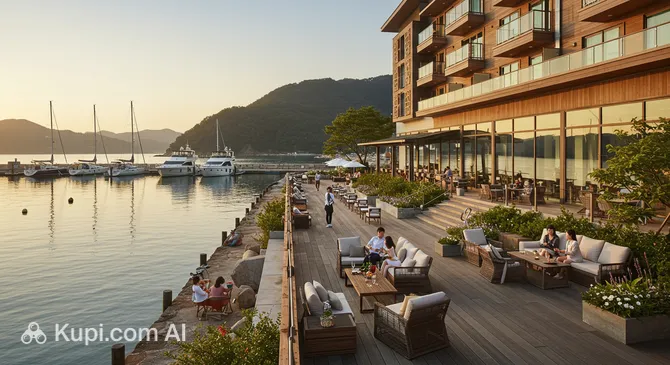
Tongyeong offers a variety of accommodation options to suit the needs of any traveler. Here you can find everything from budget guesthouses and hostels to comfortable mid-range hotels. For those seeking a luxury holiday, modern resort complexes with a full range of services are available. Apartment rentals are also popular, which is particularly convenient for families or those planning a longer stay in the city.

Many hotels and guesthouses are conveniently located near key attractions, such as Tongyeong Jungang Market or Dongpirang Mural Village, and close to transport hubs, making it easier to move around the city and its surroundings. Coastal areas are especially popular due to their picturesque sea views and easy access to boat trips and beaches.

Tongyeong Marina Resort. Illustration.
Source: Kupi.com AI

Traveler photos:

Notable accommodation options in Tongyeong include resort hotels such as Tongyeong Marina Resort or Hansan Marina Resort, which offer guests a high level of comfort and a wide range of facilities. Overall, the price range varies from affordable options for budget-conscious tourists to luxury offers for the most discerning guests.

When planning your trip, it is recommended to book accommodation in advance, especially if your travel coincides with the peak tourist season or local festivals. The most common booking methods are through popular international and local online platforms, as well as contacting hotels directly via their official websites. This allows you to compare prices, read reviews from other travelers, and choose the most suitable option that fits your preferences and budget.

Nearby Cities

For those who want to explore the surrounding area, Tongyeong serves as an excellent starting point for day trips to several interesting nearby locations:

Busan, South Korea's second-largest city, is just 69 km away. This vibrant port metropolis attracts visitors with its famous beaches like Haeundae, the colorful Gamcheon Culture Village, and numerous fish markets. It's a great place for lovers of the sea, urban bustle, and fresh seafood.

Changwon, located 48 km away, is the administrative center of Gyeongsangnam-do province. This modern city is known for its thoughtful urban planning, abundance of green zones, parks, and bike paths, as well as interesting art galleries and museums.

Gimhae, at a distance of 59 km, offers an immersion into the history of the ancient Gaya confederacy. The city is famous for its historical sites, including royal tombs, the Gimhae National Museum, and the Gaya Theme Park, making it attractive for history and culture enthusiasts.

CityPopulationDistance
Geoje240 00017 km
Sacheon114 55640 km
Jinhae190 00042 km
Jinju350 00046 km
Changwon1 046 05448 km

These nearby destinations provide an insight into the diverse culture and landscapes of the region.

Shopping & Souvenirs

Shopping in Tongyeong is, above all, an immersion into local color, traditional crafts, and the freshest seafood. The city is not famous for huge shopping malls like the metropolises of South Korea, but it offers unique goods that make excellent reminders of your trip. Tongyeong's special pride is its mother-of-pearl lacquerware (najeonchilgi) and, of course, a variety of seafood.

The main shopping spots are concentrated in the central part of the city, especially in the port area and around the busy markets. Here you can find small shops, souvenir stalls, and shops with local delicacies. A walk through these streets is an interesting experience in itself, allowing you to feel the atmosphere of a coastal Korean city.

Large modern shopping centers are not as common in Tongyeong. Shopping here is more focused on traditional markets and specialized stores where you can find authentic goods and chat with local sellers.

Tongyeong Jungang Market. Illustration.
Source: Kupi.com AI

Traveler photos:

The heart of Tongyeong's commercial life is undoubtedly the Tongyeong Jungang Market. This is a lively place where you can buy the freshest seafood just caught from the sea, local fruits, vegetables, traditional Korean snacks, and sweets. The market is also a great place to find inexpensive souvenirs and get to know the daily life of the city's residents. A unique atmosphere filled with the aromas of the sea and local cuisine prevails here.

As souvenirs from Tongyeong, it is worth bringing back:

  • Mother-of-pearl lacquerware (najeonchilgi): Tongyeong is famous for this traditional Korean craft. Boxes, fans, and jewelry inlaid with mother-of-pearl make exquisite gifts.
  • Dried seafood: Various types of dried fish, squid, and seaweed are popular and healthy souvenirs.
  • "Kkulppan" (Honey Bread): This is a local dessert – sweet buns filled with red bean paste and coated in honey.
  • Ceramics and handmade goods: Interesting ceramic items and other crafts by local artisans can be found in the city.
  • Admiral Yi Sun-sin souvenirs: Given the city's historical significance, thematic souvenirs are widely available.

Most shops in Tongyeong are typically open from 10:00-11:00 AM to 8:00-9:00 PM. Markets, especially food markets, start operating earlier. In tourist areas, some souvenir shops may stay open longer. Credit cards (Visa, MasterCard) are accepted almost everywhere, but at markets and in small stalls, it may be more convenient to pay in cash (South Korean Won).

For international tourists in South Korea, a tax refund system (Tax Free) is available. When making purchases over a certain amount in participating stores (which usually have a corresponding sticker), you can arrange documents for a VAT refund upon leaving the country. Don't forget to check with the seller about Tax Free availability and keep your receipts.

Reached the end of the page?

That means the route is fully explored