Support

Guryongpo

About

Guryongpo is a charming coastal town nestled on the east coast of South Korea, in Gyeongsangbuk-do Province. It is located right on the shores of the Sea of Japan, in a picturesque bay where the vast sea meets soft sandy beaches and rocky cliffs. This unique location provides Guryongpo with fresh sea air and gives guests the opportunity to admire incredible sunrises and breathtaking ocean views.

With a population of just over 9,000 people, Guryongpo maintains a special atmosphere of tranquility and coziness, far from the hustle and bustle of major metropolises. While the town is part of the larger city of Pohang, it has managed to preserve its identity and strong maritime character. It is an ideal place for those seeking peace, inspiration, and authentic Korean culture.
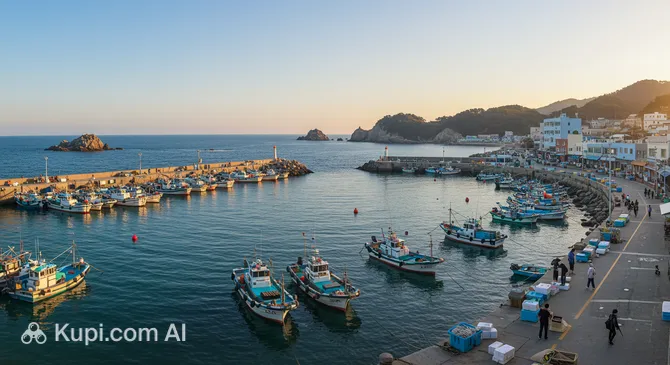
Guryongpo. Illustration.
Source: Kupi.com AI

Guryongpo attracts tourists with its unique features. Here, you can fully enjoy the beauty of the coastline by strolling along the promenade or relaxing on the beach. The town is famous for its freshest seafood, which you can taste straight from the ocean while watching fishermen return with their catch. In addition, Guryongpo offers an opportunity to immerse yourself in a calm rhythm of life and get acquainted with a traditional way of living that harmoniously blends with modern conveniences.

If you dream of relaxing your soul, enjoying seascape views, and discovering unexplored corners of Korea, Guryongpo will be an excellent choice. This town invites you to feel like a part of local life and take unforgettable memories home with you.

You can find more interesting facts on the Guryongpo city history page.

Weather Overview

The weather in Guryongpo has a distinct seasonality. Summer, especially July and August, is warm here, with average temperatures around 25.3°C - 26.4°C and maximums reaching 27-28°C. These months are also characterized by the highest rainfall, with 14-15 rainy days. Winters, by contrast, are cool: in January, the average temperature is about 2.4°C, and in December, it's 3.5°C, with minimal precipitation. Spring and autumn are transitional periods with gradual temperature changes and a moderate number of rainy days. In general, expect warm summers with periodic rain and cool, drier winters. For a more detailed view, you can explore the climate of Guryongpo.

Average monthly temperature

Average monthly precipitation

Interesting Facts

Guryongpo is not just about picturesque beaches and the freshest seafood. This coastal town holds many fascinating secrets and little-known details. Here are a few interesting facts that will show you Guryongpo from a new perspective:

  • It is no coincidence that Guryongpo is called one of the best places in South Korea to watch the sunrise. The ritual of watching the first sunrise of the New Year is especially popular—it is believed to bring luck and prosperity for the entire coming year, attracting many pilgrims and tourists.

  • While strolling through Guryongpo, take note of the historic lighthouses and colorful fishing huts. Many of these structures, built in the early 20th century, have found a second life today, turning into cozy cafes or small museums that tell the story of the daily lives of local fishermen from bygone eras.

  • The coastal landscapes of Guryongpo and its special atmosphere have inspired generations of Korean artists and poets, some of whom were born right here. To this day, the town remains a hub for creative minds, regularly hosting art festivals and open-air painting sessions.

  • There is an intriguing legend linking the name Guryongpo to its rich past. It is said that in ancient times, a busy port was located on this site, where merchant ships from distant lands would dock, bringing not only exotic goods but also wonderful tales and stories.

How to Get There

You can reach the picturesque coastal town of Guryongpo in various ways by combining air and ground transport. Since the town is small, direct access is limited, and travel usually involves a transfer at major regional transport hubs. We have prepared a detailed guide to help you plan your trip. You can find all the ways to get to the city on a separate page, and below we will look at the main options via the nearest airports and stations.

Guryongpo does not have its own airport. Tourists usually fly into one of the region's major cities and then continue their journey by bus or taxi. One of the most convenient options for international travelers is Gimhae International Airport (IATA: PUS), located in Busan. It is approximately 105 km from Guryongpo. This is a major aviation hub with huge passenger traffic, receiving flights from all over the world. The journey from the airport to Guryongpo by car or bus will take about 2.5–3 hours.

A closer alternative is Ulsan Airport (IATA: USN), located in the city of Ulsan, just 46.5 km from Guryongpo. This is a regional airport convenient for those flying on domestic flights or from some Asian countries. The trip from here to the destination will take about 1.5 hours by taxi or rental car.

For clarity, here is a summary of the main airports through which you can plan your route:

AirportPassenger trafficDistance
Pohang Airport253 70310 km
Ulsan Airport786 73947 km
Daegu International Airport3.3 mln80 km
Gimhae International Airport15.8 mln105 km
Sacheon Airport219 289166 km

Rail travel is also a popular way to travel around South Korea; however, keep in mind that there is no train station in Guryongpo itself. The nearest major railway hubs are in neighboring metropolises.

The most significant transport hub is Dongdaegu Station (IATA: XDK), located in Daegu, approximately 82.6 km from Guryongpo. This is one of the largest stations in the country with huge passenger traffic, where KTX high-speed trains from Seoul and other regions arrive. Upon arrival at Dongdaegu Station, you will need to transfer to an intercity bus or use a taxi to reach the Guryongpo coast. Travel time from the station is about 2 hours.

Below is a table with information about the nearest railway stations that can be used as transit points:

StationPassenger trafficDistance
Dongdaegu Station20 mln83 km
Jinju Station158 km
Daejeon Station18.6 mln198 km
Yeosu Expo Station212 km
Gwangju Songjeong Station3.4 mln266 km

Main Attractions

Despite its modest size, Guryongpo boasts an impressive concentration of iconic sites that attract travelers with their atmosphere and cinematic quality. The town offers guests a unique journey through time and an immersion into local folklore. Here are the key attractions that form the cultural identity of the city.

A major point of interest is the Guryongpo Japanese House Street. Preserved wooden buildings from the early 20th century create a unique setting that has become a favorite for film directors. This location served as the main set for the popular Korean drama "When the Camellia Blooms." Fans of the series come here to take photos against the famous stone staircase featured on the movie posters and to walk through the streets where the beloved story unfolded.

Climbing the steps from the historic street, you will find yourself in Guryongpo Park. This place is famous not only for its panoramic views of the port but also for a beautiful legend. It is said that nine dragons soared from the sea into the sky here, which gave the town its name ("Guryongpo" can be translated as "nine dragons bay"). The park features impressive sculptures of these mythical creatures, and the observation deck offers a spectacular view of the harbor and the waters of the Sea of Japan washing the shores of South Korea.

For those who want to delve deeper into the region's past, the Guryongpo Modern History Museum is open to visitors. It is located in the former mansion of Japanese merchant Hashimoto Zenkichi, built in the 1920s. The building is a classic example of architecture from that period: inside, you can see traditional tatami mats, sliding doors, and a well-kept garden. The museum's exhibition tells the detailed story of the life and daily routine of the fishing settlement during different historical periods, making the town's history tangible and clear.

Local Cuisine

The cuisine of Guryongpo is a true paradise for seafood lovers. Located on the coast, the town is famous for the freshest seafood, which forms the basis of most local dishes. Be sure to try the delicate sea urchins, juicy oysters, squid in various preparations, and, of course, the famous Korean crab, cooked according to ancient recipes. A special place in the gastronomic palette is held by thick and aromatic seaweed soup with seafood—a dish that fully captures the taste of the coast. It is customary to accompany meals here with a variety of Korean drinks, from refreshing non-alcoholic options to traditional light alcoholic beverages that perfectly complement the taste of seafood.

One of the most vivid gastronomic experiences in Guryongpo is a tasting of "hwae"—the Korean version of sashimi. Local markets offer paper-thin slices of the freshest fish, just caught from the sea. "Hwae" is traditionally served with a spicy and tangy "chogochujang" sauce, which perfectly complements the delicate flavor of the fish. This dish is a real gastronomic adventure for those who aren't afraid to try something new and appreciate the pristine taste of ingredients.

Street food in Guryongpo is an attraction in its own right. Strolling through the town, you will certainly come across stalls where delicious fried pancakes filled with seafood, spicy squid skewers emitting a tantalizing aroma, and delicate fish cakes are prepared right before your eyes. It’s a great opportunity for a quick and tasty snack while enjoying the hospitable atmosphere of the locals.

The gastronomic life of Guryongpo is not limited to daily meals. Throughout the year, the town hosts small but very colorful seafood festivals. This is an excellent chance to try rare delicacies, participate in workshops on preparing traditional Korean dishes, and immerse yourself in a festive atmosphere with music and dancing on the seashore. Such events make Guryongpo particularly attractive for gastro-tourism.

Overall, the gastronomic scene of Guryongpo is characterized by the freshness of ingredients, a predominance of seafood, and a commitment to tradition. Everyone will find something to their taste here—from exquisite restaurant dishes to simple but incredibly delicious street food. A trip to Guryongpo is not just an acquaintance with beautiful landscapes, but also an unforgettable culinary journey.

Travel Tips

Planning a trip to the charming coastal town of Guryongpo? To make your journey as smooth and pleasant as possible, we have prepared some practical tips. These recommendations will help you better prepare and fully enjoy your stay in this picturesque corner of South Korea.

  1. Clothing and Essentials: The climate in Guryongpo, like the rest of South Korea, has four distinct seasons. In summer (June–August), bring light, breathable clothing, sunscreen, and a hat. Spring (April–May) and autumn (September–October) offer mild weather—layered outfits are ideal. In winter (November–March), a warm jacket, sweater, and accessories are essential. Comfortable shoes are your best companion for walking around the town and its surroundings. Don't forget a universal adapter (South Korea uses Type C and F sockets). When visiting temples, if any are on your itinerary, choose modest clothing that covers shoulders and knees.

  2. City Transport: Guryongpo is a small town, so the main form of public transport here will likely be local buses. Taxis are also available; for hailing them, the popular Korean app Kakao T is very convenient. If you plan to explore the Gyeongsangbuk-do region more actively, you might consider renting a car, though for moving around Guryongpo itself, this may be unnecessary. Check for rental options in the nearest large city, such as Pohang.

  3. Financial Matters: The local currency is the South Korean Won (KRW). You can exchange money at banks or exchange offices in major cities; in Guryongpo itself, this option may be limited, so it's better to take care of it in advance or in Pohang. Credit and debit cards (Visa, Mastercard) are widely accepted, but in small shops or at local markets, cash may be preferred. ATMs are available; look for those that support international networks. Tipping is not expected in South Korea.

  4. Health and Safety: Pharmacies (약국 - "yakguk") in Guryongpo will offer basic medications. South Korea is generally a very safe country, and Guryongpo is no exception. Follow standard precautions: keep an eye on your belongings and stay alert. In case of emergency, call 119. Be sure to obtain travel medical insurance before your trip.

  5. Communication and Connectivity: The official language is Korean. The level of English proficiency in small towns like Guryongpo may be low, especially among the older generation. Learn a few basic phrases: "Annyeonghaseyo" (Hello), "Kamsahamnida" (Thank you), "Juseyo" (Please give me). You can buy a local SIM card at the airport upon arrival or at convenience stores. Wi-Fi is widely available in cafes and hotels. We recommend installing the Naver Maps or Kakao Maps apps for navigation (they work better in Korea than Google Maps) and Papago for translation.

  6. Local Etiquette: When greeting locals, a slight bow is appropriate. When giving or receiving items, especially from older people, use both hands—this is a sign of respect. In public places, especially on transport, try not to speak too loudly. Politeness and respect for elders are important aspects of Korean culture.

  7. What to Avoid: Try not to make noise or speak loudly on public transport—it is considered impolite. It is also not customary to leave chopsticks sticking vertically into a bowl of rice, as this is associated with funeral rituals. Do not litter; cleanliness is highly valued in Korea.

  8. Special Tip for Guryongpo: Be sure to try the local seafood! Guryongpo is famous for its gwamegi (half-dried saury or herring), especially during the winter. Also, one of the interesting attractions of the town is Guryongpo Japanese House Street, which reflects a specific historical period and architecture.

We hope these tips make your trip to Guryongpo even more comfortable and memorable. We wish you a great holiday and wonderful impressions!

Entertainment & Nightlife

Guryongpo, being a charming coastal town, offers its own unique, more relaxed, and authentic perspective on evening entertainment compared to South Korea's major cities. The nightlife here is focused not on loud clubs, but on cozy establishments where you can enjoy the local atmosphere and hospitality.

The main evening activity in Guryongpo centers around its picturesque port and central streets. Here you will find many restaurants specializing in the freshest seafood, which stay open until late in the evening. The atmosphere in such places is usually very relaxed and friendly, perfect for a dinner with a sea view. The crowd is mostly local, but tourists seeking authentic experiences will also feel comfortable here. The dress code is generally casual.

In addition to restaurants, you can find traditional Korean drinking establishments in Guryongpo, such as "Hofs" — the Korean version of a pub serving beer, soju, and a variety of snacks. Small bars where you can spend a quiet evening are also popular. For those who want to have fun in true Korean style, karaoke bars ("noraebang") are available. This is a popular spot for groups of friends to have a good time singing their favorite songs. Most establishments stay open until midnight or slightly later, especially on weekends.

Practical tips for evening leisure:

It is best to start your evening walk or dinner around 7-8 PM. Prices in local Guryongpo venues are generally moderate. You can get to your hotel or another destination at night by taxi. It is recommended to find out the numbers of local taxi services in advance or ask the restaurant or bar to call a car for you, as public transport may run less frequently late at night. Guryongpo is generally considered a safe city, but it is always worth taking standard precautions, especially when walking in less lit areas after dark.

As for daytime entertainment, Guryongpo offers its guests a chance to explore local culture and nature. You can visit the famous Guryongpo Japanese House Street, stroll along the promenade, enjoy sea views, or visit local markets. While the town may not have large museums or theaters, its charm lies in its authenticity and the opportunity to immerse yourself in the steady pace of life in a Korean port town.

Parks & Museums

Guryongpo, a charming port town in South Korea, offers its guests not only picturesque seascapes but also the opportunity to touch the unique history and culture of the region. Here you can find both places for peaceful relaxation in nature and interesting sites that tell of the city's past and present.

For lovers of nature and fresh sea air, Guryongpo offers several wonderful spots. One of the main ones is Guryongpo Beach—a beautiful sandy coastline ideal for leisurely strolls, relaxing by the water, and enjoying the sea breeze. Nearby is the Yeonorang Seonyeo Park. This theme park, based on an ancient Korean legend, attracts visitors not only with its scenic sea views and well-maintained walking areas but also with the opportunity to connect with local folklore through sculptures and installations. Additionally, the coastal location of Guryongpo itself provides magnificent opportunities for hiking routes along the shoreline, offering breathtaking views of the sea, especially enchanting at sunrise and sunset.

The main cultural and historical center of Guryongpo is undoubtedly the Guryongpo Japanese House Street, also known as the Japanese Street. This is not just a street, but a kind of open-air museum. Dozens of wooden houses built by Japanese settlers in the early 20th century have been preserved here. Many of these buildings have been carefully restored and now house small exhibitions, cafes, and shops, allowing for a deeper immersion into the atmosphere of that time. A walk down this street is a fascinating journey into the past, providing insight into an important period in the city's history. Some houses are open to the public and function as mini-museums, demonstrating the lifestyle and culture of that era.

To get a more authentic experience of Guryongpo, be sure to stop by the local fish market. This is a colorful place where you can see the full variety of sea treasures caught by local fishermen and feel the true atmosphere of a port city. Also, don't miss the chance to try gwamegi—a famous local delicacy of half-dried saury, particularly popular during the winter season. Stroll through the narrow alleys branching off the main historic street—there you can discover interesting details and less touristy corners that preserve the spirit of old Guryongpo.

Getting Around

When planning your travel around Guryongpo, keep in mind that it is a small town, and the public transport system is scaled accordingly. The main way for tourists and locals to get around is by bus and taxi.

Buses are the primary form of public transport in Guryongpo. These are typically local routes connecting different parts of the town and possibly nearby settlements. It is best to check schedules and routes locally or using Korean navigation apps such as Naver Maps or KakaoMap, as Google Maps has limited functionality for public transport in South Korea. Bus fares are usually paid with a T-money transport card (or similar cards like Cashbee), which can be purchased and topped up at convenience stores (e.g., CU, GS25, 7-Eleven) and at subway stations in major cities. Cash payment to the driver is also possible, but change may not be given, or it may be less convenient. Fares are usually fixed or distance-based, but for a small town, there will likely be a single flat rate, approximately 1,300-1,500 won. You must tap your transport card on the validator both when entering and exiting the bus.

Taxis are available in Guryongpo and are a convenient option for short trips or if you are traveling with luggage. Taxis can be hailed on the street, found at designated stands, or called via an app (e.g., Kakao T, if you have a local SIM card and registration). Payment is by meter, and both cash and bank cards are accepted. The base fare and cost per kilometer are standard for the region.

Alternative ways to get around:

Given the size of Guryongpo, walking can be an excellent way to get to know the town, especially if you want to explore the central part or coastal areas. There may also be bicycle rental points in town, which is another good option for leisurely exploring the surroundings, especially in good weather. Car-sharing is less common in small towns than in major cities.

Practical tips:

  • Purchase a T-money card upon arrival in South Korea. It works nationwide on most types of public transport and can even be used for small purchases.
  • Install Naver Maps or KakaoMap on your smartphone for route planning and tracking buses. The interface may be in Korean, but an English version is often available.
  • Buses typically run from early morning until late evening, but frequency may decrease during off-peak hours and on weekends. It is better to check the exact schedule in advance.
  • On buses, it is customary to press the stop signal button in advance if you want to get off at the next stop.

In Guryongpo, as a small coastal town, there may not be unique transport types like historic subways or cable cars, but convenience is provided by standard and accessible options.

Accommodation

In the town of Guryongpo, travelers can find a variety of accommodation options to suit different budgets and preferences. Choices range from economical guesthouses and motels, suitable for budget travelers, to more comfortable mid-range hotels. Apartment or room rentals are also available, which can be convenient for families or those who prefer more independence.

When choosing a place to stay in Guryongpo, it is worth paying attention to areas located near major attractions or transport links. This will help save time when moving around town. Although the specific names of popular hotels are not always widely known for small towns, you can always find up-to-date information and reviews on popular booking platforms.

It is recommended to book accommodation in advance, especially if your trip coincides with the peak tourist season or local festivals. Accommodation prices can vary from budget to mid-range, depending on the level of comfort and location. Most accommodation options can be easily found and booked through well-known online platforms or, in some cases, by contacting the hotel or property owner directly.

Nearby Cities

For those who want to explore the surroundings, Guryongpo serves as an excellent starting point for day trips to several interesting nearby locations:

CityPopulationDistance
Pohang520 30516 km
Heunghae34 32822 km
Angang33 33332 km
Gyeongju264 09134 km
Ulsan1 166 03353 km

These nearby destinations provide insight into the diverse culture and landscapes of the South Korean region. Each trip promises new discoveries. For example, Ulsan, a major industrial center, will surprise you with the picturesque Taehwagang National Garden with its bamboo forest and the rocky Daewangam Coast. Daegu, the country's third-largest city, is famous for its Yangnyeongsi Oriental Medicine Market, lively shopping streets, and the E-World theme park. A trip to Busan, the second-largest city and main port of South Korea, will give you impressions of the famous Haeundae and Gwangalli beaches, the colorful Gamcheon Culture Village, and the freshest seafood at Jagalchi Market.

Shopping & Souvenirs

Guryongpo, being a charming port town in South Korea, offers its guests a rather specific but interesting shopping experience. You won't find huge malls with global brands here, but you will be able to immerse yourself in the atmosphere of local life, purchase the freshest seafood, and find unique souvenirs reflecting the maritime spirit of the place. Shopping in Guryongpo is more about exploring local shops and markets than chasing fashion.

The main shopping spots in Guryongpo are usually concentrated around the port area and on several central streets. While walking here, you will find small shops offering a variety of goods: from fresh sea treasures and local delicacies to everyday items and small souvenirs. Historically preserved streets may also feature shops with interesting local crafts.

Large modern shopping centers are not typical for Guryongpo. The town maintains its authentic character, and shopping here is more focused on small private shops and markets. If you are looking for something specific, it is best to ask locals for advice or simply enjoy the finds in the small shops.

Local markets deserve special attention, especially if you are lucky enough to find a traditional fish market. This is the heart of any coastal town, where you can not only see an incredible variety of freshly caught fish and seafood but also purchase them at a good price. Often, such markets also sell other local produce, vegetables, fruits, and prepared snacks. Visiting a market in Guryongpo is a great way to feel the real atmosphere of the town.

As souvenirs from Guryongpo, it is worth bringing back items related to the sea and local traditions. Primarily, these are various dried and cured seafood products—squid, fish, and seaweed. This region is particularly known for its gwamegi—Pacific saury half-dried in the sea breeze, which is a popular Korean delicacy. You can also look for small handmade crafts or souvenirs with maritime symbols.

Shops in Guryongpo usually follow a standard schedule for South Korea: most open around 10:00-11:00 AM and close by 8:00-9:00 PM. Markets, especially food markets, may start much earlier. Regarding payment, bank cards are widely used and accepted in most places. However, for purchases at markets or in very small shops, it is recommended to carry some cash (Korean Won).

For foreign tourists in South Korea, a Tax-Free refund system is available. If you make purchases of a certain amount in stores participating in this program (they usually have a special Global Blue Tax Free sticker or similar), you can apply for a partial VAT refund. In a small town like Guryongpo, the number of such shops may be limited, but for larger purchases, it is always worth checking for this possibility.

Reached the end of the page?

That means the route is fully explored